
Planting
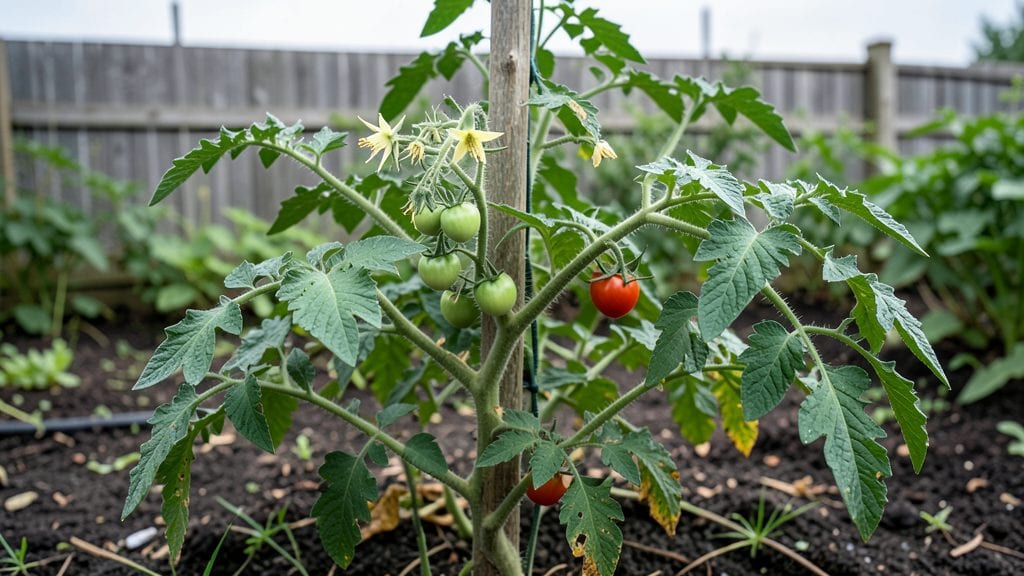
A simple tomato plant identifier can turn nursery chaos into confidence—just look at the leaves, fruit, and growth stages. 🌱 I’ve spent years sorting through mix-ups and garden mysteries, and the visual cues are simpler than you’d think once you know what to spot. you know what to look for.
The key lies in leaf shape, stem hairiness, and fruit markings—cherry tomatoes cling like grapes, beefsteaks sprawl like lazy cats, and heirlooms often sport jagged edges. Hybrid plants might look uniform, while heirlooms show wild diversity in every batch.
A quick leaf inspection tells you whether that wilt is early blight or just thirsty roots.
By the end of this guide, you’ll spot the difference between a Roma and a San Marzano just by their shoulders, recognize blight before it spreads, and even guess a plant’s maturity just by its fruit stripes.
No more swapping seeds with your neighbor or buying the wrong variety—just confidence in every plant you grow.
Works for seedlings, mature plants, and even grocery-store mysteries. Let’s decode those tomatoes like a pro.
What Triggers Plant Confusion
Identifying tomato plants can feel like solving a botanical puzzle—especially when similar-looking species or diseases muddle the picture. Below, we break down the real culprits behind misidentification, from nature’s tricks to human errors, so you can spot the red flags (literally and figuratively).
Tomato leaves are often the first clue, but their appearance can be deceiving due to: - Genetic Variability: Some heirloom or hybrid varieties (like Solanum lycopersicum relatives) have serrated, lobed, or even hairy leaves that mimic wild plants.
For example, Solanum habrochaites (a wild tomato relative) has deeply divided leaves that may fool beginners into thinking it’s a diseased tomato. - Environmental Stress: Heat, drought, or nutrient deficiencies can distort leaf shapes—making them curl, yellow, or develop irregular edges.
A tomato leaf curl virus (ToLCV) or early blight (Alternaria solani) can also create target-like spots that resemble other plant diseases. - Pests & Pathogens: Spider mites or aphids cause stippling or discoloration, while fungal infections like septoria leaf spot produce tiny dark speckles that mimic poor growing conditions.
💡 Pro Tip: Compare your plant’s leaves to a healthy tomato leaf from the same variety. Use a magnifying glass to check for vein patterns, hairiness, or underside texture—these are key differentiators!
Sometimes, the fruit gives away the game—but only if you know what to look for: - False Tomatoes: Plants like ground cherries (Physalis), pepper plants, or even deadly nightshade (Atropa belladonna) produce berries that resemble small tomatoes.
Ground cherries have a paper lantern husk, while peppers have thicker, waxier skin. - Immature vs. Mature Fruit: Green tomatoes can look identical to unripe peppers or eggplants until they ripen.
Check for: - Stems: Tomatoes have hollow stems; peppers have solid stems. - Scars: Tomatoes leave a calyx (flower scar) at the top; peppers often have a smooth or slightly indented base. - Diseased or Blighted Fruit: Fusarium wilt or bacterial spot can turn tomatoes black, mushy, or deformed, making them look like a different plant entirely.
🔥 Watch Out: If your "tomato" has no visible stem scar or grows in clusters like a pepper, it’s not a tomato!
Tomatoes have distinct growth phases, but mixing them up with other plants is easy—especially if you’re new to gardening: - Seedling Stage: Young tomato seedlings can resemble basel, chili peppers, or even potato sprouts.
Look for: - Cotyledons (first leaves): Tomato seedlings have simple, oval leaves; peppers often have lance-shaped leaves. - Stem hairiness: Some tomato varieties (like Solanum pennellii) have glandular hairs, while peppers usually don’t. - Vining vs. Bush Habit: Indeterminate tomatoes grow vining and sprawling, while determinate tomatoes stay compact.
Confusing them with cucumbers, melons, or even morning glories is common—especially if they’re trellised. - Flower & Fruit Clusters: Tomatoes produce flower clusters in the leaf axils; peppers grow solitary flowers. Eggplants have purple flowers and spiky leaves, making them a dead giveaway.
✨ Quick Fix: Snap a photo of the entire plant (leaves, stems, flowers, and fruit) and compare it to a tomato growth chart or use an app like PlantNet for instant ID.
Sometimes, the problem isn’t the plant—it’s the observer! - Assuming All Tomatoes Look Alike: There are thousands of varieties, from cherry tomatoes (tiny, round) to beefsteak tomatoes (giant, ribbed).
A black Krim tomato might look like a purple eggplant at first glance! - Ignoring the Roots: If you’re identifying from cuttings or uprooted plants, check the root structure.
Tomato roots are fibrous and shallow; potato roots are thick and tuberous. - Overlooking the Smell: Some tomato relatives (like bitter nightshade) have a distinct odor.
Crush a leaf—if it smells rank or chemical-like, it’s not a tomato. - Plant Labels Gone Wrong: Mislabeling at nurseries or swapping seedlings can lead to identity crises. Always double-check tags and ask for photos of mature plants.
🎯 Final Check: If in doubt, wait for flowers or fruit—they’re the most reliable ID markers!
Would you like a visual comparison table for the most commonly confused tomato look-alikes? Let me know!
Quick Fixes for Common Tomato Troubles
Got a tomato plant that’s not looking its best? 🌱😬 Whether it’s wilting leaves, blight spots, or stunted growth, these practical fixes will help you diagnose and revive your plants—fast.
Below, we’ve matched the most common issues to step-by-step solutions, plus prevention tips to keep your tomatoes thriving all season.
Cause: Too much (or too little) water stresses roots, leading to yellowing, wilting, or curled leaves. Fix:
- Check the soil 🌱—Stick your finger 1–2 inches deep. If it’s soggy, you’re overwatering. If dry, it’s time to hydrate.
- Adjust your watering routine:
- Overwatered? Let the soil dry slightly between waterings. Improve drainage by adding perlite or compost to pots or raised beds.
- Underwatered? Water deeply at the base (not the leaves!) in the early morning to prevent fungal issues.
- Trim damaged leaves ✂️ to redirect energy to healthy growth.
💡 Prevention Tip: Use a moisture meter or the "squeeze test"—if soil clumps but doesn’t drip, it’s ready for water.
Cause: Humidity, poor airflow, or wet foliage invites early blight, late blight, or powdery mildew. Fix:
- Prune for airflow 🌬️—Remove crowded leaves (especially lower ones) to improve circulation.
- Apply fungicide 🛡️:
- Organic option: Spray with a baking soda mix (1 tsp baking soda + 1 quart water + a drop of dish soap) every 7–10 days.
- Store-bought: Use copper fungicide or neem oil (follow label instructions).
- Water at the base only 💧—Avoid overhead sprinkling to keep leaves dry.
💡 Prevention Tip: Space plants 18–24 inches apart and mulch to reduce soil splashing onto leaves.
Cause: Chewing insects like tomato hornworms, aphids, or spider mites can devour your plants overnight. Fix:
- Handpick pests 👨🍳—Check leaves daily for green caterpillars (hornworms) or sticky residue (aphids). Drop them into soapy water.
- Spray with insecticidal soap 🧼—Mix 1 tbsp mild soap + 1 quart water and spray early morning/late evening (avoid direct sun).
- Introduce beneficial insects 🐞—Ladybugs and lacewings eat aphids; buy them online or attract them with dill or marigolds nearby.
💡 Prevention Tip: Rotate crops yearly to disrupt pest life cycles and plant basil nearby—it repels mosquitoes and some pests!
Cause: Poor pollination (from lack of bees or wind) or nutrient deficiencies (especially nitrogen or potassium). Fix:
- Hand-pollinate 🐝—Gently shake plants early morning when flowers are open, or use a small paintbrush to transfer pollen.
- Fertilize right 🌿:
- For leafy growth: Use a balanced fertilizer (10-10-10) when plants are young.
- For fruiting: Switch to low-nitrogen, high-phosphorus (5-10-10) when flowers appear.
- Check for blossom end rot 🍅—If fruit develops black bottoms, it’s a calcium deficiency. Side-dress with crushed eggshells or calcium nitrate.
💡 Prevention Tip: Mulch with compost to retain moisture and nutrients—tomatoes are heavy feeders!
If your tomato is completely wilted or blackened:
- Trim all dead leaves ⏰—Stop the plant from wasting energy.
- Repot or transplant 🌱—If roots are rotted, move to fresh, sterile soil.
- Give it shade ☀️—Move to partial shade for 3–5 days to recover.
- Monitor closely—If new growth appears in 7–10 days, it’s on the mend!
🎯 Pro Tip: Keep a plant journal—note symptoms, fixes, and results. Next season, you’ll spot issues before they spiral!
Need a visual ID? Use our [Tomato Plant Identifier Guide] (link placeholder) to match symptoms to solutions instantly. Happy gardening! 🌿🍅
Frequently asked questions
How do I tell if my plant is a tomato or a pepper?
Check the stem and fruit base: Tomatoes have hollow stems and a calyx (flower scar) at the top, while peppers have solid stems and a smooth base. Also, tomato flowers grow in clusters, while peppers have single flowers.
What’s the easiest way to identify tomato varieties from leaves?
Look for leaf shape and edges: Cherry tomatoes often have small, serrated leaves, while beefsteaks feature larger, deeply lobed leaves. Heirlooms may have irregular edges, while hybrids tend to be more uniform. Compare to reference photos for accuracy.
Can I use an app to identify my tomato plant?
Yes! Apps like PlantNet or PictureThis let you upload photos of leaves, stems, and fruit for instant ID. For best results, include healthy and diseased parts if applicable, and snap shots in good light.
Why does my tomato plant look like it has a disease when it’s actually just a different variety?
Some heirloom tomatoes (like Black Krim) have dark, almost purple leaves that can mimic blight. Others, like Solanum habrochaites, have deeply divided leaves that look diseased. Always compare to a known healthy plant of the same variety.
How do I know if my tomato plant is healthy or just slow-growing?
Healthy tomato plants have deep green leaves, strong stems, and new growth at the top. Slow growth could mean underwatering, poor soil, or lack of sunlight. Check roots for rot if leaves yellow or wilt suddenly. If in doubt, transplant to richer soil and watch for improvement.