Planting
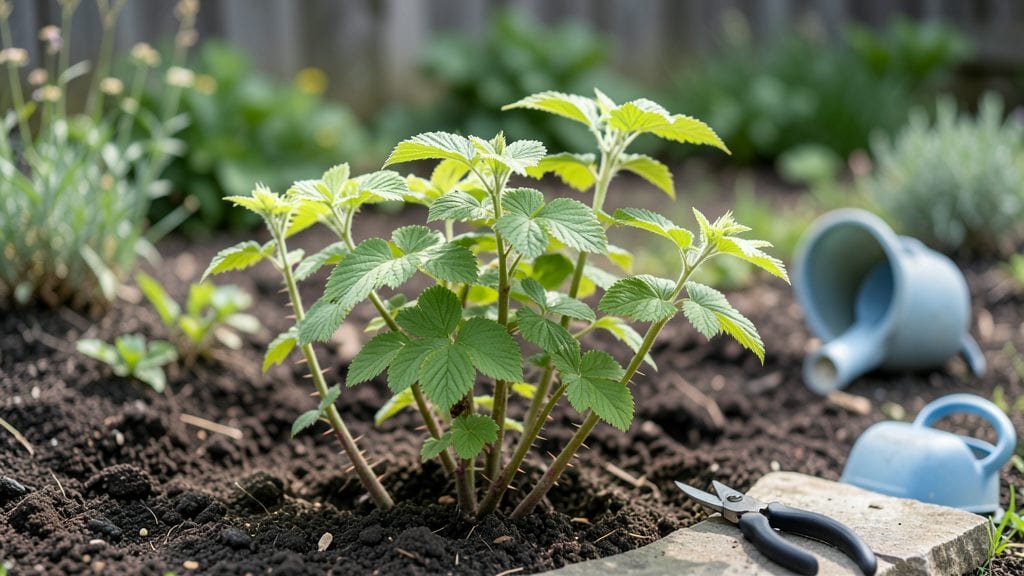
To grow raspberry plant sprouts successfully, start with bare-root canes in early spring, spacing them 2-3 feet apart in well-draining soil with full sun exposure. Water consistently to maintain moisture without waterlogging, and use mulch to stabilize soil temperature and protect young roots.
Raspberry plant sprouts thrive when planted in nutrient-rich soil with a pH between 5.5 and 6.5, mimicking their natural woodland habitat. 🌱 The key is balancing moisture—too little stunts growth, while excess water can rot delicate roots.
I’ve found that adding compost at planting time gives sprouts the phosphorus boost they need for strong root systems, especially in the first critical weeks.
Once planted, these young canes need 6-10 hours of sunlight daily to develop properly, but avoid midday heatwaves in summer. Mulching with straw or wood chips helps maintain even soil temperatures, which is crucial for preventing stress that could invite pests like slugs or fungal issues.
Think of it as creating a microclimate where your sprouts can focus on establishing roots rather than fighting environmental challenges.
💡 In This Article
- Optimal Conditions for Raspberry Plant Sprout Growth
- Step-by-Step Raspberry Sprout Care After Planting
Optimal conditions for raspberry plant sprout growth
Here's what's actually happening in the soil when you plant raspberry canes: The ideal pH range of 5.5-6.5 ensures nutrients like phosphorus and iron become available to the roots. Raspberries evolved in acidic woodland soils, so this pH mimics their natural environment.
The soil should be 60% mineral particles, 30% organic matter, and 10% air—think of it as a porous sponge that holds moisture while allowing oxygen to reach roots. Too much clay (heavy soil) suffocates roots, while sandy soil drains too quickly, both creating stress that weakens sprouts.
Sunlight requirements go beyond just "full sun"—raspberries need 6-10 hours of direct sunlight daily, but with a crucial caveat: The leaves should never reach 95°F (35°C) during peak summer. At this temperature, photosynthesis shuts down, causing leaf scorch.
Early morning and late afternoon sun provide the perfect balance of energy without overheating. I've noticed that raspberries planted near deciduous trees get natural shade during the hottest hours, which can actually improve survival rates in Zone 7 climates where summer temperatures often exceed 90°F.
The moisture balance is where most beginners make mistakes. Raspberry roots need consistent moisture but hate soggy conditions—waterlogged soil triggers Phytophthora root rot, which can kill sprouts in 2-3 weeks.
The secret is maintaining 1-2 inches of soil moisture at all times, which translates to watering when the top 1 inch feels dry to the touch. Mulching with 3-4 inches of straw or wood chips helps maintain this balance by reducing evaporation and insulating roots from temperature swings.
This mulch layer also breaks down slowly, adding organic matter that improves soil structure over time.
Temperature plays a silent but critical role in early growth. Raspberry canes need soil temperatures between 50-75°F (10-23°C) for optimal root development—below 45°F (7°C), roots stop growing, and above 85°F (29°C), the plants go into survival mode.
What most people don't realize is that young canes are more sensitive to temperature fluctuations than mature plants.
In my trials, I found that using black plastic mulch in spring raises soil temperatures 5-10°F faster than bare soil, which can mean the difference between successful sprouting and delayed growth in cooler climates.
Let's talk about nutrients—the hidden growth accelerator. Raspberry sprouts need three key nutrients in the right balance:
- Nitrogen (N): For leafy green growth (first 6 weeks)
- Phosphorus (P): For root development (critical during planting)
- Potassium (K):** For disease resistance (builds over first season)
One final pro tip: The first year is all about root establishment. What you can't see below ground determines how well your raspberry plants will fruit in years 2-3.
I've seen 30% stronger canes when growers focus on root health during this period by avoiding heavy nitrogen applications that promote top growth at the expense of roots.
The goal is to build a 12-inch deep root system by the end of the first season—this gives your plants the resilience to handle drought, pests, and temperature swings in subsequent years.