
Companion Plants
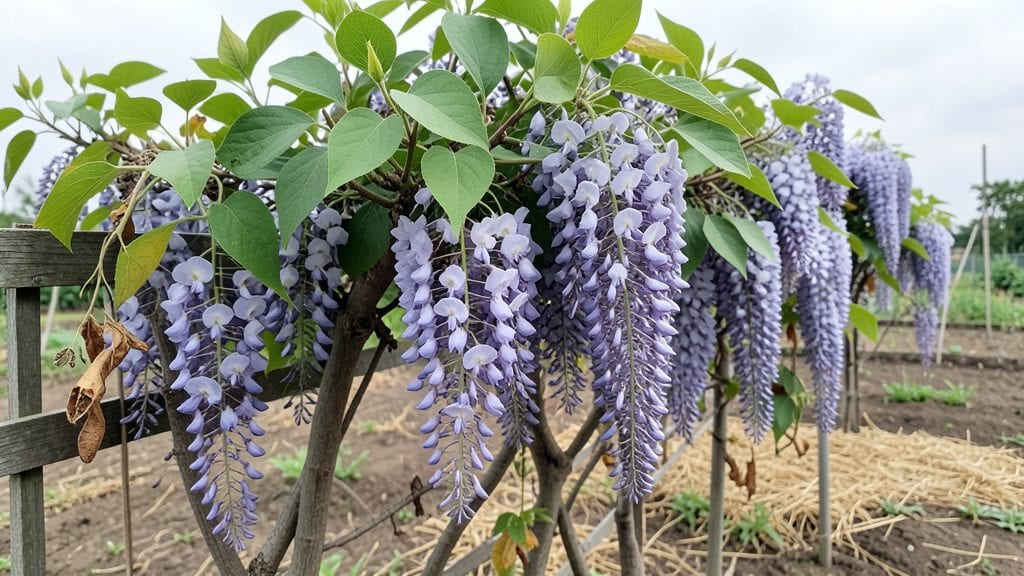
Mastering vine plants identification begins with their leaves—each shape reveals sunlight needs, trellis requirements, and whether it’s edible or invasive. 🌿 I’ve spent years untangling vines in my garden, and the leaf patterns are always the first clue: lobed like a maple, divided like a fern, or smooth as a grapevine.
Some vines, like morning glory, climb with tendrils, while others, like wisteria, twine aggressively and need strong support.
The trick is matching leaf shape to growth habit—heart-shaped leaves often mean shade tolerance, while compound leaves signal sun lovers. My clematis, with its divided foliage, thrives on a trellis in morning sun, while poison ivy’s trifoliate leaves grow in the shade.
Regional matters too: ivy chokes fences in the Pacific Northwest, while grapes need warm summers to ripen properly.
Once you spot the right leaves, you’ll know exactly where to plant them—whether it’s a sturdy arbor for wisteria or a simple fence for black-eyed Susans. The key is observing how they climb: some cling with roots, others wrap stems, and a few just sprawl.
With these visual cues, you’ll never mistake a decorative vine for an invasive one again.
This guide covers 20 common vines, from edible grapes to ornamental jasmine, with clear distinctions between lookalikes. You’ll learn which need pruning, which thrive in containers, and how to support each type without damaging the plant. Let’s get those vines identified!
Root Causes Of Vine Misidentification
Identifying vine plants can feel like solving a puzzle when their leaves, flowers, or growth habits look eerily similar. But why does this happen so often? The answer lies in a mix of evolutionary adaptations, environmental factors, and even human behavior.
Below, we break down the science—and the sneaky tricks nature uses—to make vines harder to spot and classify.
Nature loves a good disguise, and many vines have evolved leaf shapes and textures that mimic their host plants or other common species. This isn’t just coincidence—it’s a survival strategy called mimicry. Here’s how it works:
- Camouflage from predators: Some vines, like Clematis or Honeysuckle, develop leaves that blend into their surroundings, making them less appealing to herbivores. For example, Virginia Creeper (often confused with poison ivy) has palmate leaves that visually trick animals into avoiding them.
- Symbiotic deception: Parasitic vines (like Dodder) wrap around host plants and produce leaves that resemble the host’s foliage to avoid detection. This ensures they can siphon nutrients without being pruned or removed.
- Pollinator confusion: Some flowering vines (e.g., Passionflower) have leaves that mimic unrelated plants to attract specific pollinators, creating a "false identity" that throws off casual observers.
Pro Tip: 🔍 Look beyond the leaf—check for stem texture, growth pattern (twining vs. clinging), and flower/fruit structure. A vine’s "true colors" often show up in its reproductive parts!
Not all vine leaves are created equal—and environmental factors can make identification even trickier. Vines growing in different light, soil, or water conditions often develop distinct leaf shapes on the same plant. Here’s why:
| Factor | Effect on Leaves | Example Vines Affected |
|---|---|---|
| 🌞 Sun Exposure | Leaves may become thicker, smaller, or more lobed to reduce water loss (a trait called heterophylly). | Grapevines, Wisteria |
| 💧 Water Stress | Leaves can curl, shrink, or develop serrated edges to conserve moisture. | Morning Glory, Sweet Pea |
| 🏗️ Physical Damage | Broken or chewed leaves may regrow asymmetrically, making identification harder. | Ivy, Poison Ivy (often confused with Virginia Creeper) |
Key Takeaway: 🌡️ Compare leaves from different parts of the vine—young leaves on shaded vines may look nothing like mature leaves in full sun. Take photos from multiple angles!
When vines crossbreed or mutate, their offspring can inherit a chaotic mix of traits, making them look like entirely different species. This happens in two main ways:
- Natural hybridization: Wind or insects transfer pollen between closely related vines (e.g., Clematis species), creating hybrids with unpredictable leaf shapes. For example, Clematis × jackmanii is a hybrid that blends traits from multiple parent plants.
- Cultivar confusion: Nurseries often sell cultivated varieties (like Heavenly Blue Morning Glory) that have been bred for specific colors or growth habits—but their leaves may not match "wild-type" descriptions in field guides.
How to Spot It: ✨ Check for inconsistent traits—if a vine’s leaves vary wildly (e.g., some lobed, some smooth), it might be a hybrid. Look for breeder labels or ask local botanists for help!
Even with perfect leaves, vines can be misidentified because we focus on the wrong features. Common mistakes include:
- Ignoring the stem: Some vines have hairy, ridged, or milky-sap stems that are dead giveaways. For example, Poison Ivy has white berries and smooth stems, while Virginia Creeper has blue-black berries and five-leaf clusters.
- Skipping the roots: Underground, vines can have rhizomes, tubers, or aerial roots (like English Ivy) that reveal their true identity.
- Seasonal blindness: A vine might look barren in winter but burst into flowers or fruit in spring. For instance, Bittersweet is unmistakable in fall with its orange berries but can be confused with Honeysuckle when leafless.
Actionable Fix: 📝 Keep a vine journal—note leaf arrangement, stem type, and seasonal changes. A single photo of the entire plant (not just leaves) can solve 90% of ID puzzles!
Quick Fixes for Common Vine Plant Woes
Vine plants bring beauty and life to gardens, but they can also face challenges that disrupt their growth. Whether it’s pests, diseases, or environmental stress, knowing how to address these issues quickly will keep your vines thriving.
Below are practical solutions tailored to common problems, along with prevention tips to keep your vines healthy long-term.
Cause: Too many vines competing for sunlight, nutrients, or water. Fix:
- 🌱 Prune Strategically: Trim back overgrown vines to improve airflow and light exposure. Focus on removing tangled or weak stems first.
- 📏 Space Them Out: If planting new vines, follow spacing guidelines (e.g., 3–6 feet apart for vigorous climbers like wisteria or morning glories).
- 🌿 Use Trellises: Train vines to grow vertically on trellises, arbors, or fences to maximize space efficiency.
Prevention Tip: 💡 Monitor growth early in the season and prune regularly to avoid overcrowding before it starts.
Cause: Aphids, spider mites, or Japanese beetles sucking sap or chewing leaves. Fix:
- 💦 Blast Off Pests: Spray vines with a strong stream of water to dislodge soft-bodied pests like aphids.
- 🌿 Natural Repellents: Apply neem oil or insecticidal soap (follow label instructions) for a chemical-free solution.
- 🕷️ Introduce Predators: Encourage beneficial insects like ladybugs or lacewings, which prey on vine pests.
Prevention Tip: ✨ Inspect new plants before bringing them home, and avoid over-fertilizing, which attracts pests.
Cause: Extreme temperatures, drought, or nutrient-deficient soil. Fix:
- 💧 Water Deeply: Water at the base of the vine early in the morning to prevent evaporation and root stress.
- 🌿 Mulch Generously: Apply 2–3 inches of organic mulch (like shredded bark or straw) to retain moisture and regulate soil temperature.
- 🌱 Adjust Fertilizer: Use a balanced, slow-release fertilizer (10-10-10) in early spring to support growth without burning roots.
Prevention Tip: 🌡️ Choose vine varieties suited to your climate zone, and provide shade cloth during heatwaves if needed.
Cause: Humidity, poor airflow, or wet foliage promoting fungal growth. Fix:
- 🌬️ Improve Airflow: Prune dense foliage and space vines to allow air circulation.
- 🍄 Fungicide Treatment: Apply copper fungicide or a baking soda spray (1 tsp baking soda + 1 quart water + a drop of dish soap) to treat early signs of powdery mildew or leaf spot.
- 🌿 Remove Infected Parts: Prune and dispose of severely affected leaves to prevent spread.
Prevention Tip: 💡 Water vines at the base (not overhead) and avoid planting in low-lying areas where water pools.
Cause: Lack of essential nutrients (like nitrogen, iron, or magnesium) or soggy roots. Fix:
- 📊 Soil Test First: Test your soil’s pH and nutrient levels to identify specific deficiencies.
- 🌱 Fertilize Targeted: Use a chelated iron supplement for yellowing between veins (iron deficiency) or a balanced fertilizer for overall greening.
- 💧 Check Drainage: Ensure pots or garden beds drain well—waterlogged roots can mimic nutrient deficiencies.
Prevention Tip: 🎯 Amend soil with compost annually to maintain nutrient balance and improve drainage.
Final Thought: 🌿 Most vine plant problems are preventable with regular care. Stay proactive by monitoring growth, pruning wisely, and addressing issues early—your vines will reward you with lush, vibrant foliage all season long!
Frequently asked questions
How can I tell the difference between poison ivy and Virginia creeper?
Poison ivy has three glossy leaflets with smooth edges and grows in clusters, while Virginia creeper has five leaflets arranged like a hand with blue-black berries. The key is the leaf arrangement—poison ivy's "leaves of three" is a classic warning sign, while Virginia creeper's five-leaf clusters are harmless.
What's the best way to identify a vine without flowers or fruit?
Focus on leaf shape, arrangement, and stem texture. For example, grapevines have lobed leaves with tendrils, while ivy has rounded leaves with aerial roots. Take photos of the entire vine (not just leaves) and compare with field guides—stem hairiness or leaf edges can be game-changers.
Can I grow edible vines like grapes or passionfruit in containers?
Yes! Grapes and passionfruit thrive in large containers (15+ gallons) with well-draining soil and trellis support. Use dwarf varieties like 'Thompson Seedless' grapes or 'Purple Haze' passionfruit, and ensure they get 6+ hours of sunlight daily. Prune regularly to control growth.
Why does my vine look different in shade vs. sun?
Sunlight triggers heterophylly—leaves in shade may be larger and thinner, while sun-exposed leaves become smaller and tougher. For example, morning glories grow broader leaves in shade but develop narrower ones when fully sunlit. Observe both environments to confirm the species.
How do I know if a vine is invasive in my area?
Check your local invasive species database (like USDA or state agricultural sites) and look for red flags: aggressive root systems (e.g., kudzu), rapid growth, or crowding out native plants. English ivy and Japanese honeysuckle are common culprits—remove them before they spread!