
Watering
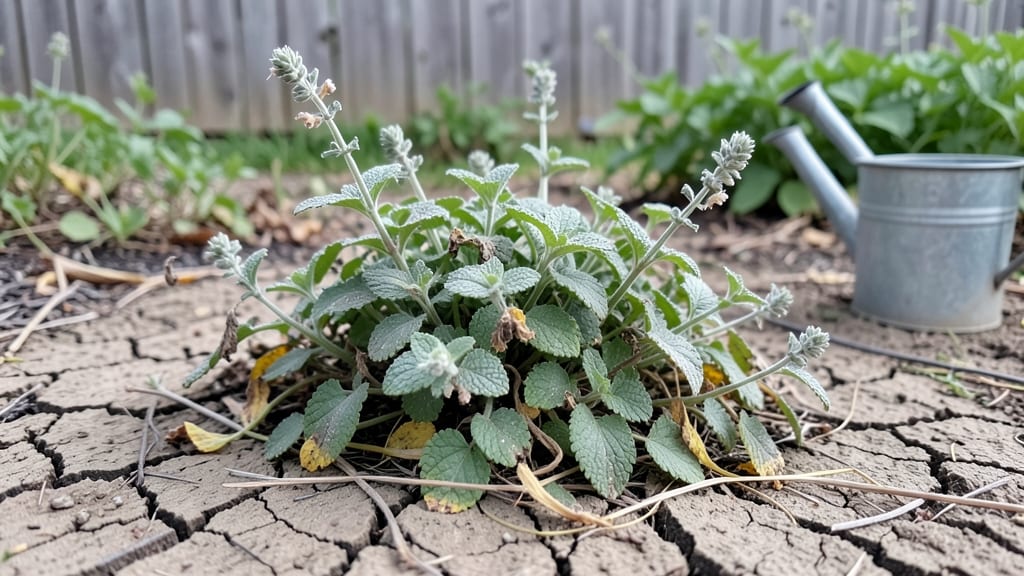
This underwatered mint plant is screaming for water—literally: crispy edges, wilting stems, and leaves that look like they’ve been in a desert for weeks? That’s underwatered mint, and the good news is you can revive it fast with the right care.
I’ve nursed back more than my share of thirsty mint plants, and the secret isn’t complicated: it’s about adjusting your watering game and giving those roots the moisture they crave.
Mint thrives when the soil stays consistently damp, not soggy. Most gardeners underestimate how quickly mint drinks up water—especially in pots, where roots dry out faster. Start by sticking your finger an inch into the soil: if it feels dry, it’s time to water.
For potted mint, aim for 1-2 times a week in summer, but check daily if your plant looks stressed. Overwatering is just as bad, so make sure your container has drainage holes to avoid root rot.
Within 24-48 hours of proper watering, you’ll see those limp leaves perk up and new growth pushing through. Trim back any crispy edges to encourage fresh foliage, and if the roots look mushy or black, it’s time to repot into fresh, well-draining soil.
The key is balance: mint wants to drink, but it won’t forgive neglect or drowning.
Prevent future drama by placing your mint in a spot with morning sun and afternoon shade—it keeps the soil from drying out too fast. And if your plant’s outgrown its pot, repotting every 1-2 years keeps roots healthy.
Trust me, once you master mint’s watering quirks, you’ll have lush, fragrant stems all season long.
Root Causes Of Dry Mint
Underwatered mint isn’t just about forgetting to water—it’s often a mix of environmental, soil, and human factors that leave its roots thirsty. Let’s dive into the science behind why your mint plant might be crying out for hydration.
Mint thrives in consistently moist soil—not soggy, not bone-dry, but like a well-wrung sponge. Here’s why skipping watering sessions backfires:
- Evaporative Demand: Mint leaves have high transpiration rates (they release water vapor fast). In hot or windy conditions, soil moisture depletes 2-3x faster than in cooler, still air. - Root Zone Stress: Mint roots grow shallow (1-2 inches deep).
If the topsoil dries out, roots can’t reach deeper water reserves, leading to wilting within 24-48 hours of neglect. - Human Error: Most gardeners water mint once a week—but this is insufficient for most climates.
A quick finger test (insert your finger 1 inch deep) should feel damp, not dry.
💡 Pro Tip: Use a moisture meter for accuracy, or group mint with other high-water plants (like basil or parsley) to create a micro-climate that retains humidity.
Mint hates compacted or sandy soil—both extremes strangle its roots. Here’s how texture and drainage play a role:
- Sandy Soil = Fast Drainage: Water runs through instead of staying near roots.
Mint needs clay-loam soil (holds moisture but drains excess). - Clay Soil = Poor Aeration: Roots suffocate if water pools, leading to rot—but if it’s too dense, water can’t penetrate, causing drought stress. - Lack of Organic Matter: Soil without compost or peat moss dries out quicker and holds less water.
Aim for 30-50% organic content in mint pots.
🔥 Fix It: Amend soil with perlite + coconut coir (for sandy soil) or vermiculite + peat (for clay). For containers, use a well-draining potting mix with 20% compost.
Heat, wind, and sunlight can double your mint’s water needs. Here’s how:
| Factor | Effect on Mint | Solution |
|---|---|---|
| High Heat | Soil dries 30-50% faster in 90°F+ temps | Water early morning (less evaporation) |
| Strong Wind | Increases transpiration by 25-40% | Use windbreaks (like a trellis) or grow in sheltered spots |
| Low Humidity | Leaves lose moisture 2x as fast | Mist leaves daily or use a humidifier tray |
| Full Sun | Needs 1-2x more water than shade-grown mint | Provide partial shade (4-6 hrs sun max) |
✨ Bonus: Mulch with straw or wood chips to lock in moisture and reduce evaporation by 30%.
Potted mint dries out faster than in-ground plants because:
- Limited Root Space: Small pots = fewer roots = less water storage.
- No Ground Insulation: Soil in containers heats up 5-10°F hotter, speeding up evaporation.
- Drainage Holes = Double-Edged Sword: While they prevent rot, they also let water escape quicker.
👨🍳 Action Step: Upgrade to a larger pot (12+ inches deep) with self-watering features or use terracotta (absorbs moisture better than plastic).
Trimming mint stimulates new growth, but if you prune heavily without increasing water:
- More leaves = more thirst. Each new shoot demands extra hydration.
- Root-to-leaf ratio shifts. If roots can’t keep up, the plant wilts faster.
🎯 Balance It: Prune after watering and reduce trimming by 30% during dry spells.
Revive Your Mint Quickly
Now that you know the signs and causes of an underwatered mint plant, let’s get it back to its vibrant, fragrant self! Mint is a hardy herb, but it needs consistent care to bounce back—especially when it’s been neglected.
Below are targeted fixes based on the most common issues, along with prevention tips to keep your mint thriving long-term.
Problem: Shallow watering or infrequent soaking leaves roots dry and stressed. Solution:
- Step 1: Check soil moisture 👨🍳 – Stick your finger 1–2 inches into the soil. If it’s bone-dry, it’s time to water.
- Step 2: Soak thoroughly 💦 – Water until the soil is damp all the way through the pot (bottom drainage holes should release excess water). Mint loves moisture but hates soggy roots—aim for 1–1.5 inches of water per week (adjust for climate).
- Step 3: Drain excess water ⏰ – After 10–15 minutes, empty the saucer to prevent root rot.
Pro Tip: 💡 Use a spray bottle to mist leaves if the air is very dry—mint appreciates humidity!
Problem: Skipping watering days or relying on sporadic showers. Solution:
- Morning watering is best ☀️ – Water early to reduce evaporation and fungal risks.
- Stick to a routine ⏰ – If your mint is in a pot, water every 2–3 days in hot weather; every 5–7 days in cooler months.
- Group plants together 🌿 – Place mint near other herbs to create a microclimate that retains moisture.
Prevention Tip: ✨ Set a phone reminder if you’re prone to forgetting—mint wilts fast but recovers quickly with consistent care!
Problem: Compacted or poor-quality soil that doesn’t hold moisture well. Solution:
- Repot if needed 🔄 – If the soil is hard or lacks organic matter, transfer your mint to a pot with well-draining potting mix (add perlite or sand for aeration).
- Mulch the surface 🍃 – Sprinkle a thin layer of organic mulch (like shredded leaves or straw) to lock in moisture and cool roots.
- Avoid over-potting 🏺 – Mint spreads aggressively; use a container just slightly larger than its root ball to prevent soil from drying out too fast.
Pro Tip: 🌡️ Test your soil—press it gently; if it crumbles easily, it’s too dry. If it stays clumped, it’s waterlogged.
Problem: Scorching sun + dry air = accelerated wilting. Solution:
- Move to partial shade 🌳 – If outdoors, place mint in morning sun + afternoon shade (especially in summer).
- Use a shade cloth 🛡️ – 30–50% coverage can prevent leaf scorch while still allowing light.
- Group with leafy friends 🌿 – Tall plants like basil or parsley can act as natural shade for mint.
Prevention Tip: 🎯 Rotate pots weekly to ensure even light exposure—mint grows toward the sun, which can lead to leggy stems.
Sometimes wilting isn’t just about water!
Check for: - Pests 🐜 – Inspect leaves for aphids or spider mites (spray with neem oil if found). - Over-fertilizing 🌱 – Too much salt or chemicals can burn roots; flush soil with water if you suspect this. - Root-bound stress 🏺 – If roots circle the pot, trim them gently and repot with fresh soil.
Final Thought: Mint is forgiving—with consistent watering, proper soil, and a little shade, it’ll perk up in 3–7 days. Keep an eye on it, and soon you’ll be harvesting fresh leaves for your favorite drinks or dishes! 🍹🍽️
Frequently asked questions
How do I know if my mint plant is truly underwatered?
Check for these 3 key signs: leaves curling at the edges, a dull grayish-green color, and stems that feel limp when touched. The soil should be damp 1-2 inches deep—if it's bone-dry, that's your first clue. Pro tip: Gently tug on a leaf—if it pulls away easily, the roots are struggling.
Can I revive a mint plant that's been underwatered for weeks?
Yes! Start by giving it a deep soak, then trim any crispy leaves. Within 3-5 days, you should see new growth. For severe cases, repot into fresh, moisture-retentive soil and keep it in partial shade while it recovers. Just avoid overwatering—mint hates soggy roots just as much as dry ones.
Why does my mint plant wilt even after watering?
If wilting persists, check these 3 common culprits: poor drainage (water pooling in the saucer), compacted soil blocking roots, or heat stress. Try watering at sunrise instead of midday, and ensure your pot has drainage holes. If the soil feels like concrete, it's time to repot with lighter, airy mix.
How often should I water mint in different seasons?
Mint drinks most in summer—water every 2-3 days when temps exceed 80°F. In spring/fall, every 5-7 days works, and winter needs just weekly watering. Always check soil moisture first—stick your finger in! A moisture meter helps if you're unsure.
What's the best soil mix for preventing underwatering?
Use a blend of 50% potting soil, 30% compost, and 20% perlite. This combo holds moisture while allowing airflow. For containers, add a 1-inch layer of mulch (like straw) to lock in humidity. Avoid pure garden soil—it compacts and dries out too fast.