Watering
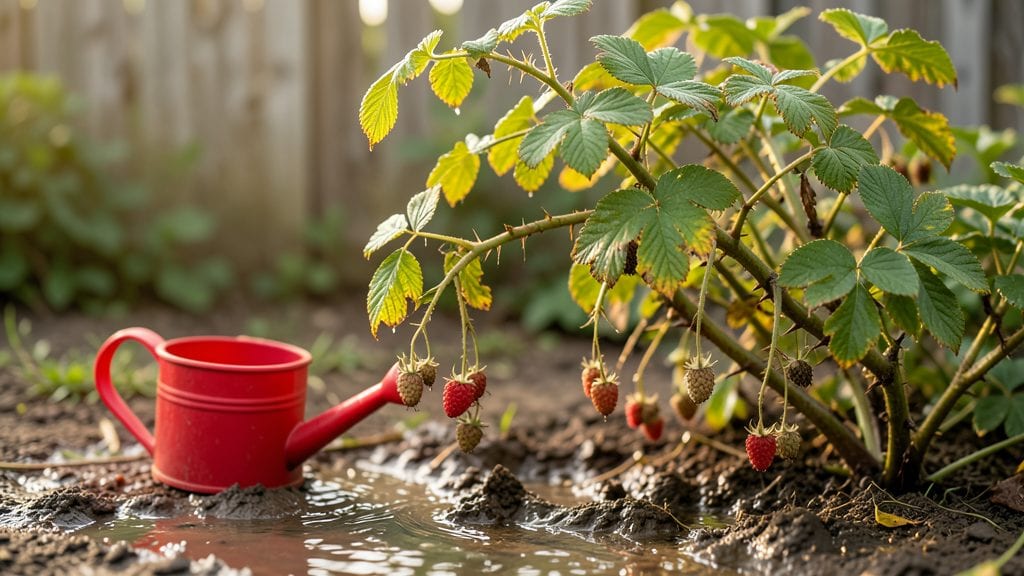
An overwatered raspberry plant with yellow, drooping leaves is a heartbreaking sight—usually not from thirst, but from drowning. 🌱 I’ve seen this happen more than I’d like, especially after heavy rains or when well-meaning gardeners assume "more water" is always better. is better."
The good news? You can nurse those roots back to health with just three focused steps, no fancy tools required.
Most overwatering problems start with soggy soil that suffocates roots, cutting off oxygen and inviting rot. My first clue is always the color—yellowing leaves with a mushy stem when you gently squeeze it. Raspberries actually prefer consistent moisture but hate sitting in wet shoes.
The fix begins with cutting back water immediately and improving drainage, whether that means amending the soil or adjusting your watering schedule to mornings only.
By the time you’ve trimmed the damaged canes, added perlite or sand to the soil, and mulched to regulate moisture, you’ll see new green shoots within 2-3 weeks. The plant won’t just survive—it’ll bounce back stronger, with thicker canes and more berries next season.
The key is patience; roots need time to recover, but they will if you give them air and space to breathe.
Once you’ve got the watering routine down, keep a finger in the soil as your new habit. If it’s damp more than an inch down, hold off. And here’s the secret weapon: a 3-inch layer of straw mulch keeps moisture even while preventing compaction.
Your raspberries will thank you with berries that taste like summer, not soggy disappointment.
Root Causes Of Overwatering
When your raspberry plants start looking sad—yellowing leaves, limp canes, or even moldy soil—it’s often a sign they’re getting too much love in the wrong way. Overwatering isn’t just about dumping extra water; it’s a complex issue tied to soil science, plant biology, and even environmental factors.
Let’s break down why this happens so you can fix it fast.
Raspberries thrive in well-draining soil, but if your garden beds or containers hold water like a sponge, roots suffocate. Here’s why:
- Compacted soil: Heavy clay or tightly packed dirt blocks oxygen flow, trapping water around roots. Think of it like a soggy sock—roots can’t breathe!
- Lack of organic matter: Soil with minimal compost or peat moss retains moisture longer, slowing drainage. Aim for 30-50% organic content to improve aeration.
- Improper container setup: Pots without drainage holes or those lined with plastic act as water traps. Even "self-watering" containers can overdo it if not monitored.
Actionable fix: Test your soil’s drainage by digging a 6-inch hole, filling it with water, and timing how long it takes to drain. If it’s slower than 4 hours, amend with perlite, sand, or coconut coir.
Raspberries hate moisture swings. Skipping water one day and drowning them the next confuses their root systems, leading to stress and rot.
- Overzealous watering: Using a hose on high pressure or watering daily (especially in humid climates) keeps roots soggy. Raspberries need 1–1.5 inches of water per week, not daily sips!
- Ignoring weather: Rainy seasons paired with automatic sprinklers = double the moisture. Check soil moisture 2 inches deep before watering.
- Wrong time of day: Watering late afternoon or evening leaves foliage damp overnight, inviting fungal diseases like Botrytis (raspberry gray mold).
Actionable fix: Water deeply early in the morning (6–9 AM) and use a soaker hose or drip irrigation to target roots, not leaves.
Raspberry roots need oxygen-rich zones to absorb nutrients. When water crowds out air, roots weaken and rot sets in.
- Shallow root systems: Young raspberry plants or those in containers have limited root depth. Overwatering here leads to anaerobic conditions (no oxygen), causing roots to turn black and mushy.
- Mulch overload: Too much mulch (especially thick layers >4 inches) traps moisture against the stem, rotting the crown. Think of it like wrapping a plant in a wet blanket!
- Fungal infections: Excess moisture encourages Phytophthora and Pythium, which attack roots. Infected roots appear brown, slimy, and smell foul.
Actionable fix: Fluff mulch to 2–3 inches thick and keep it 3 inches away from plant stems**. For containers, ensure roots fill 80% of the pot before watering.
Not all overwatering is your fault—humidity, poor airflow, and even your location play a role.
- High humidity: Areas with 60%+ humidity (like coastal regions or greenhouses) slow evaporation, keeping soil wet longer. Raspberries in these zones need less frequent watering.
- Windbreaks and shade: Dense foliage or walls blocking wind reduce airflow, trapping moisture. Prune nearby plants to improve circulation.
- Cold soil temperatures: Water drains slower in below-50°F soil. In spring/fall, reduce watering until the ground warms.
Actionable fix: Move potted raspberries to partially sunny spots (6+ hours of light) and use osmocote fertilizer to boost root resilience in humid climates.
Revive Your Plant in 3 Steps
Overwatering can feel like a death sentence for raspberry plants, but with the right approach, you can nurse them back to health—often faster than you’d expect! The key is to act quickly, adjust your watering habits, and give your plant the space it needs to recover.
Below are practical, step-by-step solutions tailored to the most common causes of overwatering, plus tips to keep your raspberries thriving long-term.
If your raspberry plant’s soil feels soggy, mushy, or smells foul, it’s drowning—and every second counts. Stop watering completely and take these actions:
🔥 Fix Compacted or Waterlogged Soil
- 👨🍳 Dig a trench around the plant (about 6–12 inches deep) to loosen the soil and encourage drainage.
- 💡 Pro Tip: If the soil is clay-heavy, mix in coarse sand, perlite, or compost to improve aeration.
Aim for a 50/50 blend of existing soil and amendments. - ⏰ Wait 2–3 days before watering again—only resume if the top 2 inches of soil feel dry.
🌡️ Check for Root Rot (The Silent Killer)
- 🔪 Gently lift the plant (if possible) and inspect the roots. Healthy roots are firm and white; rotted roots are brown, mushy, or smell like decay.
- 💡 Pro Tip: If rot is severe, trim the affected roots with sterilized pruners and replant in fresh, well-draining soil.
- ✨ Prevention: Avoid watering on a schedule—stick your finger in the soil first!
Water only when the top 1–2 inches are dry.
Raspberry plants hate "wet feet," but they also need consistent moisture—balance is everything. Follow these rules to avoid repeating the mistake:
🍳 Water Deeply, Less Often
- 💧 Use the "soak-and-dry" method: Water slowly and deeply (1–2 inches per week, depending on climate) until it drains from the bottom of the pot or soil profile.
- 🌧️ Avoid shallow watering (like sprinkling), which keeps the surface wet and encourages rot.
- 💡 Pro Tip: Morning watering is best—it gives foliage time to dry before nighttime humidity sets in.
🌡️ Upgrade Your Containers (If Potted)
- ⚠️ Warning: Plastic or glazed pots trap moisture. Switch to terracotta, fabric pots, or containers with drainage holes.
- 🔥 Fix: If repotting isn’t an option, add a layer of pebbles at the bottom for drainage.
- ✨ Prevention: Never let plants sit in saucers of standing water—empty them after watering.
Once the soil is draining properly, give your raspberry plant extra TLC to bounce back stronger:
💪 Prune Affected Foliage
- ✂️ Trim yellow or wilted leaves to redirect energy to healthy growth.
Use clean, sharp pruners to avoid spreading disease. - 💡 Pro Tip: If more than 50% of the plant is damaged, consider hard pruning (cutting back to 6–12 inches) to stimulate new growth.
🍎 Feed with the Right Nutrients
- 📊 Wait 1–2 weeks before fertilizing—overwatered plants need time to recover first.
- 💪 Use a balanced, low-nitrogen fertilizer (like 5-5-5) to rebuild strength. Avoid high-nitrogen (e.g., lawn fertilizer), which encourages leafy (but weak) growth.
- ✨ Prevention: Mulch with straw or wood chips (2–3 inches deep) to retain moisture without suffocating roots.
🌡️ Monitor for Stress Signs
- 🚨 Watch for: Leaf curl, black spots, or stunted growth—these could signal fungal issues (like botrytis) from prolonged dampness.
- 💡 Pro Tip: Improve airflow by spacing plants 2–3 feet apart and pruning nearby vegetation.
The best "fix" is preventing overwatering in the first place. Here’s how to stay ahead:
| Situation | Fix | Prevention Tip |
|---|---|---|
| Clay soil | Amend with compost or sand. | Test soil drainage—if water pools, fix it! |
| No drainage holes | Repot or add pebbles at the bottom. | Always use pots with drainage. |
| Frequent rain | Move pots to shelter or elevate beds. | Plant in raised beds for better flow. |
| New to raspberries | Water deeply every 3–4 days (adjust for climate). | Use a moisture meter for accuracy. |
💡 Final Thought: Overwatered raspberries can recover surprisingly fast—sometimes in as little as 1–2 weeks—if you act quickly. The key is draining excess water, adjusting habits, and giving your plant room to breathe. Soon, you’ll be harvesting juicy, plump berries** instead of wilting leaves! 🍓✨
Frequently asked questions about saving overwatered raspberry plants
How can I tell if my raspberry plant is overwatered vs. underwatered?
Check the soil first—overwatered raspberries have soggy, mushy soil that smells foul, while underwatered plants have dry, cracked soil 2 inches deep. Look at the leaves: yellowing with mushy stems means overwatering; crispy edges and wilting mean thirst. The key difference is root health—overwatered roots turn brown and slimy.
Will my raspberry plant recover if I stop watering immediately?
Yes, but recovery depends on how severe the damage is. Stop watering completely for 2-3 days to let soil dry, then resume only when the top 1-2 inches feel dry. If roots are rotting (black and mushy), trim the bad sections and replant in fresh, well-draining soil. Most plants show signs of recovery within 1-2 weeks with proper care.
Can I save a raspberry plant with root rot from overwatering?
but act fast! Gently remove the plant, trim all mushy, blackened roots with sterilized pruners, and replant in a mix of 50% fresh potting soil and 50% perlite for drainage. Add a balanced fertilizer (5-5-5) after 2 weeks to rebuild strength. Avoid watering for 3 days post-replanting to prevent further rot.
What’s the best way to adjust my watering schedule for raspberries?
Water deeply but infrequently—aim for 1-1.5 inches per week, adjusting for rain. Use the finger test: stick your finger 2 inches deep; if dry, water slowly until it drains from the bottom. Always water in the morning to prevent evening dampness that invites fungal diseases like botrytis.
Will mulch help or hurt an overwatered raspberry plant?
Mulch can help if used correctly—keep it 2-3 inches thick and 3 inches away from the stem to prevent crown rot. Avoid thick layers (>4 inches) that trap moisture. For recovery, focus first on improving drainage before adding mulch to regulate soil temperature and moisture long-term.