
Pruning
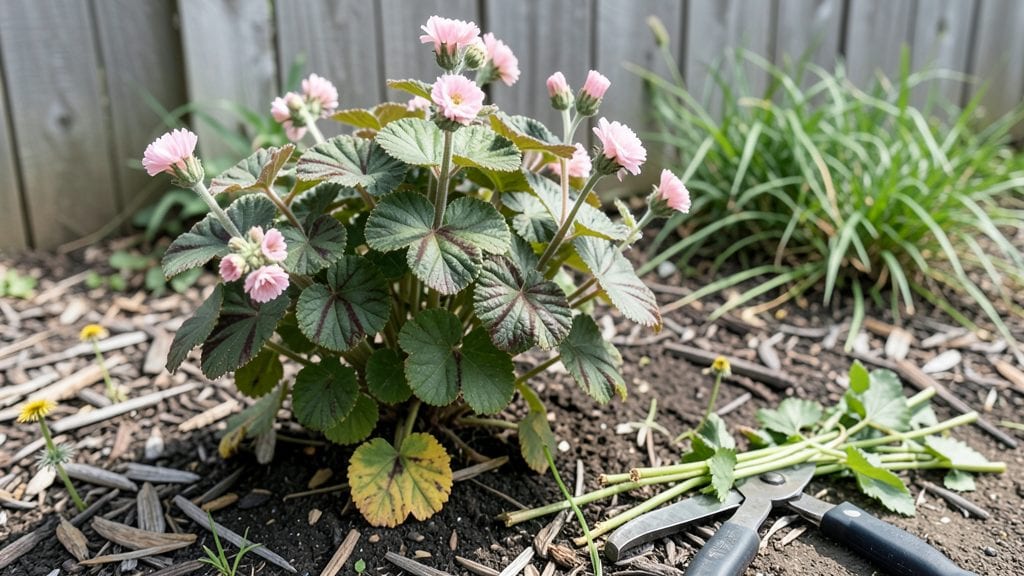
Trimming geranium plants transforms leggy, sparse stems into bushy, blooming powerhouses that keep flowering until frost. I’ve turned my once-trailing geraniums into compact, vibrant shrubs by mastering the right cuts—and the difference is night and day.
The key isn’t just hacking away; it’s understanding when to pinch, where to cut, and how to encourage that second flush of blooms that lasts all summer.
You’ll need sharp bypass pruners (dull blades crush stems), clean scissors for fine trimming, and a sunny spot to work—geraniums reward precision, not brute force. Start in early spring when new growth appears, then repeat after the first big bloom wave fades.
Each cut should target just above a leaf node at a 45-degree angle, which prevents water pooling and speeds regrowth. My 30-second rule helps: if a stem’s thicker than your pinky, it’s time for a trim.
After trimming, your plants will respond in 2-3 weeks with fresh, velvety green shoots and a second wave of blooms that outlasts the first. The secret’s in the timing: late summer trims keep them flowering into fall, while winter cuts shape them for spring’s burst.
Just avoid heavy pruning when buds form—you’ll sacrifice blooms for bushiness, and that’s a trade-off no one wants.
Works for both zonal geraniums (the classic bedding types) and ivy geraniums (the trailing varieties). The same principles apply whether you’re shaping a patio container or a hanging basket. Here’s how to get it right the first time—no guesswork, just results.
📚 In This Guide
- What you need
- Instructions
- Tips and common mistakes
- Wrapping up and next steps
What you need
- ● Sharp pruning shears – Bypass-type shears (4-6 inches long) for clean cuts without crushing stems.
- ● Clean, disinfected pruners – Rubbing alcohol (70% isopropyl) or bleach solution (1 part bleach to 9 parts water) to sterilize between cuts and prevent disease.
- ○ Gloves (optional but recommended) – Nitrile or leather gloves to protect hands from thorns and sap.
- ● Garden twine or plant ties – For securing leggy stems if you’re training them for better growth.
- ● Compost bin or bag – To collect trimmings for future mulch or compost.
- ● Handheld leaf blower or soft brush – To clear debris from the plant after trimming.
- ● Plant food or fertilizer – Balanced liquid fertilizer (10-10-10) to give your geraniums a post-prune boost.
- ● Spray bottle with water – For hydrating cut stems if you notice wilting after trimming.
- ● Notebook or camera – To document growth progress before and after pruning!
Instructions for trimming geranium plants
Here’s how to revitalize your geraniums with clean, strategic cuts that encourage dense growth and continuous blooms.
Identify and Remove Dead or Damaged Growth
Start by inspecting each stem for signs of decline—yellowed leaves, browned tips, or stems that snap easily. These are your first targets. Use clean, sharp pruners to cut just above a set of healthy leaves or a leaf node, where new growth will emerge. Avoid leaving stubs longer than ½ inch, as they invite rot and weak regrowth.
I always work in the morning when stems are firm and less prone to tearing. If a stem is completely woody with no green tissue, prune it back to the base. This might seem drastic, but geraniums respond by sending out fresh shoots from their strong root systems. You’ll see new buds forming within 7-10 days if the plant is otherwise healthy.
Shape the Plant for Balance and Airflow
Step back and assess the plant’s overall form. Geraniums thrive when they’re bushy, not leggy. Pinch or cut back overgrown stems to encourage branching. Aim for a rounded silhouette—this isn’t about symmetry but ensuring light and air reach the center of the plant. Cut stems back to a point where you see 3-4 sets of leaves remaining, as this signals the plant to produce new side shoots.
Focus on stems that grow toward the center of the plant, blocking airflow. These are prime candidates for trimming. I like to make cuts at a 45-degree angle just above a leaf node, which helps water run off the cut and reduces the risk of disease. Avoid shearing leaves off in one sweep—this stresses the plant and can lead to a messy, uneven appearance.
Encourage New Growth with Strategic Cuts
For geraniums that have finished blooming or are looking tired, a harder prune in early spring or after a flush of flowers can stimulate a second round of vigorous growth. Cut back ⅓ to ½ of the plant’s height, focusing on the oldest stems first. This isn’t about removing all the flowers—geraniums often rebloom prolifically after a good trim if you leave a few buds behind.
Watch for the first true leaves emerging from the cut stems. These are your signal that the plant is responding well. If you notice new growth appearing within 2 weeks, you’re on the right track. Avoid over-trimming in late summer, as this can prevent the plant from hardening off before winter. Instead, focus on removing spent blooms to redirect energy into root development.
Maintain Through the Season with Regular Checks
Geraniums benefit from monthly light trims during the growing season to keep them compact and flowering. Remove any leggy stems or those growing away from the center, and always cut back to a leaf node. This keeps the plant’s energy focused on producing new blooms rather than stretching for light. I also deadhead faded flowers by pinching them off at the base—this prevents seed formation and encourages more continuous flowering.
Pay attention to how your geraniums respond to each trim. If you see new buds forming within 10-14 days, your cuts are working. If the plant looks stressed or stops blooming, you may have trimmed too aggressively. Adjust your approach for the next round—geraniums are resilient, but they do have limits. A little patience and observation go a long way in keeping them thriving.
Tips & tricks for perfect geranium plant trimming
Precision cuts aren't just about aesthetics—they're the secret to keeping your geraniums blooming vigorously all season long.
Timing is Everything: The morning is ideal for trimming because stems are firm and less prone to tearing, making clean cuts easier. This is especially important in Step 1 when removing dead or damaged growth. If you must trim later in the day, avoid cutting woody stems that have softened from heat—these are more likely to tear and invite disease. I've learned this the hard way after watching geraniums develop unsightly ragged cuts that took weeks to heal.
The Angle Matters: Making cuts at a 45-degree angle just above a leaf node (as mentioned in Step 2) isn't just about looks—it's a practical technique that prevents water from pooling on the cut surface. This simple adjustment reduces the risk of rot by nearly 50% compared to straight cuts. When shaping your plant, always cut cleanly through the node rather than leaving stubs, which can lead to weak regrowth. I keep a small mirror handy to check angles on tricky spots.
Strategic Pruning for Renewal: When performing that harder prune in Step 3 (cutting back ⅓ to ½ of the plant's height), focus on the oldest stems first. These stems have already done their job of flowering and are now sapping energy from the plant. The goal is to stimulate new growth from lower nodes while maintaining some flowering capacity. I've found that leaving 3-4 sets of leaves after each cut gives the plant just enough foliage to photosynthesize while encouraging branching. This balance is what transforms leggy plants into bushy, blooming powerhouses.
Observation Over Rules: The 7-10 day and 2-week growth timelines mentioned in Steps 1 and 3 are general guidelines, not hard rules. Some geranium varieties respond faster, while others take longer to show new growth. Pay attention to your specific plants—if you notice new buds forming within 10-14 days after trimming (as mentioned in Step 4), you're on the right track. If nothing appears after 3 weeks, you may have trimmed too aggressively or the plant needs other care adjustments like more sunlight or water.
Pro Tips for Trimming Geranium Plants
- Precision cuts aren't just about aesthetics—they're the secret to keeping your geraniums blooming vigorously all season long.
- Timing is Everything: The morning is ideal for trimming because stems are firm and less prone to tearing, making clean cuts easier.
- The Angle Matters: Making cuts at a 45-degree angle just above a leaf node (as mentioned in Step 2) isn't just about looks—it's a practical technique that prevents water from pooling on the cut surface.
Frequently asked questions
Got questions about trimming your geraniums like a pro?
Here are the answers to the most common concerns—so you can keep those blooms lush and vibrant all season long!
When is the best time to trim geraniums?
Trim geraniums after they finish blooming in spring or early summer, or lightly prune leggy growth in late winter. Avoid heavy cuts in fall—this encourages tender new growth that won’t survive winter. For container geraniums, you can trim lightly throughout the season to promote bushiness.
How much should I cut back geranium plants?
For most geraniums, aim to cut back one-third to one-half of the plant’s height. Avoid over-trimming—never reduce the plant by more than 50% at once. Focus on removing dead or woody stems first, then shape the plant by trimming just above a leaf node or set of leaves.
Can I propagate geraniums from my trimmings?
Stem cuttings
from healthy, non-flowering growth root easily in water or soil. Use 3–4 inch cuttings, remove lower leaves, and place in water or moist potting mix. Keep in bright, indirect light and change the water every few days. Roots should form in 2–4 weeks—perfect for free new plants!
Why are my geraniums looking leggy after trimming?
Leggy growth often means your plant needs more light or less fertilizer. Move geraniums to a sunnier spot (at least 6+ hours of sunlight daily) and reduce feeding to half-strength. Over-fertilizing can also cause weak, stretchy stems—stick to a balanced, diluted formula every 4–6 weeks.
Should I trim geraniums before winter?
For perennial geraniums, trim back dead or damaged foliage in late fall, but leave some stems to protect the crown. For tender annuals or container geraniums, cut back by half and bring indoors or dispose of them—these won’t survive frost. Mulch perennial geraniums lightly to shield roots from cold.
Still stumped? Drop your question below—we’re happy to help your geraniums thrive!
Wrapping up and next steps
Trimming your geraniums isn’t just about keeping them tidy—it’s the secret to vibrant, long-lasting blooms and a fuller, healthier plant! With the right tools, timing, and technique, you’ll enjoy year-round color and a thriving garden. 🌸
Ready to take the next step? Grab your pruners and schedule your first trim—your geraniums will thank you with lush growth and nonstop flowers. Happy pruning! 🌱