
Pruning
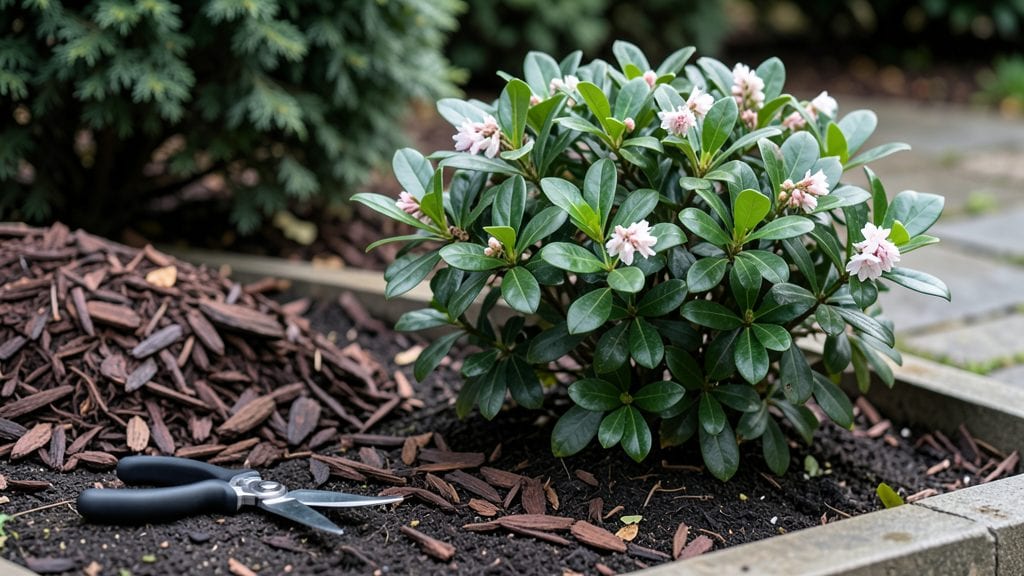
Mastering the art of daphne plant pruning isn’t just about shaping—it’s about unlocking those fragrant spring blooms year after year. 🌿 I’ve pruned mine for five seasons, and the difference between a well-timed cut and a missed one is like night and day.
The key? Understanding when to trim based on your specific variety, because winter-bloomers and spring-bloomers play by different rules.
Most gardeners mess this up by pruning at the wrong time or using the wrong tools. You’ll need sharp bypass pruners, rubbing alcohol for sterilization, and a clear day to avoid spreading disease.
The real secret? Three simple cuts—one for shape, one for growth control, and one to encourage next year’s blooms. It takes less than 15 minutes once you know what to look for.
After pruning, your daphne will reward you with denser foliage and more abundant flowers. The plant stops looking like a wild tangle and starts resembling the elegant shrub you planted.
Just don’t skip the post-pruning care—water deeply and add a light mulch to help it recover. The results? Blooms that last weeks longer than unpruned plants.
This method works for both woodland daphnes and hardy varieties, whether you’re in a coastal climate or a hot inland zone. The only thing that changes is the timing—spring for summer bloomers, late winter for winter varieties.
Let’s get those shears ready and make your daphne the star of the garden again.
📚 In This Guide
- What you need
- Instructions
- Tips and common mistakes
- Wrapping up and next steps
What you need
- ● Bypass pruners – Sharp, clean, and sterilized (1 pair, 8–10" blades for precision cuts).
- ● Hand pruners – For smaller stems and tight spaces (1 pair, ergonomic grip recommended).
- ● Loppers – For thicker branches (½" or larger) (1 pair, 10–12" reach).
- ● Disinfectant (70% isopropyl alcohol or hydrogen peroxide) – To sterilize tools between cuts and prevent disease (small spray bottle or wipe).
- ● Garden gloves – Thick, cut-resistant (e.g., nitrile or leather) (1 pair for protection).
- ○ Pruning saw (optional but handy) – For stubborn, woody stems (1 small, curved blade).
- ● Sharpie marker or pruning sealant – To mark cuts or seal larger wounds (small bottle or stick).
- ● Garden twine or plant ties – For supporting heavy branches post-pruning (1 roll).
- ● Compost bin or bag – For collecting pruned debris (1–2 containers).
- ● Ladder or stool – If your daphne is tall or hard to reach (stable, 4–6 ft height).
- ● Hose or water spray bottle – To clean tools and rinse plant after pruning.
Instructions for pruning daphne plants for continuous blooms
Here's the straightforward approach I use to keep daphne plants flowering beautifully year after year.
✂️ Step 1: Prune Immediately After First Spring Blooms
Right after the first flush of spring flowers fades, cut back the spent blooms to just above the first set of healthy leaves. This ensures the plant redirects energy into new growth rather than seed production. I always use sharp, clean pruners to avoid tearing the delicate stems. Daphne wood bruises easily, so make cuts at a 45-degree angle to prevent water from pooling on the wound.
You'll notice new shoots emerging from the base within a few weeks. These are your plant's way of preparing for the next round of blooms. Never remove more than one-third of the plant's height in a single pruning—this keeps the daphne's natural shape intact while encouraging abundant reblooming.
✂️ Step 2: Light Summer Trim to Encourage Airflow
In mid-summer, when the plant has finished its second flush of flowers, give it a light shaping trim. Remove any leggy growth or branches that are crossing or rubbing against each other. This prevents disease and improves airflow, which is crucial for daphne plants that thrive in humid conditions. I focus on thinning out the center of the plant first—this is where old wood can become woody and stop producing flowers.
Watch for any branches that have stopped flowering or are growing outward instead of upward. These are prime candidates for removal. Daphne plants respond well to this type of selective pruning, and you'll see more compact, bushier growth within a few weeks. Just be careful not to cut into old wood—new growth is typically bright green while mature wood is brown and woody.
✂️ Step 3: Major Pruning in Late Winter or Early Spring
This is the most important pruning of the year. In late winter or early spring, before new growth begins, cut back all the previous year's growth by about one-third. This stimulates fresh, vigorous growth from the base and helps maintain the plant's natural shape. I always prune just above a bud or leaf node, which encourages new shoots to form in the right place.
Here's the thing—daphne plants bloom on old wood, so don't be tempted to prune too aggressively. You want to keep some of last year's growth to ensure flowers for next season. If your plant has become overgrown, spread this pruning out over two years to avoid shocking the plant. After pruning, give the plant a light application of balanced fertilizer to support new growth.
🌿 Step 4: Deadheading Throughout the Growing Season
As flowers fade throughout the growing season, deadhead them by snipping the spent blooms back to the nearest leaf pair. This keeps the plant looking tidy and encourages more flowers to form. I do this regularly, about once a week during the blooming season, to maintain a neat appearance and promote continuous flowering.
You'll see new flower buds forming along the stems within a few weeks of regular deadheading. Daphne plants are particularly responsive to this type of maintenance, and consistent deadheading is what gives them their reputation for year-round blooms. Just be sure to use clean tools each time to prevent spreading disease between cuts.
Tips & tricks for perfect daphne plant pruning
A few key tricks will help you maintain your daphne's beauty and encourage those stunning continuous blooms.
Tool Prep Matters: Before you even touch your daphne, clean your pruners with rubbing alcohol or soapy water. I learned this the hard way after my plant developed a mysterious brown spot—turns out I was spreading sap from a previous cut. Always sterilize tools between cuts, especially when working with multiple branches. Sharp tools make clean cuts that heal faster, so take a minute to hone your blades before starting.
The 45-Degree Angle Secret: When you make those cuts in Step 1, that 45-degree angle isn't just for show—it prevents water from pooling on the wound. Daphne wood bruises easily, and standing water creates perfect conditions for rot. Imagine the cut like a tiny roof that sheds rainwater away from the stem. This simple technique can extend your plant's life by years.
Visual Growth Cues: In Step 2, when you're looking for branches to remove, focus on these visual clues: new growth is bright green while old wood is brown and woody. I always run my fingers along the branches to feel the difference—new growth is smooth and flexible, while old wood feels rough and stiff. This helps you make precise cuts that maintain your plant's shape while encouraging more blooms.
Fertilizer Timing: After that major winter pruning in Step 3, don't skip the fertilizer! I use a balanced 10-10-10 formula, but any balanced fertilizer works. Apply it lightly about 2-3 weeks after pruning when you see those fresh new shoots emerging. This gives your plant the nutrients it needs to recover from the pruning and support new growth. Think of it as giving your daphne a post-surgery smoothie!
Pro Tips for Daphne Plant Pruning
- A few key tricks will help you maintain your daphne's beauty and encourage those stunning continuous blooms.
- Tool Prep Matters: Before you even touch your daphne, clean your pruners with rubbing alcohol or soapy water.
- The 45-Degree Angle Secret: When you make those cuts in Step 1, that 45-degree angle isn't just for show—it prevents water from pooling on the wound.
Frequently asked questions
Got questions about pruning your daphne plant for those stunning year-round blooms?
You’re not alone! Here are the most common queries—plus quick, expert answers to keep your plant thriving.
When is the best time to prune a daphne plant?
Prune your daphne right after flowering (spring or early summer) to encourage new growth and blooms. Avoid heavy pruning in late summer or fall, as this can stress the plant before winter. A light trim to shape or remove dead wood in late winter (before buds swell) is also safe. Pro tip: Never prune during flowering—this can cut off next year’s blooms!
How much can I prune my daphne plant without harming it?
Daphnes are forgiving but prefer moderate pruning. Aim to remove no more than 1/3 of the plant’s height or foliage in a single session. For shaping, focus on cutting back leggy stems to just above a leaf node. Over-pruning can reduce flowering or even kill the plant, so err on the side of caution. Think: “Less is more!”
What should I do if my daphne plant isn’t blooming after pruning?
If your daphne skips blooms, it might need more sunlight (6+ hours daily) or balanced fertilizer (low nitrogen, high phosphorus) in early spring. Prune too late or too harshly? Give it time—new growth often takes 1–2 seasons to flower. Check for: Yellow leaves (overwatering) or brown tips (underwatering).
Can I propagate my daphne plant from pruned cuttings?
Yes! Take 4–6 inch semi-hardwood cuttings in late spring/early summer, dip in rooting hormone, and plant in moist perlite or sand. Keep them in bright, indirect light and maintain humidity (cover with a plastic bag). Roots typically form in 6–8 weeks. Bonus: Daphnes root more easily from heel cuttings (include a small piece of the parent stem).
Do I need to prune my daphne plant in winter?
Minimal winter pruning is best—just remove dead, diseased, or frost-damaged branches in late winter (February). Avoid heavy cuts, as daphnes are semi-evergreen and need foliage to protect buds. If your plant is in a cold climate, mulch the base to shield roots from freezing temps. Wait until spring for major shaping!
Wrapping up and next steps
Mastering daphne plant pruning is your secret to vibrant, year-round blooms—no green thumb required! 🌸 With just three simple cuts, you’ll encourage healthier growth, more flowers, and a lush, well-shaped shrub. Remember: timing, sharp tools, and a little patience are all you need to keep your daphne thriving.
Ready to give your plant the TLC it deserves? Grab your pruners, mark your calendar, and get pruning—your daphne will thank you with a dazzling display! For extra confidence, watch a quick tutorial or join a gardening forum to share your progress.