
Diseases
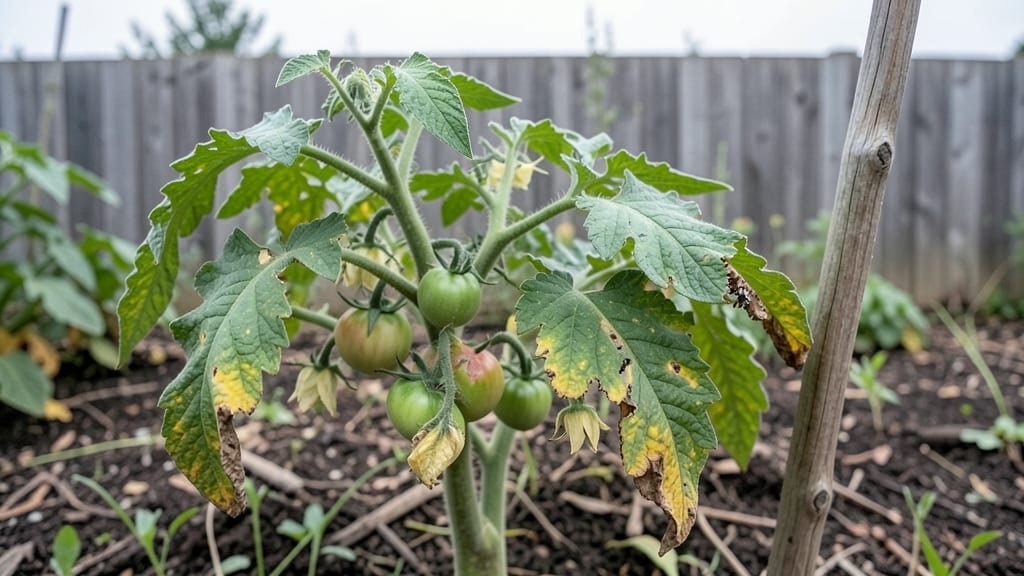
When your tomato plants suddenly wilt and refuse to bounce back, you're staring down one of gardening's most frustrating fungal foes. 🌱 I've lost entire plants to wilting diseases, but I learned the fast fixes that can save your harvest—if you act within 24-48 hours.
The key is identifying whether it's Fusarium, Verticillium, bacterial wilt, or just environmental stress, because each needs a different approach.
Most wilting starts with yellowing leaves or stems that feel hollow when cut—classic signs of fungal invasion. The good news? Organic options like copper fungicide, neem oil, and removing infected plants work fast when combined with proper spacing and watering at the base (never overhead).
I've saved plants even when they looked hopeless by cutting back infected foliage and boosting soil health with compost.
What you'll achieve is a garden where wilting becomes a rare setback, not a season-ending disaster. Your tomatoes will stay strong, produce fruit, and you'll gain the confidence to spot early warning signs before they spiral.
The secret weapon? Regular inspections and acting the moment you see wilting that doesn't recover by evening.
This works for backyard gardens, raised beds, and even container setups—just adjust your watering routine and plant spacing. Let's get those plants back in fighting shape before the disease spreads further.
Root Causes Of Tomato Wilting
Tomato plants wilt when their ability to transport water and nutrients is disrupted—often due to hidden threats lurking beneath the soil or within their tissues. Understanding the why behind wilting is the first step to saving your crop.
Below, we break down the most common culprits, from soil-borne invaders to environmental stressors, with actionable insights to tackle each.
Fungi are the #1 cause of tomato wilt, often spreading undetected until it’s too late. These pathogens clog the plant’s xylem vessels (the plant’s water highways), starving leaves of moisture and causing sudden collapse.
🍄 Verticillium & Fusarium Wilt: The Devastating Duo
- How it happens: Soil-borne fungi (Verticillium dahliae and Fusarium oxysporum) enter roots through microscopic wounds, then multiply inside the plant’s vascular system.
They secrete toxins that block water flow, leading to yellowing leaves, stunted growth, and irreversible wilting—even in healthy-looking plants. - Red flags: - Wilting starts on one side of the plant and progresses unevenly. - Vascular discoloration (brown streaks in stems) when cut open. - Symptoms worsen in heat (fungi thrive at 77–86°F). - Why it’s tricky: These fungi survive in soil for years, even after infected plants are removed.
They also jump to other crops like peppers and eggplants.
🍅 Early Blight & Late Blight: The Leafy Menaces
- How it happens: While primarily foliar diseases, severe infections can stress roots and reduce water uptake. Alternaria solani (early blight) and Phytophthora infestans (late blight) weaken the plant’s defenses, making it susceptible to secondary fungal invaders.
- Red flags:
- Brown, concentric "target" spots on leaves (early blight).
- Water-soaked, greasy lesions that spread rapidly (late blight).
- Wilting after heavy rain or overhead watering.
Tomatoes are thirsty but hate soggy feet. Water issues—whether drought or overwatering—disrupt root function and invite fungal hitchhikers.
🔥 Drought Stress: Roots Can’t Keep Up
- How it happens: When soil dries out, roots shrink and pull away from soil particles, reducing water absorption.
The plant wilts temporarily (often recovering at night) but becomes chronically stressed, making it vulnerable to fungal infections. - Red flags: - Wilting reverses after watering (unlike fungal wilt). - Crispy, dry edges on leaves. - Soil pulls away from pot edges (if container-grown).
🌊 Overwatering: The Suffocation Effect
- How it happens: Excess water drowns roots, cutting off oxygen and triggering root rot (Pythium or Phytophthora).
Rotten roots can’t absorb water, causing wilting even in wet soil. - Red flags: - Mushy, black roots when dug up. - Wilting despite soggy soil. - Foul smell from the base of the plant.
Pests like nematodes and root-knot worms feed on roots, creating entry points for fungi and disrupting water transport.
🪰 Root-Knot Nematodes: The Tiny Drill Bits
- How it happens: These microscopic worms inject toxins into roots, causing galls (knobby growths) that block water flow.
Infested plants wilt even when soil is moist. - Red flags: - Swollen, lumpy roots. - Stunted growth despite proper care. - Wilting worsens in heat (nematodes thrive at 77–95°F).
🐜 Cutworms & Slugs: The Nighttime Chewers
- How it happens: These pests sever roots or stems at the base, causing sudden wilting (often overnight). Unlike fungal wilt, damage is visible above ground (chewed stems or missing chunks).
Tomatoes are tropical plants at heart—they wilt when pushed outside their comfort zone.
☀️ Heat Stress: Wilting In The Midday Sun
- How it happens: Temperatures above 90°F cause transpiration (water loss) to outpace absorption, leading to temporary wilting.
Prolonged stress weakens roots, making plants prone to sunscald and fungal infections. - Red flags: - Wilting peaks at noon, then recovers in the evening. - Leaf scorch (brown, crispy edges).
🌬️ Poor Air Circulation: The Greenhouse Effect
- How it happens: Crowded plants or low airflow (common in greenhouses or dense plantings) create humid, stagnant conditions, perfect for fungal spores to thrive. Wilting often accompanies leaf spots or powdery mildew.
❄️ Cold Damage: Frozen Roots
- How it happens: Temperatures below 50°F slow root activity, while freezing temps can kill root cells, halting water uptake. Wilting is permanent if roots are damaged.
Soil chemistry plays a huge role in root health. Imbalances can burn roots or starve them of essential nutrients.
🧂 Salt Build-Up: The Osmotic Shock
- How it happens: Over-fertilizing (especially with synthetic salts) or poor drainage causes salt accumulation, which draws water out of roots via osmosis.
Roots wilt and die from dehydration. - Red flags: - White crust on soil surface. - Wilting despite moist soil. - Leaf tip burn (brown, crispy edges).
🪨 Nutrient Deficiencies: Starving Roots
- How it happens: Lack of potassium (K) or phosphorus (P) weakens root structure, while excess nitrogen (N) promotes leafy growth at the expense of roots, making plants prone to wilting.
- Red flags:
- Yellowing lower leaves (N deficiency).
- Purple stems (P deficiency).
- Weak, sparse roots when dug up.
Sometimes, wilting is self-inflicted—or caused by well-meaning (but harmful) gardening practices.
🔪 Root Disturbance: The "Ouch" Factor
- How it happens: Over-pruning roots (e.g., aggressive transplanting) or rough handling (like yanking weeds near roots) damages root hairs, reducing water absorption.
- Red flags:
- Wilting after recent digging or transplanting.
- Exposed, tangled roots when checked.
🚫 Herbicide Drift: The Silent Killer
- How it happens: Glyphosate (Roundup) or pre-emergent herbicides applied nearby can drift and burn roots, causing wilting within 24–48 hours.
- Red flags:
- Wilting after herbicide application nearby.
- Brown, crispy root tips when inspected.
Not sure what’s wrong? Test your suspicions with these quick checks:
- Dig up a root—healthy roots are white/firm; rotten roots are black/mushy.
- Cut open a stem—brown streaks = fungal wilt; no streaks = likely water/pest issue.
- Check soil moisture—wilting in dry soil = drought; wilting in wet soil = root rot or salt buildup.
- Inspect leaves—spots = fungal/pest; crispy edges = heat/salt stress.
Fixing Wilted Tomatoes Fast
Wilted tomato plants are a gardener’s nightmare, but the good news? Most causes have straightforward fixes—if you act quickly. Below, we break down cause-specific solutions to revive your plants, plus prevention tips to keep them thriving. Think of this as your emergency repair kit for floppy foliage!
Fix it:
- 🧴 Prune aggressively: Cut off all infected stems (blackened, wilting, or discolored) at soil level with sterilized shears (wipe with rubbing alcohol between cuts). Do not compost these plants—they’ll reinfect your garden.
- 🌱 Replace the soil: Fungal spores lurk in contaminated soil. Dig out 6–12 inches deep around the plant and replace with sterilized potting mix or fresh garden soil. Add 1–2 inches of compost on top to boost immunity.
- 💧 Adjust watering: Water deeply but infrequently (1–2 times per week) to avoid soggy roots. Use drip irrigation or soaker hoses to keep leaves dry.
- 🌿 Rotate crops: If fungal wilt strikes, don’t plant tomatoes, peppers, or eggplants in the same spot for 3–4 years. These plants share susceptibility to the same fungi.
💡 Prevention pro tips:
- Solarize soil in late summer: Cover beds with clear plastic for 4–6 weeks to bake out spores.
- Plant resistant varieties: Try ‘Defiant PhR,’ ‘Mountain Merit,’ or ‘Iron Lady’ tomatoes—bred to fight Verticillium.
- Boost soil health: Add mycorrhizal fungi (like Mycorrhiza Inoculant) to outcompete pathogens.
Fix it:
- 🚫 Remove and destroy: Bacterial wilt spreads like wildfire. Pull the entire plant (roots and all) and burn or bag it—do not compost. Contaminate tools with bleach (1 part bleach to 10 parts water).
- 🧼 Sanitize everything: Wash pots, trellises, and tools with soapy water, then 70% isopropyl alcohol.
- 🌧️ Avoid overhead watering: Bacteria hitchhike on water droplets. Switch to drip irrigation or water at the base.
- 🌡️ Heat treatment (for containers): Soak pots in hot water (120°F for 30 mins) to kill lingering bacteria.
💡 Prevention pro tips:
- Use copper-based sprays (like Copper Fungicide) as a preventive barrier.
- Avoid wounding plants: Prune carefully to prevent entry points for bacteria.
- Plant early or late: Bacteria thrive in 75–95°F soil—time plantings to avoid peak heat.
Fix it:
- ⏰ Check the soil: Stick your finger 2 inches deep—if it’s damp, wait to water. Tomatoes prefer slightly dry soil between waterings.
- 🔪 Improve drainage: Amend heavy clay soil with perlite, sand, or coconut coir. For containers, ensure drainage holes and use a mix with 30% perlite/pumice.
- 🌱 Repot if needed: If roots are circling or the pot is too small, transplant to a larger container with fresh, airy soil.
- 🥘 Mulch properly: Apply 2–3 inches of organic mulch (straw or shredded leaves) to retain moisture without suffocating roots.
💡 Prevention pro tips:
- Water in the morning so foliage dries quickly.
- Use raised beds for clay-heavy soils to improve aeration.
- Test your soil: A pH of 6.0–6.8 and good drainage = happy tomato roots.
Fix it: 1. 🔪 Inspect leaves: Look for sticky residue (honeydew), tiny webs, or chewed roots (nematodes). Spray plants with soapy water (1 tsp mild soap per quart of water) to dislodge pests.
- 🍳 Introduce predators: Release ladybugs, lacewings, or nematode-eating fungi (Pasteuria penetrans) for organic control.
- 🌿 Rotate crops: Nematodes love tomatoes—plant marigolds or basil nearby to repel them.
- 🔪 Prune heavily: Remove yellowing or curled leaves where pests hide.
💡 Prevention pro tips:
- Neem oil spray (weekly) deters pests without harming plants.
- Interplant with herbs: Basil, garlic, and onions confuse pests.
- Solarize soil in summer to kill nematode eggs.
If you’re unsure of the cause, try this quick recovery plan:
- 🌿 Trim back: Cut 1/3 of the foliage to reduce water demand while roots recover.
- 💧 Hydrate deeply: Water slowly at the base until it drains from the bottom of the pot/soil.
- 🌱 Fertilize lightly: Use a balanced fertilizer (10-10-10) or fish emulsion to rebuild strength.
- 🌡️ Move to shade: If stressed, protect from hot afternoon sun for 3–5 days.
- 🔄 Monitor daily: Healthy new growth in 5–7 days = success. No improvement? Reassess the cause.
🎯 Final Tip: When in doubt, test a small section. Dig up a 1-inch root sample—if it’s brown/mushy (fungal/bacterial) or clear/healthy (overwatering), you’ll know your next move!
Frequently asked questions
Why does my tomato plant wilt in the afternoon but recover at night?
This classic pattern suggests heat stress or transpiration overload. When temperatures exceed 90°F, your plant loses water faster than roots can absorb it. The evening recovery happens because cooler temps slow water loss. Try providing afternoon shade or mulching heavily to retain moisture.
How can I tell if my wilting tomato has fungal wilt vs. bacterial wilt?
Fungal wilts (Fusarium/Verticillium) show uneven wilting and brown vascular streaks when you cut the stem. Bacterial wilt causes sudden collapse with yellowing leaves and oozing bacterial slime from stem cuts. The key difference: fungal wilts progress slowly, while bacterial wilt spreads like wildfire in 24-48 hours.
Can I save a tomato plant with bacterial wilt?
Unfortunately, no—bacterial wilt is 100% fatal once symptoms appear. The bacteria Ralstonia solanacearum clogs the plant's vascular system permanently. Immediately remove and burn or double-bag the entire plant (roots included) to prevent spread. Sterilize tools and avoid planting susceptible crops (tomatoes, peppers, eggplants) in that spot for 3+ years.
What's the fastest way to test for root rot in wilting tomatoes?
Gently dig up a 1-inch root sample and examine it. Healthy roots are firm and white, while root rot shows black/mushy roots with a foul smell. For a quick field test, squeeze the root—if it crushes easily, you've got rot. Fix it by improving drainage, reducing watering, and adding perlite to the soil.
Will neem oil prevent tomato wilt diseases?
Neem oil is excellent for prevention but won't cure established fungal/bacterial wilts. It works by disrupting fungal spore germination and repelling pests. Apply as a foliar spray every 7-10 days during growing season, especially after rain. For best results, combine with copper fungicide and proper spacing to improve airflow.