
Planting
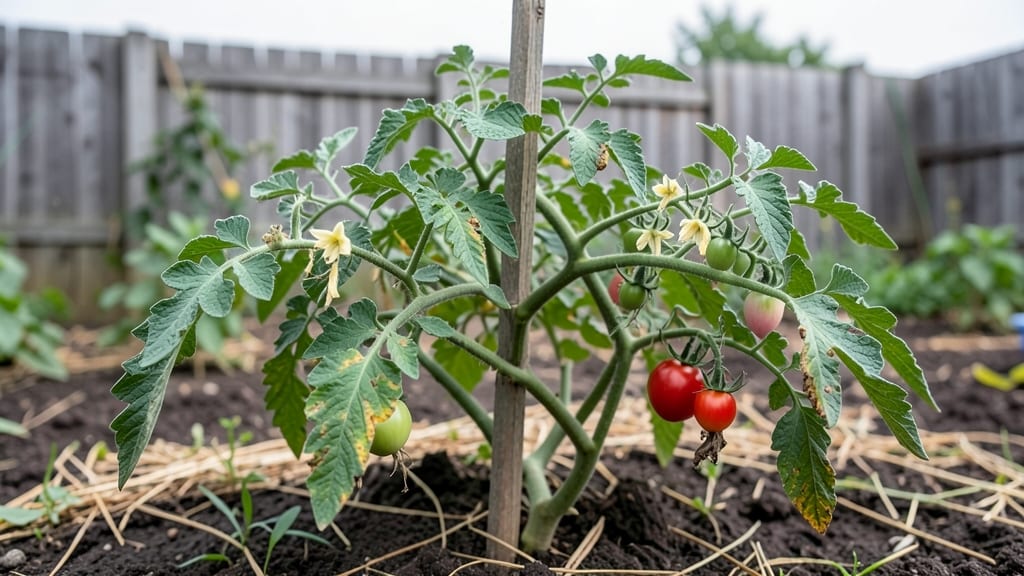
Understanding tomato plant lifespan reveals a fascinating balance between growth stages and care practices. Most tomato plants live 60 to 90 days from transplanting to harvest, though early-maturing varieties may produce fruit in just 45-60 days. Strategic pruning at key growth stages—like when plants reach 12-18 inches or before flowering—can significantly extend their productive life, while overwintering in warm climates allows some varieties to yield for multiple seasons.
Tomatoes don't follow a one-size-fits-all timeline because their lifespan depends heavily on whether you're growing determinate (bush) or indeterminate (vining) varieties. 🌱 Determinate plants focus energy on fruit production early, often maturing faster, while indeterminate types prioritize vine growth first, potentially living and producing for months if properly maintained.
The key to extending their lifespan lies in mimicking their natural growing conditions—warm days, cool nights, and consistent moisture—which directly impacts how quickly they transition through each growth stage.
What's often overlooked is how soil health plays a role. Plants grown in nutrient-rich, well-draining soil typically mature faster and produce more fruit over a longer period.
I've found that adding compost at planting time and using balanced organic fertilizers every 3-4 weeks can push indeterminate varieties to produce for 120+ days in ideal conditions. The trade-off? Over-fertilizing with nitrogen can lead to excessive foliage growth at the expense of fruit production, shortening the plant's effective lifespan.
💡 In This Article
- Tomato Growth Stages and Their Impact on Lifespan
- Pruning Techniques to Maximize Tomato Plant Productivity
Tomato growth stages and their impact on lifespan
Tomato plants progress through four distinct botanical stages, each with specific environmental requirements that directly influence their overall lifespan. The germination stage begins when seeds sprout at soil temperatures between 70-85°F, with roots emerging within 5-10 days under ideal conditions.
This initial phase is critical because cooler temperatures (60°F) slow metabolic activity, extending germination time by up to 2 weeks—a delay that can shorten the plant's productive window later in the season.
The vegetative stage follows, where the plant focuses on leaf and stem development rather than fruit production. Indeterminate varieties like 'Sungold' or 'Brandywine' prioritize vine growth here, potentially reaching 6-10 feet tall before flowering, while determinate types like 'Roma' or 'Celebrity' grow compactly (3-4 feet).
During this phase, 14+ hours of sunlight daily and consistent moisture (keeping soil at 60-70% moisture capacity) accelerate growth by 30-40% compared to stressed plants. Poor soil quality or nutrient deficiencies here can force the plant into early flowering, reducing its lifespan by 10-20 days.
Flowering marks the transition to the reproductive stage, where temperature becomes the dominant factor. Tomatoes require daytime highs of 75-85°F and cooler nights (60-65°F) for optimal pollination. Nighttime temperatures above 75°F can cause flower drop, effectively halting fruit production and shortening the plant's lifespan.
Indeterminate varieties like 'Cherokee Purple' can continue flowering for 60+ days under ideal conditions, while determinate types like 'Early Girl' typically flower for 21-30 days before focusing on fruit maturation.
The final fruiting stage determines how long the plant remains productive. Here, indeterminate varieties excel by continuously producing new flowers and fruit clusters, potentially yielding for 100+ days in warm climates. Determinate plants, however, allocate all energy to ripening existing fruit, maturing in 60-80 days before senescing.
Soil pH between 6.0-6.8 ensures optimal nutrient uptake during this stage, while calcium deficiencies (common in sandy soils) can lead to blossom-end rot, reducing fruit quality and lifespan by 15-25%.
Environmental stress during any stage accelerates aging. For example, indeterminate plants exposed to 90°F+ temperatures for prolonged periods may enter a state of dormancy, halting growth entirely. In contrast, cool-season varieties like 'Stupice' thrive at 65-75°F and can extend their lifespan by 20-30 days compared to heat-sensitive types.
The interplay between these stages explains why some gardeners achieve multiple harvest seasons from a single indeterminate plant in warm climates—each stage builds on the previous one's success.
What most gardeners don't realize is how pruning during the vegetative stage can reset the plant's biological clock. Removing suckers (side shoots) at 12-18 inches of growth redirects energy toward main stem development, potentially adding 2-4 weeks to the plant's productive lifespan.
This technique works because it maintains the plant's leaf-to-fruit ratio at optimal levels (typically 1:1 to 2:1 leaves per fruit cluster), preventing overcrowding that leads to disease and early senescence.
Understanding these stages helps explain why some heirloom varieties like 'Black Krim' can produce for 120+ days while commercial slicers like 'Better Boy' mature in 70-80 days.
The difference lies in genetic programming—indeterminate types prioritize continuous growth, while determinate varieties follow a fixed developmental timeline. 🌿 For maximum lifespan, mimic the plant's natural progression by providing consistent care at each stage.