Fertilization
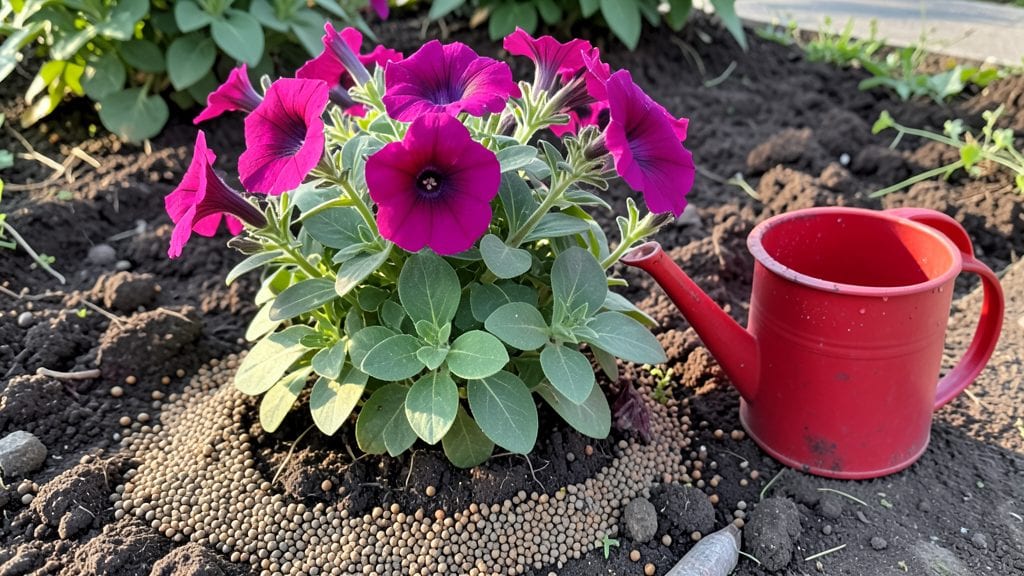
My petunia plant food routine starts with a simple truth: vibrant blooms need the right fuel at the right time. 🌸 I learned this after my first summer of petunias faded into sad, leggy shadows—until I adjusted their diet.
The secret isn’t just any fertilizer, but a balanced blend timed with their growth stages.
You’ll need two things: a 10-10-10 or 20-20-20 water-soluble fertilizer for quick blooms and a slow-release organic option like compost or worm castings. Feed young plants lightly every two weeks, then switch to weekly feedings once buds form.
Container petunias need more frequent feeding than in-ground plants because their roots have less access to soil nutrients.
By mid-summer, your petunias will reward you with clusters of blooms so dense they’ll make your neighbors jealous. The key is stopping feedings in late summer to harden plants for fall. Overfeeding here causes weak stems and attracts pests—trust me, I’ve made that mistake.
This works for both hanging baskets and garden beds, though container plants may need an extra dose every third feeding. The difference between lackluster petunias and showstopping ones often comes down to this simple feeding schedule. Let’s get those flowers popping!
📚 In This Guide
- What you need
- Instructions
- Tips and common mistakes
- Wrapping up and next steps
What you need
- ● Balanced liquid fertilizer (10-10-10 or 20-20-20 NPK ratio) – 1-2 tbsp per gallon of water
- ● Slow-release granular fertilizer (10-10-10 or 14-14-14) – 1-2 cups per 10 sq ft of planting area
- ● Compost or organic matter – 2-3 inches mixed into soil
- ● Watering can or hose with a gentle spray nozzle
- ● Gloves and knee pads (for comfort and protection)
- ● pH testing kit – Ensures soil is in the ideal range (6.0–7.0 for petunias)
- ● Epsom salt – 1 tbsp per gallon of water (for magnesium boost)
- ● Fish emulsion or seaweed extract – 1-2 tbsp per gallon (for extra nutrients)
- ● Mulch (straw or shredded bark) – Helps retain moisture and nutrients
How to feed petunias for long-lasting, vibrant blooms
Petunias reward consistent feeding with nonstop flowers—here's how to keep yours thriving.
🌿 Step 1: Choose the Right Fertilizer Mix
Petunias need a balanced 10-10-10 or 20-20-20 fertilizer to encourage both foliage and blooms. I avoid high-nitrogen blends—they produce lush leaves but fewer flowers. For organic options, use a fish emulsion or seaweed extract diluted to half strength. Always check the label for phosphorus content—this is what triggers those vibrant petal bursts.
If you're using granular fertilizer, sprinkle it evenly over the soil surface around the plant, keeping it 2-3 inches away from stems. This prevents root burn while ensuring the roots absorb nutrients. Water immediately after application to help the granules dissolve and distribute evenly.
💧 Step 2: Feed During Active Growth
Start fertilizing when your petunias show new growth after planting, typically 3-4 weeks after transplanting. Feed every 2 weeks during the growing season (spring through fall) for best results. I like to fertilize on a cloudy morning—this reduces leaf burn from direct sun exposure after watering.
Stop feeding in late summer or early fall when temperatures drop below 50°F. Cold weather slows growth, and excess fertilizer can harm roots or cause salt buildup in the soil. You'll know you're overdoing it if leaves turn yellow or crispy at the edges.
☀️ Step 3: Pair Feeding with Proper Watering
Water petunias deeply before and after fertilizing to help distribute nutrients into the root zone. Aim for 1 inch of water per week, adjusting for rainfall. I use a soaker hose or drip irrigation to avoid wetting the leaves, which can cause fungal issues when combined with fertilizer salts.
Watch for wilting or drooping after feeding—this often means the plant needs more water to absorb the nutrients. If you see white crusty deposits on the soil surface, flush the area with water to prevent salt buildup. Petunias are thirsty feeders, but they hate soggy roots.
✂️ Step 4: Deadhead and Encourage Continuous Blooms
After each feeding session, take a moment to deadhead spent blooms by pinching off faded flowers with your fingers. This redirects the plant's energy into producing new buds instead of seed pods. I do this every 3-4 days during peak bloom season—it keeps petunias flowering nonstop.
If you notice fewer blooms after feeding, check for overcrowding. Petunias need 6-12 inches of space between plants to breathe. Thin out congested areas and feed the remaining plants with a low-nitrogen, high-phosphorus blend to stimulate flowering.
Tips & tricks for perfect petunia care
A few simple tricks will help you keep your petunias blooming like crazy all season long.
Fertilizer Application: When using liquid fertilizers like fish emulsion or seaweed extract, always dilute them to half strength as directed in Step 1. I've learned this the hard way—using full strength can burn delicate petunia roots and cause leaf discoloration. For granular fertilizers, spread them evenly around the base but keep that 2-3 inch distance from stems to prevent direct contact that could cause root damage.
Seasonal Timing: The 2-week feeding schedule in Step 2 works perfectly during warm weather, but remember that petunias slow down when temperatures drop below 50°F. This is your cue to stop fertilizing—cold weather means the plants aren't actively growing, and excess nutrients can actually harm them. Watch for those crispy leaf edges as your warning sign.
Watering Wisdom: The deep watering in Step 3 is crucial—petunias need that 1 inch per week to absorb nutrients properly. I've found that morning watering works best because it gives leaves time to dry before evening, reducing fungal risks. If you see wilting after feeding, don't panic—just give them a good drink. The plants often perk right up once they've had enough water to process the fertilizer.
Deadheading Strategy: That 3-4 day deadheading schedule in Step 4 makes all the difference! I like to do it first thing in the morning when blooms are still crisp. The key is to pinch off the entire faded flower stem down to the next set of leaves—this prevents seed pods from forming and encourages more blooms. You'll notice a dramatic increase in flower production within just a few weeks.
Pro Tips for Petunia Plant Food
- A few simple tricks will help you keep your petunias blooming like crazy all season long.
- Fertilizer Application: When using liquid fertilizers like fish emulsion or seaweed extract, always dilute them to half strength as directed in Step 1.
- Seasonal Timing: The 2-week feeding schedule in Step 2 works perfectly during warm weather, but remember that petunias slow down when temperatures drop below 50°F.
Frequently asked questions
Got questions about feeding your petunias?
You’re not alone! Here are answers to the most common queries to keep your blooms thriving—no guesswork required.
How often should I fertilize petunias for the best results?
Feed petunias every 2–4 weeks during the growing season (spring to fall) using a balanced liquid fertilizer (like 10-10-10 or 20-20-20). Reduce to once a month in winter or skip entirely if growth slows. Over-fertilizing can burn roots—always water first!
Can I use coffee grounds or homemade compost as petunia plant food?
Yes! Coffee grounds (used in moderation) and well-aged compost add nutrients like nitrogen and organic matter. Mix 1 part grounds to 10 parts soil or top-dress with compost in early spring. For a quick boost, dilute 1 cup coffee grounds in 1 gallon of water and use as a foliar spray.
Why are my petunia leaves turning yellow after fertilizing?
Yellowing leaves often signal over-fertilization or nutrient burn. Flush the soil with water to dilute excess salts, then reduce fertilizer strength by half for 2–3 weeks. Check for chlorosis (yellowing between veins), which may mean iron deficiency—try a chelated iron supplement.
Is synthetic fertilizer better than organic for petunias?
Both work! Synthetic fertilizers (like water-soluble blends) provide immediate, precise nutrients, ideal for container petunias. Organic options (fish emulsion, worm castings) improve soil long-term but require more frequent applications. Choose based on your petunias’ needs: fast blooms vs. soil health.
When is the best time to start fertilizing new petunia seedlings?
Wait until seedlings have 2–3 sets of true leaves (about 4–6 weeks after sowing). Start with a diluted, low-nitrogen fertilizer, like 5-10-5, to encourage root growth. Avoid high-nitrogen feeds—petunias prioritize blooms over foliage!
Wrapping up and next steps
Choosing the right petunia plant food is the secret to unlocking those show-stopping blooms you’ve always dreamed of! 🌸 Whether you opt for organic compost, balanced synthetic fertilizers, or homemade tea blends, consistency and proper timing are key.
Remember: healthy soil equals happy petunias—so feed them well, water wisely, and watch your garden burst with color.
Ready to transform your garden? Start by testing your soil this weekend and pick your petunia’s favorite meal. Happy gardening—your flowers will thank you! 🌱