
Aphids
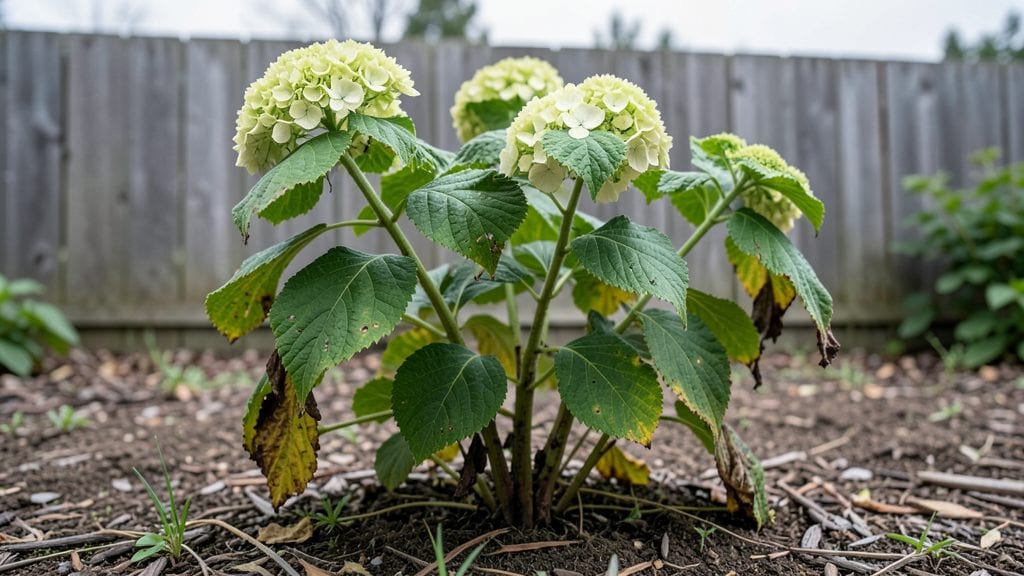
Your newly planted hydrangea wilting like a sad balloon isn’t a death sentence—it’s a cry for help, and I’ve revived more than a few with quick, simple fixes. The first step is figuring out whether your plant is thirsty, drowning, bugged, or just stressed out from heat or wind.
Start by feeling the soil: if it’s bone-dry two inches down, give it a deep drink until water runs out the bottom. If it’s soggy, hold off on watering and check the pot for drainage holes.
Pests like aphids or spider mites love stressed plants—run your fingers over the leaves and stems for sticky residue or tiny webs. Most wilting hydrangeas bounce back in 24 hours once you correct the issue.
For the real fix, trim any mushy stems at the base and repot if the roots smell rotten. Move the plant to shadier spot if it’s been scorched by afternoon sun, and give it a light fertilizer boost with diluted fish emulsion.
Within a day, those limp leaves should perk up like they’ve had a good nap.
Prevention is about balance: water when the top inch is dry, mulch to keep roots cool, and prune in late winter to encourage fresh, sturdy growth. Hydrangeas are tougher than they look—they just need you to listen to what they’re telling you with those droopy signals.
Root Causes Behind Drooping Leaves
When your newly planted hydrangeas start wilting, it’s rarely a single issue—it’s usually a mix of environmental stress, care mistakes, or hidden problems lurking beneath the soil. Understanding the specific triggers helps you diagnose and fix the issue fast.
Below, we break down the most common culprits, from overwatering to soil-borne threats, with clear science-backed explanations.
Hydrangeas are thirsty plants, but too much water suffocates their roots, cutting off oxygen and triggering wilting. This is especially true in container-grown or heavy clay soils, where water pools around roots instead of draining.
- Why it happens:
- Hydrangeas prefer moist but well-drained soil. When roots sit in soggy conditions for more than 24 hours, they develop anaerobic conditions (lack of oxygen), leading to root rot (often caused by Phytophthora or Pythium fungi).
- Wilting may appear sudden and uniform, with leaves feeling soft or mushy when pressed.
- Young plants are most vulnerable because their root systems haven’t established deep drainage pathways.
- Actionable signs:
- Soil smells sour or rotten.
- Leaves turn yellowish-brown at the edges.
- Stems feel spongy when squeezed near the base.
💡 Pro Tip: Stick your finger 2 inches into the soil—if it’s damp after 24 hours, you’re overwatering. Hydrangeas need 1–1.5 inches of water per week, but adjust for rain and heat.
While hydrangeas love partial shade, too much direct sun—especially after transplanting—can cause wilting, crispy edges, or leaf scorch. This is common in hot, dry climates or when plants are moved from shade to full sun.
- Why it happens:
- Hydrangeas have large, thin leaves that lose moisture quickly in intense sunlight. When water loss outpaces uptake, cells plasmolyze (collapse), causing wilting.
- Newly planted hydrangeas have shallow root systems, making them highly sensitive to temperature spikes.
- Wilting from sun stress often occurs midday and recover slightly in the evening.
- Actionable signs:
- Leaves develop brown, papery patches (like sunburn).
- Wilting is worse on the south or west side of the plant.
- Soil may feel bone-dry despite recent watering.
🌡️ Quick Fix: Provide afternoon shade (use shade cloth or a temporary cover) and water deeply in the morning to hydrate roots before heat peaks.
Even with proper care, newly planted hydrangeas can wilt due to root trauma during transplanting. Roots are delicate, and cutting or compacting them disrupts water and nutrient uptake.
- Why it happens:
- When roots are pruned or bruised during digging, they release ethylene gas, a stress hormone that accelerates wilting.
- Hydrangeas have fibrous root systems that take 4–6 weeks to recover after transplanting.
- Wilting from shock is often uniform and gradual, with leaves curling downward.
- Actionable signs:
- Wilting starts within 24–48 hours of planting.
- No yellowing or browning—just droopy, limp leaves.
- Plant may not respond to watering immediately.
✨ Recovery Boost:
- Apply mycorrhizal fungi (like Rhizophagus irregularis) to help roots regenerate faster.
- Avoid fertilizing for 4–6 weeks—focus on deep watering instead.
- Mulch with 2–3 inches of organic matter (e.g., shredded bark) to protect roots and retain moisture.
Hidden pests or pathogens can drain a hydrangea’s vitality, leading to wilting before visible damage appears. Common culprits include aphids, spider mites, or fungal infections like powdery mildew.
- Why it happens:
- Aphids/spider mites: These sap-sucking insects inject toxins into leaves, causing wilting, curling, and stunted growth. They thrive in dry, dusty conditions.
- Fungal diseases (e.g., powdery mildew): Fungi like Podosphaera clog leaf pores, reducing photosynthesis and causing wilting + white powdery spots.
- Root-knot nematodes: Microscopic worms burrow into roots, creating galls that block water absorption.
- Actionable signs:
Pest/Disease Wilting Signs Other Clues Aphids Leaves curl upward, sticky residue ("honeydew") Black sooty mold on leaves Spider Mites Leaves yellow and crispy, webbing on undersides Visible tiny red dots moving on leaves Powdery Mildew Wilting + white fuzzy patches on leaves Worse in humid, low-light conditions Root-Knot Nematodes Wilting even after watering Gnarled, lumpy roots when dug up
🔥 Emergency Treatment:
- For pests: Spray with neem oil or insecticidal soap (
Quick Fixes to Revive Drooping Hydrangeas
Now that you know what’s causing your hydrangeas to wilt, let’s tackle the solutions—fast. Whether it’s thirst, pests, or stress, these fixes will help your plants perk up in no time.
Below, we’ve mapped out practical, step-by-step fixes for each common cause, plus prevention tips to keep your hydrangeas thriving long-term.
Signs: Yellowing leaves, mushy stems, or soil that smells sour.
How to Fix It: 🔥 Step 1: Stop Watering Immediately
- Let the top 1–2 inches of soil dry out before watering again. Overwatering is the #1 killer of hydrangeas!
🍳 Step 2: Improve Drainage
- If your hydrangea is in a pot, add perlite or sand to the soil mix (aim for 20% amendment).
- For in-ground plants, amend the soil with compost or coarse sand to break up clay.
👨🍳 Step 3: Repot (If Needed)
- If roots are rotting (black, mushy), repot in fresh, well-draining soil and trim away damaged roots with sterilized scissors.
🥘 Step 4: Adjust Watering Habits
- Water deeply but less frequently—hydrangeas prefer 1–1.5 inches per week (check soil moisture with your finger).
- Water at the base, not overhead, to prevent fungal issues.
💡 Prevention Tip:
- Test your soil’s drainage by digging a hole, filling it with water, and timing how long it takes to drain. If it takes >30 minutes, amend the soil.
Signs: Crispy leaf edges, drooping despite moist soil, or wilting in hot afternoons.
How to Fix It: 🔥 Step 1: Water Deeply & Often
- Give your hydrangea a slow, deep soak (10–15 minutes) to encourage strong root growth.
- Mulch around the base (2–3 inches of shredded bark or straw) to retain moisture.
🍳 Step 2: Provide Shade Relief
- If your hydrangea is in full sun, move it to morning sun + afternoon shade (especially in summer).
- Use a shade cloth (30–50%) if relocating isn’t an option.
👨🍳 Step 3: Revive with a Foliar Spray
- Mist leaves early in the morning with room-temperature water to instantly hydrate wilting foliage.
- For extra help, add 1 tsp of seaweed extract per gallon of water for stress relief.
🥘 Step 4: Adjust Watering Schedule
- Water in the early morning or late evening to reduce evaporation.
- Check soil moisture daily during heatwaves—hydrangeas dry out fast in pots!
💡 Prevention Tip:
- Group hydrangeas with thirsty companions (like hostas or ferns) to create a micro-climate that retains humidity.
Signs: Sticky leaves, holes in foliage, or tiny bugs on stems/undersides of leaves.
How to Fix It: 🔥 Step 1: Isolate & Inspect
- Move the plant away from others to prevent spread. Check for aphids, spider mites, or scale insects.
🍳 Step 2: Blast Off Pests (Natural Methods)
- Spray with soapy water (1 tsp mild dish soap + 1 quart water) and rinse after 15 minutes.
- Release beneficial insects like ladybugs or lacewings (available at garden centers).
👨🍳 Step 3: Neem Oil Treatment (For Stubborn Infestations)
- Mix 1 tbsp neem oil + 1 tsp mild soap per quart of water. Spray every 5–7 days until pests are gone.
🥘 Step 4: Strengthen Defenses
- Fertilize with compost tea or a balanced organic fertilizer (10-10-10) to boost plant health.
- Prune heavily infested leaves and dispose of them in a sealed bag.
💡 Prevention Tip:
- Inspect new plants before bringing them home—quarantine for 2 weeks to spot hitchhiking pests.
Signs: Wilting despite proper watering, roots circling the pot, or stunted growth.
How to Fix It: 🔥 Step 1: Check the Roots
- Gently remove the plant from its pot. If roots are circling or packed tightly, it’s time to upgrade.
🍳 Step 2: Repot with Room to Grow
- Choose a pot 2–3 inches larger in diameter with drainage holes.
- Use well-draining potting mix (add perlite or orchid bark for aeration).
👨🍳 Step 3: Loosen Roots & Prune
- Tease out circling roots with your fingers.
- Trim any black or mushy roots (use sterilized scissors).
🥘 Step 4: Water & Wait
- Water thoroughly after repotting, then keep soil lightly moist for 2 weeks.
- Avoid fertilizing for 4–6 weeks to reduce stress.
💡 Prevention Tip:
- Repot every 2–3 years or when roots exceed the pot’s size by 50%.
Signs: Wilting in windy or extreme conditions, sudden droop after a storm.
How to Fix It: 🔥 Step 1: Wind Protection
- Stake tall hydrangeas with bamboo or metal stakes + soft ties.
- Plant near a natural windbreak (like a fence or shrub border).
🍳 Step 2: Shield from Temperature Swings
- Move potted hydrangeas to a sheltered spot during heatwaves or cold snaps.
- Use frost cloth in winter if your variety isn’t cold-hardy.
👨🍳 Step 3: Boost Soil Health
- Add organic matter (compost or worm castings) to improve resilience.
- Mulch heavily (4–6 inches) to regulate soil temperature.
💡 Prevention Tip:
- Choose the right hydrangea variety for your climate (e.g., Oakleaf or Panicle hydrangeas for heat tolerance).
🌡️ Monitor Soil pH – Hydrangeas love acidic soil (pH 5.5–6.2).
Use sulfur or peat moss to adjust if needed. 🎯 Prune Strategically – Cut back dead or crossing branches in early spring to improve airflow. 🔄 Rotate Pots – If growing in containers, rotate every few weeks for even sunlight exposure.
With these fixes, your hydrangeas should bounce back in 24–48 hours—and with a little TLC, they’ll stay lush and vibrant all season! 🌿✨
Frequently asked questions about wilting hydrangeas
Why do my newly planted hydrangeas wilt so fast after transplanting?
Transplant shock is common because hydrangea roots release stress hormones when disturbed. The wilting usually starts within 24–48 hours and lasts 4–6 weeks as roots recover. To help, water deeply but avoid fertilizing for 4–6 weeks—focus on keeping soil consistently moist and mulching with 2–3 inches of organic matter to protect roots.
Can I save a hydrangea that’s wilting from overwatering?
Yes, but act fast! Stop watering immediately and let the top 1–2 inches of soil dry out. If roots are mushy or smell rotten, repot in fresh, well-draining soil and trim blackened roots. For containers, add perlite or sand to improve drainage. Most hydrangeas recover within 3–5 days if root rot hasn’t set in.
How do I tell if my hydrangea is wilting from pests vs. underwatering?
Check for sticky residue (honeydew) or tiny webs on leaves—these signal pests like aphids or spider mites. Wilting from pests often includes curled leaves or yellowing spots. Underwatering causes crispy edges and dry soil, while wilting from pests persists even when soil is moist. Spray with neem oil if pests are present, or water deeply if the soil is dry.
Should I prune wilting hydrangea branches to help them recover?
Only prune dead or mushy stems at the base—healthy branches can regrow if the root system is intact. Avoid heavy pruning during stress; wait until the plant shows new growth. Focus first on fixing water, light, or pest issues. Once recovered, prune in late winter to shape the plant and encourage fresh blooms.
How long does it take for a hydrangea to perk up after fixing the problem?
Most hydrangeas show improvement within 24 hours if the issue is water-related or environmental. For root trauma or pests, recovery takes 3–7 days. If wilting persists beyond a week, check for root rot or nematodes. Patience is key—hydrangeas are resilient but need consistent care to bounce back fully.