Watering
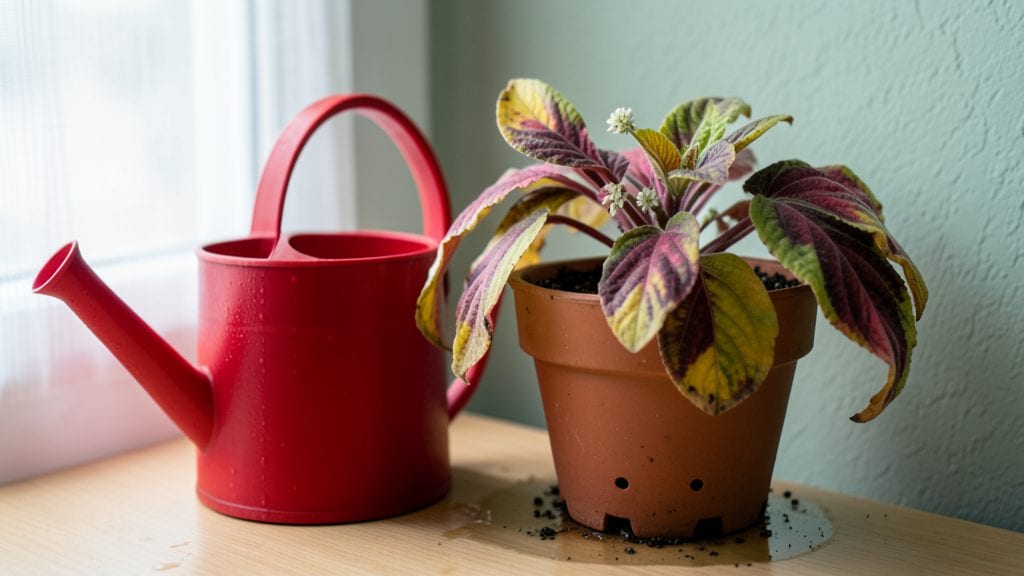
When your coleus leaves turn yellow and droop like a soggy dishrag, it’s not a death sentence—just a cry for help. 🌿 I’ve nursed back more overwatered coleus plants than I’d like to admit, and the fix is simpler than you’d think.
The key is acting fast before root rot sets in, because once the roots turn mushy, even the hardiest coleus can’t bounce back.
Here’s the thing—coleus plants hate soggy feet. They thrive in moist but well-draining soil, and if the roots sit in water too long, they suffocate. That’s why I always check soil moisture with my finger before watering: if it’s still damp an inch down, I wait.
Most people overwater because they assume coleus need constant moisture like ferns, but these plants are tougher than they look.
Within 24 hours of adjusting your watering, you’ll see the leaves perk up again. Start by letting the top inch of soil dry out completely between waterings, and if the pot has no drainage holes, transfer it to one immediately.
A little extra humidity from a pebble tray can help too—coleus love the air moist but the soil just damp.
Once you’ve got the watering right, keep an eye on your coleus’s environment. Bright, indirect light and cooler temperatures (around 65-75°F) help them recover faster. And next time, stick with a well-draining potting mix—that’s the secret to keeping coleus thriving all season long.
Root Causes Of Soggy Soil
When your coleus plant starts looking like a sad, waterlogged sponge, the issue usually boils down to a few key factors. Understanding these causes helps you adjust your care routine before the problem worsens. Let’s break down why your plant might be drowning in its own pot.
Coleus plants thrive in well-draining soil, but overzealous watering can turn their roots into a soggy mess. Here’s why:
- Poor oxygen exchange: Roots need oxygen to breathe—just like us! When soil stays saturated, oxygen gets displaced, suffocating the roots and preventing nutrient absorption.
- Fungal infections: Excess moisture creates the perfect breeding ground for Phytophthora and Pythium, fungi that rot roots and stems. Look for black, mushy roots or yellowing leaves as red flags.
- Nutrient leaching: Overwatering flushes essential nutrients (like nitrogen and potassium) out of the soil before the plant can use them. This leads to weak growth and pale foliage.
Pro Tip: 💡 Stick your finger 1-2 inches into the soil before watering—if it’s damp, wait another day. Coleus prefer slightly dry soil between waterings.
A pot without drainage holes is a one-way ticket to root rot. Here’s how it happens:
- Water pooling: Without escape routes, excess water pools at the bottom of the pot, creating a waterlogged environment. Even "water-loving" plants like coleus (which are not water-lovers!) can’t handle this.
- Compacted soil: Some potting mixes retain too much moisture, especially if they’re heavy or clay-based. This traps water against the roots, cutting off airflow.
- Root-bound stress: If roots are crowded or circling the pot, they struggle to spread into dry soil, making the plant more vulnerable to overwatering.
Fix It: ✨ Repot your coleus in a container with drainage holes and use a light, airy mix (like 50% peat moss, 30% perlite, and 20% vermiculite). Elevate pots on saucers to prevent saucer water from seeping back up.
Coleus plants are tropical but still need a balance. Too much humidity or the wrong temps can trick your brain into overwatering:
- High humidity slows evaporation: In damp air, soil stays wet longer. If your home is humid (e.g., bathrooms, kitchens), the plant may not dry out between waterings.
- Cold drafts or heat stress: Coleus prefer 65–75°F. If your plant is near a window in winter or a heater in summer, transpiration (water loss through leaves) slows down, making the soil stay soggy longer.
- Seasonal changes: Winter means less light = slower drying soil. Many gardeners water on autopilot, not realizing the plant needs less in low-light months.
Adjust Care: 🌡️ Use a hygrometer to monitor humidity (ideal: 40–60%). In winter, move plants away from cold windows and reduce watering by 30–50%.
Not all soil and pots are created equal—and some are downright deadly for coleus:
| Problem | Why It Causes Overwatering |
|---|---|
| Heavy clay soil | Retains water like a sponge, never drying out. Roots suffocate in anaerobic (oxygen-free) conditions. |
| Too-small pot | Roots fill the space quickly, so water evaporates slower. The plant drinks up moisture fast but can’t "catch up" if you keep adding water. |
| No perlite/vermiculite | These additives create air pockets for drainage. Without them, soil stays compacted and waterlogged. |
Solution: 🔥 Upgrade to a terracotta or fabric pot (breathable materials wick away moisture) and amend soil with 20% coarse sand or orchid bark to improve aeration.
Now that you know the why, the next step is fixing it—without losing your plant! Stay tuned for our 3-step revival guide to bring your coleus back to vibrant life.
Reviving Your Coleus Quickly
Now that you know the signs and causes of an overwatered coleus, it’s time to take action! The good news is that with the right steps, you can nurse your plant back to health—often within days.
Below, we’ll map out practical fixes based on the most common symptoms and causes, plus prevention tips to keep your coleus thriving long-term.
If your coleus leaves are turning yellow or mushy, root rot is likely the culprit. Act fast to save the plant!
🔥 Step 1: Remove the Plant from Wet Soil
- Gently lift your coleus from its pot to inspect the roots.
- If the soil smells sour or the roots are dark and mushy, root rot has set in.
🍳 Step 2: Trim the Damaged Roots
- Use sterilized scissors or pruning shears to snip off any black, soft, or slimy roots.
- Healthy roots should be firm and white or light tan.
👨🍳 Step 3: Repot in Fresh, Dry Soil
- Choose a well-draining potting mix (add perlite or sand if yours is heavy).
- Select a pot with drainage holes—no exceptions!
- Let the soil dry out completely between waterings (stick your finger in: if the top 1–2 inches are dry, it’s time to water).
⏰ Step 4: Adjust Your Watering Routine
- Water only when the top inch of soil is dry—coleus hate soggy roots!
- Bottom-watering (placing the pot in a tray of water for 10–15 minutes) can help prevent overwatering.
💡 Pro Tip: If your coleus is severely damaged, propagate a healthy stem cutting in water or fresh soil to grow a new plant!
Droopy leaves often mean overwatering + poor drainage. Here’s how to revive your coleus:
🔥 Step 1: Let the Soil Dry Out
- Stop watering immediately and place the pot in a shady spot (direct sun can stress a weak plant).
- If the soil is still damp after 24 hours, wait another day before checking again.
🥘 Step 2: Improve Airflow and Light
- Move your coleus to a bright, indirect light spot (avoid harsh afternoon sun).
- Increase airflow by placing a small fan nearby (gentle breeze helps prevent fungal issues).
🌡️ Step 3: Check for Pests
- Inspect leaves for soft, sticky spots (sign of aphids or mealybugs), which thrive in damp conditions.
- Wipe leaves with a neem oil solution (1 tsp neem oil + 1 quart water) if pests are present.
✨ Step 4: Gradually Resume Watering
- Once leaves perk up, water sparingly—only when the soil is bone dry.
- Use a moisture meter if you’re unsure (they’re cheap and lifesavers!).
💡 Pro Tip: If your coleus is in a decorative pot without drainage, repot it ASAP—this is the #1 reason coleus drowns!
Brown, crispy leaf edges usually mean low humidity + overwatering. Here’s how to fix it:
🔥 Step 1: Increase Humidity
- Place the pot on a pebble tray filled with water (evaporation adds moisture).
- Mist leaves lightly in the morning (avoid evening misting to prevent fungal growth).
🍳 Step 2: Reduce Watering Frequency
- Coleus prefer moderate moisture—water only when the top 1–2 inches of soil are dry.
- If your thumbstick test shows dampness, wait 3–4 more days before watering.
👨🍳 Step 3: Trim Damaged Leaves
- Snip off brown or crispy edges with clean scissors to encourage new growth.
- Avoid cutting into healthy tissue—this can stress the plant further.
🎯 Step 4: Fertilize Lightly (If Needed)
- If your coleus isn’t recovering after 1–2 weeks, it may need nutrients.
- Use a balanced, diluted fertilizer (half-strength) once a month in growing season.
💡 Pro Tip: Grouping coleus with other plants creates a microclimate with higher humidity—great for recovery!
Once your coleus is back in shape, keep it thriving with these habits:
| Problem | Prevention Tip |
|---|---|
| Overwatering | Use a moisture meter or the finger test before watering. |
| Poor Drainage | Always repot in well-draining soil with perlite or sand. |
| Low Humidity | Place a humidifier nearby or use a pebble tray. |
| Pests | Inspect leaves weekly and remove pests manually or with neem oil. |
| Root Rot | Never let soil stay soggy—water only when dry. |
✨ Bonus Tip: Rotate your coleus quarter-turn weekly to ensure even light exposure—this prevents leggy growth and keeps leaves vibrant!
By following these steps, your coleus should bounce back in no time—and with a little care, it’ll reward you with lush, colorful foliage all season long! 🌿💚
Frequently asked questions
How do I know if my coleus is overwatered vs. underwatered?
Check the soil first—if it’s soggy and smells sour, you’ve overwatered. Yellowing leaves with mushy stems or black, slimy roots confirm it. Underwatered coleus shows crispy brown edges and dry, pulling soil. The key difference? Overwatered leaves droop and feel heavy, while underwatered leaves droop and feel dry and papery.
Can I save a coleus with root rot?
Yes, but act fast! Remove the plant, trim all black/mushy roots with sterilized scissors, and repot in fresh, well-draining mix. For severe cases, propagate healthy stem cuttings in water or perlite mix. Avoid watering for 3-5 days to let roots recover before resuming with dry soil between waterings.
Why does my coleus keep getting overwatered even when I think I'm doing it right?
Most people overestimate how fast soil dries. Coleus prefer soil that dries out between waterings—stick your finger 1-2 inches deep. If damp, wait. Also check your pot: decorative containers without drainage holes trap moisture. Upgrade to terracotta or fabric pots with holes, and use a mix with perlite to improve airflow.
How often should I water my coleus once it's recovered?
Water when the top 1 inch of soil is dry—usually every 7-10 days in summer or 10-14 days in winter. Use the finger test daily: if soil feels damp below the surface, wait. Bottom-watering (placing pot in a tray of water for 15 minutes) helps prevent overwatering while keeping roots hydrated.
Will my coleus grow back if I cut off all the yellow leaves?
Yes! Trim yellow leaves at the base with clean scissors to redirect energy to healthy growth. Avoid cutting into green tissue—this stresses the plant. New leaves will emerge from the stem within 2-3 weeks if roots are healthy. For extra boost, fertilize lightly with half-strength balanced fertilizer after trimming.