
Diseases
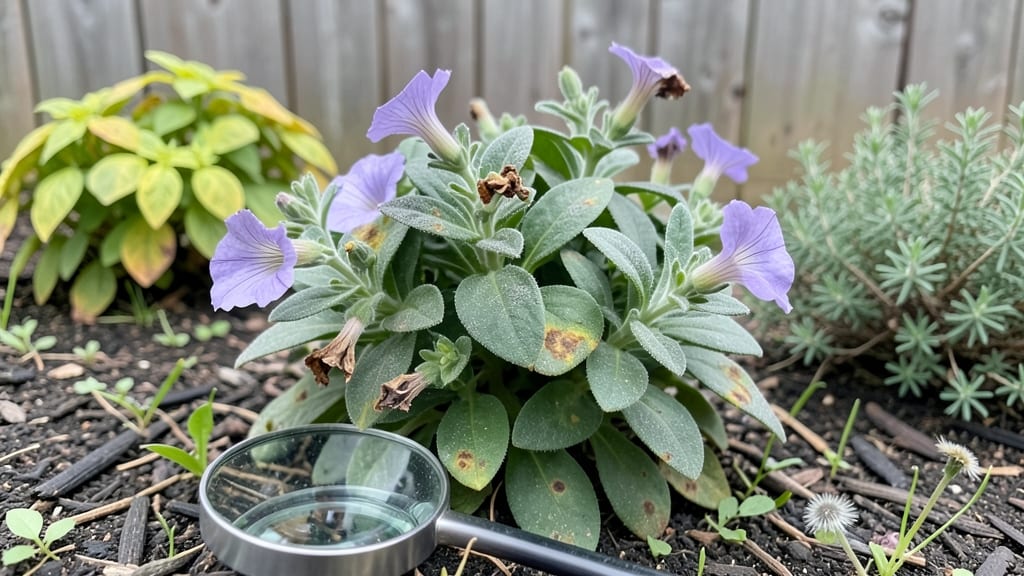
Petunia plant diseases can turn vibrant blooms into sad, spotted messes in a matter of days. 🌿 I’ve seen healthy petunias go from showstoppers to sad, wilted shadows because of fungal invaders—and I’m here to help you spot and stop them before they ruin your garden.
The key is acting fast, because once those dark spots or fuzzy growth appear, it’s already too late for some plants.
Most petunia diseases start with too much moisture or poor airflow—think crowded pots or watering from above. Powdery mildew leaves white dust on leaves, while botrytis blight creates brown, mushy spots that spread like wildfire.
Early blight shows up as concentric rings on leaves, and if you see yellowing leaves with black spots, that’s likely septoria leaf spot. The good news? Organic fixes like neem oil, copper fungicide, or simply spacing plants better can save your petunias.
With the right prevention, your petunias will stay lush and blooming all season. I’ve used a mix of fungicide sprays, pruning infected leaves, and improving drainage to keep my petunias thriving—even in humid summers.
The secret is checking plants weekly for the first signs of trouble, so you can cut it off before it spreads. Let’s get your garden back to its full, colorful glory.
This works for both container and in-ground petunias, whether you’re dealing with powdery mildew in shade or blight in hot, humid climates. The same principles apply—just adjust your watering and airflow based on where your plants live. You’ve got this!
Root Causes Of Petunia Troubles
Petunias are stunning, but their vibrant blooms can quickly fade when fungal diseases strike. Understanding why these issues arise is the first step to prevention. Below, we break down the scientific triggers behind petunia plant diseases—so you can tackle them head-on.
Fungi thrive in moisture-rich environments, and petunias are prime targets when humidity and water linger. Here’s why:
- Poor Air Circulation – Crowded plants or dense foliage trap humidity, creating the perfect fungal buffet. Botrytis blight and powdery mildew love this setup. - Overhead Watering – Wet leaves (especially at night) encourage fungal spores to germinate.
Unlike roots, leaves aren’t designed to handle prolonged moisture. - High Humidity (60%+) – Fungi spread faster in stagnant, humid air. Greenhouses and shaded areas are hotspots for outbreaks.
💡 Pro Tip: Water at the base in the morning (not evening) and space plants 12–18 inches apart for airflow.
A healthy petunia resists disease, but stress opens the door to pathogens. Common culprits:
- Nutrient Deficiencies – Low nitrogen or phosphorus weakens cell walls, making plants vulnerable to Alternaria leaf spot.
- Physical Damage – Pruning wounds or pest bites (like aphids) create entry points for fungi.
- Heat Stress – Extreme heat (above 85°F) weakens petunias, making them susceptible to Fusarium wilt.
✨ Fix It: Use balanced fertilizer (10-10-10) and mulch to retain moisture without suffocating roots.
Some fungi lurk in soil, waiting for the right moment to strike:
- Old Infected Debris – Leaving dead petunia leaves or roots in the soil spreads Verticillium wilt.
- Contaminated Tools/Compost – Pruners, gloves, or compost piles can harbor spores.
- Poor Drainage – Waterlogged soil (common in clay pots) encourages Phytophthora root rot.
🔥 Solution: Sterilize tools with 10% bleach solution and rotate crops yearly to break disease cycles.
Petunias face different threats based on weather:
| Season | Risk | Why It Happens |
|---|---|---|
| Spring/Rainy | Powdery mildew, Botrytis | Cool nights + warm days = fungal feast |
| Summer | Leaf spot, heat stress | High temps weaken defenses |
| Fall | Root rot, damping-off | Cooler soil + lingering moisture |
🎯 Action Step: Monitor weather forecasts and adjust watering during transition periods.
Even before planting, disease can hide in:
- Infected seed coatings (e.g., Fusarium).
- Nursery stock with latent fungal infections.
🛡️ Prevention: Buy from reputable growers and soak seeds in hydrogen peroxide (3%) for 10 minutes before planting.
Petunia diseases don’t strike randomly—they exploit environmental weaknesses. By controlling moisture, boosting plant health, and breaking fungal cycles, you can dramatically reduce outbreaks. Next up: How to Spot These Diseases Early—so you can act before they spread!
Fixing Petunia Problems Step-by-Step
Now that you’ve identified the issue plaguing your petunias, it’s time to take action! Early intervention is key to saving your blooms, so let’s tackle each problem with practical, garden-friendly solutions. Below, we’ll map common petunia diseases to their fixes—plus pro tips to keep your plants thriving long-term.
Fungal diseases like powdery mildew, botrytis blight, and gray mold thrive in damp, crowded conditions. Here’s how to banish them for good:
🔥 Remove Infected Plant Parts
- Snip and toss any leaves, stems, or flowers showing signs of fungus (white powder, brown spots, or fuzzy growth).
- Sterilize your pruners with rubbing alcohol (70% or higher) to avoid spreading spores.
- Don’t compost infected plant debris—throw it in the trash instead.
🌬️ Improve Airflow & Light
- Space plants 12–18 inches apart to reduce humidity buildup.
- Avoid overhead watering—use drip irrigation or water at the base early in the day.
- Prune nearby foliage blocking sunlight to encourage faster drying.
💡 Fungal Sprays That Work
- Baking soda spray: Mix 1 tsp baking soda, 1 tbsp vegetable oil, and a drop of dish soap in 1 quart of water. Spray on leaves (test a small area first).
- Neem oil: A natural fungicide that disrupts fungal growth.
Apply every 7–10 days. - Copper fungicide: For stubborn cases like late blight, follow label instructions.
🌡️ Prevent Future Outbreaks
- Water deeply but less often to discourage fungal growth.
- Rotate crops—don’t plant petunias in the same spot year after year.
- Choose resistant varieties like ‘Wave’ or ‘Supertunia’ if fungi are recurrent.
Aphids, spider mites, and whiteflies suck the life out of petunias, weakening them for disease. Smother them fast with these methods:
👨🍳 Homemade Sprays for Soft-Bodied Pests
- Soapy water spray: Mix 1 tsp mild dish soap (like Dawn) in 1 quart of water.
Spray directly on pests (avoid flowers). - Garlic spray: Blend 2 cloves of garlic with 1 quart of water, strain, and add a drop of soap. Spray weekly.
🕷️ Mechanical Removal
- Blast off aphids with a strong jet of water from a hose.
- Use sticky traps for whiteflies—hang yellow cards coated with petroleum jelly near plants.
- Release beneficial insects: Ladybugs and lacewings devour aphids naturally.
✨ Long-Term Pest Prevention
- Inspect new plants before bringing them home.
- Interplant with herbs like basil or marigolds to repel pests.
- Avoid over-fertilizing—soft new growth attracts bugs.
Root rot, bacterial wilt, or nutrient deficiencies leave petunias looking sad. Rebuild their health with these steps:
💧 Drainage & Soil Rescue
- Check drainage: If soil stays soggy 24+ hours after watering, amend with perlite or sand.
- Repot if needed: Use a well-draining potting mix (avoid heavy garden soil).
- Raise containers: Elevate pots on bricks or saucers to prevent waterlogging.
💪 Fertilizer & Care Reset
- Flush the soil with water to remove excess salts (common in over-fertilized plants).
- Switch to a balanced, slow-release fertilizer (10-10-10) every 4–6 weeks.
- Avoid wetting leaves when fertilizing to prevent leaf burn.
🌿 Boost Immunity Naturally
- Compost tea: Brew a batch (steep compost in water for 24 hours, strain) and use as a foliar spray.
- Epsom salt soak: For magnesium-deficient plants, dissolve 1 tbsp Epsom salt in a gallon of water and water at the base.
If your petunias are beyond saving (e.g., bacterial wilt or severe root rot), don’t despair—replace them with healthier plants:
- Pull up the infected plant (bag it for disposal).
- Sterilize the pot with bleach (1 part bleach to 9 parts water) or a 10-minute boil.
- Plant new petunias in fresh soil or a repurposed container.
💡 Pro Tip: Keep a garden journal to track what works (and what doesn’t). Note weather patterns, watering schedules, and treatments—it’ll help you spot problems faster next season!
By following these fixes, your petunias will bounce back with vibrant blooms. Stay vigilant, and your garden will thank you! 🌸
Frequently asked questions
How do I tell if my petunia has a fungal disease vs. pest damage?
Fungal diseases show as powdery coatings (like white mildew) or water-soaked brown spots with fuzzy edges. Pest damage usually looks like tiny holes, sticky residue (aphids), or webby strands (spider mites). Check the undersides of leaves—fungi often appear there first due to trapped moisture.
Can I save my petunia if it already has brown spots or wilting?
It depends! For early-stage fungal issues, prune infected parts immediately and apply neem oil. If the plant is over 50% affected or shows yellowing stems, it’s likely too late—remove it to prevent spread. Always sterilize tools and containers after cleanup to avoid reinfection.
Why does my petunia get diseases even when I water it properly?
Diseases often strike due to hidden stress factors like nutrient deficiencies (check for yellowing leaves), poor drainage (test soil moisture), or crowded growth (prune to improve airflow). Even with perfect watering, high humidity or nighttime leaf wetness can trigger outbreaks. Try spacing plants 12–18 inches apart and watering in the morning.
Is baking soda safe to use on all petunia diseases?
Baking soda works best for powdery mildew and early fungal signs, but it’s not effective against bacterial wilt or root rot. Mix 1 tsp baking soda + 1 tbsp oil + 1 drop soap per quart of water and spray leaves. Test on a small area first—some petunia varieties may react to the alkalinity. For stubborn cases, switch to copper fungicide.
How often should I inspect my petunias for diseases?
Check your petunias weekly during growing season (spring-fall) and biweekly in winter. Focus on new growth, leaf undersides, and stem bases—these are hotspots for early symptoms. Morning inspections work best when leaves are dry. Keep a small notebook to track changes over time.