Plants
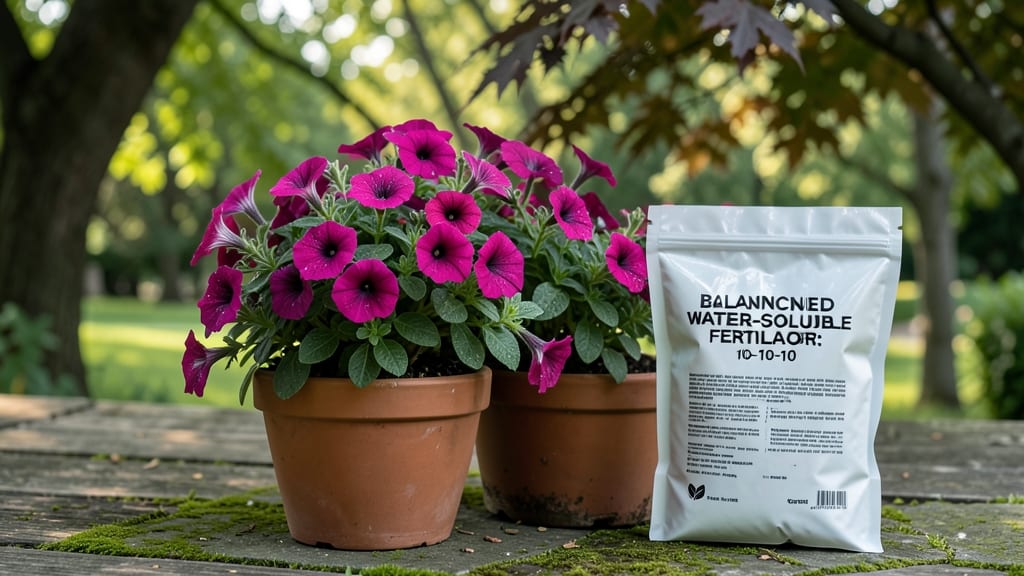
The right petunia plant fertilizer transforms your garden into a riot of color—turning a handful of blooms into a dazzling, nonstop show from spring to frost. 🌸
Struggling to keep your petunias blooming vibrantly from spring to frost? The secret lies in the right fertilizer—one that delivers the perfect nitrogen-phosphorus-potassium (N-P-K) balance to fuel lush foliage and show-stopping flowers.
Too much nitrogen and you’ll end up with leafy monsters, not petals. Too little phosphorus and your blooms will fade fast. But get it right, and your petunias will reward you with nonstop blossoms all season long.
In this guide, I’ll walk you through the best fertilizer types, when to apply them, and how to avoid common mistakes that leave your plants looking lackluster.

Optimal N-P-K ratios for petunia blooms: what your plants need
Petunias thrive when their nutrient needs are met with precision—especially the N-P-K ratio in your fertilizer. Too much nitrogen (N) leads to leafy growth at the expense of flowers, while phosphorus (P) and potassium (K) are critical for vibrant blooms and root strength.
The key is finding the right balance, adjusted by season, to keep your petunias blooming from spring until frost.
A 10-10-10 fertilizer is a classic choice for petunias, offering equal parts of all three nutrients. This balanced approach supports both foliage development and flower production, making it ideal for most gardeners.
However, if your petunias are struggling to bloom, a slightly higher phosphorus ratio (like 5-10-5 or 7-7-7) can encourage more flowers without overfeeding the leaves.
🌸
For container-grown petunias, a 5-10-5 ratio is often ideal because it reduces the risk of salt buildup in potting mix while still promoting abundant blooms. In-ground petunias, however, can handle slightly higher nitrogen ratios like 10-10-10 to support their larger root systems.
Always water thoroughly after fertilizing to prevent root burn and ensure nutrients reach the roots.
Seasonal adjustments are key to petunia success. In early spring, a higher nitrogen ratio (like 14-14-14) helps jumpstart foliage growth, but switch to a phosphorus-rich fertilizer (5-10-5) once buds form.
During peak bloom season (June-August), maintain a balanced feed (7-7-7 or 10-10-10) every 2-3 weeks to sustain energy for continuous flowering.
As temperatures drop in late summer, reduce feeding to a low-phosphorus ratio (like 3-4-6) to harden off plants for fall. By early fall, taper off fertilizing entirely—petunias are annuals and won’t survive winter, so focus on harvesting seeds or enjoying their final blooms before frost.
If your petunias develop yellow leaves or stunted growth, they may need more nitrogen. For poor blooming despite lush leaves, switch to a higher phosphorus fertilizer (e.g., 5-10-5) to redirect energy to flowers.
Always follow label instructions for application rates, and avoid fertilizing in extreme heat (above 90°F), as this can stress plants.
🌿
Pro tip: Mix a slow-release fertilizer (like Osmocote) into the soil at planting time for a steady nutrient supply all season. Pair this with liquid feeds (e.g., fish emulsion or seaweed extract) every 2-3 weeks for a two-pronged approach that keeps petunias thriving without overloading the soil.
This method is especially effective for container gardens, where nutrients leach out faster.
Finally, monitor your petunias’ response to their fertilizer regimen. Adjust ratios based on their growth patterns—if you notice excessive leaf growth with few blooms, cut back on nitrogen.
If flowers are small or sparse, increase phosphorus. With the right N-P-K balance, your petunias will reward you with bold, long-lasting blooms from spring to frost.
Best fertilizer types for petunias: organic vs. synthetic options
Choosing the right petunia fertilizer can transform your garden from ordinary to extraordinary. Petunias thrive with a balanced N-P-K ratio (like 10-10-10 or 5-10-5) to support both leaf growth and flower production.
But with so many options—organic, synthetic, slow-release, or liquid—how do you decide? Let’s break down the best choices for your container petunias or in-ground beds, including application frequency and cost-effectiveness.
Organic fertilizers, like fish emulsion or compost tea, enrich soil over time and improve microbiome health. Synthetic options, such as slow-release granules, provide quick, precise nutrition but may require more careful handling.
Your choice depends on your gardening goals, budget, and whether you prioritize long-term soil health or immediate blooms. Below, we’ll compare the top options to help you pick the perfect fit for your petunia plants.
Petunia Fertilizer Comparison
Organic liquid fertilizer
Organic liquid fertilizer
Synthetic solid fertilizer
- Rich in nitrogen for foliage
- Improves soil structure over time
- Easy to apply (liquid form)
- Strong odor (may deter some gardeners)
- Requires frequent applications (every 2 weeks)
- Higher cost per gallon than granules
- Boosts beneficial microbes in soil
- Gentle on roots and petunias
- Great for container gardens (no runoff)
- Short shelf life (must use fresh)
- Less concentrated nutrients than synthetic
- Time-consuming to brew
- Long-lasting 3-6 month release
- Precise N-P-K control (e.g., 14-14-14)
- Low application frequency (every 6-8 weeks)
- Risk of over-fertilization if overapplied
- Less organic matter added to soil
- Can burn roots if not watered in properly
For container petunias, I recommend compost tea or water-soluble synthetic fertilizers because they’re easier to control in small spaces. The roots are closer to the surface, so you want to avoid salt buildup from granules.
In in-ground beds, slow-release granules or fish emulsion work well—they feed the plants steadily and improve soil health over time.
If you’re growing petunias for continuous blooms, aim for a balanced fertilizer with equal parts nitrogen, phosphorus, and potassium (e.g., 10-10-10). During the flowering season (summer), switch to a phosphorus-heavy formula (like 5-10-5) to encourage more bud development.
Just remember: less is often more—petunias are sensitive to over-fertilization, which can lead to leaf burn or stunted growth.
Cost-wise, organic options like compost tea or fish emulsion tend to be pricier upfront but pay off in long-term soil health. Synthetic granules are cheaper per application but require more planning. For budget-friendly gardening, I suggest mixing half organic (compost) with half synthetic (granules) to balance nutrition and affordability.
Pro tip: Always water your petunias before applying fertilizer to prevent root burn. And if you notice yellowing leaves or fewer blooms, it might be time to adjust your fertilizer type or application schedule.
With the right feed, your petunias will reward you with non-stop color all season long! 🌸