
Diseases
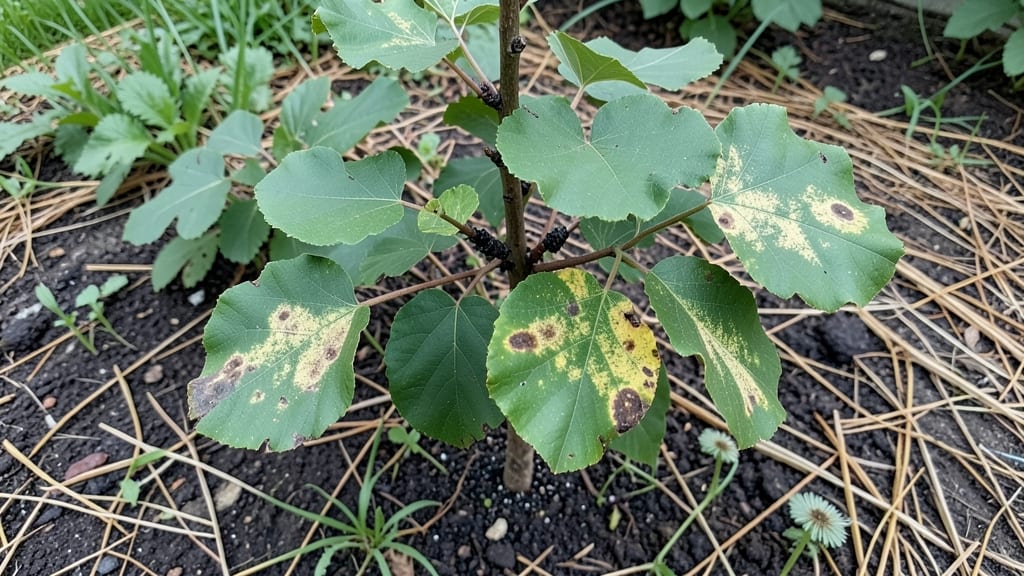
Mulberry plant diseases can turn your lush trees into sad, spotted shadows if you don't catch them early. 🌿 I've seen anthracnose blacken leaves overnight and powdery mildew smother branches like a white blanket—both ruin harvests if ignored.
The good news? Spotting these issues early means you can save your tree with simple, organic fixes before it's too late.
Most mulberry diseases start with poor air circulation or overwatering—wet leaves and crowded branches create the perfect storm. Anthracnose thrives in damp conditions, while powdery mildew loves shaded, humid spots. Root rot sneaks in when soil stays soggy for weeks.
The key is checking your tree regularly, especially after rain, and giving it room to breathe with proper spacing and pruning.
You'll stop the spread by removing infected leaves immediately and treating with a mix of baking soda (for mildew) or neem oil (for fungal spots). Healthy mulberries reward you with sweet berries and glossy foliage—no more brown patches or weak branches.
Let's get your tree back to thriving in no time.
Works for both young saplings and mature trees, whether you're growing in containers or full sun. The same principles apply no matter the size—early action is everything. Here's how to keep your mulberry strong and disease-free season after season.
Root Causes of Mulberry Ailments
Understanding why mulberry plants fall prey to diseases starts with recognizing the perfect storm of conditions that create ideal environments for pathogens. Mulberries, like all plants, are vulnerable when their natural defenses weaken—whether due to environmental stress, poor cultural practices, or biological invaders.
Below, we break down the key triggers behind common mulberry plant diseases, so you can address them at their source.
Mulberries thrive in warm climates, but extreme or inconsistent weather can turn their resilience into vulnerability. Here’s how:
- Excessive Moisture & Humidity Mulberries hate soggy roots and damp foliage. When rainfall exceeds 1–1.5 inches per week or poor drainage traps water, fungal diseases like anthracnose and powdery mildew explode.
Fungal spores thrive in 90%+ humidity, clinging to leaves and stems like a damp blanket. Why? Fungi release enzymes that break down plant cell walls, leading to leaf spots, wilting, and defoliation.
- Temperature Swings Sudden shifts—especially cold snaps below 32°F (0°C) followed by warm spells—shock the plant. Cold weakens cell membranes, making mulberries more susceptible to bacterial infections (e.g., bacterial blight). Heat stress (above 95°F/35°C) also reduces photosynthesis, starving the plant of energy to fight off pests.
- Poor Air Circulation Dense mulberry foliage or planting too close to walls/fences creates stagnant, humid microclimates. This traps moisture and promotes rust diseases (e.g., Puccinia spp.), which require free water on leaves to infect.
Healthy soil = healthy mulberries. When nutrients are off-kilter or soil structure fails, diseases sneak in.
- Compacted or Waterlogged Soil Mulberries despise wet feet. Compacted soil restricts root oxygen, leading to root rot (caused by Phytophthora or Pythium). Roots suffocate, turning brown and mushy, while the plant wilts despite moist soil. Fix it: Amend soil with compost or perlite to improve drainage.
- Nitrogen Deficiency or Excess
- Too little nitrogen? Leaves yellow (chlorosis), weakening the plant’s immune response to pathogens.
- Too much nitrogen? Lush, soft growth becomes a buffet for pests (e.g., spider mites) and fungal infections (e.g., downy mildew).
- pH Imbalances Mulberries prefer slightly acidic to neutral soil (pH 6.0–7.0). If soil is too alkaline (pH >7.5), micronutrient deficiencies (like manganese or iron) occur, making plants more prone to bacterial leaf spot.
Diseases don’t act alone—they often hitchhike on pests or exploit wounds. Here’s how:
- Fungal Hitchhikers
- Powdery Mildew (Erysiphe spp.): Spreads via wind and splashing water, coating leaves in white, powdery growth. Thrives in shady, humid conditions.
- Anthracnose (Colletotrichum spp.): Enters through leaf wounds (e.g., from hail or pruning cuts), causing dark, sunken lesions.
- Bacterial Bullies
- Fire Blight (Erwinia amylovora): Invades through flower nectar or pruning wounds, turning leaves black and crispy (like "shepherd’s crook" symptoms).
Even the best mulberry growers make mistakes that invite diseases. Here’s how:
- Overhead Watering Splashing water onto leaves launches fungal spores into the air, increasing infection rates. Drip irrigation or soaker hoses keep foliage dry.
- Poor Pruning Practices
- Leaving dead wood creates hiding spots for ambrosia beetles, which weaken trees.
Pollution and stress from urban environments or agricultural runoff can also weaken mulberries:
- Air Pollution (e.g., Sulfur Dioxide, Ozone) Causes leaf chlorosis and necrosis, reducing the plant’s ability to photosynthesize and fight diseases.
- Herbicide Drift Non-selective herbicides (e.g., glyphosate) can burn mulberry leaves, creating entry points for pathogens.
- Competition from Weeds Weeds compete for nutrients and water, stressing mulberries and making them more susceptible to root diseases like armillaria root rot.
Many mulberry diseases chain-react:
- Poor drainage → Root rot → Weakened roots → Increased susceptibility to fungal leaf spots.
- Aphid infestation → Viral spread → Stunted growth → Reduced fruit yield.
Actionable Fix: Address one stressor at a time—start with drainage, then pruning, and finally pest control to break the cycle.
Quick fixes for mulberry plant ailments
When your mulberry tree shows signs of distress, acting fast can mean the difference between a full recovery and losing your plant. Below are practical, organic solutions tailored to the most common mulberry plant diseases—each paired with prevention tips to keep your tree thriving long-term.
Cause: Overwatering, poor drainage, or fungal invasion (like Phytophthora).
How to Treat It:
- 🔥 Stop Watering Immediately
- Let the soil dry out completely for at least 3–5 days. Use a moisture meter to check—if it reads above 40%, wait longer.
- Pro Tip: 💡 If your mulberry is in a pot, move it to a well-draining container with holes at the bottom.
- 🍳 Apply Fungicide Spray
- Mix 1 tbsp baking soda + 1 quart water + a few drops of dish soap (as a surfactant). Spray the roots and soil surface.
- For severe cases, use neem oil (1 tsp neem oil + 1 quart water) to smother the fungus.
- 👨🍳 Improve Drainage
- Dig around the base to loosen compacted soil. Add perlite or coarse sand to heavy clay soil.
- Elevate the tree slightly by mounding soil under the roots (not the trunk) to encourage airflow.
- ⏰ Monitor & Prune
- Remove any black, mushy roots with sterilized shears. Dip tools in rubbing alcohol between cuts.
- If the trunk is soft or hollow, the tree may be beyond saving—consider replanting.
Prevention Tips: ✨ Water deeply but infrequently—mulberries hate soggy feet! ✨ Mulch properly—keep mulch 3–4 inches away from the trunk to prevent moisture buildup. ✨ Plant in raised beds if your soil drains poorly.
Cause: High humidity, poor airflow, or crowded foliage (fungus Erysiphe or Sphaerotheca).
How to Treat It:
- 🌡️ Boost Air Circulation
- Prune back dense branches to open up the canopy. Aim for 30–50% more space between leaves.
- Pro Tip: 💡 Install a small fan on low speed near the tree for 1–2 hours daily if humidity is consistently high.
- 🥘 Homemade Spray Remedies
- Milk spray: Mix 1 part milk + 9 parts water and spray every 7–10 days until symptoms fade.
- Copper fungicide: Use 1 tsp copper sulfate per gallon of water (follow label instructions).
- 🔪 Prune Infected Leaves
- Snip off white, powdery leaves and dispose of them in the trash (not compost). Sterilize shears after each cut.
- 🎯 Adjust Watering Habits
- Water early in the morning so leaves dry quickly. Avoid overhead sprinklers.
Prevention Tips: ✨ Space mulberry trees 10–15 feet apart to reduce humidity pockets. ✨ Water at the base (not the leaves) to keep foliage dry. ✨ Apply a preventive spray (like neem oil) every 2 weeks during humid seasons.
Cause: Dry conditions, dusty leaves, or lack of predators (tiny pests that suck sap).
How to Treat It:
- 🔥 Blast Off Pests
- Spray leaves with water (using a hose on a gentle setting) to dislodge mites. Repeat every 3–4 days for 2 weeks.
- 🍳 Soap & Oil Spray
- Mix 1 tbsp insecticidal soap + 1 tsp neem oil + 1 quart water. Spray both sides of leaves until damp.
- Pro Tip: 💡 Add 1 tsp vegetable oil to help the spray stick to leaves.
- 👨🍳 Introduce Beneficial Bugs
- Release predatory mites (Phytoseiulus persimilis) or lacewings to eat spider mites naturally.
- 🌿 Increase Humidity
- Place a shallow tray of water near the tree or mist leaves lightly daily (avoid soggy soil).
Prevention Tips: ✨ Mulch heavily to retain soil moisture and deter mites. ✨ Wipe leaves with a damp cloth weekly to remove dust (mites love dust!). ✨ Plant companion crops like marigolds or basil to repel pests.
Cause: Fungal spores (Colletotrichum) thriving in wet, warm conditions.
How to Treat It:
- 🔪 Prune & Dispose
- Remove all infected leaves and fruit (burn them if possible). Sterilize pruners with bleach (1:10 ratio).
- 🥘 Fungicide Mix
- Spray with 1 tbsp potassium bicarbonate + 1 tsp horticultural oil + 1 gallon water. Reapply every 10 days.
- 🌡️ Improve Spacing & Airflow
- Thin out branches to reduce humidity inside the canopy. Aim for sunlight reaching the lower leaves.
- ⏰ Adjust Watering
- Water only at the base and avoid late-day watering (leaves should dry by sunset).
Prevention Tips: ✨ Apply copper fungicide as a preventive spray before rainy seasons. ✨ Remove fallen leaves from the ground to eliminate spore sources. ✨ Choose resistant varieties like Morus alba if anthracnose is recurrent in your area.
Final Pro Tip: 🌟 Rotate treatments every few weeks to prevent fungal resistance. Keep a plant journal to track what works best for your mulberry’s specific needs!
Frequently asked questions
What are the most common mulberry plant diseases I should watch for?
Look for anthracnose (dark sunken spots), powdery mildew (white powdery coating), and root rot (mushy brown roots). Spider mites and bacterial blight are also frequent culprits, especially in humid climates. Early detection is key—check leaves weekly after rain.
Can I use household items to treat mulberry plant diseases?
For powdery mildew, mix 1 part milk + 9 parts water and spray leaves. Neem oil (1 tsp per quart of water) works against fungal spots and pests. Always test sprays on a small area first to avoid leaf burn.
Why does my mulberry tree keep getting powdery mildew even after treatment?
Powdery mildew thrives in shady, humid conditions and poor airflow. Prune to improve sunlight exposure and space trees 10–15 feet apart. Avoid overhead watering—water at the base instead. If humidity is consistently high, a small fan near the tree can help.
Is it safe to compost leaves from a diseased mulberry tree?
No, never compost infected leaves—they can reintroduce pathogens into your soil. Burn or trash them instead. For severe cases like anthracnose or fire blight, sterilize pruners with bleach (1:10 ratio) between cuts to prevent spreading spores.
How can I prevent mulberry plant diseases before they start?
Focus on proper spacing, drainage, and pruning. Water at the base (not leaves), mulch 3–4 inches away from the trunk, and apply neem oil every 2 weeks during humid seasons. Healthy soil with compost also boosts natural resistance.