
Succulent
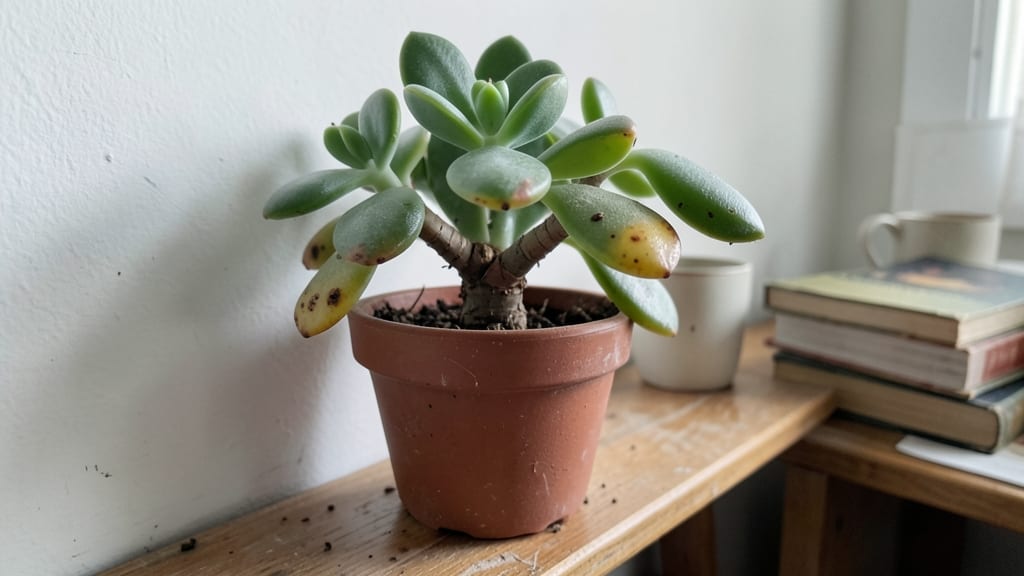
Your jade plant’s sad, droopy leaves don’t mean it’s dead—just thirsty for the right care. 🌱 I’ve nursed back more overwatered jades than I’d like to admit, and the secret lies in three simple steps that stop the rot and bring back that plump, glossy growth.
The first sign? Yellowing leaves and stems that feel mushy when you touch them—that’s root rot knocking at your plant’s door.
Here’s the thing—jade plants store water like tiny succulent water tanks, so they hate soggy soil. Most people water every other week, but that’s often too much, especially in cooler months. Instead, stick your finger an inch into the soil: if it’s damp, wait.
If it’s dry, water thoroughly until it drains from the bottom, then let excess water run out completely. This one habit alone saves plants from the slow death of overwatering.
What you’ll see after a few weeks is new growth pushing from the base, leaves perking up, and that signature jade plant thickness returning. The key is patience—don’t rush to water again until the soil dries out, even if the leaves look sad.
Within a month, your plant will bounce back, looking like it never had a drama.
This works whether your jade lives in a sunny windowsill or a shady corner—just adjust watering based on light. The same rules apply to other succulents too, so you’ll have a foolproof system for keeping them thriving. Let’s get that plant back to its happy, healthy self.
Root Causes Of Overwatering Jade Plants
Overwatering your jade plant (Crassula ovata) can turn its plump, vibrant leaves into sad, mushy messes—fast. But why does this happen? The issue often boils down to a mix of environmental mismatches, human habits, and plant biology.
Let’s break down the science (and the mistakes) behind it.
Jade plants are succulents, meaning they store water in their leaves and stems—like tiny, leafy water tanks. But when their roots sit in soggy soil for too long, they suffocate. Here’s why drainage becomes a disaster:
- Compacted or clay-heavy soil holds water like a sponge, blocking oxygen flow to roots. Jade plants need soil that releases excess water quickly—think 60% mineral, 30% organic matter, 10% perlite/pumice.
- No drainage holes in pots trap water at the bottom, creating a "root bath" that promotes root rot (a fungal infection). Even "self-watering" pots can backfire if the reservoir isn’t emptied.
- Overpotting with too much soil volume means more water retention. A pot that’s 2–3 inches larger in diameter than the plant is ideal—any bigger, and the soil stays wet too long.
Pro tip: 💡 Test your soil’s drainage by filling a pot with water, then timing how long it takes to drain completely. If it’s slower than 10–15 minutes, amend your mix with coarse sand or orchid bark.
Most plant care guides recommend watering every 2–3 weeks, but jade plants don’t follow calendars—they follow soil moisture levels. Here’s how rigid schedules backfire:
- Ignoring the "finger test": Stick your finger 1–2 inches into the soil. If it’s damp, wait. If it’s dry, water. No exceptions.
- Seasonal blindness: Watering every 2 weeks in summer heat might work, but in winter dormancy, the same routine can drown roots. Reduce watering by 50–70% in cooler months.
- Overestimating evaporation: Humid climates or indoor heating can trick you into thinking the soil is dry when it’s not. Use a moisture meter for accuracy.
Pro tip: 🌡️ Track your plant’s local climate and adjust: Desert-like conditions (low humidity, hot days) = water every 3–4 weeks. Tropical or rainy seasons = water every 2–3 weeks.
Not all pots are created equal. Some materials wick moisture back into the soil or don’t breathe, turning your jade plant’s home into a swamp. Avoid these:
| ❌ Problem Material | Why It’s Risky |
|---|---|
| Unglazed ceramic | Absorbs water like a sponge, releasing it slowly back into the soil. |
| Plastic without drainage | Traps heat and moisture, creating a greenhouse effect that accelerates rot. |
| Glazed pots (sealed) | Prevents airflow to roots, even if drainage holes exist. |
Safe bets: Terracotta (unglazed), concrete, or fabric grow bags with drainage holes. Pro tip: 🔥 If repotting, scrub old pots with a 10% hydrogen peroxide solution to kill lingering fungi or bacteria.
Jade plants thrive in arid conditions—think 30–40% humidity and good airflow. When these factors are off, excess moisture lingers:
- High humidity (above 50%) slows evaporation, keeping soil damp longer. Solution: Place a fan nearby or use a dehumidifier in humid climates.
- Crowded spaces (like terrariums or closed cabinets) trap moisture. Jade plants need 6+ hours of indirect light daily and circulation to dry out.
- Misting myths: Never mist jade plants! Water droplets on leaves can rotting stems at the base.
Pro tip: ✨ In winter, move your jade plant away from heat vents—dry air from heating systems can trick you into overwatering. Group it with other succulents to create a microclimate with balanced humidity.
Revive Your Jade Plant in 3 Steps
If your jade plant is looking sad and soggy, don’t worry—it’s not too late to bring it back to life! Overwatering can be tricky, but with the right care, your plant can bounce back stronger than ever. Here’s how to diagnose the issue and fix it fast.
The first rule of reviving an overwatered jade plant? Cut back on the water. Jade plants are succulents, meaning they store water in their leaves and stems—too much moisture leads to root rot and wilting.
- 🔹 Check the soil: Stick your finger about an inch deep. If it’s damp, wait before watering again. - 🔹 Drain excess water: If your pot has drainage holes, let it sit in a tray for 10–15 minutes to drain completely.
If not, gently tip the pot to remove excess moisture. - 🔹 Avoid misting: Jade plants hate humidity—skip the spray bottle and let the leaves dry out.
⚠️ Pro Tip: If the soil smells sour or mushy, your plant may already have root rot. In that case, you’ll need to repot it ASAP (see Step 3).
Jade plants thrive in fast-draining soil—regular potting mix holds too much moisture. Here’s how to fix it:
- 🔹 Repot with fresh soil: Use a cactus or succulent mix (or make your own by mixing regular potting soil with perlite or coarse sand). - 🔹 Choose the right pot: Terracotta or ceramic pots help wick away moisture.
If using plastic, ensure it has drainage holes (or drill some yourself). - 🔹 Elevate the pot: Place it on a cactus tray or elevated stand to prevent water from pooling at the bottom.
💡 Quick Fix: If repotting isn’t an option, mix in perlite or pumice into the existing soil to improve aeration.
Once you’ve stopped the watering cycle, focus on reviving the plant’s health and preventing further damage.
- 🔹 Prune dead leaves: Use sterilized scissors to snip off yellow, mushy, or blackened leaves. This helps the plant redirect energy to healthy growth. - 🔹 Let it dry out: Place the plant in bright, indirect light (no direct sun yet—it’s still stressed).
Avoid watering for at least 7–10 days to let the roots recover. - 🔹 Fertilize lightly (after recovery): Once new growth appears, use a balanced, diluted succulent fertilizer (like 20-20-20 at half strength) once a month in spring and summer.
✨ Prevention Tip: After recovery, water only when the soil is bone-dry (about every 3–4 weeks in winter, 2 weeks in summer).
Now that your jade plant is on the mend, follow these golden rules to keep it thriving:
| Do This ✅ | Avoid This ❌ |
|---|---|
| Water deeply but rarely | Watering on a schedule |
| Use well-draining soil | Heavy, clay-based soil |
| Place in bright, indirect light | Dark corners or harsh direct sun |
| Repot every 2–3 years | Keeping it in the same pot too long |
| Prune yellow or dead leaves | Letting rot spread |
💡 Bonus Tip: If your jade plant is severely root-bound, gently tease the roots when repotting to encourage better growth.
With patience and the right care, your jade plant will perk up in no time—and you’ll have a thriving, drought-resistant beauty to enjoy for years! 🌟
Frequently asked questions about reviving an overwatered jade plant
How do I know if my jade plant has root rot from overwatering?
Check the stems and soil for these signs: mushy, blackened stems at the base, yellowing leaves that fall easily, and soil that smells sour or damp even days after watering. Gently tug on the plant—if it pulls out easily, root rot is likely. Healthy roots should be firm and white.
Can I save a jade plant with completely black stems?
It depends! If the blackened area is small, you can prune above the healthy green tissue with sterilized scissors and let it dry for 3–5 days before repotting in fresh soil. If most of the stem is black, the plant may not recover—but try propagating the healthy cuttings in dry soil.
Why does my jade plant keep getting overwatered even when I stop?
This usually happens because the soil retains too much moisture. Test your mix by filling a pot with water and timing drainage—it should empty in 10–15 minutes. If not, amend with 50% perlite or coarse sand. Also, ensure your pot has drainage holes and isn't sitting in saucers of standing water.
How soon can I water my jade plant after fixing overwatering?
Wait until the soil is completely dry—stick your finger 2 inches deep. In summer, this might take 3–4 weeks; in winter, 6–8 weeks. Overwatering recovery requires patience—rushing leads to relapse. Always water thoroughly until it drains from the bottom.
Will my jade plant grow back after losing all its leaves?
Yes! If the stem is still firm and green, new leaves will regrow from the base. Place the plant in bright, indirect light and avoid watering for 10–14 days to prevent further stress. Healthy stems can sprout leaves within 4–8 weeks—just be consistent with dry soil.