
Pruning
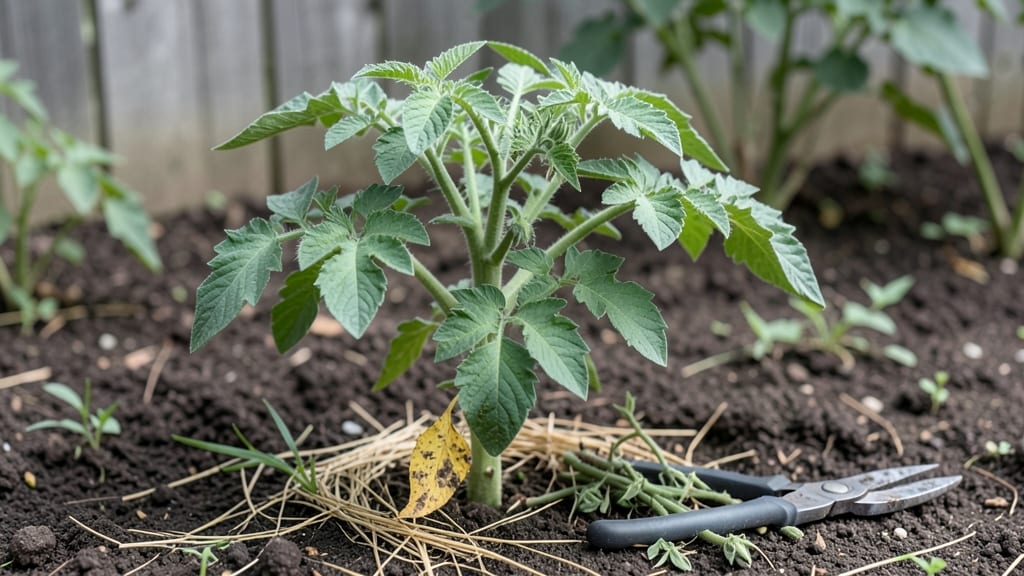
Pruning young tomato plants transforms leggy seedlings into sturdy, productive bushes—just three strategic cuts can double your harvest. 🌱 I learned the hard way that skipping this step leads to weak stems and small fruit, but once I mastered the technique, my plants went from scraggly to showstopping.
The key is timing: wait until plants hit 12–18 inches tall, then focus on removing suckers (those little shoots in the leaf axils) while keeping the main stem strong.
All you need is a clean pair of pruning shears and 10 minutes of focused attention. For indeterminate varieties (the vining types), prune suckers weekly to encourage bushier growth, while determinate tomatoes (bush types) need minimal pruning—just remove damaged leaves.
The goal is airflow: better circulation means fewer diseases and bigger, riper fruit by harvest time.
By mid-summer, you’ll see the difference: thicker stems, more flowers, and tomatoes the size of your palm instead of marbles. The plants will reward you with heavier yields and easier maintenance—no more wrestling with floppy vines or blight-ridden leaves.
Once you try it, you’ll never go back to letting them grow wild.
Works for both container and in-ground plants, and the same principles apply whether you’re growing heirlooms or hybrids. Now grab those shears—your future tomatoes are waiting.
📚 In This Guide
- What you need
- Instructions
- Tips and common mistakes
- Wrapping up and next steps
What you need
- ● Pruning shears or sharp bypass pruners – Choose bypass-style (not anvil) for cleaner cuts. Size: 5-7 inches, with stainless steel blades to prevent rust.
- ○ Gloves – Garden gloves (nitrile-coated for grip) to protect hands from thorns and dirt. Optional: Long sleeves for extra defense!
- ● Disinfectant (70% isopropyl alcohol or bleach solution) – 1 part bleach to 9 parts water to sterilize tools between cuts and prevent disease spread.
- ● Small bucket or bag – For collecting pruned branches (compost them later!).
- ● Watering can or hose with a gentle spray nozzle – To hydrate plants before and after pruning.
- ● Hand sanitizer or soap – For cleaning hands after handling plants.
- ● Plant tie or soft twine – If your tomato plants need staking or support post-pruning.
- ● Garden twine or clips – To secure suckers to stems if you’re practicing determinate tomato training.
- ○ Magnifying glass (optional) – Helps spot tiny suckers or pests on young plants.
Step-by-Step guide to pruning young tomato plants
Here’s how I shape my tomato plants for stronger stems and more abundant harvests—no guesswork involved.
✂️ Step 1: Remove Lower Leaves to Improve Airflow and Prevent Disease
Start by stripping away all leaves from the bottom 6 inches of the plant’s stem. These lower leaves touch the soil and trap moisture, creating the perfect conditions for blight. Use clean, sharp pruning shears to make clean cuts just above leaf nodes—never tear leaves, as this damages the plant.
Watch for the first set of leaves that sits above the soil line. These are your new starting point. Removing everything below them ensures sunlight reaches the lower fruit and strengthens the main stem. This step is critical for indeterminate varieties, which grow continuously.
✂️ Step 2: Prune Suckers for Bushier Growth
Suckers are the small shoots that grow in the V-shaped crotch between the main stem and a branch. These compete with your plant for energy, so you’ll want to remove them regularly. Pinch suckers off with your fingers or cut them at the base—never leave a stub, as it can regrow.
Focus on suckers that are smaller than a pencil. Larger ones can be trimmed back to a leaf node, but tiny suckers are easiest to remove by hand. I check for suckers every 7-10 days during the growing season, especially after heavy rain or wind, which can stress the plant and encourage new growth.
✂️ Step 3: Trim Overcrowded Branches to Boost Fruit Production
Once your plant has 3-4 main stems, stop pruning suckers to allow those stems to thicken and support fruit. However, if you notice branches growing too close together or rubbing against each other, trim the weaker one back to a leaf node. This prevents disease and ensures each remaining branch gets enough sunlight and nutrients.
Look for stems that are pale or spindly—these are the ones to remove. Keep the strongest, most upright branches, as they’ll produce the heaviest fruit. Avoid over-pruning; the goal is balance, not bare stems. After this step, your plant should look fuller and more structured.
⏰ Step 4: Time Your Pruning for Maximum Impact
Prune in the early morning or late afternoon when temperatures are cooler. This reduces stress on the plant and gives it time to recover before the heat of the day. Avoid pruning after heavy rain, as wet foliage can harbor fungal spores and increase the risk of infection.
Stop pruning 4-6 weeks before your first frost to allow the plant to harden off and prepare for dormancy. At this stage, focus on harvesting fruit rather than shaping the plant. You’ll know you’ve pruned correctly when your tomatoes are larger, fewer in number, and ripening more evenly than before.
Tips & tricks for perfect tomato pruning
Don't let these common mistakes turn your thriving tomato plants into a tangled mess—these pro tips will help you shape them like a seasoned gardener.
The 6-Inch Rule: When removing lower leaves in Step 1, use a ruler or tape measure to confirm that exact 6-inch mark from the soil line. I've seen gardeners stop too early, leaving leaves that still touch the ground—this defeats the purpose of improving airflow. For extra precision, mark the spot with a small piece of tape before you start pruning.
Sucker Spotting Secret: In Step 2, I've found that using a small flashlight can help you spot tiny suckers that blend into the plant's foliage—especially on cloudy days. Focus on the V-shaped areas between the main stem and branches, and remember that suckers smaller than a pencil are easiest to remove by hand. If you're unsure, pinch and check—you can't damage the plant by removing a non-existent sucker.
Branch Selection Strategy: For Step 3, here's what I do: I run my fingers along each branch and feel for the thickness and rigidity. The strongest branches will have a firm, woody feel, while weaker ones will be soft and bendy. Keep in mind that you want to maintain a balanced shape—aim for a plant that looks like an upside-down pyramid rather than a top-heavy tree.
Timing is Everything: When following Step 4's timing advice, I always set reminders on my phone for those 7-10 day sucker checks. The early morning timing is crucial—if you prune in the heat of the day, the plant can go into shock. And that 4-6 week frost warning? Mark your calendar now so you're not scrambling when fall arrives unexpectedly.
Pro Tips for Prune Young Tomato Plants
- Don't let these common mistakes turn your thriving tomato plants into a tangled mess—these pro tips will help you shape them like a seasoned gardener.
- The 6-Inch Rule: When removing lower leaves in Step 1, use a ruler or tape measure to confirm that exact 6-inch mark from the soil line.
- Sucker Spotting Secret: In Step 2, I've found that using a small flashlight can help you spot tiny suckers that blend into the plant's foliage—especially on cloudy days.
Frequently asked questions
Got questions?
Pruning young tomato plants can feel tricky at first, but these answers will help you grow like a pro!
When should I start pruning my young tomato plants?
Begin pruning once your plants reach 12–18 inches tall and have 4–6 true leaves. For indeterminate varieties (like cherry tomatoes), prune regularly throughout the growing season. Determinate (bush) tomatoes need minimal pruning—just remove suckers if desired. Wait until after transplanting to avoid stressing the plant.
What if I accidentally prune too much?
Don’t panic! If you’ve removed too many leaves or stems, your plant may slow down temporarily. Focus on healthy growth—prune back to a leaf node (the bump where leaves grow) to encourage new shoots. Avoid cutting into the main stem. Over-pruned? Keep the plant well-watered and fertilized to bounce back.
Will pruning reduce my tomato yield?
Not if done correctly! Pruning increases airflow and sunlight, which actually boosts fruit production. However, over-pruning (especially early on) can stress the plant. Aim for 3 main stems (for indeterminate varieties) to maximize yield. Pro tip: Save suckers (side shoots) for grafting or composting if you’re not using them.
Can I prune tomato plants in hot or cold weather?
Prune during cool, cloudy mornings to reduce stress. Avoid pruning in extreme heat (above 90°F) or freezing temps, as it can shock the plant. If you must prune in heat, do it early or late in the day and water thoroughly afterward. Cold snaps? Wait until temperatures stabilize.
What’s the difference between suckers and leaves I should remove?
Suckers
are the small shoots growing in the _V_-shaped junction between the main stem and a branch—always remove these to direct energy to fruit. Lower leaves (near the soil) can be pruned to improve airflow, but leave upper leaves (near flowers/fruit) intact. Yellow or diseased leaves? Remove them immediately to prevent spread.
Wrapping up and next steps
Pruning young tomato plants might seem intimidating, but with just three simple cuts, you’ll unlock healthier growth, bigger yields, and happier vines! 🌱 Remember, the key is to remove suckers early, balance air circulation, and encourage energy toward fruit production.
Now that you’re armed with the know-how, grab those pruners and get ready to watch your garden thrive.
Your next step? Monitor your plants weekly—consistent pruning keeps them strong and productive. Happy gardening! 🌿