
Watering
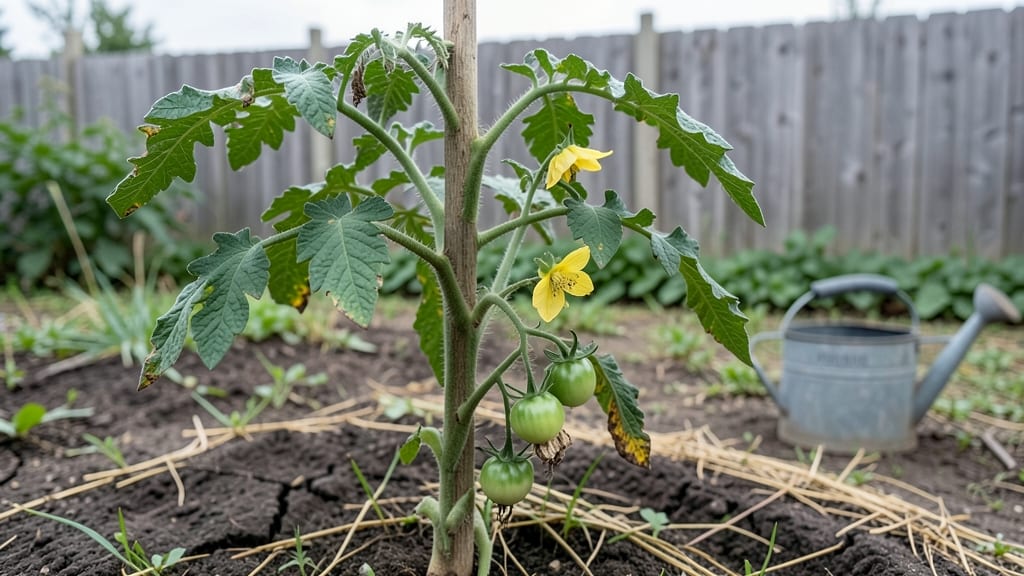
The underwatered tomato plants in your garden—leaves curling like parchment, fruit splitting open—are easier to revive than you think. 🌱 I’ve nursed back more than a dozen struggling tomato plants, and the fix isn’t complicated: it’s about timing, soil, and a few smart tweaks that work in just days.
The first step? Check your watering routine—most people either drown roots or leave them high and dry. Tomatoes need 1-2 inches of water per week, delivered deep so roots grow strong.
If your soil feels dry past the first inch, you’re underwatering. Mulch helps too—it locks in moisture and keeps roots cool, which is half the battle.
Within 24-48 hours of proper watering, you’ll see leaves perk up and new growth pushing out. The cracked fruit will stop splitting, and your plants will bounce back faster than you’d expect. The key is consistency—no more hit-or-miss watering, just steady hydration.
This works for container tomatoes too, just adjust the volume—5-7 gallons per plant per week keeps them thriving. And if the problem keeps coming back, it’s time to dig deeper (literally) and check your soil’s drainage. Let’s get those plants back in action!
Root Causes Of Thirsty Tomatoes
When your tomato plants start looking wilted, droopy, or just plain sad, the most likely culprit is underwatering—but it’s rarely as simple as "forgetting to water."
Several interconnected factors can leave your plants parched, each with its own scientific explanation. Let’s break down the real reasons your tomatoes are begging for hydration.
Tomatoes thrive on consistency. Their deep root systems need a steady supply of moisture to absorb nutrients efficiently. When watering is sporadic—like skipping a day or two during a heatwave—roots struggle to compensate, leading to:
- Shallow root development: Without regular deep watering, roots stay near the surface, making them vulnerable to drying out quickly.
- Osmotic stress: Fluctuating moisture levels force roots to work harder to absorb water, weakening their ability to take up nutrients.
- Blossom-end rot risk: Uneven watering disrupts calcium uptake, causing that dreaded black, mushy spot on fruits.
💡 Pro Tip: Aim for 1–1.5 inches of water per week, delivered deeply (6–8 inches into soil) 2–3 times per week rather than light daily sprinkles.
If your soil is clay-heavy, rocky, or overly compacted, water may pool on the surface instead of penetrating where roots need it most. Signs of drainage issues include:
- Puddles lingering after watering (even 30+ minutes later).
- Soil that feels hard or rubbery when squeezed (like a stress ball).
- Roots growing outward instead of downward (a sign they’re suffocating).
Compacted soil also reduces oxygen flow to roots, slowing their ability to absorb water. 🌡️ Fix It: Amend soil with compost or perlite to improve aeration, or use raised beds for better control.
Tomatoes are water hogs in hot, dry, or windy conditions. When temperatures climb or gusts pick up, plants lose moisture through:
- Transpiration: Leaves release water vapor faster than roots can replace it, causing wilting even if soil seems moist.
- Evaporative loss: Wind strips away humidity around leaves, accelerating dehydration.
- Root zone drying: Heat bakes the topsoil, making it harder for roots to access moisture.
✨ Actionable Fix:
- Water early morning or late evening to reduce evaporation.
- Use mulch (straw or wood chips) to retain soil moisture and cool roots.
- Consider shade cloth (30–50%) during peak heat (10 AM–4 PM).
Some mulches—like plastic or black landscape fabric—can trap heat near roots, increasing water loss. Even organic mulches (if too thin) may not provide enough insulation. The result?
- Soil stays dry faster because heat escapes upward.
- Roots struggle to cool down, slowing water absorption.
- Fungal risks increase if mulch is too dense (blocking airflow).
🔥 Better Mulch Choices:
- Straw or hay (breathable, insulates roots).
- Wood chips (slow-release organic matter).
- Avoid plastic—it reflects heat and suffocates soil.
Young tomato plants (or newly transplanted seedlings) have underdeveloped roots that can’t reach deep water sources yet. Common triggers:
- Transplant shock: Disturbed roots take 1–2 weeks to regrow, leaving plants vulnerable.
- Small containers: Roots in pots dry out 3x faster than in-ground plants.
- Slow starter fertilizer: Over-fertilizing early can burn roots, reducing their ability to absorb water.
👨🍳 Quick Revival:
- Water daily for the first 7–10 days after transplanting.
- Use root stimulator (like seaweed extract) to encourage growth.
- Avoid fertilizing until 2 weeks post-transplant.
Most underwatering issues stem from a mix of these factors. The good news? Once you identify the root cause (pun intended), reviving your tomatoes is often as simple as adjusting your watering routine or soil conditions.
Stay tuned for our next section on quick fixes to bring your plants back to full, juicy life! 🍅💦
Revive & Prevent Thirsty Tomatoes
Here’s how to nurse your parched tomato plants back to health—and keep them thriving without the guesswork.
If your plants are already wilting, deep watering is your first move. Use a soaker hose or drip irrigation to deliver water slowly to the roots (about 1–2 inches per week, depending on soil and heat). Avoid overhead sprinklers—they waste water and encourage disease.
How to do it right:
- Water in the morning (6–9 AM) to reduce evaporation and fungal risks.
- Check soil moisture by sticking your finger 2 inches deep—if it’s dry, water again.
- Use a moisture meter for precision (especially in sandy or rocky soil).
💡 Pro Tip: If your soil is hard and cracked, soak the area thoroughly for 20–30 minutes to break up compaction.
Thirsty plants struggle because water evaporates too fast. Mulch (straw, grass clippings, or wood chips) locks in moisture and cools roots. Apply a 2–4 inch layer around the base (but keep it 6 inches away from the stem to prevent rot).
Best mulch options:
| Type | Pros | Cons |
|---|---|---|
| Straw | Retains moisture, weed-free | Can harbor rodents if wet |
| Grass Clippings | Free, breaks down fast | May compact over time |
| Wood Chips | Long-lasting, aesthetic | Takes time to decompose |
🌡️ Heat Hack: In scorching weather, wet burlap sacks and drape them over plants for shade + humidity boost.
Not all soil holds water the same way. Clay soil? It drains slowly—water less but deeper. Sandy soil? It dries fast—water more frequently but lightly.
| Soil Type | Watering Schedule | Signs of Over/Under-Watering |
|---|---|---|
| Clay | 2–3x/week, deep soaks | Cracked soil, yellow leaves |
| Loamy | 1–2x/week, moderate | Wilting, dry topsoil |
| Sandy | Daily light watering | Crusty surface, root exposure |
✨ Soil Test Trick: Dig a hole, fill it with water, and time how long it takes to drain. Fast drain? Water more often. Slow drain? Space out waterings.
If you’re still struggling, invest in smarter tools:
- Self-watering planters (great for containers).
- Drip irrigation kits (automates deep watering).
- Olla pots (clay pots that slowly release moisture).
🔥 DIY Fix: Repurpose a plastic bottle as a slow dripper—poke holes in the cap, bury it near roots, and fill it with water.
Once your plants perk up, stay consistent with these habits:
- Water at the base (never the leaves) to prevent disease.
- Group tomatoes with thirsty pals (peppers, basil) to conserve moisture.
- Use drought-resistant varieties (e.g., ‘Solar Fire’ or ‘Heatmaster’) if your climate is brutal.
- Monitor weather forecasts—adjust watering before heatwaves.
🎯 Final Check: Yellow lower leaves? It’s often overwatering. Crispy edges? Underwatering. Both? Time to reassess soil and shade!
Within 3–5 days, your tomatoes should bounce back—ready for juicy harvests. 🍅💚
Frequently asked questions
How do I tell if my tomato plants are truly underwatered?
Check for wilted leaves that don’t perk up when watered, dry, cracked soil 2+ inches deep, or crispy leaf edges. A simple test: Stick your finger in the soil—if it’s dry past 1 inch, your plants need water. Also watch for blossom-end rot (black spots on fruit) or drooping stems that feel stiff.
Can I fix underwatered tomato plants overnight?
No, but you can see improvement in 24-48 hours with deep watering. For severe cases, soak the root zone for 20-30 minutes using a soaker hose, then mulch heavily to retain moisture. Avoid overhead watering—it wastes water and spreads disease. Consistency is key: water deeply 2-3x/week moving forward.
Why do my tomato leaves turn yellow when I water more?
Yellowing leaves often signal overwatering, not underwatering. Roots need oxygen—if soil stays soggy, they suffocate. Check for mushy stems or pale yellow leaves (vs. brown crispy edges from drought). Let soil dry slightly between waterings, and improve drainage with compost or raised beds. If roots smell rotten, you’ve overwatered.
What’s the best time of day to water tomato plants?
Always water early morning (6-9 AM) to reduce evaporation and fungal risks. Avoid evening watering—wet leaves overnight invite disease. For container tomatoes, water when the top inch of soil feels dry. Pro tip: Use a moisture meter for accuracy, especially in sandy or rocky soil.
Will mulch really help my underwatered tomatoes?
Mulch (straw, wood chips) locks in 30% more moisture and cools roots. Apply a 2-4 inch layer around plants, keeping it 6 inches from stems to prevent rot. For extreme heat, try wet burlap sacks draped over plants to boost humidity. Avoid plastic mulch—it traps heat and dries out soil faster.