
Pests and Diseases
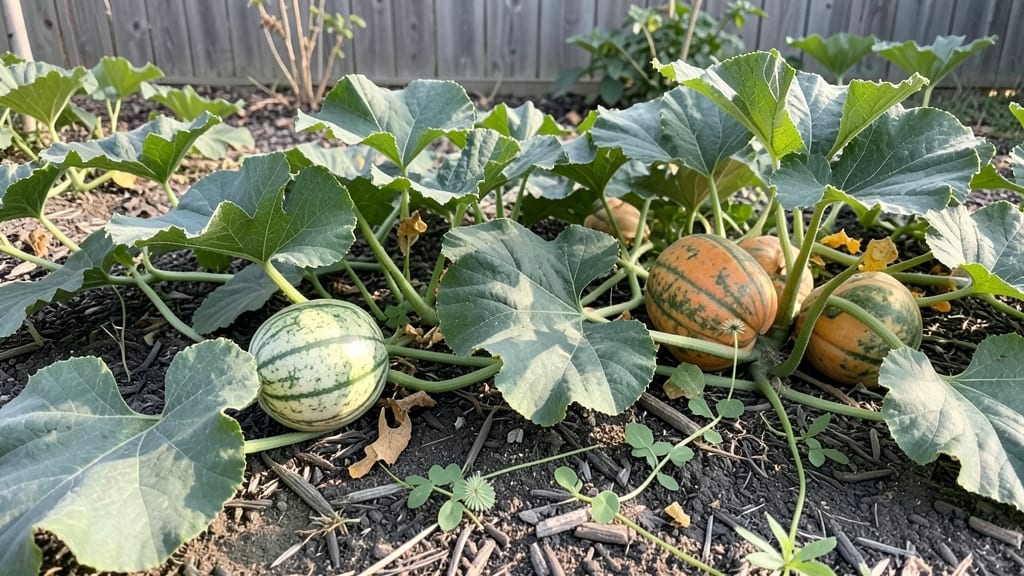
You can plant watermelon and pumpkins together, but success depends on strategic spacing and companion planning to avoid nutrient competition and yield loss.
Both plants demand heavy feeding and sprawling space, so their vines will battle for resources if left unmanaged. 🌱 I've found that dedicating separate sections of a large raised bed—with at least 8 feet between vines—helps reduce competition while keeping them close enough for shared irrigation.
The key is monitoring soil fertility, as pumpkins deplete nutrients faster than watermelons, potentially starving your melons if you're not replenishing with compost or balanced fertilizer.
Another smart approach is staggered planting: start pumpkins 2-3 weeks earlier than watermelons, since pumpkins mature faster. This way, you can harvest pumpkins first, freeing up space for watermelon vines to spread without interference.
Just be prepared to prune aggressively—watermelon vines can grow 20 feet long if unchecked, while pumpkin vines need similar room to develop properly.
💡 In This Article
- Growing Conditions for Watermelon and Pumpkin Co-Planting
- Maximizing Yield When Planting Watermelons and Pumpkins Together
Growing conditions for watermelon and pumpkin co-planting
Here's what's actually happening when you plant these two heavy feeders together: both watermelons and pumpkins develop sprawling vines that can spread 15-20 feet in a single season, creating a competition for sunlight that can reduce fruit production by up to 30% if not managed.
The science behind this involves their root systems—watermelons develop roots that spread horizontally within the top 12 inches of soil, while pumpkins send roots deeper (2-3 feet) to access nutrients.
This vertical/horizontal divide means they're not directly competing at the root level, but their canopy competition for sunlight becomes fierce as both plants mature.
The ideal climate zones for dual cultivation are USDA zones 4-10, where both plants thrive with 120-150 frost-free days. In cooler climates (zones 4-6), you'll need to use black plastic mulch to warm the soil to 70-85°F—the minimum temperature both seeds require to germinate.
What most people don't realize is that pumpkins actually prefer slightly cooler soil temperatures (60-70°F) for germination, while watermelons need 75-90°F. This creates a delicate balance where timing becomes critical—plant pumpkins first when soil reaches 65°F, then watermelons once it hits 75°F to prevent germination delays.
Soil requirements present another challenge: both plants demand fertile, well-draining soil with a pH between 6.0-6.8, but their nutrient needs differ. Pumpkins are heavier feeders, requiring 2-3 pounds of nitrogen per 100 square feet during their growth cycle, while watermelons need slightly less (1.5-2 pounds).
The key factor is organic matter—amend your soil with 4-6 inches of compost before planting to ensure both plants have enough nutrients. Without this, you'll see stunted growth, smaller fruits, and increased susceptibility to diseases like powdery mildew, which thrives in crowded, nutrient-deficient conditions.
Sunlight competition becomes the biggest hurdle as both plants mature. Watermelon vines develop broad, flat leaves that cast dense shade, while pumpkin leaves are more lobed but equally expansive.
When planted too closely (within 6 feet), the combined canopy can block 70-80% of sunlight from reaching the soil surface, creating a cooler, more humid microclimate that encourages fungal growth.
This is why I recommend dedicating separate 8x8 foot sections in a raised bed or using trellises to lift vines off the ground—this increases air circulation and reduces disease pressure while maintaining access to sunlight.
One surprising complement between these plants is their pest-repelling qualities. Pumpkins naturally deter squash vine borers, which can devastate watermelon plants, while watermelons help repel cucumber beetles that target pumpkins. This natural pest control creates a beneficial balance when planted with proper spacing.
The trade-off is that you'll need to monitor for aphids, which both plants attract—regular applications of neem oil can help manage these pests without harming beneficial insects.
For climate-specific considerations, northern gardeners (zones 4-6) should focus on early-maturing varieties like 'Jackpot' watermelon (70 days) and 'Small Sugar' pumpkin (85 days) to maximize harvest before frost.
In warmer zones (7-10), you can extend the growing season by planting watermelons in early spring or late summer when temperatures dip below 90°F—both plants struggle with heat stress above this threshold, leading to blossom drop and poor fruit set.
What I've found works best in my own garden is creating a "companion block" system where watermelons and pumpkins share the same bed but are planted in alternating rows with 4-foot spacing between plants and 6-foot spacing between rows.
This gives each plant enough room while allowing some canopy overlap that actually improves pollination—bees are more likely to visit when multiple flowering plants are nearby. The visual effect is stunning: golden pumpkin blossoms contrasting with watermelon's broad, waxy leaves, all thriving under the same sun.