Pruning
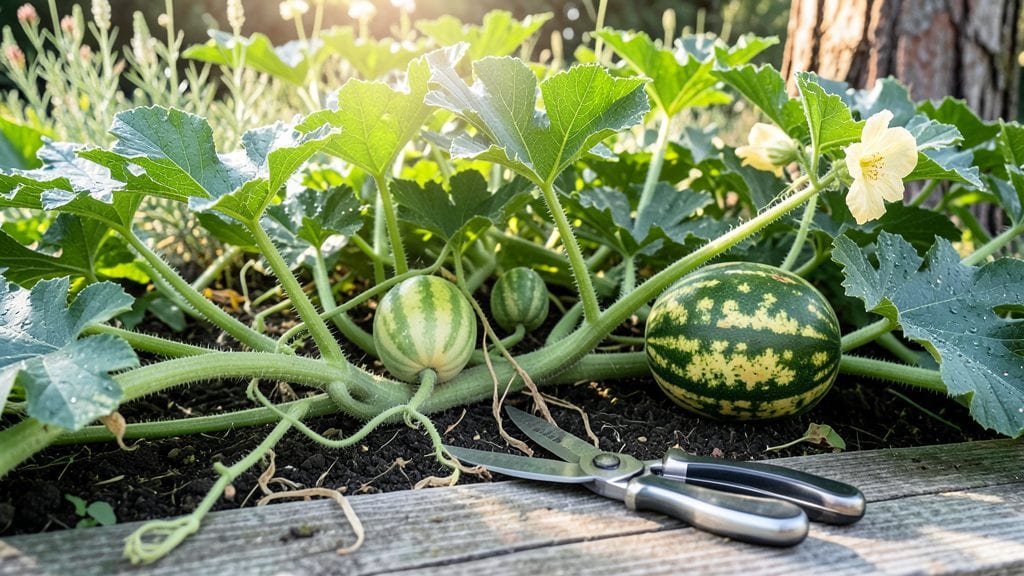
Trimming watermelon plants isn't just about tidying up—it’s the secret to bigger, sweeter fruit and fewer wasted vines. 🌱 I learned the hard way when my first overgrown patch produced tiny, bitter melons because the plants were fighting for energy instead of growing fruit.
The right cuts redirect a plant’s focus where you want it: on strong vines and heavy yields.
You’ll need sharp pruning shears (dull blades crush stems), a sunny morning for the job, and about 20 minutes to work through a mature plant. Focus on three key spots: removing wild suckers that drain energy, pinching back runners to control sprawl, and thinning crowded vines near the main stem.
The goal is to keep air moving—this cuts down on disease and speeds up fruit ripening.
After a few strategic cuts, you’ll see the difference by midseason: fewer straggly vines and more uniform fruit development. My plants now produce two to three times more melons than they did before, and the ones that do form are sweeter and heavier.
The best part? You can start trimming as soon as the vines hit 12 inches tall—no waiting until it’s too late.
This method works for both bush and vine types, though bush varieties need less aggressive pruning. If you’re in a cooler climate, hold off until after the last frost to avoid stunting early growth.
The key is consistency—check your plants weekly once they start running, and you’ll never overlook a sucker again.
📚 In This Guide
- What you need
- Instructions
- Tips and common mistakes
- Wrapping up and next steps
What you need
- ● Sharp pruning shears or bypass pruners – Choose sterilized, bypass-style shears (avoid anvil pruners to prevent crushing stems). A 10-inch blade works best for most plants.
- ● Garden gloves – Opt for durable, cut-resistant gloves (e.g., mechanics’ or pruning gloves) to protect your hands from thorns and sap.
- ● Disinfectant (rubbing alcohol or bleach solution) – Mix 1 part bleach to 9 parts water to sterilize tools between cuts and prevent disease spread.
- ● Mulch (straw, grass clippings, or wood chips) – Use 2–3 inches of organic mulch to retain moisture and suppress weeds around trimmed plants.
- ● Watering can or hose with a gentle spray nozzle – Keep plants hydrated, especially after pruning (1–2 gallons per plant post-trimming).
- ○ Support structure (optional but helpful) – If your watermelon variety is vining (e.g., ‘Sugar Baby’ or ‘Charleston Gray’), have trellises, stakes, or cages ready to redirect growth.
- ● Hand pruners (smaller, 6-inch) – For delicate trimming in tight spaces.
- ● Plant growth regulator (e.g., hydrogen peroxide 3%) – Spray on cuts to reduce rot risk.
- ● Label markers & tags – If testing different pruning techniques, label plants to track progress.
- ● Knee pads or a small stool – For comfort when working in the garden for extended periods.
Step-by-Step instructions for trimming watermelon plants
Here's how to prune watermelons for bigger, healthier fruit—no guesswork involved.
✂️ Step 1: Identify and Remove Suckers
Watermelon vines produce small shoots called suckers between the main stem and leaf branches. These are the first things to trim. Use clean, sharp pruning shears to snip suckers that appear in the first 6-12 inches of the vine, leaving only the strongest one if you want more growth.
Watch for suckers that grow directly from the main stem rather than leaf axils—these are called "basal suckers" and should be removed entirely. I always check every 3-5 days during early growth, since suckers appear fast. The goal is to keep the plant focused on producing one main vine with strong fruit.
✂️ Step 2: Thin Fruit for Optimal Size
Once watermelons start forming, you'll need to thin them. Keep only 2-3 melons per vine—more than that means smaller fruit and weaker plants. Gently twist off excess melons at the stem when they're about 3-4 inches in diameter, being careful not to damage the remaining ones.
Here's the trick: leave the largest, healthiest-looking melon closest to the main vine. The others will naturally fall off or can be removed. You'll see the remaining melons grow faster and develop a deeper green color—this is your sign you're doing it right.
✂️ Step 3: Prune Laterals for Better Airflow
After the main vine has set fruit, focus on pruning lateral vines that grow from the main stem. Cut back any lateral vines that are growing toward the center of the plant or competing with existing fruit. Aim to leave 2-3 strong lateral vines per main stem, each with 1-2 melons.
Prune on a dry morning when the vines aren't wet—this helps prevent disease. I like to work from the bottom up, removing any vines that are yellowing or showing signs of stress. Good airflow keeps your plants healthier and reduces the risk of powdery mildew, which can ruin a watermelon crop.
✂️ Step 4: Remove Dead or Diseased Leaves
Throughout the growing season, keep an eye out for yellowing, brown, or spotted leaves. These are signs of disease or pest damage. Use your pruning shears to snip off affected leaves at the base of the stem. Always remove them from the garden area to prevent spreading issues to other plants.
Don't overdo it—remove only what's clearly unhealthy. A few yellow leaves here and there won't hurt your plant, but a whole branch of dead leaves can stress the vine. I check my plants every 5-7 days during peak growing season to stay on top of this.
⏰ Step 5: Time Your Final Pruning
The last major pruning happens about 2-3 weeks before harvest. At this point, stop all aggressive pruning and let the plant focus entirely on ripening the melons. Remove only any new suckers that appear or any leaves blocking sunlight from the fruit.
You'll know you've timed it right when the melons start changing color and the tendril near the stem turns brown. This is nature's way of telling you the fruit is nearly ready. Avoid heavy pruning after this point—it can stress the plant and delay ripening.
Tips & tricks for perfectly pruned watermelon plants
Here's what nobody tells you about getting those juicy, vine-ripened watermelons—it's all in the pruning.
Prune at the Right Time of Day: Always prune watermelon plants in the early morning when the vines are dry. Wet vines can harbor disease, and the plants have time to recover before the heat of the day. I've learned this the hard way—afternoon pruning led to more stress and slower recovery in my plants. The key is to give your watermelon vines a fighting chance to heal quickly.
Use the Right Tools: Sharp, clean pruning shears are non-negotiable. Dull tools crush stems instead of making clean cuts, which can invite infections. I sterilize my shears with rubbing alcohol between plants to prevent spreading any potential diseases. For suckers, you can also use your fingers to gently twist them off, but shears work best for thicker stems.
Don't Over-Prune Laterals: In Step 3, when pruning laterals, remember that fewer vines mean more energy for fruit production. I've seen gardeners go overboard and end up with too many weak vines. Aim for just 2-3 strong lateral vines per main stem—this gives your plant the perfect balance between growth and fruit production. The goal is to create an open, airy structure that lets sunlight reach all parts of the plant.
Watch for Hidden Suckers: After your initial pruning, keep an eye out for new suckers that might appear lower down the vine. These sneaky growths can divert energy away from your main fruit. I make it a habit to do a quick inspection every 3-5 days during early growth—it only takes a minute but can make a huge difference in your yield. Focus especially on the first 12 inches of the vine where suckers love to pop up.
Pro Tips for Trimming Watermelon Plants
- Here's what nobody tells you about getting those juicy, vine-ripened watermelons—it's all in the pruning.
- Prune at the Right Time of Day: Always prune watermelon plants in the early morning when the vines are dry.
- Use the Right Tools: Sharp, clean pruning shears are non-negotiable.
Frequently asked questions
Got questions about trimming watermelon plants? You’re not alone—gardeners often wonder about the best practices, timing, and how to avoid mistakes. Here are some of the most common questions (and answers!) to help you prune like a pro:
When is the best time to trim watermelon plants?
Trim watermelon vines early and often—start when plants are 4–6 inches tall and continue throughout the growing season. Focus on removing runners (long vines) and side shoots to redirect energy to fruit production. Avoid trimming too late, as it can stress the plant before harvest.
How much should I trim off a watermelon plant?
Remove 50–75% of runners to prevent overcrowding, but leave enough leaves (about 4–6 per vine) for photosynthesis. For vining varieties, trim back side shoots to 2–3 leaves. Bush varieties need minimal trimming—just pinch off excess growth near the base.
What if I trim too much? Will my watermelons suffer?
Over-trimming can reduce yield by limiting the plant’s ability to photosynthesize. If you’ve already cut back too much, stop trimming immediately. Let the plant recover for 1–2 weeks before resuming light pruning. Water and fertilize (with potassium) to help it bounce back!
Can I use pruned watermelon vines for propagation?
Yes! Healthy, disease-free runners can be rooted in water or planted directly in soil. Choose vines with at least 2–3 nodes (bumps where roots form). This is a great way to expand your garden or share plants with fellow gardeners!
How do I prevent pests after trimming?
Trimming creates fresh wounds, which can attract pests like aphids or cucumber beetles. Dust cuts with sulfur powder or use neem oil spray to protect the plant. Also, remove fallen leaves around the base to reduce hiding spots for pests.
Wrapping up and next steps
Trimming your watermelon plants isn’t just about tidying up—it’s a game-changer for bigger, sweeter fruit and healthier vines! 🌱 By mastering the art of pruning, you’ll encourage stronger growth, better airflow, and fewer pests while maximizing your harvest.
Whether you’re a seasoned gardener or just starting out, these techniques are your secret weapon for a bountiful summer.
Ready to put your new skills into action? Grab your pruners, pick a sunny day, and give your watermelons the care they deserve! Start with just one plant to build confidence, then expand your pruning prowess across the garden. Happy growing—your future watermelon feasts are waiting! 🍉✨