
Pests and Diseases
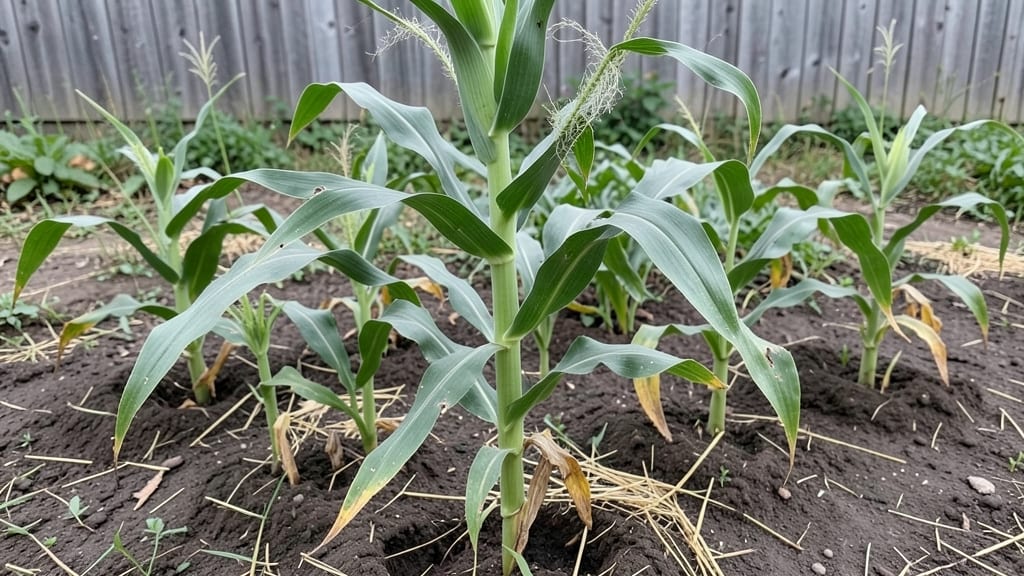
You can plant corn and watermelon together, but success depends on strategic spacing and timing to balance their competing needs for nutrients and sunlight.
Corn’s rapid vertical growth can overshadow watermelons, which sprawl across the ground and require full sun for fruiting. 🌱 The key is planting corn in rows at least 3–4 feet apart while giving watermelons a 5–6 foot radius—or using trellises to lift watermelons off the ground.
I’ve found that staggering planting times (corn first, watermelons 2–3 weeks later) also helps, as corn’s early nutrient demands won’t starve the watermelons before they establish roots.
Both crops love warm soil and well-draining conditions, but corn’s deep roots (up to 7 feet) compete with watermelons’ shallow, spreading roots.
Adding compost or a thick mulch layer before planting creates extra nutrient zones, while black plastic mulch can direct sunlight to watermelons even as corn towers above. The trade-off? Watermelons may yield smaller if shaded, but with these adjustments, you can grow both profitably in the same space.
💡 In This Article
- Growing Conditions for Corn and Watermelon Compatibility
- Best Companion Planting Strategies for Corn and Watermelon
Growing conditions for corn and watermelon compatibility
Corn and watermelons share fundamental growing requirements that make them theoretically compatible: both thrive in full sun (at least 6-8 hours daily), prefer warm soil temperatures above 60°F, and demand consistent moisture during fruiting.
The real challenge lies in their contrasting growth patterns. Corn shoots upward aggressively, reaching 6-10 feet tall with deep roots extending 5-7 feet into the soil, while watermelons sprawl horizontally with vines stretching 10-15 feet and shallow roots spreading just 1-2 feet deep.
This creates a spatial conflict where corn's vertical dominance can block sunlight to watermelon leaves, reducing photosynthesis by up to 40% in crowded conditions. 🌱
Their nutrient competition is equally intense. Corn is a heavy feeder, absorbing 1 lb of nitrogen per 100 lbs of grain produced, while watermelons require balanced nutrients with particular sensitivity to potassium for fruit development.
When planted too closely, corn's rapid early growth depletes nitrogen reserves before watermelons establish their root systems. Soil tests reveal that corn can reduce available nitrogen by 30-50% in the top 12 inches of soil during its first 6-8 weeks of growth—a critical period for watermelon root development.
The solution lies in soil preparation: incorporating 4-6 inches of compost before planting creates a nutrient buffer zone that both crops can access simultaneously.
Water requirements present another balancing act. Both crops need 1-2 inches of water weekly, but corn's deep roots access moisture from lower soil layers while watermelons rely on surface moisture.
During drought periods, corn's roots can outcompete watermelons for available water, causing fruit to develop bitter flavors and reduced yields. Drip irrigation systems placed 12-18 inches from watermelon vines while avoiding corn roots can help maintain this delicate balance. The key insight?
Watermelons need consistent surface moisture, while corn benefits from deeper, less frequent watering—making irrigation timing as critical as spacing. ✨
Light competition becomes visible within 4-6 weeks after planting. Corn's leaves can create a 70% shade canopy over watermelon vines by mid-summer, particularly when planted in rows just 2-3 feet apart. This shading reduces watermelon photosynthesis by 25-35%, directly impacting fruit development.
The visual difference is striking: watermelons grown under corn's shade develop lighter green foliage and produce fruit with thinner rinds and lower sugar content. Professional growers address this by using black plastic mulch under watermelons to reflect 10-15% more sunlight while maintaining soil warmth.
Root zone separation is the most effective solution. Corn's root system develops primarily in the top 2 feet during early growth before extending deeper, while watermelon roots stay within the top 12 inches.
Creating planting zones where corn rows are 3-4 feet apart with watermelons placed 5-6 feet from corn stalks allows both crops to establish without direct competition. This spacing mimics natural ecosystems where tall plants and ground covers coexist by occupying different vertical layers. The trade-off?
It reduces planting density by 30-40%, but the yield quality improvement often justifies the space investment. 🌿
Soil temperature preferences offer a rare point of harmony. Both crops perform optimally when soil temperatures reach 75-85°F, making them ideal companions in regions with short growing seasons where sequential planting isn't practical.
The secret weapon here is black plastic mulch, which can raise soil temperatures by 5-10°F while suppressing weeds—a benefit that outweighs the slight shade it creates. When combined with straw mulch around watermelon vines, this dual-layer approach maintains moisture while creating microclimates that accommodate both growth patterns.
The result? Watermelons receive adequate sunlight while corn maintains its vertical dominance without resource depletion.