
Diseases
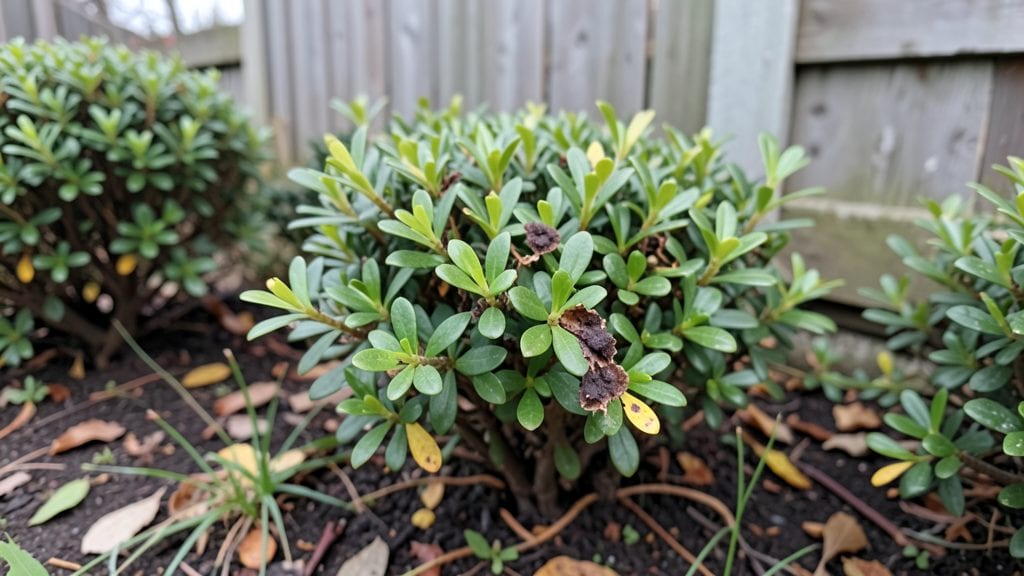
Boxwood plant diseases can turn your neat, evergreen hedges into a sad, brown mess—unless you catch them early. I’ve seen box blight and anthracnose turn thriving shrubs into skeletal remains, but the good news is that spotting symptoms fast means you can save your plants before they’re beyond help.
The key is knowing what to look for: dark spots, leaf drop, or that weird grayish mold creeping across branches.
Most boxwood diseases start with poor airflow, soggy soil, or stressed plants from over-pruning. My first mistake was ignoring yellowing leaves until they turned crispy—by then, the roots were already struggling.
The right watering (deep but infrequent) and pruning (airy shapes, not tight hedges) cuts off the problem at the pass. I’ve even used a mix of neem oil and baking soda for early fungal signs, and it works like a charm.
With the right moves, you’ll stop diseases before they spread. Your boxwoods stay lush, dense, and healthy all season long—no more patchy, dying sections ruining the look of your yard.
The secret is acting fast, so let’s get into the early warning signs and what to do when you see them.
This works for both foundation plants and hedges, whether you’re dealing with a single shrub or a full border. The same principles apply no matter how many boxwoods you’ve got—prevention is easier than cleanup. Let’s make sure yours stay in top shape.
Root Causes Of Boxwood Decline
Boxwood plants are prized for their lush, evergreen foliage, but they’re also susceptible to a variety of diseases that can turn vibrant hedges into sad, brown skeletons. Understanding why these issues arise is the first step to prevention—and saving your shrubs.
Below, we break down the most common culprits behind boxwood diseases, from fungal invaders to environmental stressors.
Fungi thrive in damp, shaded conditions, making boxwoods—especially those planted too closely together—a perfect breeding ground. Here’s how these microscopic menaces strike:
🔬 Boxwood Blight (Cylindrocladium buxicola)
- Why it spreads: This aggressive fungus loves high humidity (think: 70%+ moisture for prolonged periods) and warm nights (70–80°F). It enters plants through wounds, old leaves, or even splashing water from irrigation.
- How it weakens plants: The fungus clogs stomata (leaf pores), blocking gas exchange and causing rapid browning. Infected leaves develop dark, greasy spots that spread like wildfire.
- Actionable fix: Space plants for airflow, avoid overhead watering, and sterilize pruners with 70% isopropyl alcohol between cuts.
🍂 Anthracnose (Colletotrichum gloesporoides)
- Why it takes hold: Cool, wet springs (50–75°F) with frequent rain create ideal conditions. The fungus overwinters in fallen leaves or mulch, then infects new growth when spores splash onto leaves.
- How it damages: It targets young leaves and stems, causing target-like brown lesions with yellow halos. Severe cases lead to defoliation and dieback.
- Actionable fix: Rake up debris in fall/winter, water at soil level, and apply copper fungicide preventatively in early spring.
🌡️ Powdery Mildew (Erysiphe alphitoides)
- Why it erupts: Unlike other fungi, powdery mildew doesn’t need wet conditions—it thrives in shady, stagnant air with high nighttime humidity. Poor airflow (e.g., dense hedges) accelerates its spread.
- How it harms: It coats leaves in a white, powdery film, reducing photosynthesis. Infected plants look dusty and may drop leaves prematurely.
- Actionable fix: Prune for open spacing (3–4 feet apart), avoid nitrogen-heavy fertilizers (they encourage soft, mildew-loving growth), and spray with neem oil or baking soda solution (1 tsp baking soda + 1 quart water + a drop of soap).
Diseases don’t always come from pathogens—sometimes, your boxwood’s surroundings are the real villain.
💧 Overwatering or Poor Drainage
- Why it’s deadly: Boxwoods hate soggy roots. Overwatering (or clay soil that traps moisture) creates anaerobic conditions, where roots suffocate and root rot fungi (Phytophthora) move in.
- Signs to watch for: Yellowing leaves, mushy stems, and a sour, rotting smell at the base.
- Actionable fix: Amend soil with compost or perlite, ensure pots have drainage holes, and water only when the top 1–2 inches of soil are dry.
☀️ Sun Scorch & Heat Stress
- Why it happens: Boxwoods prefer partial shade. When exposed to intense afternoon sun + dry wind, leaves lose moisture faster than roots can replace it, leading to crispy, brown edges (often mistaken for disease).
- How to prevent: Gradually acclimate plants to sun, mulch to retain moisture, and water deeply in late afternoon to reduce evaporation.
🍃 Nutrient Imbalances
- Why it backfires: Too much nitrogen (from synthetic fertilizers) makes boxwoods grow too fast, with weak stems vulnerable to breakage and disease. Deficient phosphorus or potassium weakens roots, making plants more susceptible to pathogens.
- Actionable fix: Use a balanced fertilizer (10-10-10) in early spring, and avoid heavy nitrogen in summer. A soil test can pinpoint deficiencies.
Some pests don’t cause disease directly—but their damage opens the door for fungal infections.
🐜 Boxwood Leafminers
- Why they’re dangerous: These larvae tunnel inside leaves, creating wounds that let in bacterial leaf spot (Xanthomonas campestris). Infested leaves turn brown and crispy.
- Actionable fix: Handpick heavily infested leaves (drop them in soapy water), spray with insecticidal soap, or introduce beneficial nematodes (Steinernema feltiae).
🐛 Boxwood Mites
- Why they’re sneaky: These tiny pests feed on sap, weakening plants and creating sticky honeydew that attracts sooty mold (a black, fuzzy fungus).
- Actionable fix: Blast plants with water to dislodge mites, or use horticultural oil in dormant season (fall/winter).
Pro Tip: 🌡️ Monitor your boxwoods’ microclimate—use a hygrometer to track humidity and a soil moisture meter to avoid overwatering. Prevention is easier (and cheaper) than cure!
Revive Your Boxwoods: Step-by-Step Fixes
Watching your boxwoods wilt or wither is heartbreaking, but the good news? Most issues have straightforward fixes—if you act fast. Below, we’ve mapped out practical solutions for common boxwood diseases, organized by cause, plus prevention tips to keep your plants thriving long-term. Think of this as your boxwood first-aid kit!
Fungal diseases like volutella blight or anthracnose thrive in damp, crowded conditions. Here’s how to kick them to the curb:
🔥 Prune Aggressively (But Safely)
- Step 1: Use sterilized pruners (wipe with rubbing alcohol between cuts) to remove all infected branches—even if they look “mostly healthy.” Fungi spread invisibly!
- Step 2: Cut back to healthy green tissue (avoid brown/streaked areas). Dispose of clippings in the trash not your compost.
- Pro Tip: 💡 Prune on a dry morning to speed up wound healing.
🍳 Fungicide Treatment (The Right Way)
- Step 1: Choose a copper-based fungicide (e.g., Bordeaux mixture) or a neem oil solution (1 tbsp neem oil + 1 quart water + a drop of dish soap).
- Step 2: Spray thoroughly on both top and bottom of leaves, focusing on stems. Repeat every 7–10 days until new growth appears.
- ⏰ Timing Matters: Apply at dawn or dusk to avoid burning leaves in sunlight.
🌡️ Adjust Growing Conditions
- Fix Overhead Watering: Use a soaker hose or drip irrigation to keep foliage dry. Fungi love wet leaves!
- Improve Airflow: Thin out dense branches or space plants 3–4 feet apart to reduce humidity.
- Prevention: 🎯 Mulch with gravel or pine straw (not wood chips) to deter soil-borne fungi.
Boxwood leafminers and mites suck the life out of your plants. Here’s how to evict them:
👨🍳 Manual Removal (Yes, Really!)
- Step 1: Shake plants over a white sheet to spot leafminers (tiny white worms) or mites (reddish dots).
- Step 2: Blast off mites with a strong stream of water from a hose (repeat weekly).
- Step 3: For leafminers, handpick infested leaves and drop them into soapy water.
🔪 Chemical-Free Pest Control
- Neem Oil Spray: Mix 2 tbsp neem oil + 1 tsp mild soap + 1 quart water. Spray every 5–7 days until pests vanish.
- Horticultural Oil: Apply in early spring (before buds swell) to smother mite eggs.
- Pro Tip: 🌿 Introduce beneficial nematodes (like Steinernema feltiae) to the soil—they hunt leafminer larvae naturally!
🥘 Prevent Future Attacks
- Reflective Mulch: Use silver plastic mulch around plants to confuse pests (they hate shiny surfaces!).
- Row Covers: Install fine mesh netting over young boxwoods in early spring to block adult leafminers.
Mushy stems and yellowing leaves? Root rot is likely. Here’s how to rescue your boxwood:
⏰ Drainage First, Always
- Step 1: Dig around the base to check roots. Healthy roots = firm and white. Rotten roots = brown/mushy.
- Step 2: If soil is compacted or clay-heavy, mix in perlite or coarse sand to improve drainage.
- Step 3: Repot severely affected plants into a container with well-draining mix (50% potting soil, 50% perlite).
🔥 Adjust Your Watering Habits
- Rule of Thumb: Water only when the top 1–2 inches of soil are dry. Stick your finger in—if it’s damp, wait!
- Upgrade Your Setup: Switch to self-watering pots or drip irrigation to avoid soggy soil.
- Prevention: 💡 Plant boxwoods on a slight mound to encourage runoff.
🌡️ Fungicide for Roots
- Step 1: Soak roots in a 1:10 hydrogen peroxide solution (3% strength) for 10 minutes to kill fungi.
- Step 2: Dust with mycorrhizal fungi powder (available at garden centers) to promote healthy root growth.
Regardless of the cause, these tricks can boost recovery and resilience:
- 🍎 Feed Them Right: Use a balanced fertilizer (10-10-10) in early spring and low-nitrogen (5-10-10) in summer to avoid leafy but weak growth.
- ☀️ Sunlight Check: Boxwoods need 6+ hours of sun. If yours is in shade, supplement with a grow light for 4–6 hours daily.
- 🌡️ Temperature Control: Avoid planting in low-lying areas where cold air pools (causes frost damage).
- 🔄 Rotate Treatments: Alternate between neem oil, copper fungicide, and horticultural oil to prevent pest/fungus resistance.
Remember: The key to curing boxwood diseases is early action and consistent care. Even severely damaged plants can bounce back with the right treatment. And once they’re healthy? Your garden will thank you with lush, vibrant hedges for years to come! 🌿✨
Frequently asked questions
What are the first signs of boxwood blight?
Watch for small, dark brown spots with yellow halos on leaves—these spread quickly into greasy, blackened patches. Infected branches may develop a grayish mold, and leaves often curl or drop prematurely. Act fast by removing affected foliage and applying copper fungicide.
Can I save a boxwood with powdery mildew?
Yes! Start by pruning for better airflow and spraying with a neem oil solution (1 tbsp per quart of water). Repeat every 7–10 days until new growth appears. Avoid overhead watering and thin dense branches to reduce humidity.
Why do my boxwoods get yellow leaves even when I water them?
Yellowing leaves often signal overwatering or poor drainage, causing root rot. Check soil moisture—water only when the top 1–2 inches are dry. Amend heavy clay soil with perlite and ensure pots have drainage holes to prevent soggy roots.
How do I prevent boxwood diseases in containers?
Use a well-draining potting mix (50% soil, 50% perlite) and water at the base, never overhead. Sterilize pots annually with a 10% bleach solution, and avoid crowded arrangements—space plants 3–4 feet apart for airflow.
Is there an organic cure for boxwood anthracnose?
Yes! Mix 1 tsp baking soda + 1 quart water + a drop of soap and spray leaves thoroughly. For severe cases, apply copper fungicide (like Bordeaux mix) every 2 weeks. Remove fallen leaves promptly to break the disease cycle.