Diseases
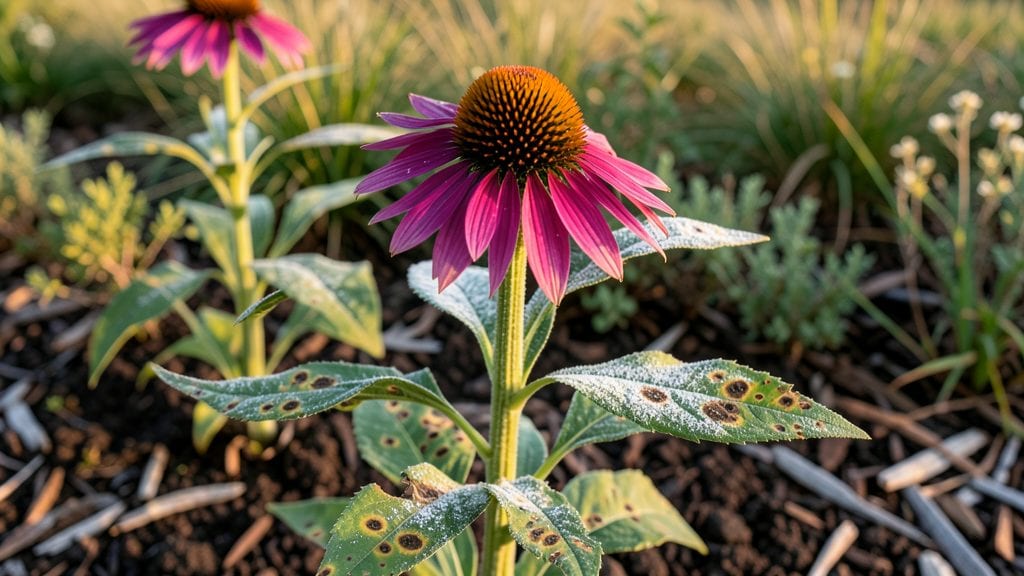
Echinacea plant diseases most commonly include powdery mildew, rust fungus, and bacterial leaf spot, often appearing as white patches, orange-brown spots, or yellowing foliage. Early detection and organic treatments like neem oil or copper fungicide can prevent severe damage.
Echinacea plants are tough but not invincible—these three diseases are the top culprits behind wilting, discoloration, and stunted growth. 🌿 Powdery mildew thrives in humid conditions, creating that telltale white dusting on leaves, while rust fungus produces those unsightly orange pustules that eventually kill leaf tissue.
Bacterial leaf spot, on the other hand, starts as water-soaked spots that expand into larger, irregular patches. The good news? Catching these early gives you the best shot at saving your plants with simple organic fixes like neem oil sprays or improving airflow around your echinacea.
Prevention is your best defense. I’ve found that spacing plants properly and avoiding overhead watering drastically reduces disease risk. If you notice any of these symptoms, act fast—once the damage spreads, even organic treatments may not fully restore your echinacea’s health.
Regular inspections during the growing season can save you from losing entire plants to these common issues.
💡 In This Article
- Identifying Common Echinacea Fungal and Bacterial Infections
- Organic Remedies for Echinacea Disease Prevention
Identifying common echinacea fungal and bacterial infections
Here's what's actually happening when your echinacea shows signs of distress: powdery mildew starts as faint white speckles on leaf surfaces that eventually merge into a chalky, powdery coating. This fungal infection thrives in 75-85% humidity and poor airflow, creating ideal conditions for its spores to spread rapidly.
The key factor is its superficial nature—it grows on the leaf surface rather than penetrating tissues, which is why it looks like someone dusted your plants with flour.
Rust fungus takes a different approach, appearing as small, orange-brown pustules on the undersides of leaves. These pustules release spores that can travel up to 100 feet in wind, making it highly contagious.
What most people don't realize is that rust fungus often appears after periods of wet foliage, especially when leaves remain damp for more than 6-8 hours. The infected areas eventually turn yellow and drop off, leaving behind a skeleton of veins that gives away the disease's progression.
The science behind bacterial leaf spot involves Xanthomonas bacteria that enter through leaf wounds or natural openings. You'll first notice small, water-soaked spots that expand into 1/4-inch to 1/2-inch lesions with irregular edges. These spots often have a greasy appearance and may ooze when touched.
Unlike fungal infections, bacterial leaf spot spreads through water splashes, which is why overhead irrigation systems can turn your garden into a disease hotspot.
Environmental triggers play a massive role in disease outbreaks. Powdery mildew loves crowded plantings where airflow is restricted, while rust fungus flourishes in cool, wet springs. Bacterial leaf spot thrives in warm, humid conditions (80°F+) with frequent rainfall.
I've found that echinacea grown in full sun with proper spacing (18-24 inches apart) shows significantly fewer disease symptoms, as sunlight helps dry foliage faster and discourages fungal growth.
Visual cues are your best early warning system. Start by examining the leaf undersides—this is where most fungal spores hide. For powdery mildew, look for white fuzz; for rust, check for orange pustules; and for bacterial spot, watch for those water-soaked lesions.
What most gardeners miss is that symptoms often appear on older leaves first, giving you a heads-up before the disease spreads to new growth.
Don't wait until you see widespread damage to act. The moment you spot these symptoms, isolate affected plants and remove severely infected leaves. This 3-step approach—identify, isolate, and remove—can stop diseases in their tracks before they become unmanageable. 💫