
Planting
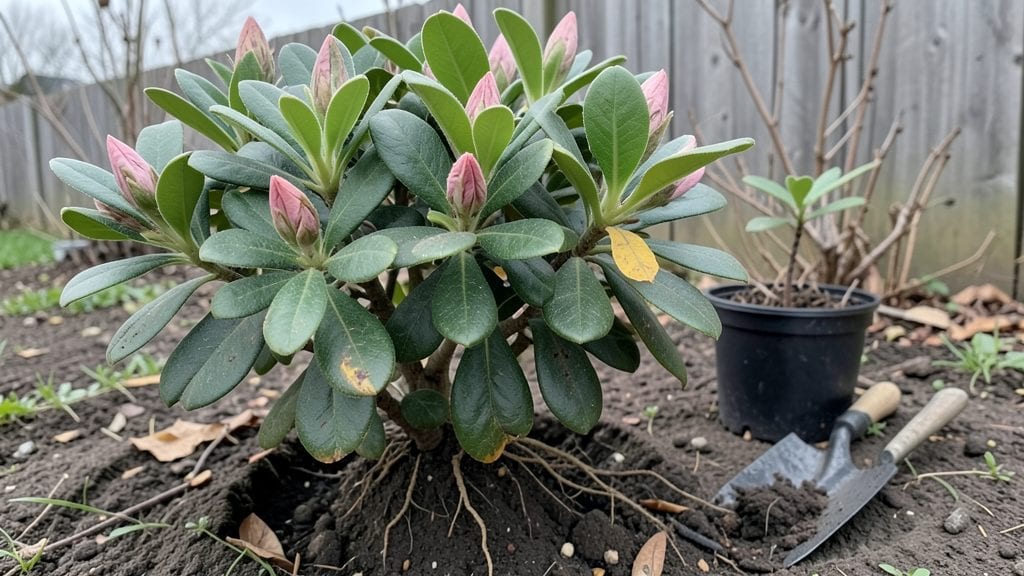
Planting azaleas at the right distance 🌸 determines whether you get lush, blooming shrubs or scraggly underperformers.
Struggling to get your azaleas to bloom beautifully year after year? The secret often lies in how far apart you plant them—too close, and they’ll fight for nutrients; too far, and your garden will look sparse. Mastering azalea planting distance transforms your shrubs from scraggly to showstopping.
In Zone 6a, most azaleas need 3 to 5 feet of space between plants, but dwarf varieties can thrive in just 2 feet. The key is matching spacing to their mature size and growth habit, whether they’re mounding, spreading, or upright.
Get it wrong, and you’re stuck with crowded roots or bare spots.
Below, I break down the exact spacing for each type, plus how to adjust for sunlight, soil, and companion plants—so you can plan a thriving azalea bed that blooms like clockwork every fall.

Optimal azalea planting distance by variety and growth habit
Azaleas thrive when planted with just the right spacing—too close, and they’ll compete for nutrients and sunlight; too far, and your garden will look sparse. The key lies in understanding your azalea variety and growth habit.
Dwarf azaleas need tight spacing, while standard varieties require room to spread. Let’s break down the perfect distances for each type to ensure lush, blooming shrubs every season.
Most gardeners focus on mature size when spacing azaleas, but growth habits like mounding, spreading, or upright shapes also play a critical role. For example, a spreading azalea like 'Girard’s Pink' needs more room than a mounding type like 'Hino Crimson'.
Mixing varieties? Space them based on the largest mature size to avoid future overcrowding.
Here’s the golden rule: plant azaleas 3-6 feet apart for standard varieties, but adjust based on their mature width. Dwarf azaleas can handle closer spacing, while tall, upright types need extra room to avoid shade competition. Let’s dive into the specifics to get your spacing just right.
🌸
| Variety Type | Mature Size (H x W) | Optimal Spacing (ft) | Growth Habit | Notes |
|---|---|---|---|---|
| Dwarf Azaleas | 2-4 ft (H) x 3-5 ft (W) | 2-3 ft apart | Mounding | Ideal for borders, containers, or mass plantings. |
| Semi-Dwarf Azaleas | 4-6 ft (H) x 5-7 ft (W) | 3-4 ft apart | Spreading or Mounding | Perfect for hedges or mixed shrub beds. |
| Standard Azaleas | 8-15 ft (H) x 6-10 ft (W) | 6-8 ft apart | Upright or Spreading | Best for specimen plantings or woodland gardens. |
| Knock Out® Azaleas | 3-5 ft (H) x 3-5 ft (W) | 3 ft apart | Compact, Mounding | Tolerates closer spacing due to dense foliage. |
| Evergreen Azaleas | 6-12 ft (H) x 5-8 ft (W) | 5-6 ft apart | Upright or Pyramidal | Provides year-round structure; space for airflow. |
For dwarf azaleas, like 'P.J.M.' or 'Little Devil', spacing them 2-3 feet apart creates a lush, full look without overcrowding. These varieties stay compact, making them perfect for containers, rock gardens, or as edging plants.
If you’re planting a hedge row, reduce spacing to 1.5-2 feet for a dense, uniform barrier.
Semi-dwarf azaleas, such as 'Hino Crimson' or 'George L. Taber', strike a balance. Space them 3-4 feet apart to allow airflow and prevent fungal diseases. These varieties often have spreading habits, so avoid planting them too closely if you want to showcase their natural shape.
In mixed plantings, pair them with low-growing perennials like ferns or hostas.
Standard azaleas, like 'Bowl of Beauty' or 'Girard’s Pink', are the divas of the azalea world. They need 6-8 feet of space to thrive, especially if they’re upright or spreading types.
Planting them too close can lead to shady interiors, which reduces flowering. Use them as focal points or in woodland gardens where they can stretch out naturally.
🌿
When planning mixed azalea plantings, always base spacing on the largest mature size in the group. For example, if you’re mixing a dwarf azalea (3 ft wide) with a standard azalea (8 ft wide), space them 6-8 feet apart to accommodate the taller variety.
This ensures all plants get adequate sunlight and airflow, even as they grow.
Pro tip: Use a string and stakes method to mark planting spots before digging. This helps visualize spacing and prevents uneven rows. For curved borders, space plants 10-15% closer to create a natural, flowing look.
Always measure from the center of one plant to the center of the next for consistency.
Finally, consider your garden’s light conditions. In shady areas, you can plant azaleas slightly closer together since they won’t compete as fiercely for sunlight. However, in bright, open spaces, stick to the recommended distances to avoid stress from excessive sun exposure.
✂️
Common mistakes in azalea spacing and how to fix them
Overcrowded azaleas steal nutrients from each other, leading to smaller blooms and weak growth. I’ve seen too many gardens where azaleas were planted too close together, creating a competition for resources that stunts their beauty.
The right azalea planting distance ensures each shrub gets enough sunlight, air circulation, and root space to thrive.
Even worse, incorrect spacing can invite pests and diseases by trapping moisture and reducing airflow. If your azaleas look stressed or leggy, poor spacing is often the culprit. The good news? Fixing spacing issues is easier than you think—whether through pruning, transplanting, or simply adjusting future plantings.
Planting azaleas too close (less than 3 feet apart for dwarf varieties or 6 feet apart for standard types) creates a nutrient war.
Roots compete for water and soil nutrients, leading to pale leaves, fewer blooms, and even root rot from poor airflow. Fix it now before your azaleas become a shadow of their potential!
One of the biggest mistakes is ignoring the mature size of your azalea variety. A dwarf azalea (like 'Girard’s Pink') needs only 3-4 feet of space, while a standard azalea (like 'Bowl of Beauty') requires 6-8 feet.
I once saw a garden where standard azaleas were planted just 4 feet apart, and by year three, they were crashing into each other, blocking sunlight and causing dead branches.
If your azaleas are already too close, pruning is your first line of defense. In late winter or early spring, thin out crowded branches to improve airflow. Focus on removing crossing or inward-growing branches—this opens up the center and reduces competition.
For severely overcrowded beds, transplanting may be necessary. Dig up the most affected plants, prune their roots by one-third, and replant them with proper spacing.
Don’t forget about sunlight access—azaleas need partial shade, but they’ll suffer if blocked by neighbors. If you’re planting near trees or other shrubs, leave at least 5-6 feet of clearance to prevent root competition and shade stress.
I recommend sketching a garden layout before planting to visualize how your azaleas will interact with other plants as they mature.
For existing azalea beds, mulching can help mitigate spacing issues by improving soil health and moisture retention. Use 2-3 inches of organic mulch (like pine bark) to suppress weeds and regulate soil temperature. Just avoid piling mulch against the trunk or stems, as this can cause rot.
With the right spacing and care, your azaleas will reward you with vibrant blooms for years to come! 🌸