
Shrubs
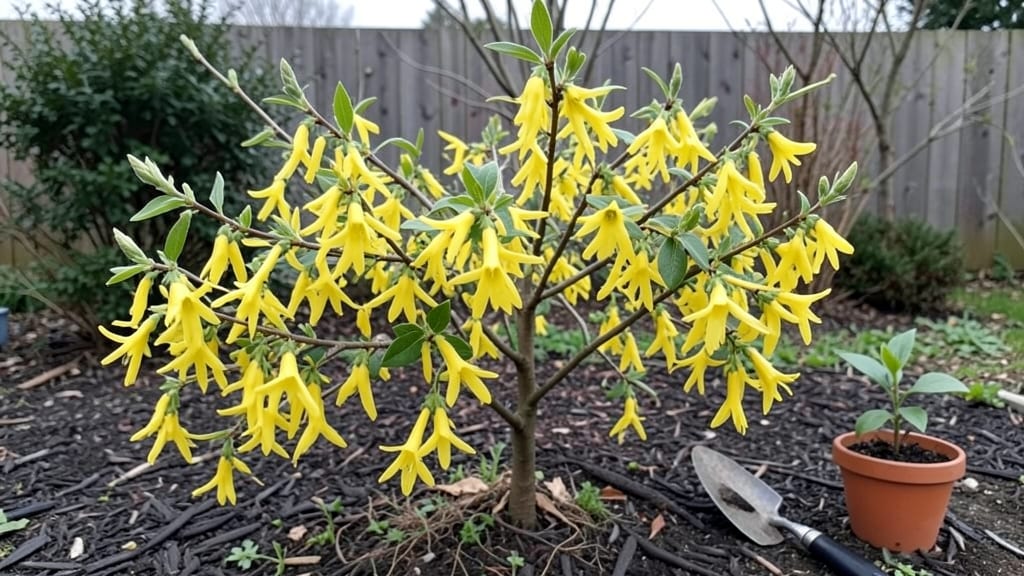
The forsythia planting distance that guarantees those jaw-dropping yellow blooms every spring starts with spacing like a pro. I learned the hard way—planting too close means years of fighting for sunlight and air, while too far apart wastes space.
The sweet spot depends on your forsythia type, but most mature plants need 6 to 10 feet between centers for that full, bushy look we all want.
Here’s the thing—forsythia grows fast, and those branches spread wider than you’d expect. If you’re working with a compact variety like ‘Little Gold,’ stick to 4 to 6 feet between plants.
For the classic, larger types, give them room to stretch out—8 to 10 feet ensures they don’t crowd each other, which means fewer diseases and more blooms. Sunlight exposure matters too; plant in full sun for maximum flowering, but avoid tight clusters that block light from reaching the center.
When you nail the spacing, you’ll see the difference in just a few years. Those branches fill out beautifully, creating a stunning yellow canopy in early spring that neighbors will envy. The airflow keeps pests at bay, and the roots have space to establish without competing.
Imagine waking up to a wall of golden blooms every year—this is how you make it happen.
Pro tip: Sketch a simple layout before digging. Use stakes or spray paint to mark the spots—trust me, it saves headaches later. And if you’re planting multiple shrubs, consider staggering them in a natural, slightly offset pattern for a more organic look. Your garden will thank you for the planning!
📚 In This Guide
- What you need
- Instructions
- Tips and common mistakes
- Wrapping up and next steps
What you need
- ● Forsythia shrubs: Choose healthy, dormant plants (bare-root or container-grown) from a trusted nursery. Quantity depends on your design, but plan for 3–6 feet apart for optimal spacing.
- ● Shovel or trowel: A round-point shovel (for digging holes) or a hand trowel (for smaller plants).
- ● Measuring tape or spacing stakes: Ensures precise 3–6 foot intervals between plants.
- ● Compost or well-aged manure: 5–10 lbs per plant to enrich the soil.
- ○ Mulch (optional but recommended): 2–3 inches of organic mulch (e.g., shredded bark or pine straw) to retain moisture.
- ● Garden gloves: Protect your hands from thorns or rough soil.
- ● Pruning shears: For trimming dead branches post-planting.
- ● Soil pH tester: Forsythia prefers slightly acidic to neutral soil (pH 6.0–7.0)—adjust with lime or sulfur if needed.
- ● Drip irrigation or hose: Keeps roots consistently moist during the first 2–3 weeks after planting.
- ● Plant food (balanced fertilizer): A 10-10-10 or 20-20-20 formula applied after planting to boost growth.
How to space forsythia for vibrant, long-lasting blooms
Perfect spacing transforms a shrub from a scraggly mess into a showstopping spring display.
Understand Forsythia’s Growth Habits
Forsythia grows aggressively, with mature shrubs reaching 6-10 feet wide and 8-12 feet tall depending on the variety. The key is spacing them 8-12 feet apart for full, unobstructed blooms. This prevents overcrowding, which leads to weak stems and reduced flowering. If you’re planting a hedge, space them 6-8 feet apart in a staggered pattern to encourage dense growth along the line.
Here’s the thing—forsythia thrives when it has room to stretch its branches outward. When planted too closely, the center becomes bare as the outer branches compete for sunlight. I’ve seen beautiful forsythia turn into leggy, sparse bushes because they were crammed together. Give them space, and they’ll reward you with bold yellow cascades every spring.
Plan for Sunlight and Airflow
Forsythia needs full sun—at least 6 hours daily—to produce its brightest blooms. When spacing, ensure no other shrubs or trees will cast shade on them as they mature. I like to map out the 10-foot radius around each plant where sunlight should remain unobstructed. If you’re planting near a fence or wall, leave at least 3 feet of clearance on that side to prevent heat stress and allow airflow.
Airflow is just as critical as sunlight. Crowded plants trap moisture, inviting fungal diseases like powdery mildew. You’ll notice healthy forsythia has glossy, disease-free leaves and sturdy stems. If you see yellowing leaves or black spots, it’s a sign the spacing is too tight. Adjust by thinning out or pruning back overgrown branches to restore circulation.
Dig and Plant with Proper Depth
Dig a hole twice as wide as the root ball but no deeper—forsythia roots should sit no more than 1 inch below soil level. The goal is to encourage outward root growth, not bury the stem. Amend the native soil with 2-3 inches of compost mixed into the bottom of the hole to give roots a nutrient boost without overwhelming them.
Place the shrub in the hole, backfill with the amended soil, and water deeply to settle it. Don’t compact the soil too firmly—forsythia roots need room to expand. After planting, mulch with 2-3 inches of organic mulch (like shredded bark) to retain moisture and regulate soil temperature. Keep the mulch 6 inches away from the stem to prevent rot.
Prune Strategically After Flowering
Forsythia blooms on old wood, so prune immediately after the flowers fade in late spring. Cut back one-third of the oldest stems to the ground to encourage new growth. This also helps maintain the 8-12 foot spacing by controlling the shrub’s size. Avoid pruning in fall or winter—you’ll remove next year’s flower buds.
Watch for stems that cross or rub against each other. These should be removed entirely to prevent wounds that attract pests. You’ll see a difference in just one season—thicker foliage, more blooms, and a fuller shape. If a shrub starts to look leggy, it’s a sign it needs more sunlight or a pruning refresh. Don’t wait until it’s too late; prune while the plant is still healthy.
Monitor and Adjust Over Time
Check your forsythia annually to ensure spacing remains optimal. If branches from neighboring shrubs begin to intertwine, prune them back to restore airflow. You’ll know the spacing is right when the shrubs fill out completely without crowding each other. Over time, you may need to thin out older stems to maintain vigor—this is normal and actually improves the plant’s health.
If you notice bare spots at the base, it’s a sign the shrub needs more light or space. Forsythia is forgiving, but it won’t tolerate neglect. A little annual pruning and occasional thinning keep it looking its best for decades. With the right spacing, your forsythia will be the first to burst into color each spring, long before any other shrub in the neighborhood.
Tips & tricks for perfect forsythia planting
A few simple tricks will help you avoid common mistakes and create a thriving forsythia display that lasts for years.
Visualize the Mature Shrub: Before planting, sketch a rough outline of where each forsythia will reach at maturity—6-10 feet wide and 8-12 feet tall. I always use a garden flag or spray paint to mark the 8-12 foot spacing between plants. This prevents overcrowding before it happens and ensures you'll have that stunning, unobstructed bloom wall every spring.
Sunlight Mapping is Key: The 6 hours of full sun requirement is non-negotiable for vibrant blooms. Use a solar path analyzer app to track sunlight patterns in your yard during the growing season. If you notice areas that drop below 6 hours, either relocate your forsythia or choose a different spot entirely. I've seen forsythia planted in partial shade turn into weak, sparse bushes with minimal flowers.
Root Ball Depth Matters: When planting, remember that forsythia roots should sit no deeper than 1 inch below soil level. I've made the mistake of burying them too deep, which suffocates the roots and leads to poor growth. To check depth, place the root ball in the hole and make sure the top of the root ball is level with the surrounding soil—this encourages outward root growth rather than downward.
Pruning Timing is Critical: That one-third stem pruning after flowering in Step 4 isn't just about shaping—it's about maintaining the spacing you worked so hard to establish. I always mark the oldest stems with a ribbon before pruning to ensure I'm removing the right ones. This annual pruning prevents the shrub from becoming too dense and maintains that perfect 8-12 foot spacing between plants as they mature.
Pro Tips for Forsythia Planting Distance
- A few simple tricks will help you avoid common mistakes and create a thriving forsythia display that lasts for years.
- Visualize the Mature Shrub: Before planting, sketch a rough outline of where each forsythia will reach at maturity—6-10 feet wide and 8-12 feet tall.
- Sunlight Mapping is Key: The 6 hours of full sun requirement is non-negotiable for vibrant blooms.
Frequently asked questions
Got questions about planting forsythia? You’re not alone! Here are some of the most common concerns—and their answers—to help you plant with confidence.
What’s the ideal forsythia planting distance for a hedge?
For a dense, bushy hedge, space forsythia shrubs 3 to 5 feet apart. This spacing allows branches to intertwine naturally, creating a lush, uniform barrier. If you prefer a more open look, stretch it to 6 feet.
Can I plant forsythia too close together?
Yes, but it may compromise growth. Overcrowding leads to competition for sunlight, water, and nutrients, resulting in leggy, sparse shrubs. If you’ve already planted too close, prune aggressively in early spring to encourage airflow and sunlight penetration.
How far apart should forsythia be in a row for a single-species border?
For a single-row border, plant forsythia 4 to 6 feet apart. This spacing ensures each shrub has room to mature without overshadowing neighbors, while still creating a cohesive, vibrant display when in bloom.
What if my forsythia isn’t blooming well—could spacing be the issue?
Possibly! If plants are too far apart, they may lack the "crowded" signal that triggers dense blooming. Conversely, overcrowding can stress shrubs, reducing flower production. Aim for 4–5 feet and monitor sunlight exposure—forsythia thrives in full sun (6+ hours/day).
Can I mix forsythia with other shrubs for layered planting?
Pair forsythia with dwarf conifers (3–4 ft apart), hydrangeas (5 ft apart), or ornamental grasses (4–6 ft apart). Just ensure taller plants (like arborvitae) are placed behind forsythia to avoid blocking its sunlight. Layering adds depth and extends your garden’s seasonal interest!
Wrapping up and next steps
Planting forsythia with the right spacing—3 to 6 feet apart—is the secret to lush, vibrant blooms and healthy growth. Whether you’re lining a fence, adding color to a border, or creating a focal point, proper spacing ensures airflow, sunlight access, and long-term beauty.
Now that you’re armed with the know-how, grab those pruners and get planting! 🌸
Ready to transform your garden? Sketch a layout first—mark where each forsythia will go, then dig in with confidence. Happy gardening! 🌱