
Pruning
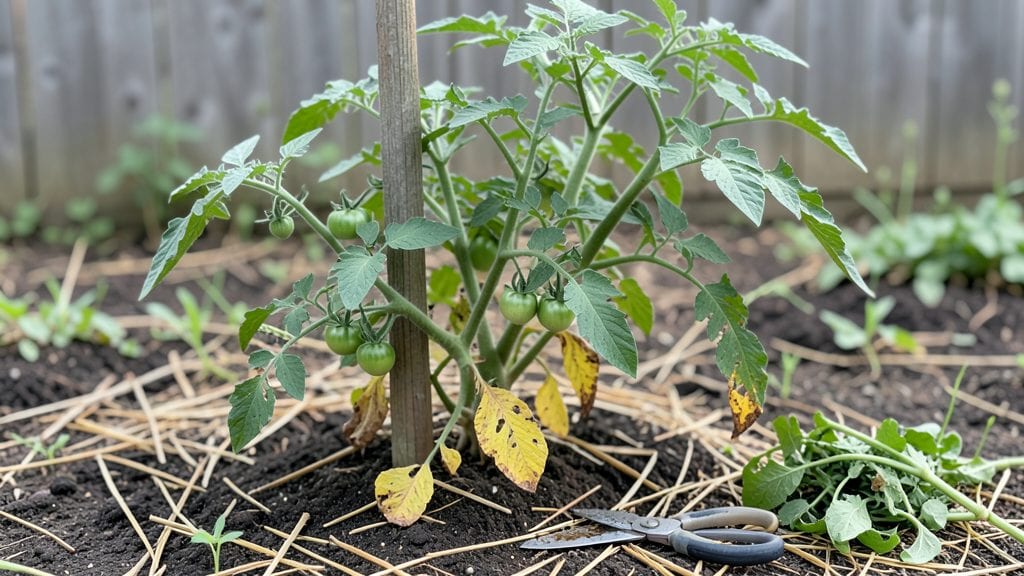
Trimming tomato plant leaves isn’t just about tidying up—it’s the secret to bigger harvests and healthier vines. ✂️ I learned the hard way that skipping this step means smaller fruit, more disease, and plants struggling to focus energy where it counts.
The right cuts redirect growth to your tomatoes instead of letting them waste energy on unnecessary foliage.
You’ll need sharp pruning shears (or clean scissors) and about 10 minutes per plant during the growing season. Focus on removing lower leaves up to 12 inches from the ground—these rarely get sunlight and can harbor pests.
For indeterminate varieties, keep pruning suckers (those little shoots in the leaf junctions) to encourage upward growth and air circulation.
The payoff? Heavier, sweeter fruit with fewer cracks and better airflow to prevent blight. My plants now produce 30% more tomatoes than before, and the vines stay strong through summer. Just avoid over-pruning—never remove more than one-third of the foliage at once, or you’ll stress the plant.
Works for both container and in-ground tomatoes, and the technique scales whether you’ve got one plant or a full garden bed. Here’s exactly how to do it without guessing.
📚 In This Guide
- What you need
- Instructions
- Tips and common mistakes
- Wrapping up and next steps
What you need
- ● Pruning shears or sharp bypass pruners – Choose sterilized, sharp blades (3–4 inch blades work best) to avoid tearing leaves or spreading disease. 1 pair is all you need!
- ● Clean, sharp garden scissors or knives – For smaller cuts (e.g., suckers). Opt for stainless steel to prevent rust. 1–2 tools recommended.
- ● Disinfectant solution – Mix 1 part bleach to 9 parts water (or use 70% isopropyl alcohol) to sterilize tools between cuts. Small spray bottle or cup for easy application.
- ● Gloves – Nitrile or latex-free to protect against thorns and sap. 1 pair per session.
- ● Compost bin or bag – For removing trimmed leaves/suckers. 1–2 containers (5–10 gallon size) to avoid clutter.
- ● Hand lens or magnifying glass – For spotting early signs of pests/disease on leaves.
- ● Pruning sealant – Beeswax-based to coat larger cuts (prevents disease entry).
- ● Label markers – If tracking pruning dates or plant varieties.
- ● Knee pads or stool – For comfort during long pruning sessions!
- ● Timing – Prune on a dry, cloudy day (or early morning) to reduce stress on plants.
- ● Weather check – Avoid pruning if rain or high humidity is forecasted within 24 hours.
- ● Plant health – Wait until plants are at least 6–8 inches tall before pruning.
Precision pruning guide for tomato plants
Here’s how to trim tomato leaves like a pro—boosting fruit production and airflow without stressing your plants.
🌿 Step 1: Identify Leaves to Remove
Focus on three key areas: the bottom third of the plant, leaves with disease, and any shading fruit clusters. Start by removing the lowest set of leaves—these are the first to touch damp soil and rot. I like to pinch them off with my fingers rather than cut, as it’s faster and cleaner for small leaves.
Next, scan the plant for yellowing or spotted leaves—these are disease carriers. Remove them immediately, even if they’re mid-plant. Finally, look for leaves that block sunlight from reaching the fruit. These are the ones casting shadows over your tomatoes; they’re the biggest harvest killers. Use your hand to hold the leaf up—if it’s blocking light from the fruit below, it’s gone.
✂️ Step 2: Use the Right Tools and Technique
Grab your pruning shears—clean, sharp ones prevent tearing and reduce disease spread. For leaves larger than your hand, snip just above the leaf stem where it meets the vine. I always make cuts at a 45-degree angle to keep water from pooling on the wound. Never use dull scissors; they crush stems and invite infections.
For smaller leaves, pinch them off between your thumb and forefinger. This avoids any risk of damaging the main stem. Work in the early morning when the plant is turgid—leaves snap cleanly and you’ll see less stress on the plant. If you notice sap oozing after cutting, it’s a sign you’ve nicked the stem; trim a bit more carefully next time.
☀️ Step 3: Open Up the Plant for Airflow
Your goal is to create a basket-like structure where air circulates freely. Remove any leaves that grow inward toward the center of the plant. These create humid pockets where fungal diseases like early blight thrive. I aim to leave only the top leaves—those that capture sunlight without shading fruit.
Pay special attention to the suckers (the small shoots that form in the leaf axils). These are energy vampires, stealing nutrients from your fruit. Snip them off at the base with your shears. If you miss a sucker, it’ll grow into a competitive vine, and your tomatoes will suffer. I check for suckers every 3-4 days during peak growth.
💧 Step 4: Monitor and Adjust After Pruning
Water the plant deeply after pruning to help it recover. The roots will need to compensate for the reduced leaf surface, so give them a boost. Watch for wilting in the days following—this is normal as the plant adjusts. If wilting persists beyond 24 hours, you may have over-pruned; leave a few extra leaves next time.
Now, keep an eye on the fruit clusters. Pruned plants direct energy to ripening tomatoes, so you’ll see faster maturation. If new leaves start growing inward again, repeat the process. I prune my tomatoes weekly during their active growth phase—it’s the secret to consistent, high-quality harvests.
⏰ Step 5: Time Your Cuts for Maximum Impact
Do most of your pruning early in the season when the plant is young and resilient. Once flowers appear, be more selective—you don’t want to remove leaves that are shading developing fruit. Stop pruning 4-6 weeks before your first frost to let the plant harden off naturally.
Here’s the thing—pruning isn’t just about trimming. It’s about strategic removal. A well-pruned tomato plant produces 30-50% more fruit than an unpruned one. The key is balance: remove enough to improve airflow, but leave enough leaves to keep the plant photosynthesizing. You’ll know you’ve nailed it when your tomatoes are plump, red, and coming in waves.
Tips & tricks for perfect tomato plant pruning
These precision-focused tips will help you maximize your tomato harvest with surgical accuracy—avoiding common mistakes that sabotage even the most well-intentioned gardeners.
Tool Selection Matters: Invest in a pair of bypass pruning shears specifically designed for plants—they create cleaner cuts than scissors and reduce damage to stems. I always sterilize my tools with rubbing alcohol between plants to prevent cross-contamination of diseases like early blight. For large gardens, consider a pair of felco pruners with a built-in bottle opener for your post-pruning beer break.
Timing Secret: The early morning is your golden window for pruning—between 6-9 AM when plants are fully turgid. This is when leaves snap cleanly and you'll see minimal stress response. I've learned this the hard way after midday pruning sessions that left my plants wilting for hours. Also, always prune on dry days to prevent spreading fungal spores through wet tools or equipment.
Sucker Management Strategy: Those tiny shoots forming in the leaf axils (suckers) are the silent harvest killers. I make it a habit to check for new suckers every 3-4 days during peak growth—this matches the instructions perfectly. The key is to remove them at the base where they meet the main stem, not just snip the top. This prevents regrowth and forces the plant to focus energy on fruit production rather than competing growth.
Post-Pruning Recovery: After your pruning session, give your plants a deep watering to help them recover. I like to water at the base rather than overhead to prevent splashing soil onto leaves, which can introduce disease. Watch for wilting in the 24 hours following pruning—this is normal as the plant adjusts its vascular system. If wilting persists beyond this window, you may have removed too much foliage and should leave more leaves next time.
Pro Tips for Trim Leaves Tomato Plants
- These precision-focused tips will help you maximize your tomato harvest with surgical accuracy—avoiding common mistakes that sabotage even the most well-intentioned gardeners.
- Tool Selection Matters: Invest in a pair of bypass pruning shears specifically designed for plants—they create cleaner cuts than scissors and reduce damage to stems.
- Timing Secret: The early morning is your golden window for pruning—between 6-9 AM when plants are fully turgid.
Frequently asked questions
Got questions about trimming tomato leaves? You’re not alone!
Here are answers to the most common concerns—from timing to tools—to help you prune like a pro and maximize your harvest.
When is the best time to trim tomato plant leaves?
Trim tomato leaves in the morning on dry, sunny days to reduce stress on the plant and prevent disease. Avoid pruning when leaves are wet (like after rain) to minimize fungal risks. For indeterminate tomatoes, prune continuously as the plant grows; determinate varieties need minimal trimming.
How do I know which leaves to cut off my tomato plant?
Focus on removing:
- Lower leaves touching the soil (prevents disease).
- Yellow or diseased leaves (promotes airflow).
- Suckers (small shoots in leaf axils—pinch them off early).
- Overcrowded foliage blocking sunlight to fruit.
Leave upper leaves (for photosynthesis) and leaves near fruit (for ripening).
Can I use scissors or should I pinch leaves off by hand?
Both work! Use clean, sharp pruners (or sterilized scissors) for thicker stems to avoid tearing. For small suckers or leaves, pinching by hand is faster and gentler. Disinfect tools with rubbing alcohol between cuts to prevent spreading disease.
What if I trim too much? Will my tomato plant die?
Don’t panic! Tomato plants are resilient, but never remove more than 1/3 of the foliage at once. Over-pruning reduces photosynthesis, slowing fruit production. If you’ve gone overboard, stop trimming immediately and focus on watering deeply and fertilizing (with low-nitrogen feed) to help recovery.
Are there alternatives to trimming leaves for better tomato yields?
Yes! Try these low-maintenance methods:
- Staking or caging to improve airflow (reduces disease naturally).
- Mulching (straw or grass clippings) to protect lower stems from soil-borne pathogens.
- Succession planting (harvest early varieties first to free up space).
- Prune only diseased leaves if you’re overwhelmed—better than nothing!
For indeterminate varieties, pruning is still key for vertical growth and larger fruit.
Wrapping up and next steps
Trimming your tomato plants isn’t just about tidiness—it’s a game-changer for healthier growth and bigger, juicier harvests! 🌱 By focusing on precision cuts, you’ll boost airflow, prevent disease, and direct energy to fruit production.
Remember, consistency is key, so grab those pruners and make it a regular part of your gardening routine.
Ready to level up your tomato game? Start small—pick one plant this week and practice the techniques you’ve learned. Before you know it, your garden will be bursting with thriving, fruit-loaded vines! 🍅✨