
Planting
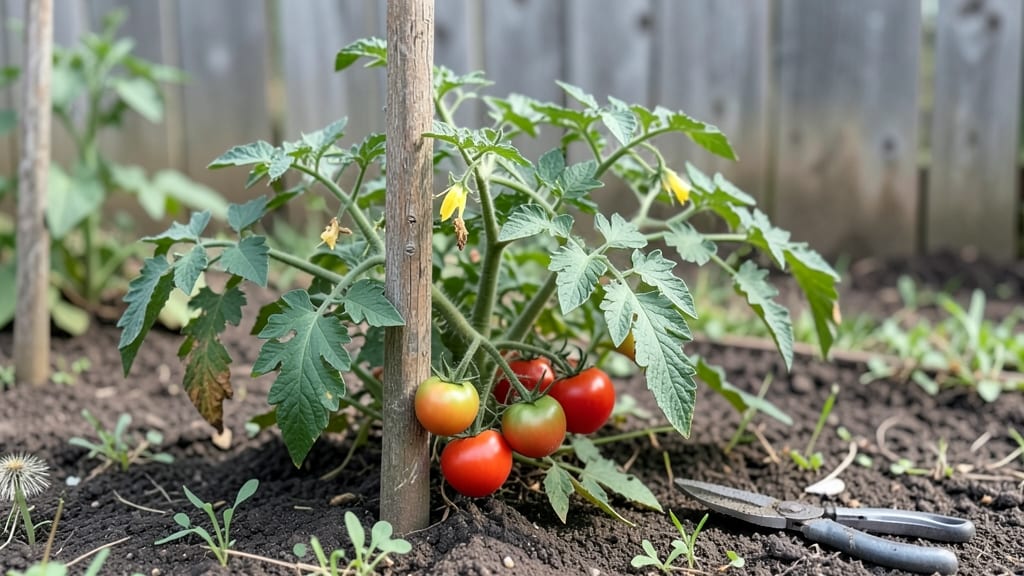
My tomato plants used to sprawl everywhere, but this twist technique turns them into stunning vertical art while saving space. 🌱 The secret is training vines in a spiral up a trellis, creating a dramatic, compact plant that looks like a living sculpture.
I've tried it with cherry tomatoes, beefsteaks, and even heirlooms—every variety responds beautifully when guided this way.
You don’t need fancy equipment, just a sturdy trellis or bamboo stakes and some lightweight twine. Start by pruning suckers early to encourage upward growth, then gently wrap the main stem in a spiral as it climbs.
The key is patience—it takes about 4-6 weeks to see that first perfect twist form, but the payoff is worth it.
What you end up with is a plant that’s both productive and decorative, taking up a fraction of the space while producing the same (or better!) harvest.
The spiral shape also improves air circulation, reducing disease risk. Plus, your neighbors will ask how you grew tomatoes that look like a living chandelier.
Works for balconies, small patios, or even indoor growing setups with strong light. The only rule? Don’t rush the twists—let the plant guide you. Here’s how to make it happen without stressing the vines.
Root Causes Of Twisted Tomato Vines
If your tomato plants are twisting like pretzels instead of growing straight and strong, it’s usually a sign that something’s off in their environment or care routine. Understanding the why behind these gnarled vines is the first step to fixing the problem—and keeping your plants productive.
Here are the most common culprits, broken down scientifically so you can take action.
When tomato roots get cramped, they compete aggressively for nutrients, water, and space. This competition triggers a survival response: the plant sends out erratic, twisting growth patterns to escape the root-bound stress.
Think of it like a child reaching for sunlight through a crowded window—they’ll twist and stretch in any direction to get what they need.
- Why it happens: Roots outgrow their container or soil volume, leading to root-bound conditions. This restricts water and nutrient uptake, forcing the plant to prioritize vertical (but often twisted) growth over sturdy stems.
- Science behind it: Ethylene gas, a plant hormone released under stress, promotes abnormal growth patterns. When roots can’t expand, ethylene levels rise, causing vines to twist as they search for stability.
- Actionable fix:
- Transplant root-bound seedlings into larger pots or garden beds with at least 18–24 inches of depth and 12–18 inches of width per plant.
- Loosen roots gently before replanting to encourage outward growth.
- Use container-specific trellises (like tomato cages or stakes) to guide vines upward before they get too twisted.
Tomatoes are not built for the wild—unlike their wild relatives, modern cultivars rely on support to grow upright. When wind or physical contact (like brushing against fences or other plants) repeatedly bends young stems, the plant develops thigmomorphogenesis, a growth response to mechanical stress.
This causes vines to twist as they remember the direction of the force and grow in compensation.
- Why it happens: Wind or accidental touching triggers auxin redistribution (a plant growth hormone) on the side of the stem under pressure. The plant grows faster on the leeward side, creating an uneven, spiraling effect.
- Science behind it: Studies show that repeated mechanical stress can alter cell division patterns, leading to helical (spiral) growth. This is why vines often twist clockwise or counterclockwise in a predictable pattern.
- Actionable fix:
- Install windbreaks (like burlap screens or tall grasses) near your garden to shield plants from gusts.
- Use soft ties (e.g., old T-shirts, pantyhose, or rubber bands) to gently guide vines along trellises instead of letting them flop.
- Avoid placing tomato plants near fences, walls, or other plants where they’ll brush against surfaces.
Tomatoes are heliotropic, meaning they naturally grow toward sunlight. But when light comes from one direction only (like a south-facing window or a shaded east side), the plant’s stem elongates and twists toward the light source.
This creates a one-sided, spiral growth habit as the vine stretches to maximize exposure.
- Why it happens: Auxin (the growth hormone) concentrates on the shaded side of the stem, causing cells to elongate faster there. Over time, this uneven growth leads to twisting.
- Science behind it: Research from Journal of Experimental Botany shows that blue and red light wavelengths (abundant in direct sunlight) trigger stem straightening. Without balanced light, the plant “gives up” and twists.
- Actionable fix:
- Rotate container-grown tomatoes quarter-turns every 2–3 days to ensure even light exposure.
- Place garden tomatoes in full sun (6+ hours daily) and avoid tall structures (like trees or buildings) that cast shadows.
- Use reflective surfaces (like white walls or aluminum foil) to bounce light onto shaded sides of plants.
Too much or too little water throws tomato plants into survival mode. When roots struggle to absorb moisture consistently, the plant prioritizes water transport over structural integrity, leading to weak, twisting vines. This is especially common in container gardens where soil dries out quickly.
- Why it happens: Fluctuating moisture levels cause cellular turgor pressure (the “plumpness” of plant cells) to drop. Without proper hydration, stems become flaccid and misaligned, causing them to twist as they search for stability.
- Science behind it: A study in Plant Physiology found that abscisic acid (a drought stress hormone) accumulates in water-deprived plants, altering growth patterns and leading to abnormal stem curvature.
- Actionable fix:
- Water deeply and consistently—aim for 1–1.5 inches per week, including rainfall. Use a moisture meter to check soil levels.
- Mulch around plants with straw or wood chips to retain moisture and prevent soil temperature swings.
- Avoid overhead watering, which can weaken stems by promoting fungal growth. Water at the base instead.
Pro Tip: 💡 If your tomato plants are already twisted, don’t panic! With the right support (like a vertical trellis or cage) and consistent care, they can still produce a bountiful harvest. The key is acting early—once vines are severely twisted, they’re less likely to straighten out on their own.
Fixing Twisted Tomato Plants Naturally
A tomato plant twist isn’t just an eyesore—it can stunt growth, reduce yields, and even make harvesting a nightmare. But the good news? Most causes have simple, effective fixes.
Below, we’ll break down the most common reasons your tomatoes are spiraling out of control and how to straighten them out—plus how to keep it from happening again.
Cause: If your tomatoes are flopping or twisting because they’re not properly supported, they’ll grow in awkward directions to reach sunlight or air.
How to Fix It: 🔥 Install a sturdy trellis or cage immediately—even if the plant is already twisted. Use a vertical trellis (like a tomato tower or A-frame) or a cage with wide spacing (at least 18 inches in diameter). Avoid flimsy stakes; they bend under the weight of vines and fruit.
👨🍳 Gently guide the main stem upward, tying it to the trellis with soft plant ties (avoid wire or anything that can cut into the stem). If the plant is already curved, bend it gradually (don’t force it) over a few days to avoid snapping.
🥘 Prune lower leaves (up to the first flower cluster) to improve airflow and reduce strain on the stem. This encourages upward growth rather than sprawling.
Prevention Tips: ✨ Plant early—give roots time to establish before vines get too heavy. 🎯 Space plants 18–24 inches apart (or follow seed packet guidelines). 💡 Use a strong support system from day one—don’t wait until the plant is already struggling.
Cause: Strong winds, rain, or even heavy dew can cause stems to twist as they bend and snap back repeatedly.
How to Fix It: 🔥 Create a windbreak with burlap, straw bales, or a mesh screen on the windward side of your garden. Even a temporary fence can help.
🍳 Stake or cage plants securely—if they’re already twisted from wind damage, straighten the stem gently and secure it with ties. Avoid pulling too hard, as damaged stems can break.
🌡️ Mulch heavily (2–3 inches of straw or wood chips) to keep soil moist and reduce root stress from drying winds.
Prevention Tips: 🔥 Plant in a sheltered spot—near a fence, building, or hedge. 🌡️ Water deeply in the morning so plants aren’t stressed by afternoon winds. ✨ Choose wind-resistant varieties like ‘Solar Fire’ or ‘Mountain Merit’ if you’re in a breezy area.
Cause: Too much water (or waterlogged soil) can weaken stems, making them more prone to twisting as they struggle to stay upright.
How to Fix It: 🔥 Check your soil—stick your finger 1–2 inches deep. If it’s soggy, reduce watering and let the topsoil dry slightly between waterings.
👨🍳 Improve drainage by adding compost or perlite to heavy clay soil. If planting in containers, ensure pots have drainage holes and use a well-draining potting mix.
🥘 Water at the base (not overhead) to avoid wetting leaves, which can lead to disease and further weaken the plant.
Prevention Tips: 💡 Use drip irrigation or soaker hoses for consistent, deep watering. 🎯 Avoid watering late in the day—morning watering gives foliage time to dry. 🌱 Raise beds or containers if your garden has poor drainage.
Cause: Bugs like hornworms, aphids, or spider mites can chew on stems, while diseases like early blight weaken the structure, leading to twisting.
How to Fix It: 🔥 Inspect for pests—look for chewed leaves, sticky residue (aphids), or holes in stems. Handpick hornworms or spray with neem oil for a natural fix.
🍳 Treat fungal issues with copper fungicide or a baking soda spray (1 tsp baking soda + 1 quart water + a drop of dish soap).
🌡️ Support weak stems with soft ties to a trellis or stake, even if the plant is already twisted.
Prevention Tips: 🔥 Rotate crops yearly to prevent soil-borne diseases. 💡 Encourage beneficial insects like ladybugs to control pests naturally. ✨ Water in the morning to reduce humidity, which fuels fungal growth.
Cause: Lack of nitrogen, potassium, or calcium can lead to weak, misshapen stems that twist easily.
How to Fix It: 🔥 Test your soil—a simple DIY test kit or professional lab analysis can reveal deficiencies. Amend soil with:
- Compost or worm castings (for organic matter)
- Balanced fertilizer (like 10-10-10) if nitrogen is low
- Crushed eggshells or bone meal for calcium
👨🍳 Side-dress plants with a banana peel tea (rich in potassium) or fish emulsion for nitrogen.
🥘 Avoid over-fertilizing—too much salt can burn roots, making stems weaker.
Prevention Tips: 🎯 Add compost at planting time for long-term nutrient balance. 💡 Use slow-release fertilizers to avoid spikes in nutrients. 🌱 Mulch with aged manure for steady nutrient release.
Cause: Some cherry or heirloom varieties naturally grow in a bushy, twisting habit. If your tomatoes are just following their genetics, the best fix is proper training.
How to Fix It: 🔥 Use a strong cage or trellis designed for indeterminate varieties (like ‘Brandywine’ or ‘Sungold’).
🍳 Prune aggressively—remove suckers (side shoots) to direct energy upward. For determinate varieties (like ‘Roma’), let them bush out naturally but stake heavily.
🌡️ Harvest regularly—heavy fruit loads can cause stems to twist under pressure. Pick tomatoes when 70% ripe to reduce strain.
Prevention Tips: 💡 Choose dwarf or bush varieties (like ‘Patio’ or ‘Tiny Tim’) if space is limited. ✨ Research your variety’s growth habit before planting—some are naturally twist-prone! 🎯 Train vines early—the sooner you guide them, the less likely they’ll spiral out of control.
If your tomato plant is already severely twisted but still alive:
- Gently straighten the stem (don’t force it—think of it like realigning a broken bone).
- Secure it to a trellis with soft plant ties every 6–12 inches.
- Prune damaged leaves to reduce stress.
- Fertilize lightly with a balanced feed to encourage recovery.
With a little TLC, your tomatoes can bounce back—and next season, they’ll grow strong and straight! 🍅✨
Frequently asked questions about creative tomato plant training
What’s the best trellis material for spiral tomato training?
Bamboo stakes or lightweight PVC pipes work best—they’re sturdy yet flexible enough to guide vines into gentle spirals. For a decorative look, try a wooden obelisk or metal tomato tower with wide spacing (at least 12 inches apart) to prevent crowding. Avoid flimsy plastic cages; they can’t support the weight of twisting vines.
How often should I prune to maintain the twist shape?
Prune suckers (side shoots) every 1–2 weeks once the main stem reaches your desired height. For a tight spiral, limit pruning to 2–3 main stems—this encourages upward growth while keeping the twist defined. Avoid over-pruning; too few leaves reduces photosynthesis and weakens the plant.
Can I use this technique for determinate (bush) tomatoes?
Not ideally—determinate varieties (like Roma or Bush Early Girl) are bred to grow compactly and rarely respond well to forced twisting. They’re better suited for cages or low trellises. For spiral training, stick to indeterminate varieties (e.g., Sungold, Brandywine) that naturally vine upward.
Will twisting the vines reduce my tomato yield?
Only if done improperly! When guided correctly, spiral training improves airflow and reduces disease risk, often boosting yields. The key is gentle, gradual twisting—never force the stem. Over-tightening can restrict sap flow, but a loose spiral (like a 3-inch diameter coil) supports healthy growth while creating that artistic look.
How do I fix an already twisted tomato plant?
Gently straighten the stem (don’t pull—think of it like untangling a rope) and secure it to a trellis with soft ties every 6–12 inches. Prune any damaged leaves and fertilize lightly with a balanced feed. For severe twists, focus on supporting the main stem—new growth will naturally follow the trellis direction over time.