
Planting
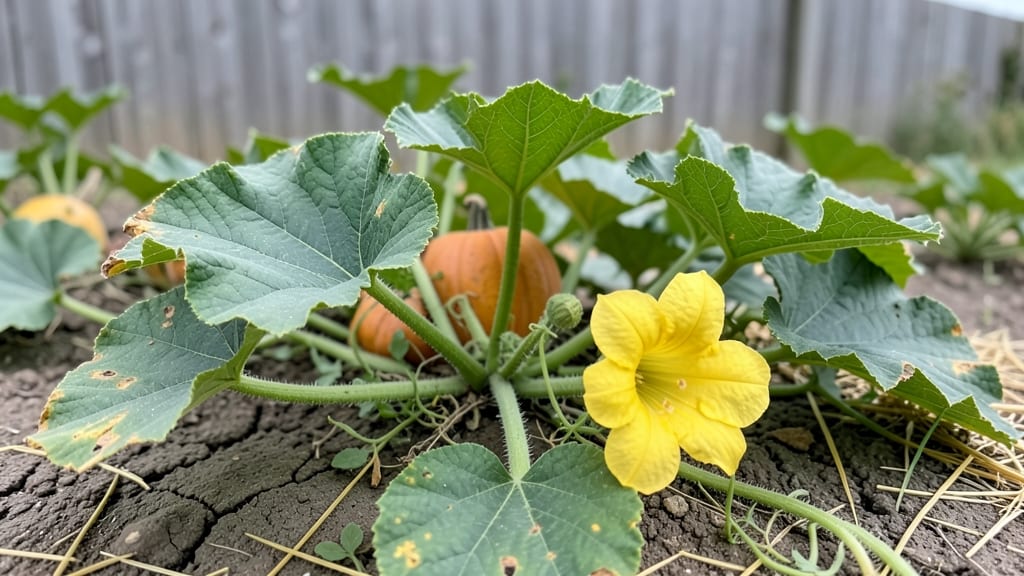
Mastering pumpkin plant identification begins with those deeply lobed leaves—like jagged green hands reaching for the sun. 🌿 I’ve spent years telling apart pumpkins from squash and gourds, and the key is in the vine structure too: pumpkins grow on rough, hairy stems that sprawl aggressively, while squash stays more compact.
The first clue is often the leaf shape—pumpkin leaves are 5-7 pointed lobes, wider than most squash varieties, and the veins create a web-like pattern you can’t miss.
Common varieties like Jack Be Little or Cinderella have distinct leaf shapes too—Jack Be Little’s leaves are smaller and more compact, while Cinderella’s are broader with smoother edges. Look for tendrils (those curly vines) clinging to the main stem, a dead giveaway for pumpkins.
And if you spot yellow flowers with a squashy green fruit behind them, that’s your confirmation—pumpkins bloom first, then the fruit swells up fast.
Diseased plants tell a different story: yellowing leaves, black spots, or mushy stems mean trouble. Healthy pumpkin leaves stay glossy and vibrant, while sick ones look dull or spotted.
If you’re still unsure, snap a photo and compare it to plant databases like PlantNet or iNaturalist—they’re free and foolproof for tricky cases. Once you’ve got the hang of it, you’ll spot pumpkins in gardens from a mile away.
This works for backyard patches, community gardens, or even wild patches—just keep an eye out for those telltale leaves and vines. The more you look, the easier it gets. Now go find your next pumpkin!
Common Reasons for Misidentifying Pumpkins
Accurately identifying pumpkin plants can be tricky, especially if you're new to gardening or unfamiliar with their many lookalikes. Misidentification often stems from a mix of natural botanical similarities, environmental factors, and even human error.
Understanding the root causes (pun intended!) helps you spot the differences next time. Here’s why it happens—and how to avoid falling into common traps.
Pumpkins belong to the Cucurbita family, which includes squash, gourds, and cucumbers. Many of these plants share lobed leaves, sprawling vines, and yellow flowers, making them easy to mix up. For example:
- Butternut squash has deep, jagged leaf lobes and a more upright growth habit.
- Zucchini features smoother, less pronounced lobes and grows faster with bushier foliage.
- Cucumbers have serrated, less rounded leaves and tendrils for climbing.
Why it happens: Without close inspection, the general shape of the leaves and vine structure can deceive even experienced gardeners. Actionable fix: Examine the leaf veins, flower structure, and fruit shape—pumpkins typically have five-lobed leaves with rough, hairy stems and large, solitary yellow blooms.
Pumpkin plants go through distinct growth stages, and their appearance changes dramatically. Young seedlings might resemble other cucurbits, while mature vines can look like overgrown weeds. Key stages where confusion arises:
- Seedling stage (0–4 weeks): Tiny round leaves with minimal lobing can mimic cucumber or melon starts.
- Flowering stage (4–8 weeks): Male and female flowers (with tiny pumpkins forming) are unique but often overlooked.
- Fruiting stage (8+ weeks): Vines sprawl wildly, and leaves may yellow or develop spots, masking their true identity.
Why it happens: Gardeners may judge a plant by its current stage rather than its inherent traits. Actionable fix: Track growth over time—pumpkins develop large, flat, five-pointed leaves and heavy, rounded fruits as they mature.
Pests like cucumber beetles, squash vine borers, or diseases such as powdery mildew can distort leaves, stems, and vines, making identification nearly impossible. For example:
- Beetle feeding causes notched, skeletonized leaves.
- Vine borers create wilted, dying vines with sawdust-like frass.
- Fungal infections (e.g., downy mildew) produce yellow spots or white powder on foliage.
Why it happens: Damage obscures natural features, leading to assumptions about the plant’s identity. Actionable fix: Inspect undamaged leaves or younger growth. Healthy pumpkin leaves should be dark green, rough-textured, and deeply lobed.
Pumpkins come in hundreds of varieties, from small pie pumpkins to giant Atlantic Giants, each with subtle differences in leaf shape, vine length, and fruit size. Additionally, cross-pollination between squash and pumpkins can produce hybrids with unpredictable traits.
Why it happens: Local nurseries may sell heirloom or hybrid pumpkins that don’t match classic descriptions. Actionable fix: When in doubt, check the seed packet or plant tag for variety names. If growing from seed, research the parent plant’s traits.
Even with perfect conditions, misidentification happens when gardeners skip critical observations. Common oversights include:
- Ignoring fruit shape (pumpkins are round to oval; squash may be ribbed or elongated).
- Not checking flower structure (female pumpkin flowers have a tiny pumpkin at their base).
- Assuming all large, lobed leaves belong to pumpkins (e.g., Cucurbita pepo includes both pumpkins and zucchini).
Why it happens: Rushing or focusing on one trait (like leaf shape) leads to mistakes. Actionable fix: Use a checklist:
- ✅ Leaf lobes: 5–7 deep, jagged indentations.
- ✅ Vine: Hairy stems, sprawling (not climbing).
- ✅ Flowers: Large, solitary, yellow (male and female).
- ✅ Fruit: Hard rind, develops from female flowers.
Quick fixes for pumpkin plant puzzles
Got a pumpkin plant that’s acting off—leaves turning weird, vines growing crooked, or flowers that won’t set fruit? Don’t panic! Most pumpkin plant mysteries have simple fixes, and we’ve broken them down by cause so you can diagnose and treat fast.
Below, find step-by-step solutions, plus pro tips to keep your patch thriving. Let’s get those vines back on track!
Possible Causes:
- Nitrogen deficiency (pale yellow leaves)
- Overwatering (yellowing edges, soggy soil)
- Pest damage (chewed leaves, holes, or sticky residue)
- Fungal infection (brown spots, moldy patches)
How to Fix It:
1️⃣ Test Your Soil (🔬)
Use a DIY soil test kit (available at garden centers) to check pH and nutrient levels. Pumpkins love 6.0–7.0 pH and need nitrogen (N), phosphorus (P), and potassium (K). If deficient:
- For nitrogen: Side-dress with compost or a balanced 10-10-10 fertilizer (follow package rates).
- For phosphorus: Add bone meal (1–2 tbsp per plant) to encourage root and flower growth.
- For potassium: Use wood ash (sparingly) or a banana peel tea (soak peels in water for 24 hours, then water plants).
2️⃣ Adjust Watering (💧)
Pumpkins hate wet feet! If leaves are yellow and soil feels damp:
- Stop watering for 2–3 days to dry out roots.
- Improve drainage: Mix sand or perlite into soil if your garden retains too much moisture.
- Water deeply but less often: Aim for 1–2 inches per week (check with a trowel—top inch should dry out between waterings).
3️⃣ Pest Patrol (🐞)
- Aphids/spider mites: Spray with neem oil (1 tbsp per gallon of water) or soapy water (1 tsp mild dish soap + 1 quart water).
- Squash bugs: Handpick eggs (tiny white clusters under leaves) or use row covers early in the season.
- Fungal spots: Remove infected leaves immediately and apply copper fungicide (follow label).
💡 Prevention Tip:
Mulch around plants with straw or grass clippings to retain moisture without soil splash (which spreads fungi). Space plants 3–5 feet apart for airflow—crowding invites pests and disease.Possible Causes:
- Poor soil (compacted, lacking organic matter)
- Underwatering (wilting, crispy edges)
- Temperature shock (frost, extreme heat)
- Root-bound roots (if transplanted too late)
How to Fix It:
1️⃣ Loosen the Soil (🏗️)
Gently scratch the top 2 inches of soil around the base with a fork to aerate roots. Mix in:
- Compost (1 part compost to 3 parts soil)
- Worm castings (for a nutrient boost)
2️⃣ Water Deeply (💦)
Weak vines often mean thirsty roots. Water slowly at the base (not overhead) for 15–20 minutes to encourage deep root growth. Use a moisture meter if possible—aim for 60% soil moisture at root level.3️⃣ Protect from Extremes (❄️☀️)
- Frost risk? Cover young plants with frost blankets or black plastic sheets (remove during the day).
- Heatwave? Provide shade cloth (30–50%) to prevent wilting. Water early morning to reduce evaporation.
🌡️ Pro Tip:
If transplanting, harden off seedlings (acclimate to outdoor temps for 7–10 days) and plant after the last frost date in your zone. Use root stimulator (like liquid seaweed extract) when transplanting to reduce shock.Possible Causes:
- Too much nitrogen (leafy growth, no flowers)
- Inconsistent watering (stresses plants)
- Lack of pollinators (no bees to transfer pollen)
How to Fix It:
1️⃣ Balance Fertilizer (🧪)
If your pumpkin is all leaves, it’s overfed with nitrogen. Switch to a low-nitrogen, high-phosphorus fertilizer (like 5-10-10) to encourage blooming.2️⃣ Hand-Pollinate (🐝)
On warm, dry mornings, use a paintbrush or cotton swab to transfer pollen from male flowers (long stem, no bulb) to female flowers (tiny pumpkin at the base). Do this every 2–3 days if bees are scarce.3️⃣ Stress Less (🌿)
Pumpkins need consistent care. Avoid:
- Over-pruning (remove only diseased leaves).
- Sudden changes (don’t move plants after transplanting).
- Herbicide drift (keep pumpkins away from treated lawns).
✨ Bonus Tip:
Plant borage or marigolds nearby to attract pollinators! These flowers also repel pests like squash bugs.If your pumpkin is suddenly limp, blackened, or collapsing: 1. Check for squash vine borers (look for sawdust-like frass near the stem). If found, cut open the stem to remove larvae.
- Prune back damaged vines with sterilized shears (dip in rubbing alcohol).
- Apply diatomaceous earth around the base to deter borers.
- Water deeply to revive roots (if soil isn’t waterlogged).
🔥 Last Resort:
If the plant is beyond saving, remove it immediately to prevent disease spread. Replace with a new seedling if the season allows!Frequently asked questions
How can I tell the difference between pumpkin leaves and squash leaves?
Pumpkin leaves typically have 5-7 deeply lobed points with rough, hairy stems, while squash leaves often have 3-5 smoother lobes. Check the vine too—pumpkins sprawl aggressively with rough, hairy stems, whereas squash vines are often smoother and more compact. Look for the female flower with a tiny pumpkin at its base for confirmation.
What are the key signs of a healthy pumpkin plant?
A healthy pumpkin plant has dark green, glossy leaves with 5-7 jagged lobes and hairy, sprawling vines. The leaves should feel firm, not mushy or spotted. You’ll also see large yellow flowers (male and female) and hard-shelled fruits developing from the female blooms. Avoid yellowing edges or black spots, which signal disease or pests.
Can I use a plant identification app to confirm my pumpkin?
Apps like PlantNet or iNaturalist let you upload photos for instant ID. Focus on the leaf shape, vine structure, and flowers—these are the most reliable traits. For tricky cases, snap multiple angles (top/bottom of leaves, flowers, and stems) and compare with known pumpkin varieties like Jack Be Little or Cinderella.
Why do my pumpkin leaves look different from what I’ve seen in pictures?
Pumpkin leaves vary by variety—some like Jack Be Little have smaller, tighter lobes, while others like Atlantic Giant grow larger and broader. Pests (like aphids) or diseases (like powdery mildew) can also distort leaves. Check for yellowing, spots, or holes—if leaves are otherwise healthy but just "off," it’s likely a different cultivar. Cross-reference with seed packets or plant databases.