
Watering
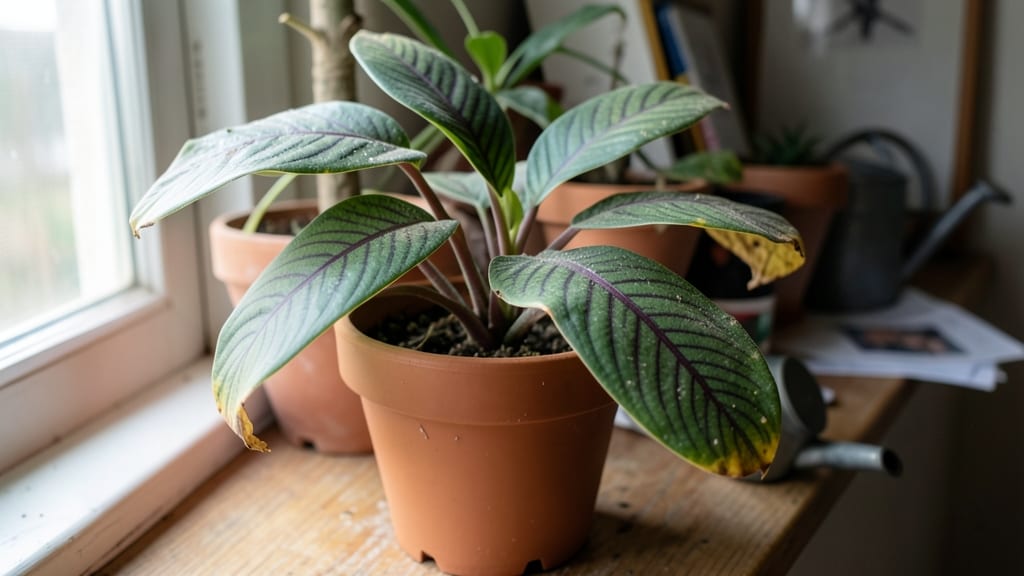
That drooping, yellow mess isn’t just a prayer plant overwatered—it’s a fixable fiasco, and your plant’s revival starts with a single, dramatic step. 🌱 The moment you see those droopy, yellowing leaves, you’ve got a 3-day window to turn things around before root rot sets in.
Overwatering happens when we treat houseplants like tropical rainforest giants—constant moisture, no breaks. Prayer plants need a top-down watering approach: let the top inch of soil dry out completely before watering again.
Most people check soil moisture with their fingers, but I use a chopstick—it tells me exactly how deep the dryness goes. The key is balance: too little water wilts the leaves, but too much turns them yellow and mushy.
Within 72 hours, you’ll see new signs of life: perky leaves, vibrant green veins, and that signature prayer-like fold when it’s happy. Start by emptying the saucer, repotting if the soil smells sour, and cutting back on water to every 10-14 days (depending on humidity).
The first flush of new growth is the best reward—proof your plant is back from the brink.
This works for all Maranta varieties, whether you’re growing in a bright bathroom or a north-facing window. The trick is consistency: once you adjust the routine, your prayer plant will bounce back faster than you expect. Let’s get those roots breathing again!
Root Causes of Overwatering
Your Maranta leuconeura—the stunning prayer plant—isn’t just wilting when overwatered; it’s sending you a distress signal. 🚨 Understanding the why behind soggy soil is the first step to saving its striking foliage. Let’s dig into the science and habits that turn your green thumb into a drowning threat.
Prayer plants thrive in well-draining, aerated soil that mimics their tropical understory habitat. When soil stays waterlogged, it creates an oxygen-deprived environment where roots can’t breathe. Here’s what’s really happening:
- Compacted soil: Heavy or clay-based mixes trap moisture like a sponge, suffocating roots. Solution: Amend with perlite, orchid bark, or coconut coir (20-30% by volume) to improve drainage.
- Lack of organic matter: Pure peat or potting soil without chunky additives (like bark or charcoal) breaks down too quickly, losing structure and drainage over time. Solution: Repot with a chunky, airy mix (e.g., 40% peat, 30% perlite, 20% orchid bark, 10% worm castings).
- No drainage holes: Pots without exit points turn every watering into a root bath. Solution: Always use containers with drainage—even decorative cache pots should sit in a saucer with a tray underneath.
Pro Tip: 🌡️ Test your soil’s moisture by sticking your finger 1–2 inches deep. If it’s damp after 2–3 days, you’re overdoing it.
Most plant owners fall into the trap of routine watering—assuming a prayer plant needs H₂O every Tuesday and Friday, regardless of conditions. But these plants are sensitive to consistency, and their water needs shift with:
- Humidity levels: High humidity (70%+) means soil stays moist longer. Fix: Reduce watering by 30–50% in steamy bathrooms or greenhouses.
- Light exposure: Bright, indirect light speeds up evaporation, drying soil faster. Fix: Move to a shadier spot if leaves yellow quickly after watering.
- Seasonal changes: Winter slows metabolism—roots absorb less water. Fix: Water only when the top 50% of soil is dry in cooler months.
Warning: 🚫 Mistakes like ice-cold water or tap water with high chlorine/salts can also mimic overwatering by disrupting root function. Always use room-temperature, filtered water.
A pot that’s too large for your prayer plant’s root system is a recipe for disaster. Extra soil holds onto moisture longer than roots can absorb it, leading to:
- Root rot: Fungal pathogens like Phytophthora thrive in stagnant water, cutting off nutrient flow.
- Nutrient imbalance: Excess water leaches out fertilizers, leaving roots starved even as they sit in soggy conditions.
Rule of Thumb: ✅ Use a pot only 1–2 inches wider than the plant’s current root ball. For mature prayer plants, a 6–8 inch container is ideal.
Next up: How to diagnose overwatering in your prayer plant’s leaves (and what to do about yellowing!).
Reviving Your Prayer Plant Fast
If your prayer plant’s leaves are drooping, yellowing, or turning mushy, it’s a clear sign of overwatering—but don’t panic! With the right steps, you can nurse it back to health in 3 days or less.
Below, we’ll break down the most common causes of overwatering and the practical fixes to save your plant, plus tips to keep it thriving long-term.
Cause: Too much water in the soil cuts off oxygen roots need, leading to root rot and leaf discoloration. Solution:
- 🌱 Stop Watering Immediately Let the top 1–2 inches of soil dry out completely before watering again. Stick your finger in the soil—if it’s damp past your first knuckle, wait.
- 💦 Drain Excess Water
- Place your pot in a shallow tray and let it drain for 10–15 minutes to remove saturated soil.
- If water pools at the bottom, empty the saucer to prevent soggy roots.
- 🌿 Trim Damaged Leaves Use sterilized scissors to snip off yellow or mushy leaves at the base. This helps the plant focus energy on recovery.
- 🌞 Improve Airflow & Light
- Move your plant to a bright, indirect light spot (east or north-facing windows are ideal).
- Increase airflow by moving it away from walls or using a small fan on low.
💡 Pro Tip: If the roots smell foul or look black/mushy, you may need to repot (see next section).
Cause: Chronic overwatering leads to fungal/bacterial root rot, causing stems to soften or collapse. Solution:
- 🔪 Remove & Inspect Roots
- Gently take the plant out of its pot and rinse the roots with water to remove soil.
- Trim away black, mushy, or slimy roots with clean scissors. Healthy roots are firm and white.
- 🧼 Disinfect the Pot
- Wash the pot with soapy water and rinse thoroughly.
- For severe cases, soak the pot in a 1:10 hydrogen peroxide-water solution for 10 minutes, then rinse.
- 🌿 Repot in Fresh Soil
- Use a well-draining mix: Combine 1 part peat moss or coco coir, 1 part perlite, and 1 part orchid bark.
- Plant the prayer plant in the new mix, ensuring the crown (where leaves meet the stem) stays above soil level.
- 🚫 Hold Off on Watering Wait 3–5 days before watering to let roots heal. Then, water only when the top 1–2 inches of soil are dry.
✨ Prevention Tip: Use a terracotta pot (which dries faster) or add orchid bark chunks to soil to improve drainage.
Cause: Overzealous watering (or poor drainage) keeps soil soggy. Solution:
- 📅 Water on a Schedule
- Every 7–10 days in warm weather; every 10–14 days in cooler months.
- Test soil moisture before watering—stick your finger in 1–2 inches deep.
- 💧 Use the Right Amount
- Water slowly until it drains from the bottom (about ½ cup for a 6-inch pot).
- Empty the saucer 10 minutes after watering to prevent root suffocation.
- 🌧️ Mimic Natural Rainfall
- Prayer plants love bottom watering: Place the pot in a tray of water for 10–15 minutes, then remove excess.
- Avoid ice cube watering—it can shock roots.
🎯 Long-Term Tip: Group plants together to increase humidity (they love 50–70% humidity) and reduce evaporation, cutting down on frequent watering.
⏰ Timeline for Recovery:
- Day 1–2: Stop watering, trim leaves, improve light/airflow.
- Day 3–5: Repot if needed, resume light watering (only when dry).
- Week 2: New growth should appear if roots are healthy!
By following these steps, your prayer plant should bounce back in no time—and you’ll have a lush, happy green companion for years to come! 🌿💚
Frequently asked questions about reviving your prayer plant
Why do prayer plant leaves turn yellow when overwatered?
Yellowing leaves signal root stress from soggy soil. Overwatering cuts off oxygen to roots, causing them to rot and preventing nutrient uptake. The plant then sheds yellow leaves to conserve energy. Check for mushy stems or a foul smell—these are red flags for root rot.
How often should I water a prayer plant after fixing overwatering?
Wait until the top 1–2 inches of soil are completely dry—usually every 10–14 days in cooler months or 7–10 days in warm weather. Use a chopstick to test moisture: if it comes out clean, it’s time to water again.
Can I save a prayer plant with black, mushy roots?
Yes, but you’ll need to act fast! Gently remove the plant, trim all black/mushy roots with sterilized scissors, and repot in fresh, well-draining soil. Skip watering for 3–5 days to let roots recover. If >50% of roots are damaged, recovery may take longer.
What’s the best soil mix to prevent future overwatering?
Use a chunky, airy blend: 40% peat/coco coir, 30% perlite, 20% orchid bark, and 10% worm castings. This combo improves drainage while retaining just enough moisture. Avoid pure potting soil—it compacts and holds too much water.
Will my prayer plant bounce back after overwatering damage?
With proper care, most prayer plants recover within 2–4 weeks. Focus on trimming damaged leaves, improving airflow, and adjusting your watering routine. New growth is your best sign of recovery—just be patient! New leaves will emerge vibrant and healthy once roots stabilize.