
Companion Plants
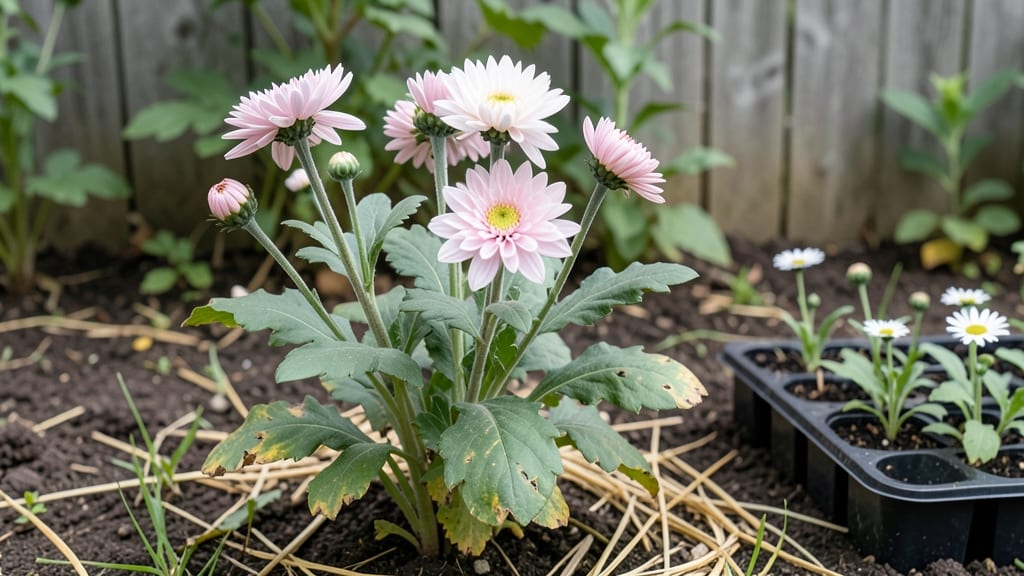
Planting daisy plants in your sunny border transforms any space into a buzzing pollinator paradise. 🌻 I’ve watched my own daisy patches go from sparse to lush in just a few weeks, and the secret starts with the right soil prep and spacing.
These cheerful blooms thrive where others struggle—just give them full sun and room to spread.
The key to success is loose, well-draining soil mixed with compost. Daisy roots need space to breathe, so avoid heavy clay unless you amend it. Plant in early spring or fall, spacing perennial varieties 18-24 inches apart and annuals 12-15 inches apart.
Dig holes just deep enough to cover the roots without burying the crown—this keeps them from rotting.
Once planted, water deeply but let the soil dry slightly between waterings. Daisies hate soggy roots but love consistent moisture. Within 4-6 weeks, you’ll see those classic white-and-yellow blooms drawing bees and butterflies—proof that simple steps create stunning results. The best part? They multiply easily, filling gaps naturally.
Perennial daisies like Shasta or Gerbera come back stronger each year, while annuals like African Daisy offer bold color for one season. Either way, your border will look effortlessly polished with minimal upkeep. Ready to get started?
📚 In This Guide
- What you need
- Instructions
- Tips and common mistakes
- Wrapping up and next steps
What you need
- ● Daisy plants or seeds: For transplants: 1–3 healthy nursery-grown daisy plants (e.g., Oxeye Daisy, Shasta Daisy, or Gerbera Daisy). For seeds: 1–2 packets of daisy seeds (organic, non-GMO preferred; ~50–100 seeds per packet).
- ○ Well-draining soil: 1–2 bags of garden soil (10–20 lbs each) or potting mix (for containers). Optional: Compost (5–10 lbs) to enrich soil fertility.
- ● Sunny planting location: 6+ hours of direct sunlight daily (full sun preferred). Space: 12–24 inches apart (check plant tags for variety-specific needs).
Step-by-Step instructions for planting daisy plants
Here's how to get your daisies thriving in sunny borders with minimal fuss.
🌱 Step 1: Choose the Perfect Planting Spot
Daisies love full sun—at least 6-8 hours daily. Scan your yard for a location with open sky exposure and well-drained soil. I always test drainage first by digging a 6-inch hole and filling it with water. If it drains within 30 minutes, your spot is perfect. Avoid low areas where water pools after rain.
Daisies also need space to spread. For 4 plants, mark out a 3-foot diameter circle to give them room to grow. If planting near other perennials, space them 12-18 inches apart. Watch for nearby trees—daisies hate competition for sunlight and nutrients.
🌿 Step 2: Prepare the Soil for Healthy Roots
Loosen the soil in your marked area to a depth of 12 inches using a garden fork or tiller. This breaks up compacted layers so roots can grow easily. If your soil feels heavy or clay-like, mix in 2-3 inches of compost to improve drainage and fertility. I always work the compost into the top 6 inches of soil.
Daisies prefer slightly acidic to neutral soil (pH 6.0-7.0). If your soil tests higher, add a bit of peat moss or sulfur to adjust. Rake the area smooth afterward—you want a level surface for planting. Avoid adding fresh manure; it can burn tender roots and attract pests.
🪴 Step 3: Plant Daisy Starts at the Right Depth
Remove each daisy plant from its container and gently tease apart the roots if they're circling. Dig a hole twice as wide as the root ball but only as deep as the plant's container. Place the plant in the hole so the top of the root ball sits just below soil level. Press the surrounding soil firmly to eliminate air pockets.
Water deeply right after planting to settle the soil and encourage root contact. You'll know it's done correctly when water drains evenly without pooling. Mulch with 2 inches of shredded bark or straw to retain moisture and keep weeds at bay. Avoid piling mulch against the stems—keep it 2 inches away to prevent rot.
☀️ Step 4: Water and Maintain for Blooms All Season
Water newly planted daisies every 2-3 days until they establish roots (4-6 weeks). You'll see new growth as a sign they're settling in. Once established, water 1-2 times per week, depending on rainfall. Daisies are drought-tolerant but produce fewer blooms if underwatered.
Deadhead spent blooms regularly to encourage more flowers. Pinch back leggy stems in early summer to promote bushier growth. If leaves yellow, it's often a sign of overwatering—let the soil dry out between waterings. Fertilize lightly in spring with a balanced 10-10-10 formula to support vibrant blooms.
Tips & tricks for planting daisy plants
Here's what I've learned from years of growing daisies that'll help your sunny border thrive.
Sunlight Secret: The 6-8 hours of full sun requirement is non-negotiable for daisies. I've planted them in partial shade before, and while they survive, they produce fewer blooms and grow leggy. If your yard has areas with morning sun but afternoon shade, consider adding a few more hours of light with a reflective surface nearby—it can make a surprising difference in bloom quantity.
Drainage Test: That 30-minute drainage test in Step 1 is your best friend. I learned this the hard way when my first batch of daisies struggled in a spot that looked perfect but had hidden compaction. If water pools after 30 minutes, amend the soil with more compost or create a raised bed. Daisies hate soggy roots—they'll quickly develop root rot and decline.
Soil Prep Strategy: When loosening soil to 12 inches deep in Step 2, don't just scratch the surface—really work that fork into the soil. I use a garden fork to break up compacted layers because it's more effective than a tiller for small areas. For clay-heavy soil, mix in that 2-3 inches of compost all the way through the 12-inch depth, not just on top. This creates proper root channels for your daisies to spread.
Planting Depth: The "just below soil level" guideline in Step 3 is crucial. I've seen many gardeners bury plants too deep, which can cause stem rot. After planting, gently tug on each plant—it should feel secure but not forced down. The top of the root ball should be slightly below ground level, but never deeper than the container's rim. This ensures proper air circulation at the stem base.
Pro Tips for Planting Daisy Plants
- Here's what I've learned from years of growing daisies that'll help your sunny border thrive.
- Sunlight Secret: The 6-8 hours of full sun requirement is non-negotiable for daisies.
- Drainage Test: That 30-minute drainage test in Step 1 is your best friend.
Frequently asked questions
Got questions about planting daisy plants? You’re not alone! Here are answers to the most common concerns—from timing to troubleshooting—so you can grow a thriving border of these cheerful blooms with confidence.
When is the best time to plant daisy plants?
For annual daisies (like Gerbera or African daisies), plant after the last frost in spring when soil is warm (60°F+). Perennial daisies (like Shasta or Oxeye) thrive when planted in early spring or fall, giving roots time to establish before extreme weather. Avoid planting in summer heat—transplants may struggle!
How much sun do daisy plants need?
Most daisies crave full sun (6–8 hours daily) for vibrant blooms, but a few varieties (like Oxeye Daisy) tolerate partial shade (4–6 hours). If planting in shadier spots, expect fewer flowers. Pro tip: Monitor leaves—yellowing or stretching stems signal insufficient light.
Can I plant daisies from seed, or should I buy transplants?
Both work! Seeds take 60–90 days to bloom (great for annuals like Zinnias), while transplants give instant color. For perennials, transplants are easier—seeds often need stratification (cold treatment) to germinate. Budget tip: Start seeds indoors 4–6 weeks before the last frost for a head start!
Why aren’t my daisies blooming?
Bloomless daisies usually need one of three fixes:
- Deadhead spent flowers to encourage new blooms ( snip stems just above a leaf).
- Check for over-fertilizing—too much nitrogen = leafy growth, fewer flowers.
- Ensure they’re not overcrowded; thin plants to 12–18 inches apart for airflow.
If the problem persists, they may need more sun or water.
What plants pair well with daisies in a border?
Daisies are pollinator magnets and play nicely with:
- Companion plants: Catmint, Lavender, or Coneflowers (drought-tolerant trio!).
- Edging: Salvia, Yarrow, or Ornamental Grasses for texture.
- Avoid competing root systems like mint or aggressive spreaders (e.g., Daylilies).
Design tip: Plant taller varieties (like Giant Fleabane) at the back, shorter ones (e.g., African Daisy) in front.
Wrapping up and next steps
Planting daisy plants is a rewarding way to brighten your garden while supporting local pollinators—like bees and butterflies! 🌼 With the right soil, sunlight, and care, these cheerful blooms will thrive and bring life to your outdoor space.
Whether you’re a beginner or seasoned gardener, the key is patience and attention to their needs.
Ready to take the next step? Start by choosing your favorite daisy varieties and mark your calendar for the best planting times in your region. Soon, you’ll be enjoying a vibrant, pollinator-friendly garden that’s the envy of the neighborhood!