Watering
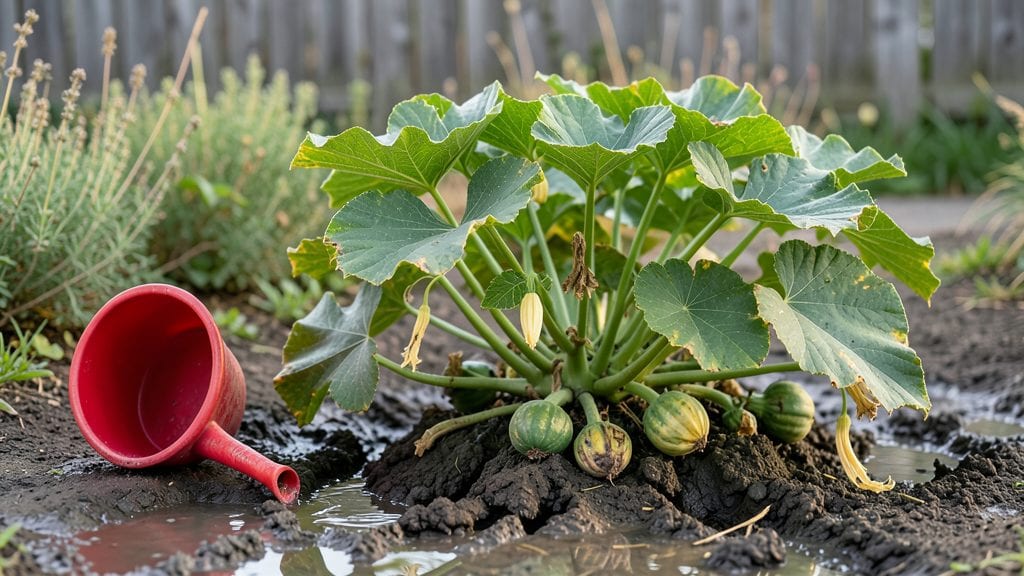
Overwatered squash plants are a nightmare that turns lush vines into sad, yellowing messes—until you fix the drainage.
I’ve pulled squash plants back from the brink of root rot more times than I’d like to admit, and the key always comes down to cutting back on water and giving roots room to breathe. The first sign?
Leaves that look like they’ve been sunburned but are actually drowning in soggy soil. You’ll see wilting even when the soil feels damp, and sometimes that musty smell of mold gives it away before the damage spreads.
The fix starts with your watering schedule: squash needs about 1 inch of water per week, but that’s spread over 2-3 sessions to let soil dry slightly between drinks. Ditch the saucer under pots or raised beds—water should drain away within 30 minutes, not pool like a swamp.
Amend heavy clay soil with compost or perlite to break up compaction, and if you’re growing in containers, make sure they’ve got drainage holes bigger than a dime. My biggest mistake? Ignoring the soil’s texture until the plants were already struggling.
Within 7-10 days of adjusting water and improving drainage, you’ll see new growth pushing through—dark green, crisp leaves instead of those sad, limp ones. The vines will perk up, and if you caught it early, you might even salvage some fruit.
The real win? Preventing future rot by mulching with straw to keep moisture steady (but not soggy) and avoiding watering in the evening when foliage stays wet overnight. It’s a game-changer for summer squash, zucchini, and pumpkins alike.
This works whether you’re growing in-ground, in raised beds, or even in containers on a patio. The only variable is how fast your soil drains—sandy soil needs less tweaking than clay, but the principles stay the same.
Once you’ve got the rhythm down, your squash plants will thrive instead of throwing tantrums every time you water them. Let’s get those roots breathing again.
The Hidden Triggers Behind Wet Squash Woes
When your squash plants start looking more like soggy sponges than thriving vines, the blame often points to one sneaky culprit: excessive moisture. But why does this happen? Let’s break down the science behind the soggy soil and wilting leaves—so you can fix the problem before it’s too late.
Squash plants thrive in well-draining soil, but if your garden beds or containers are compacted, clay-heavy, or lack organic matter, water pools around the roots instead of draining away. Here’s why this is a disaster:
- Oxygen deprivation: Roots need oxygen to respire (yes, they breathe!). Waterlogged soil displaces air, suffocating roots and triggering Pythium or Phytophthora fungi—common causes of root rot.
- Nutrient lockout: Excess water washes away essential nutrients like nitrogen and potassium, which squash plants need for vine growth and fruit production.
- Temperature swings: Wet soil stays cooler longer, slowing microbial activity that helps break down organic matter into plant-available nutrients.
Pro tip: Test your soil’s drainage by digging a 6-inch hole, filling it with water, and timing how long it takes to drain. If it’s slower than 4 hours, amend with perlite, compost, or coarse sand to improve aeration. 💡
Even with good drainage, watering on a schedule (rather than by need) is a fast track to root rot. Squash plants are drought-tolerant once established, but many gardeners err on the side of caution—and drown their crops in the process. Here’s the breakdown:
- Surface watering: Pouring water at the base (especially in broadleaf varieties) creates a perched water table, where roots sit in a permanent puddle. Aim for deep, infrequent watering to encourage roots to grow downward.
- Ignoring weather: Rain + overhead watering = double the moisture. If your forecast calls for showers, skip the hose for 24–48 hours to avoid soggy soil.
- Small containers: Pots without drainage holes act like sponges, trapping water. Squash in containers needs at least 5-gallon pots with drainage holes and a cactus/succulent mix to prevent gloop.
Action step: Use a moisture meter or the finger test—stick your index finger 1–2 inches into the soil. If it’s damp, wait. If it’s bone-dry, water deeply until it runs out the bottom. ⏰
Squash plants spread like weeds (literally), and when vines tangle or seedlings are planted too closely, roots compete for space—and oxygen. Here’s how crowding backfires:
- Fungal hotspots: Dense foliage traps humidity, creating the perfect environment for downy mildew or powdery mildew, which weaken plants and make them more susceptible to rot.
- Stunted root growth: Roots grow toward water and nutrients. In crowded beds, they can’t expand, leading to shallow, waterlogged root systems.
- Competition for resources: Overlapping squash plants steal water and nutrients from each other, leaving them stressed and prone to disease.
Fix it fast: Thin seedlings to 2–3 feet apart (check your variety’s spacing needs!). For vining types, use trellises to lift plants off the ground and improve airflow. 🌿
Squash plants hate cool, damp conditions, which slow evaporation and keep soil saturated. Here’s how climate plays a role:
- Cool nights: Temperatures below 60°F (15°C) reduce transpiration (water loss through leaves), so plants retain more moisture in the soil.
- High humidity: Air that’s already saturated means water lingers on leaves and soil, inviting bacterial wilt or root rot pathogens.
- Poor airflow: Wind helps dry foliage and soil. In still, humid conditions, moisture clings—especially in thick canopies.
Climate hack: If your area is prone to damp weather, mulch with straw (not plastic!) to regulate soil temperature and reduce evaporation. For containers, move them to a shady, breezy spot during humid days. 🌬️
Revive & Prevent Overwatered Squash
Now that you’ve pinpointed the issue, let’s turn things around with targeted fixes—whether your squash plants are drowning in soggy soil or struggling from past overwatering. Below are practical, step-by-step solutions tailored to the root cause, plus long-term prevention to keep your vines thriving.
Cause: Excess moisture suffocates roots, inviting rot and fungal infections. Fix:
- Pause watering for 24–48 hours to let the soil dry out slightly. This halts further damage while giving roots a chance to recover.
- If the soil is mushy or smells like rot, skip watering entirely until it feels slightly dry 1–2 inches below the surface (test with your finger).
- ⚠️ Warning: Yellowing leaves or wilting despite dry soil? Your plant may be too late—see the next section.
Cause: Compacted or waterlogged soil traps oxygen, starving roots. Fix:
- Loosen the soil around the base of the plant using a fork or trowel (gently—avoid piercing roots). Aim for 6–8 inches deep to improve drainage.
- Create a well (6–8 inches deep) around the plant’s stem and fill it with a mix of:
- 50% perlite or coarse sand (for drainage)
- 50% compost or aged manure (to replenish nutrients)
- Optional: Add a handful of mycorrhizal fungi (boosts root health).
- Water lightly only after the soil feels slightly dry (not bone-dry).
Cause: Overzealous watering or poor soil structure leads to chronic sogginess. Fix: - Water deeply but infrequently: Aim for 1–1.5 inches of water per week (including rain), delivered in one long session (e.g., 30–45 minutes) rather than daily sprinkles. - Morning watering only: Wet leaves at night = fungal risks.
Water at sunrise so foliage dries quickly. - Check soil moisture: Stick your finger 2 inches down—if it’s damp, wait. Use a moisture meter for accuracy. - Mulch properly: Apply 2–3 inches of straw or wood chips (not plastic) to retain even moisture without suffocating roots.
Cause: Root rot or powdery mildew weakens plants after overwatering. Fix: 1. Fungal treatment (if needed): - Spray leaves with a baking soda solution (1 tsp baking soda + 1 quart water + few drops of dish soap) every 7–10 days for powdery mildew. - For root rot, apply hydrogen peroxide (3%) to soil (1 part H₂O₂ to 20 parts water) to kill pathogens.
- Fertilize lightly: Use a balanced, water-soluble fertilizer (10-10-10) diluted to half strength to avoid burning stressed roots. Focus on potassium (e.g., banana peel tea) to strengthen cell walls.
- Prune damaged foliage: Snip off yellow, mushy, or blackened leaves with sterilized scissors to redirect energy to healthy growth.
Cause: Ignoring soil conditions or watering patterns repeats the problem. Prevention Tips: - Test your soil: Use a DIY pH test kit—squash prefers 6.0–7.0 pH.
Amend with lime (to raise pH) or sulfur (to lower it) if needed. - Choose the right container: If growing in pots, ensure they have drainage holes and use cactus/succulent mix blended with compost. - Rotate crops: Avoid planting squash in the same spot yearly to prevent soil-borne diseases. - 💡 Pro Tip: Drip irrigation (on a timer) delivers water directly to roots and cuts waste by 30–50% compared to hose watering. - 🌡️ Monitor weather: Use a rain gauge to track precipitation—adjust watering if your area gets sudden downpours.
If your squash plant is completely mushy at the base or leaves are black and slimy:
- Dig it up and inspect the roots. Healthy roots are firm and white; rotten roots are brown/mushy.
- Trim away all rotten roots with clean pruners.
- Repot in fresh, sterile soil (mix compost + perlite) and place in bright, indirect light (no direct sun for 1 week).
- Hold off on watering for 5–7 days to let roots recover before resuming light watering.
🎯 Key Takeaway: Overwatering is reversible, but speed and soil drainage are critical. Act fast, adjust habits, and your squash vines will bounce back—ready to produce plump, disease-free fruits in no time!
Frequently asked questions
How can I tell if my squash plants are overwatered vs. underwatered?
Check the soil first! Overwatered squash will have yellowing leaves, mushy stems, and soil that stays damp for days. Underwatered plants have crispy brown edges and dry soil pulling away from pot edges. A good test: Stick your finger 2 inches deep—if it’s soggy, you’re overdoing it.
Can I save a squash plant if the roots are already rotting?
Maybe! Dig up the plant and trim away all mushy, brown roots with clean scissors. Repot in fresh, well-draining soil (mix 50% compost with 50% perlite) and hold off watering for 5-7 days. Place it in bright, indirect light until new growth appears. If most roots are rotten, it may not recover.
Why does my squash keep getting powdery mildew even after I stop overwatering?
Powdery mildew thrives in humid conditions, not just wet soil. Improve airflow by spacing plants 2-3 feet apart and prune crowded foliage. Spray leaves with a baking soda solution (1 tsp baking soda + 1 quart water + dish soap) every 7-10 days for prevention. Morning watering helps leaves dry faster too.
What’s the best way to water squash in containers to avoid soggy soil?
Use drip irrigation on a timer for 30-45 minutes daily (early morning) to deliver water directly to roots. Ensure pots have drainage holes and use a mix of 50% cactus/succulent soil with 50% compost. Never let water sit in saucers—empty them after watering.
How long does it take for overwatered squash to recover?
With proper care, you’ll see improvement in 7-10 days. New growth should appear as dark green leaves, and wilting should reduce within a week. For severe cases, recovery may take 2-3 weeks. Monitor soil moisture daily and adjust watering immediately if leaves start yellowing again.