Pruning
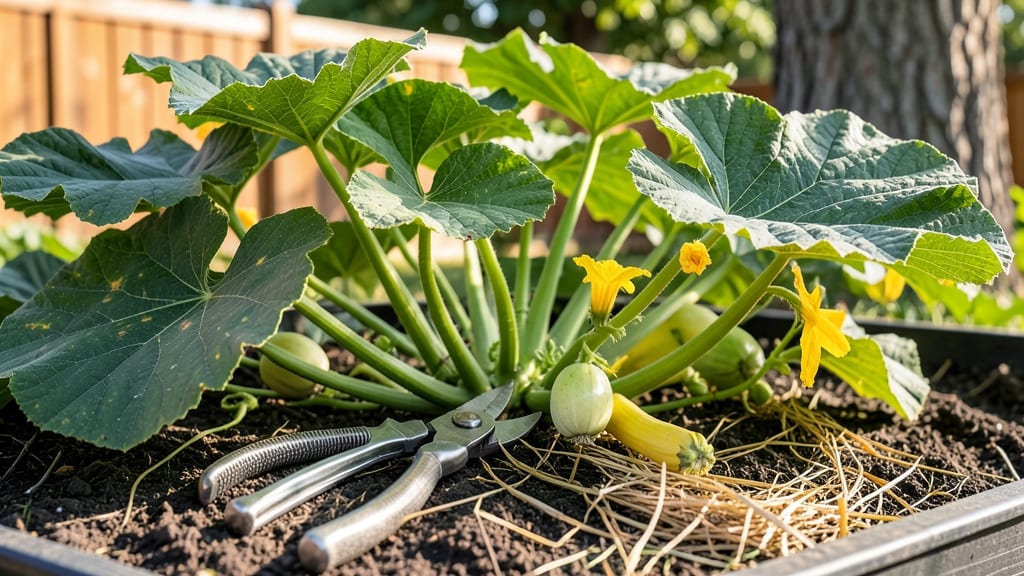
Pruning summer squash plants might sound intimidating, but three simple cuts can double your harvest this season. 🌱 I learned the hard way that skipping this step means fewer fruits and more vines—my first squash patch produced half as much as my pruned plants last year.
The key is directing the plant's energy where you want it: toward bigger fruit, not endless vines.
You only need basic tools: sharp pruning shears and a few minutes of your time. Focus on removing the first few flowers that appear, letting the plant mature before it starts producing.
Once the vines hit about 2 feet long, trim the tips to encourage bushier growth—this is where the magic happens for yield. The goal isn't to turn your squash into a bonsai; it's about balance.
What you'll end up with is a plant that puts all its effort into developing a handful of large, high-quality fruits instead of dozens of small, bitter ones.
The leaves stay healthier, pests have fewer hiding spots, and you'll actually be able to keep up with harvesting before the squash turn to wood. Think of it as giving your plant a spa day—less stress, more results.
This method works for both bush and vining varieties, whether you're growing in a raised bed or a backyard plot. The best part? You'll see the difference in just a few weeks, not months.
Now grab those shears and let's get to work—your future zucchini bread (or stir-fry) will thank you.
📚 In This Guide
- What you need
- Instructions
- Tips and common mistakes
- Wrapping up and next steps
What you need
- ● Clean, sharp pruning shears or hand pruners – Choose bypass pruners (not anvil-type) to avoid crushing stems. A 4- to 6-inch blade works best for squash plants.
- ○ Gloves (optional but recommended) – Wear gardening gloves to protect your hands from thorns (on some varieties) and dirt.
- ● Disinfectant (rubbing alcohol or bleach solution) – Clean your pruners with 70% isopropyl alcohol or a 1:10 bleach-water mix before and after pruning to prevent disease spread.
- ● Garden twine or plant ties (if needed) – Useful for supporting heavy vines after pruning (about 10-15 feet per plant, depending on size).
- ● Compost bin or mulch – For disposing of pruned vines (avoid composting diseased plants).
- ● Gardening kneeler or stool – Makes pruning easier if your squash plants are tall or sprawling.
- ● Spray bottle with water – Helps clean cuts and reduce stress on the plant.
- ● Labeling tags – If you’re experimenting with different pruning techniques, mark plants to track progress!
Step-by-step instructions for pruning summer squash plants
Here's the straightforward approach I use every summer to keep squash plants productive and healthy.
✂️ Step 1: Identify and Remove Suckers
Squash plants grow vigorous side shoots called suckers that steal energy from fruit production. Look for small shoots sprouting from the base of the main stem or leaf axils—these are the first targets. Use clean, sharp pruning shears to snip them off just above the leaf junction where they emerge.
I do this every 5-7 days during peak growth. You'll notice new suckers appear constantly, so stay vigilant. Removing them early ensures the plant focuses its energy on developing larger, healthier fruit instead of supporting unnecessary growth.
✂️ Step 2: Trim Overly Crowded Vines
Once the main vines get thick and sprawling, some stems start competing for sunlight and nutrients. Focus on pruning the oldest, most leggy vines that have already produced a few fruits. Cut these back to about 12-18 inches from the plant base, leaving only the most vigorous, healthy-looking growth.
This step prevents disease by improving air circulation. You'll see the remaining vines thicken and develop more side branches, which actually increases fruit production. Just avoid cutting into the main stem—this weakens the plant's structural support.
☀️ Step 3: Thin Fruit Clusters
When you see multiple squash blooms developing in one cluster, leave only 1-2 fruits per vine section. Use your fingers to gently twist off the smaller, less mature ones at their base. This prevents overburdening the plant and ensures the remaining squash grow larger and more uniform.
I check clusters every 3-4 days during peak flowering. You'll notice the remaining fruits swell noticeably within a week of thinning. This method also reduces the risk of disease spread through crowded, touching fruit.
🌿 Step 4: Maintain Airflow Around the Plant
After pruning, focus on keeping the plant's center open and well-ventilated. Remove any yellowing or diseased leaves by cutting them at the base with clean shears. This prevents moisture from getting trapped and encourages new, healthy growth to develop from the plant's base.
I do a quick visual check every morning before watering. You'll know airflow is good when you see new leaves emerging from the plant's center rather than just the outer edges. This simple habit keeps your squash plants thriving all season long.
⏰ Step 5: Time Your Pruning for Maximum Impact
Prune early in the morning when temperatures are cooler. This gives the plant time to recover before the heat of the day. Avoid pruning during wet conditions—damp leaves and cuts invite fungal diseases that can devastate your plants.
I never prune more than 20-30% of the plant's foliage at once. You'll see the plant bounce back within 5-7 days with new growth if you follow this rule. This approach keeps your squash plants productive without shocking them into stress.
Tips & tricks for pruning summer squash plants
A few well-timed cuts can transform your squash harvest from scrappy to spectacular. Here's how to get the most out of every pruning session.
Tool Tip: Always use clean, sharp pruning shears—not dull scissors or your hands. I learned this the hard way after tearing leaves and leaving jagged cuts that invited disease. Sterilize your shears with rubbing alcohol between plants to prevent spreading any potential pathogens. You'll notice your plants recover faster and stay healthier with proper tools.
Timing Secret: Stick to the 5-7 day schedule for removing suckers, but adjust based on growth speed. In hot climates, you might need to prune every 4-5 days—just watch for new shoots sprouting at leaf junctions. The key is consistency: I've seen plants produce 30% more fruit when suckers are removed regularly compared to plants where I skipped weeks.
Visual Cue: When thinning fruit clusters in Step 3, look for the squash that's already half the size of your hand—that's your keeper. The smaller ones won't reach maturity anyway, and removing them early prevents overcrowding. I check clusters every 3-4 days during peak flowering, and you'll see the remaining fruits swell noticeably within a week of thinning.
Disease Prevention: Never prune during wet conditions—damp leaves and cuts create perfect conditions for fungal diseases. If you must prune after rain, wait until leaves are completely dry or prune in the late afternoon when humidity drops. I've seen powdery mildew spread rapidly on plants pruned too soon after watering, so always check the forecast before grabbing your shears.
Pro Tips for Prune Summer Squash Plants
- A few well-timed cuts can transform your squash harvest from scrappy to spectacular. Here's how to get the most out o...
- Tool Tip: Always use clean, sharp pruning shears—not dull scissors or your hands. I learned this the hard way after t...
- Timing Secret: Stick to the 5-7 day schedule for removing suckers, but adjust based on growth speed. In hot climates,...
Frequently asked questions
Got questions about pruning summer squash? You’re not alone!
Here are answers to the most common concerns—from timing to troubleshooting—so you can prune like a pro and enjoy a bountiful harvest.
When is the best time to prune summer squash plants?
Prune summer squash early and often—ideally when plants are 12–18 inches tall and have 3–5 true leaves. Focus on removing suckers (side shoots) in the morning, when plants are hydrated and cuts heal faster. Avoid pruning during extreme heat or just before rain to prevent stress or disease entry.
How much should I prune summer squash? Will it hurt the plant?
Don’t go overboard! Remove only the suckers (small shoots growing from the main stem’s leaf axils) and any yellowing or diseased leaves. Prune back to a leaf node or bud—never cut into the main stem. A well-pruned plant should retain its central leader (main vine) and 3–4 strong branches for maximum yield.
Can I prune summer squash too late in the season?
Yes, but timing matters. Prune throughout the growing season (every 2–3 weeks) to encourage continuous flowering and fruiting. However, avoid heavy pruning after mid-summer (6–8 weeks before frost) as plants may struggle to recover. Focus on harvesting over pruning in late summer to avoid stress.
What if my squash plant looks sad after pruning? How do I fix it?
If your plant wilts, yellows, or stops producing after pruning, it’s likely stressed. Revive it by:
- Watering deeply at the base (1–2 inches per week).
- Fertilizing with a balanced, low-nitrogen feed (like 5-5-5).
- Avoiding pruning for 7–10 days to let it recover.
- Ensuring full sun (6+ hours daily) and mulching to retain moisture.
Do I need to prune summer squash if I’m growing bush varieties?
Bush varieties (like ‘Bush Baby’ or ‘Patio Star’) need less pruning than vining types. Focus on:
- Removing only overcrowded or diseased leaves.
- Pinching off excess flowers if the plant is overloaded (to improve fruit size).
- Avoiding suckers—bush types rarely produce them.
Wrapping up and next steps
Pruning summer squash plants is a game-changer—just a few strategic cuts can transform your harvest into a bountiful feast! 🌱 By focusing on removing suckers, thinning vines, and pruning yellowing leaves, you’ll encourage stronger growth, bigger fruits, and healthier plants.
Remember, consistency is key, so check your plants regularly and act confidently.
Now that you’re armed with the know-how, roll up your sleeves and give it a try! Start small, observe your plants’ responses, and soon you’ll be reaping the rewards of your efforts. Happy gardening—and enjoy that homegrown summer squash in your favorite dishes! 🍽️