
Watering
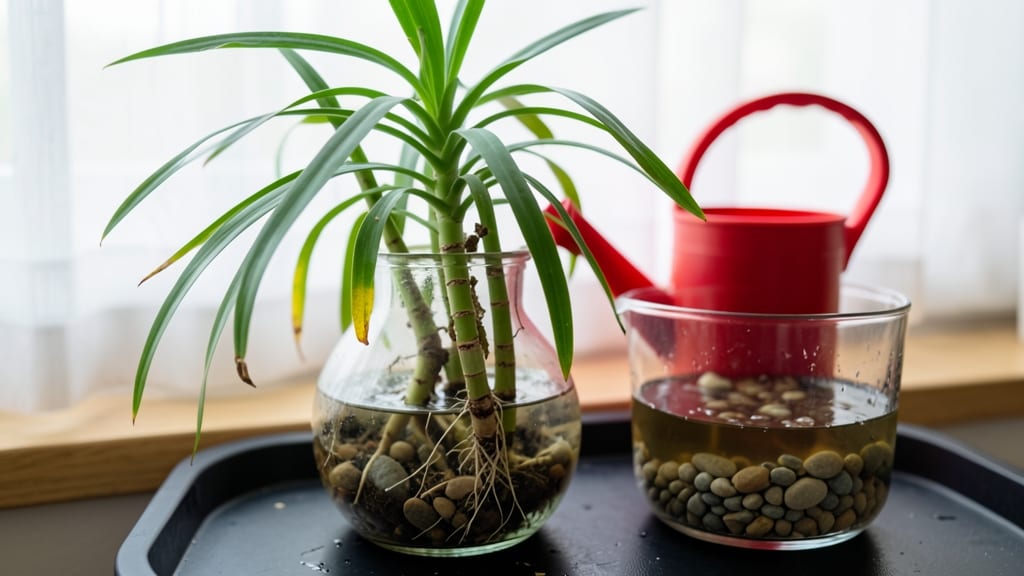
An overwatered bamboo plant looks like a sad, soggy mess—yellowing leaves, mushy stems, and roots that smell like a swamp. 🌱 I’ve revived more than my share of these after learning the hard way that bamboo’s thick canes hide a weak spot: they rot faster than you’d think.
The good news? With the right drainage fix and a new watering routine, your plant can bounce back stronger than ever.
First, check the roots—if they’re black, mushy, or falling apart, you’ve got root rot. Drain the pot immediately and trim away the damaged roots with clean scissors. Then, repot into a container with fresh, chunky soil mix (think perlite or orchid bark) and holes in the bottom.
Bamboo needs its feet to dry out between waterings, not to sit in a swamp.
Once you’ve got it repotted, hold off on watering for a full week to let the roots recover. After that, stick your finger in the soil—if the top inch feels dry, give it a drink.
The goal is to keep the soil lightly moist, not soggy. Within a few weeks, you’ll see fresh green growth pushing through, and those canes will start standing tall again.
Prevent future drowning by choosing pots with drainage holes and watering only when the top inch of soil feels dry. If you’re growing bamboo outdoors, plant it in well-draining soil and avoid low spots where water pools.
A little caution now means years of lush, thriving bamboo—no more sad, soggy surprises.
Why it happens
When your bamboo plant starts looking more like a soggy sponge than a thriving green friend, it’s often due to a mix of well-intentioned mistakes and environmental factors.
Understanding why this happens is the first step to saving your plant—and preventing future mishaps. Let’s dig into the science (and the soil) behind the problem.
🌧️ Poor Drainage Systems
Bamboo plants hate "wet feet" more than you hate soggy socks. If your pot lacks drainage holes or the soil is packed with dense, water-retentive materials (like clay or poorly amended garden soil), excess water has nowhere to go.
Without escape routes, moisture lingers in the root zone, suffocating roots and inviting root rot—a fungal nightmare that turns healthy roots into mushy, brown slime.
- Why it happens: Water molecules get trapped in tiny air pockets between soil particles, cutting off oxygen to roots. Anaerobic conditions (no oxygen) force roots to switch to inefficient fermentation for energy, weakening them over time.
- Actionable fix: Repot in a container with drainage holes and use a chunky mix like 60% peat moss, 20% perlite, and 20% sand. Add a layer of gravel or broken terracotta at the bottom to boost drainage.
💧 Overzealous Watering Habits
Even bamboo—with its tropical roots—can drown if you treat it like a houseplant that thrives in a swamp. Many gardeners water on a schedule rather than assessing the plant’s actual needs. Sticking to a rigid routine (e.g., "every Tuesday and Thursday") ignores critical factors like humidity, temperature, and season.
- Why it happens: Bamboo roots absorb water through osmosis, but if the soil is already saturated, the plant can’t "breathe." Overwatering also leaches essential nutrients (like nitrogen and potassium) out of the soil, leaving roots starved and stressed.
- Actionable fix: Use the finger test: Stick your index finger 2 inches into the soil. If it’s damp, wait. If it’s bone-dry, water thoroughly—then let excess drain completely. In hot climates, reduce watering by 30-50%.
🌍 Environmental Misalignment
Bamboo plants are native to regions with distinct wet and dry seasons. If your indoor or outdoor conditions mimic a permanent monsoon, the plant’s natural rhythms get thrown off balance.
High humidity, poor airflow, or a lack of sunlight can trick bamboo into thinking it’s always "rainy season," prompting it to retain more water than it needs.
| Factor | Why It Causes Overwatering | Fix It Like This |
|---|---|---|
| High Humidity | Slow evaporation = soil stays wet longer. Roots suffocate from lack of oxygen. | Use a hygrometer to monitor levels. Aim for 40-60% humidity. Add a fan for airflow or use a dehumidifier. |
| Low Light | Plants photosynthesize less, reducing water uptake. Excess moisture lingers, promoting rot. | Move to indirect sunlight (east or north-facing windows). Supplement with grow lights if indoors. |
| Compacted Soil | Tight soil blocks water drainage and oxygen flow to roots. | Loosen soil with a fork or add organic matter (compost, coconut coir) to improve aeration. |
🔄 Ignoring Seasonal Shifts
Bamboo’s water needs aren’t static—they change. During dormancy (winter for temperate climates), growth slows, and roots absorb less water. Yet, many gardeners keep watering as if it’s summer, leading to a buildup of moisture the plant can’t use.
- Why it happens: In cooler months, microbial activity in the soil slows down, reducing the breakdown of organic matter. This creates a denser, water-logged environment that roots can’t penetrate efficiently.
- Actionable fix:
- ❄️ Winter: Reduce watering by 50%. Let the top 3-4 inches of soil dry out completely between waterings.
- ☀️ Summer: Increase watering frequency but ensure pots have drainage. Mulch around outdoor plants to retain moisture without trapping excess.
🌱 Wrong Pot Material
Not all pots are created equal—and some are downright deceptive. Terracotta pots, for example, are porous and can "breathe," but they dry out quickly. Plastic pots, on the other hand, trap moisture like a sponge, creating a greenhouse effect that keeps roots damp for days.
- Why it happens: Plastic pots lack transpiration (water loss through evaporation), so the soil stays saturated longer. Roots in these conditions often develop anaerobic pockets, where harmful bacteria thrive and outcompete beneficial microbes.
- Actionable fix:
- ✅ Best choices: Unglazed terracotta (for hot climates) or fabric grow bags (for humidity control).
- ⚠️ If using plastic: Drill additional drainage holes and water less frequently but more deeply.
Revive Your Drowning Bamboo Now
If your bamboo plant is looking more like a soggy swamp than a sleek, green showstopper, don’t panic—it’s time to drain, dry, and rescue it before root rot sets in. The good news? Bamboo is resilient, and with the right steps, you can bring it back to life.
Below, we’ll map out the exact fixes for each cause of overwatering, plus prevention tips to keep your plant thriving long-term. Let’s get to work!
If your bamboo’s leaves are turning yellow or brown at the tips, the roots are likely suffocating in wet soil. Here’s how to drain the excess moisture and save your plant:
- 🔥 Remove the plant from its pot (if potted) or dig around the base (if in-ground). Gently loosen the soil to check for sogginess—if it feels like a damp sponge, it’s time to act.
- 🍳 Repot in fresh, well-draining soil. Mix 50% potting mix with 50% perlite or coarse sand to improve aeration. Avoid heavy garden soil, which holds too much moisture.
- 👨🍳 Check the drainage holes. If your pot lacks holes, drill a few at the bottom to prevent future waterlogging. Pro tip: Place a layer of gravel or broken pottery at the bottom for extra drainage.
- ⏰ Let the soil dry between waterings. Stick your finger 1-2 inches into the soil—if it’s damp, wait. Only water when the top 1-2 inches are dry.
💡 Prevention Tip: Use a moisture meter or the "squeeze test" (gently press the soil—if water drips out, it’s too wet). Bamboo prefers consistently moist but never soggy soil.
If your bamboo’s stems feel mushy or you spot black, slimy patches, root rot is already setting in. This is an emergency—follow these steps immediately:
- 🔪 Trim away the damaged parts. Use sterilized scissors or pruning shears to cut off any blackened stems or leaves. Healthy tissue should be firm and green.
- 🌡️ Disinfect the plant. Soak the roots in a 1:10 hydrogen peroxide solution (3% peroxide) for 10 minutes to kill fungus. Rinse thoroughly afterward.
- ✨ Repot in sterile, dry soil. Use a fresh potting mix (or a mix with fungicide) and ensure the pot has excellent drainage.
- 🚫 Avoid watering for 3-5 days. Let the roots recover before reintroducing moisture. Once you water, do so sparingly and only when the soil is bone-dry.
💡 Prevention Tip: If your bamboo is in-ground, improve soil drainage by adding compost or organic matter around the base. Avoid mulching too close to the stem, as this can trap moisture.
If your bamboo is wilting despite the wet soil, it’s stressed from poor oxygen flow. Here’s how to revive its structure:
- 🌬️ Improve airflow. Move your bamboo to a bright, indirect spot with good ventilation (but avoid cold drafts). Humidity is fine, but stagnant air worsens rot.
- 💧 Water deeply but infrequently. Instead of daily light watering, give your bamboo a thorough soak once a week (or when the top 2 inches of soil are dry).
- 🌿 Fertilize lightly. Once recovered, use a balanced, water-soluble fertilizer (like 10-10-10) once a month in spring/summer. Avoid fertilizing a stressed plant.
💡 Prevention Tip: Group bamboo with other plants to create a microclimate with balanced humidity—but keep them spaced apart to prevent overcrowding and moisture buildup.
Once your bamboo is back on track, lock in these habits to prevent future drowning:
- ✅ Choose the right pot: Opt for terracotta or fabric pots (they dry faster than plastic). For in-ground planting, ensure the area has a slight slope for water runoff.
- ✅ Water like a pro:
- 📊 Test soil moisture before watering—stick your finger in or use a moisture meter.
- 🌧️ Water at the base, not over the leaves, to avoid fungal growth.
- 🚰 Empty saucers after 10-15 minutes of watering to prevent root suffocation.
- ✅ Prune regularly: Trim yellow or dead leaves immediately to redirect energy to healthy growth. Use clean tools to prevent disease spread.
- ✅ Monitor humidity: Bamboo loves humidity (50-70%), but too much (like in bathrooms) can lead to rot. Use a dehumidifier if needed.
🎯 Final Pro Tip: If your bamboo is clumping bamboo (like Bambusa or Dendrocalamus), it’s more drought-tolerant—let the soil dry out more between waterings. Running bamboo (like Phyllostachys) needs consistent moisture but still hates soggy soil.
With these steps, your bamboo should bounce back in 2-4 weeks. Stay patient, adjust your care routine, and soon you’ll have a lush, thriving plant that’s the envy of the garden! 🌿✨
Frequently asked questions
How do I know if my bamboo plant is overwatered?
Check for these signs: yellowing leaves (especially lower ones), mushy stems, or a foul smell from the soil. If the roots look black and slimy, root rot has set in. Gently squeeze the soil—if water drips out, it’s too wet.
Can I save a bamboo plant with root rot?
Yes, but act fast! Cut away blackened roots with sterilized scissors, repot in fresh, chunky soil (mix potting mix with perlite), and avoid watering for 3-5 days. Use a 1:10 hydrogen peroxide solution to disinfect roots before repotting.
Why does my bamboo plant wilt even when the soil is wet?
Wet soil without oxygen causes roots to suffocate. Move your plant to a brighter spot with better airflow and let the soil dry out completely. Overwatering also leaches nutrients, so fertilize lightly (10-10-10) once recovered in spring/summer.
What’s the best soil mix for preventing overwatering?
Use a chunky blend of 60% potting mix, 20% perlite, and 20% coarse sand. Add a layer of gravel at the pot’s bottom for extra drainage. Avoid heavy garden soil—it traps moisture and suffocates roots.
How often should I water my bamboo plant?
Water only when the top 1-2 inches of soil are dry. Stick your finger in to test—if damp, wait. In summer, water every 5-7 days; in winter, reduce to every 2-3 weeks. Always empty saucers after 15 minutes to prevent soggy roots.