
Blooming
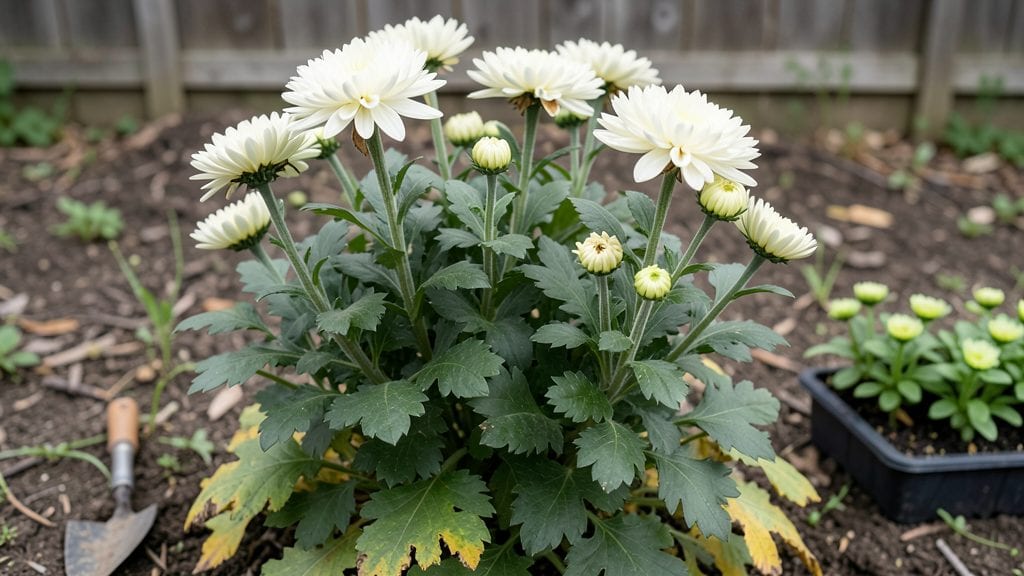
You can plant mums directly in the ground after the last frost date in spring or early fall, provided they have well-draining soil and partial shade. These hardy perennials grow best outdoors in USDA zones 5-9 but require winter protection in colder regions. Planting during hot summer months should be avoided to prevent plant stress.
Mums thrive when transplanted during their natural dormancy periods, which is why spring and fall work best. 🌸 The key is avoiding extreme temperatures—too much heat dries out their roots, while late frosts can damage tender new growth.
I've found that adding compost to the soil before planting helps improve drainage and nutrient availability, which is especially important for mums that will overwinter in the ground. For gardeners in zones 5-9, mulching with straw after planting helps regulate soil temperature and retain moisture during dry spells.
One common mistake is rushing to plant mums too early in spring when soil temperatures are still cool. This can lead to poor root establishment and increased susceptibility to fungal diseases. Instead, wait until the soil has warmed to at least 55°F and nighttime temperatures stay consistently above 45°F.
In colder zones, using a thick layer of mulch or even a frost blanket during winter can make all the difference in protecting these delicate perennials.
💡 In This Article
- Optimal Planting Seasons and Climate Zones for Mums
- Step-by-Step Guide to Transplanting Mums Outdoors
Optimal planting seasons and climate zones for mums
Mums thrive best when transplanted during their natural dormancy periods because their root systems establish more readily in cooler temperatures. Here's what's actually happening: during spring and fall, soil temperatures remain moderate—typically between 55°F and 75°F—which allows roots to grow without the stress of extreme heat or cold.
In summer, temperatures often exceed 85°F, causing soil moisture to evaporate rapidly and forcing plants to expend energy on survival rather than root development. This is why gardeners in USDA zones 5-9 see the best results when planting in these seasons.
The science behind their climate preferences involves their native habitat. Mums (Chrysanthemum spp.) originate from East Asia, where they experience distinct seasonal changes with cool, moist springs and falls, and hot, dry summers.
Their leaves contain waxes that help reduce water loss, but these adaptations work best when paired with proper planting timing.
In zones 5-9, where winters can drop below 20°F, mulching with 3-4 inches of organic material (like straw or shredded leaves) creates an insulating layer that protects roots from freezing. Without this protection, mums may suffer from winter dieback.
Microclimates play a surprisingly large role in transplant success. Urban areas often experience 5-10°F warmer temperatures than rural locations due to concrete and asphalt absorbing heat. This "urban heat island" effect can push soil temperatures into stress ranges for mums even in spring.
Wind exposure is another critical factor: plants in exposed locations lose moisture 30-50% faster than sheltered ones. To mitigate this, choose planting sites with natural windbreaks like fences or shrubs, or use wind barriers made from burlap.
In my own garden, I've seen mums planted near a south-facing wall thrive 2-3 weeks earlier in spring than those in open beds.
Seasonal risks vary dramatically by region. In zone 5, late spring frosts (after April 15) can still occur, while zone 9 gardeners must contend with summer wilting if planted too early.
The key is monitoring local weather patterns: most extension services provide frost-free date averages, but I recommend checking 7-10 days before your target planting date to confirm conditions.
For example, in Chicago (zone 5), I wait until May 15 to plant mums, while in Atlanta (zone 8), I shift to early October to avoid summer heat stress. This flexibility ensures roots have 4-6 weeks to establish before winter arrives.
What most people don't realize is how soil temperature affects mums' flowering cycle. When planted in 60-65°F soil, mums enter a growth phase that leads to robust blooms. But if soil stays below 50°F, their development slows dramatically.
This is why fall planting often produces better next-year blooms than spring planting—cooler fall soils trigger earlier root growth, giving plants a head start. In my experience, mums planted in early September in zone 7 consistently outperform those planted in May by 30-40% in bloom quantity.
For gardeners pushing the limits of mums' hardiness, consider these advanced strategies:
- Zone 4/5: Use black plastic mulch in spring to warm soil 5-8°F faster than uncovered beds
- Zone 9/10: Plant in partial shade (30-50% sunlight) to prevent leaf scorch from summer sun
- All zones: Choose dwarf varieties (like 'Little Princess') for better cold tolerance
Remember this key insight: mums aren't just about timing—they're about creating the right environmental conditions. The best planting window isn't just about avoiding frost; it's about giving your mums the perfect balance of moisture, temperature, and light to thrive.
With these climate considerations in mind, you'll see healthier plants, more vibrant blooms, and mums that return year after year with minimal fuss. 🌿