
Planting
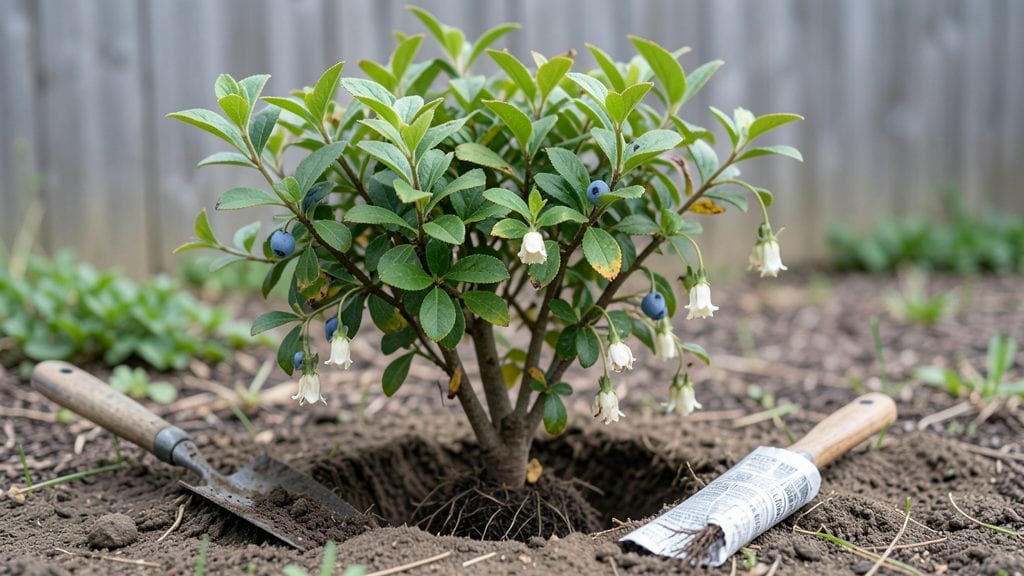
Here are some blueberry planting tips to ensure success: start with acidic, well-draining soil where your bushes get at least 6 hours of sun daily—I learned the hard way that neutral soil kills their roots. faster than deer do, so I now test my soil and amend it with peat moss or pine needles before planting.
The payoff? Bushes that fruit for decades with minimal fuss.
Whether you're dropping in bare-root plants or potted starters, spacing matters—10 feet apart gives them room to spread without crowding. I mulch heavily with pine straw to lock in moisture and acidity, which cuts watering by half.
The first year is all about roots, so resist the urge to pick berries—let those bushes focus on growing strong before they reward you with harvests.
📚 In This Guide
- What you need
- Instructions
- Tips and common mistakes
- Wrapping up and next steps
What you need
- ● Blueberry plants: Choose between northern (cold-hardy) or southern varieties (e.g., 'Duke,' 'Bluecrop,' or 'Rabbiteye'). Buy 3–5 plants for cross-pollination (unless self-fertile).
- ● Well-draining soil: Test for acidity (pH 4.5–5.5). Amend with peat moss or sulfur if needed (1–2 lbs per 10 sq ft).
- ● Organic mulch: Pine needles, wood chips, or straw (2–3 inches thick) to retain moisture and acidity.
- ● Fertilizer: Acid-loving plant fertilizer (e.g., cottonseed meal or azalea/camellia mix). Apply 2–3 lbs per 100 sq ft annually.
- ● Watering system: Drip irrigation or soaker hoses (blueberries need 1–1.5 inches of water weekly).
- ● Pruners: Sharp, sterilized bypass pruners (for shaping and removing dead wood).
- ● Gloves & long sleeves: Blueberry bushes have thorns—protect yourself!
- ● Soil pH test kit: Monitor acidity levels for peak growth.
- ● Row covers: Protect young plants from pests or late frosts.
- ● Blueberry cages: Support tall varieties (e.g., 'Jersey' or 'Patriot').
- ● Compost: Boost soil fertility with well-aged compost (avoid fresh manure—it raises pH!).
- ● Bird netting: Save your harvest from hungry feathered friends!
Step-by-Step instructions for planting blueberry bushes
Here’s how I’ve learned to plant blueberries for a bountiful harvest—focused on the right soil, spacing, and sunlight.
Choose the Perfect Planting Spot
Blueberries thrive in full sun—at least 6 to 8 hours daily—but they also need shelter from harsh winds. I always pick a spot where morning sun warms the soil gradually, preventing root shock. The soil must be acidic (pH 4.5–5.5)—test it with a kit before planting. If your soil is alkaline, amend it with sulfur or peat moss to lower the pH over time.
Dig a hole twice as wide as the root ball but only as deep—planting too deep can suffocate the roots. Loosen the soil at the bottom of the hole to encourage root spread. Blueberries hate soggy feet, so if your area drains poorly, mix in compost or sand to improve aeration.
Prepare the Soil for Acid-Loving Roots
Blueberries refuse to grow in alkaline soil, so I mix 3 gallons of peat moss (or pine bark fines) into the planting hole. This keeps the pH low where the roots need it most. Add 1 cup of an acid-loving fertilizer (like cottonseed meal or iron sulfate) to the hole—this feeds the plant immediately and helps establish strong roots.
Gently place the blueberry bush into the hole, spreading the roots outward naturally. Fill the hole with the amended soil, pressing lightly to remove air pockets. Water deeply until the soil settles—you’ll see it sink about 1 inch. This ensures the plant sits at the right depth without sinking later.
Space Plants for Future Growth
Blueberries need room to spread—plant bushes 4 to 6 feet apart in rows 8 to 10 feet apart. This gives them space for airflow and prevents disease. If you’re planting multiple bushes, I recommend at least two varieties for cross-pollination (unless you’re growing a self-pollinating type). Group them close together so bees can easily visit.
Mulch the area with 3 inches of pine needles or wood chips—this keeps the soil acidic, retains moisture, and suppresses weeds. Avoid bark mulch that contains lime, as it raises pH. Water the mulch lightly after spreading to help it settle and start breaking down.
Water and Protect Newly Planted Bushes
Water the bush deeply once a week for the first month, ensuring the soil stays moist but not soggy. Blueberries are drought-sensitive, but overwatering can rot the roots. I check soil moisture by sticking my finger 2 inches down—if it’s dry, water again. Avoid wetting the leaves to prevent fungal diseases like botrytis.
Install a 1-inch mesh hardware cloth cage around each bush to deter rabbits and voles, which love young blueberry shoots. Prune any damaged branches immediately, and avoid heavy pruning in the first year—let the plant focus on root growth. You’ll see new growth in 4 to 6 weeks, signaling the plant is settling in.
Monitor and Maintain for Long-Term Success
After the first year, fertilize in early spring with 1 cup of acid-loving fertilizer spread around the base. Water again deeply, and watch for new canes—these will produce fruit in 2 to 3 years. Prune in late winter before buds swell, removing dead wood and thinning crowded branches to improve airflow.
Test the soil pH annually and amend if it rises above 5.5. Blueberries are finicky but rewarding—I’ve seen bushes produce 5 to 10 pounds of berries per plant once established. Patience is key: the first harvest might be small, but each year gets better with proper care.
Tips & tricks for perfect blueberry planting
A few key tricks can make all the difference between a struggling blueberry bush and one that thrives for years. Here's what I've learned from planting dozens myself.
Soil pH is non-negotiable: That 4.5-5.5 pH range in Step 1 is critical—blueberries simply won't thrive outside it. I test my soil every spring and fall because even well-amended soil can drift over time. If your soil tests above 5.5, don't just add more peat moss—use aluminum sulfate for faster results, especially in clay soils where pH changes happen slowly.
Root ball preparation matters: Before planting, I always soak the root ball for 15-20 minutes to ensure it's fully hydrated. This helps prevent transplant shock, which is why we're seeing that 1-inch soil settlement in Step 2. For container-grown bushes, gently loosen the edges of the root ball to encourage new root growth into the surrounding soil.
Mulching strategy beyond aesthetics: That 3-inch layer of pine needles in Step 3 does more than just suppress weeds—it slowly releases organic acids that maintain soil pH. I refresh the mulch every spring, removing any decomposed material that might raise the pH. For northern climates, add an extra 2 inches of mulch in winter to protect roots from freeze-thaw cycles.
Watering technique that saves time: The once-a-week deep watering in Step 4 works, but I've found drip irrigation is far more efficient. Set up emitters to deliver 1-1.5 inches of water per week, right at the root zone. This prevents fungal issues from overhead watering while ensuring consistent moisture at those crucial 2-inch soil depths you're checking.
Pro Tips for Blueberry Planting Tips
- A few key tricks can make all the difference between a struggling blueberry bush and one that thrives for years.
- Soil pH is non-negotiable: That 4.5-5.5 pH range in Step 1 is critical—blueberries simply won't thrive outside it.
- Root ball preparation matters: Before planting, I always soak the root ball for 15-20 minutes to ensure it's fully hydrated.
Frequently asked questions
Got questions about growing blueberries? You’re not alone! Here are answers to the most common queries to help you cultivate thriving bushes with confidence.
When is the best time to plant blueberry bushes?
The ideal time to plant blueberries is in early spring (after the last frost) or fall (4-6 weeks before the first frost). This gives roots time to establish before extreme temperatures. Avoid planting in summer heat, which can stress young plants.
How long does it take for blueberry bushes to bear fruit?
With proper care, blueberries typically take 2–3 years to produce fruit. Dwarf varieties may fruit sooner (1–2 years), while standard bushes can take up to 4 years. Patience pays off—healthy soil and consistent watering speed up the process!
Do blueberries need acidic soil? How do I test it?
Yes! Blueberries thrive in acidic soil (pH 4.5–5.5). Test your soil with a home pH kit or send a sample to a local extension office. If your soil is too alkaline, amend it with peat moss, sulfur, or pine needles.
What pests or diseases should I watch for, and how do I prevent them?
Common threats include blueberry maggots, spider mites, and fungal diseases like botrytis. Prevent issues by:
- Pruning for airflow
- Using neem oil or insecticidal soap
- Avoiding overhead watering
- Removing infected leaves promptly
Can I grow blueberries in containers? What’s the best setup?
Use a 15–20 gallon pot with acidic potting mix (add peat moss or pine bark). Choose self-pollinating varieties like ‘Top Hat’ or ‘Peach Sorbet.’ Place containers in full sun and water consistently—containers dry out faster than garden beds!
Why aren’t my blueberries ripening? Troubleshooting tips.
If berries stay small or fail to ripen, check these fixes:
Issue
Solution
Not enough sun
Move to a 6+ hours of full sun spot.
Poor pollination
Plant 2+ compatible varieties nearby.
Nutrient deficiency
Fertilize with acid-loving plant food in early spring.
Wrapping up and next steps
Growing blueberries from seed to harvest is a rewarding journey filled with sweet surprises! Remember, the key to success lies in choosing the right variety, preparing your soil, and giving your bushes the love they need—whether through proper spacing, watering, or mulching.
With patience and care, you’ll soon be enjoying homegrown, juicy blueberries that taste even better than store-bought.
Ready to take the next step? Start small—plant a few bushes this season and watch your garden flourish! For even more tips, check out our blueberry care guide or share your progress with fellow gardeners. Happy planting! 🌱✨