
Planting
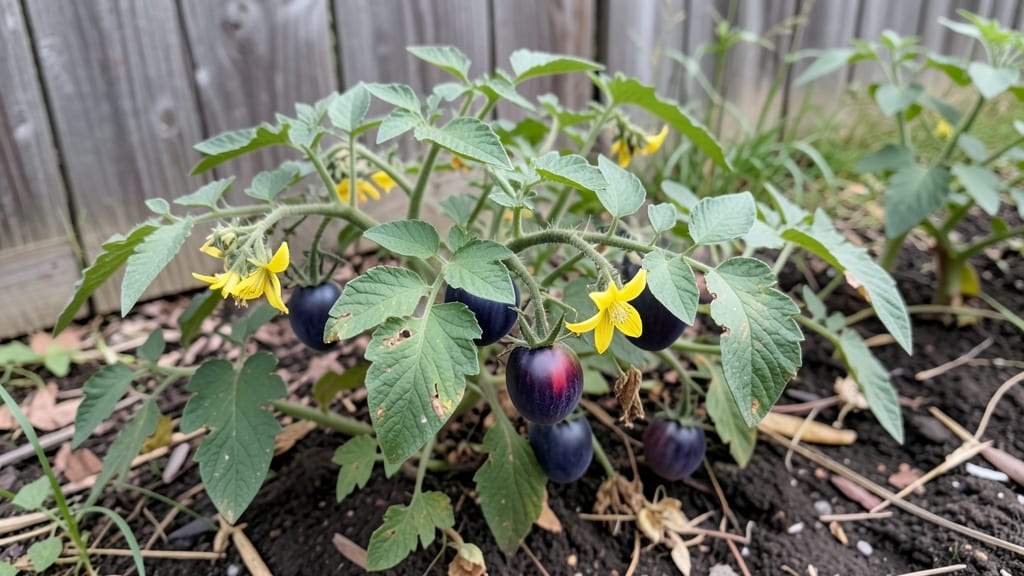
Growing blue tomato plants transforms your balcony into a striking edible garden. 🌿 These heirloom varieties like 'Indigo Rose' need the same care as red tomatoes but reward you with deep purple-blue fruit that ripens perfectly in containers.
The key difference? Their unique anthocyanin pigments make them more sun-resistant while producing sweet, meaty tomatoes perfect for slicing or sauces.
Start with well-draining potting mix in a 5-gallon container—these plants need room for roots but thrive in limited space. Place them in full sun (6+ hours daily) and water consistently, letting the top inch dry between waterings.
The blue color intensifies with proper sunlight, while overwatering leads to pale, bland fruit. Prune suckers regularly to focus energy on fruit production rather than leafy growth.
You'll harvest 60-80 days after transplanting, with tomatoes that stay firm longer than red varieties. The flavor? A balance of sweet and tangy with a hint of earthiness—ideal for fresh eating or preserving.
These plants also attract pollinators while adding dramatic color to your space, making them both functional and ornamental.
For best results, rotate containers annually to prevent soil depletion and use balanced fertilizer every 4-6 weeks. If birds or pests become an issue, netting or companion planting with basil deters them without chemicals.
The blue hue fades slightly as tomatoes ripen, but the flavor only improves—proof that beauty and productivity go hand in hand.
📚 In This Guide
- What you need
- Instructions
- Tips and common mistakes
- Wrapping up and next steps
What you need
- ● Seeds or seedlings: 3–5 blue tomato seeds (or young plants) – check for sun-resistant varieties like Indigo Rose.
- ● Containers: 5–10 gallon pots (with drainage holes) or a raised balcony planter (at least 12" deep).
- ● Potting mix: 1 bag of high-quality, well-draining organic soil (or a mix of 60% potting soil + 40% compost).
- ● Fertilizer: Balanced organic fertilizer (10-10-10 or tomato-specific formula) or compost tea.
- ● Support system: 1–2 tomato cages or stakes per plant (to handle heavy fruit).
- ● Mulch: Straw or shredded leaves (to retain moisture and suppress weeds).
- ● Hand trowel or small shovel for planting.
- ● Watering can or hose with a gentle spray nozzle (avoid overhead watering).
- ● Pruning shears (for trimming suckers and dead leaves).
- ○ pH test kit (optional but helpful—blue tomatoes thrive in slightly acidic soil, pH 6.0–6.8).
- ● Sunlight access: At least 6–8 hours of direct sunlight daily (balconies facing south or west are ideal!).
- ● Drip irrigation kit for consistent watering.
- ● Copper tape or fungicide spray (to prevent blight in humid climates).
- ● Epsom salt (1 tbsp/month) for magnesium boost.
- ● Grow lights (if your balcony lacks sufficient sunlight).
Step-by-Step guide to cultivating sun-resistant blue tomato varieties
Here's how to grow vibrant, sun-tolerant blue tomato plants that thrive even in intense balcony heat.
🌱 Step 1: Select the Right Blue Tomato Varieties and Start Seeds Indoors
Begin with Indigo Apple or Blue Beauty seeds—these heirloom varieties develop striking purple-blue hues when exposed to sunlight and ripen fully in containers. I like to start seeds 8-10 weeks before the last frost date, using biodegradable peat pots filled with sterile seed-starting mix.
Plant seeds ¼ inch deep and keep them in a warm spot (75-85°F) until germination, which typically occurs in 7-14 days. The key here is patience—blue tomatoes need strong roots to handle heat stress, so don't rush the process. Once seedlings show their first true leaves, move them to a sunny windowsill or under a grow light for 14-16 hours daily.
🪴 Step 2: Transplant Seedlings into Large Containers with Heat-Tolerant Mix
Use 5-gallon fabric grow bags or large ceramic pots with drainage holes—these varieties need room for deep roots. Fill containers with a mix of 50% potting soil, 30% compost, and 20% perlite to improve aeration and drainage. The extra perlite prevents soil from baking in direct sun.
Transplant seedlings when they're 4-6 inches tall and have 4-5 sets of leaves. Bury the stem up to the first set of true leaves to encourage stronger root growth. Water deeply right after transplanting to settle the soil and reduce shock. Here's the thing—blue tomatoes are sensitive to root disturbance, so handle them gently to avoid breaking stems.
☀️ Step 3: Provide Strategic Sun Protection and Consistent Watering
Place your containers in a location that receives 6-8 hours of morning sun followed by afternoon shade—this mimics their natural preference for dappled light. If your balcony gets intense afternoon heat, use a lightweight shade cloth (30-50%) to protect plants without blocking all sunlight. Blue tomatoes need bright light to develop their signature color, but too much direct sun can scorch leaves.
Water deeply every 2-3 days until the top 2 inches of soil feel dry. Let the soil dry slightly between waterings to prevent blossom-end rot, a common issue with tomatoes. I like to water in the early morning so foliage dries quickly, reducing the risk of fungal diseases like early blight. Mulch with 2 inches of straw to retain moisture and keep roots cool.
✂️ Step 4: Prune and Support Vines for Maximum Fruit Production
As your plants grow, prune suckers (the small shoots that form in the leaf axils) to direct energy toward fruit production. Leave 1-2 main stems and remove any leaves touching the ground to improve airflow. Blue tomatoes benefit from cage supports or sturdy stakes—their vines can get heavy with fruit, so secure them well to prevent breakage.
Real talk: These varieties are prone to cracking if watered inconsistently, so monitor soil moisture closely. Harvest fruits when they reach their full color and are slightly soft to the touch. The deeper the purple-blue hue, the sweeter the flavor—so let them ripen fully on the vine. I promise, the wait is worth it for those stunning, flavorful tomatoes.
🌿 Step 5: Extend the Season with Seasonal Care Adjustments
In late summer, reduce watering slightly to allow the soil to dry out more between sessions—this helps prevent splitting. If temperatures drop below 55°F at night, move containers to a sheltered spot or cover them with frost cloth to protect tender growth. Blue tomatoes are sensitive to cold, so don't rush to harvest before they're fully ripe.
By late fall, you can harvest the last of your crop and compost the plants. Save seeds from your best tomatoes by scooping out the gel, rinsing the seeds, and drying them on a paper towel. Store them in a cool, dry place for next year's garden. With this approach, you'll enjoy sun-resistant blue tomatoes for years to come—no greenhouse required!
Tips & tricks for perfect sun-resistant blue tomato cultivation
Between us, these sun-resistant blue tomato varieties demand special attention—but once you master these tricks, you'll have vibrant plants that outperform conventional tomatoes in even the hottest balconies.
Heat Tolerance Strategy: The 14-16 hours of daily light in Step 1 isn't just about photosynthesis—it's about building heat resistance. Place your seed trays near a south-facing window where they'll receive indirect light during the hottest afternoon hours. If using grow lights, position them just 6 inches above seedlings to prevent overheating. I've seen seedlings wilt when lights are too close, so monitor leaf temperature—it should never exceed 85°F during the germination phase.
Root Development Secret: When transplanting in Step 2, don't just bury those stems—create a "root collar" by pressing soil firmly around the buried stem up to the first true leaves. This technique stimulates lateral root growth, which is crucial for heat-stressed plants. The 50-30-20 soil mix isn't just about drainage—it's about creating an airy environment that prevents soil compaction, which can suffocate roots in containers. After transplanting, give the soil a gentle squeeze—it should hold its shape but not be rock-hard.
Watering Precision: The every-2-to-3-days watering schedule in Step 3 requires more nuance than it seems. Use your finger to check soil moisture at the 2-inch depth—if it feels like a slightly damp sponge, that's perfect. Too much moisture leads to blossom-end rot, while too little causes fruit cracking. I've found that morning watering combined with 2 inches of straw mulch creates a microclimate that maintains consistent moisture without overheating roots. During heatwaves, increase to every-other-day watering but check soil moisture more frequently.
Seasonal Transition: When nighttime temperatures approach 55°F in Step 5, don't just move your plants—prepare them gradually. Acclimate them over 3-4 days by moving them to cooler spots during the day first, then overnight. For frost protection, use frost cloth instead of plastic—it allows light penetration while providing insulation. The deeper purple-blue color won't develop properly if plants experience sudden temperature drops, so monitor weather forecasts and adjust care accordingly.
Pro Tips for Blue Tomato Plant
- Between us, these sun-resistant blue tomato varieties demand special attention—but once you master these tricks, you'll have vibrant plants that outperform conventional tomatoes in even the hottest balconies.
- Heat Tolerance Strategy: The 14-16 hours of daily light in Step 1 isn't just about photosynthesis—it's about building heat resistance.
- Root Development Secret: When transplanting in Step 2, don't just bury those stems—create a "root collar" by pressing soil firmly around the buried stem up to the first true leaves.
Frequently asked questions
Got questions about growing blue tomato plants? You’re not alone! Here are some of the most common queries—and their answers—to help you grow a thriving balcony garden with these sun-resistant beauties.
What makes a blue tomato plant different from regular tomatoes?
Blue tomato plants, like the Indigo Rose variety, aren’t actually blue—they’re purple when ripe! Their skin contains anthocyanins, antioxidants that give them a stunning hue and extra sun protection. The flesh stays red, and the flavor is rich, slightly tangy, and sweeter than many red tomatoes. Perfect for adding color and nutrition to your dishes!
How long does it take for a blue tomato plant to produce fruit?
Patience is key! From seed, expect 80–90 days to harvest, while transplanted seedlings may fruit in 60–75 days, depending on sunlight, soil, and care. Start seeds indoors 6–8 weeks before your last frost date, or buy sturdy seedlings to jumpstart your harvest. Pro tip: Use a heat mat if your balcony is chilly—these plants love warmth!
Can blue tomato plants grow in containers on a balcony with partial shade?
While they thrive in full sun (6+ hours/day), blue tomato plants can tolerate partial shade (4–6 hours)—just expect smaller yields. Choose dwarf or determinate varieties (like Blueberry Girl) for containers. Place pots in the sunniest spot possible, rotate them weekly for even growth, and use reflective surfaces (like white walls) to maximize light. Pro tip: A grow light can boost productivity in low-light balconies!
Are there any easy alternatives to blue tomato plants for beginners?
If blue tomatoes seem tricky, try these low-maintenance balcony-friendly alternatives:
- Cherry Tomatoes (e.g., Sweet 100): Fast-growing, prolific, and forgiving.
- Patio Tomatoes (e.g., Tiny Tim): Compact, determinate, and perfect for small pots.
- Purple Egg Tomatoes: Similar care to blue tomatoes but slightly easier to find.
- Peppers (e.g., Shishito or Jalapeño): Thrives in containers and loves heat.
All these options share the sun-resistant trait and are beginner-friendly!
Why are my blue tomato plant leaves turning yellow, and how do I fix it?
Yellow leaves usually signal overwatering, underwatering, or nutrient issues. Check the soil—it should be moist but not soggy. If the yellowing starts at the bottom leaves, it’s often overwatering or poor drainage; if it’s spotted or curled, pests (like aphids) or fungus (early blight) may be the culprit. Quick fixes:
- Adjust watering (let top inch dry between waterings).
- Fertilize with balanced tomato food (10-10-10).
- Spray leaves with neem oil for pests.
- Ensure pots have drainage holes and use well-draining soil.
Prune affected leaves to redirect energy to healthy growth.
Wrapping up and next steps
Growing blue tomato plants on your balcony isn’t just possible—it’s a rewarding adventure that brings vibrant color and fresh flavors to your table! 🌱 Whether you’re drawn to the striking Indigo Rose or the classic Blue Beauty, these sun-resistant varieties prove that even small spaces can yield big harvests.
With the right care, you’ll soon be enjoying homegrown tomatoes with a unique twist.
Ready to take the next step? Start small—pick one variety, gather your supplies, and dive in! Experiment with companion plants like basil or marigolds to boost growth, and don’t forget to share your progress (or harvest) with fellow gardening enthusiasts. Happy growing! 🌿