
Pruning
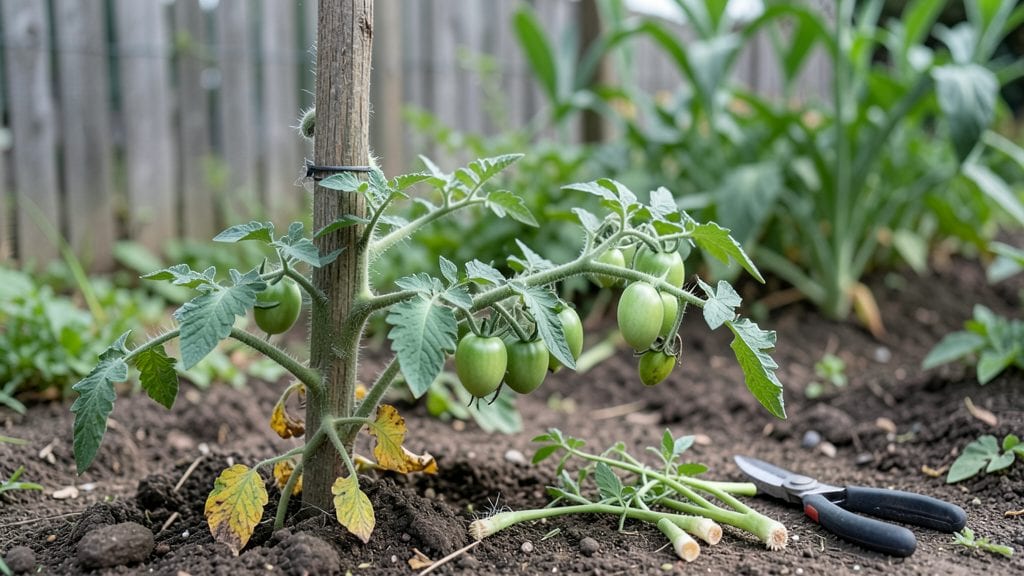
You’re supposed to trim tomato plants—and it’s the difference between a handful of fruits and a vine bursting with tomatoes. 🌱 I’ve watched my indeterminate cherry tomatoes go from scraggly to prolific just by cutting back the right growth, and the method is simpler than it seems.
The key lies in knowing which stems to remove and when—because pruning at the wrong time can backfire.
Start pruning when plants hit 12–18 inches tall, focusing on indeterminate varieties (the ones that keep growing). Use clean pruners to snip suckers—those tiny shoots in the V-shaped junctions between the main stem and branches—before they grow more than 2 inches long.
Determinate tomatoes (the bush types) rarely need pruning, but even they benefit from removing lower leaves to improve airflow. The goal? More sunlight on the fruit and fewer pests hiding in the foliage.
What you’ll get is 30–50% more tomatoes than unpruned plants, with fruits that ripen faster and stay cleaner. My vines now produce pounds of tomatoes where they once struggled with just a few.
The trade-off? A little extra work during the growing season—but trust me, the harvest makes it worth it. Ready to see the difference?
For determinate tomatoes, skip the pruning entirely unless you notice disease pressure. For indeterminate types, prune every 2–3 weeks through summer, always cutting just above a leaf or branch.
And here’s the secret: stop pruning 4–6 weeks before your first frost—you want the plant to focus on ripening what’s already there, not new growth. University extension guides (like those from Ohio State or UC Davis) back this up: pruning isn’t just optional—it’s how you maximize your harvest.
📚 In This Guide
- What you need
- Instructions
- Tips and common mistakes
- Wrapping up and next steps
What you need
- ● Bypass pruning shears – Choose sharp, clean shears (4–6 inches long) to make precise cuts without crushing stems. Example: Felco F-2 or Gonicc pruners.
- ● Gloves – Heavy-duty, gardening-grade gloves (e.g., blank">Foxelli or blank">Glovesource) to protect against thorns and dirt.
- ● Disinfectant (70% isopropyl alcohol or bleach solution) – 1 part bleach to 9 parts water to sterilize tools between cuts and prevent disease spread.
- ● Sharpie or permanent marker – For labeling pruned sections if you’re experimenting with training methods.
- ● Watering can or hose with a gentle nozzle – To hydrate plants before and after pruning (1–2 gallons per plant).
- ● Pruning saw – For thicker stems (rare in tomatoes but handy for indeterminate varieties with woody growth).
- ● Plant ties or soft twine – To secure main stems to stakes or cages post-pruning (3–4 feet long per plant).
- ● Compost or mulch – To replenish soil nutrients after pruning (e.g., aged cow manure or straw).
- ● Plant food (balanced fertilizer, 10-10-10 or 5-5-5) – A half-strength solution to give plants a post-pruning boost.
- ● Magnifying glass – For spotting tiny pests or disease signs before they spread.
When and how to prune tomato plants for maximum fruit
Pruning isn’t just optional—it’s the secret to bigger, healthier tomatoes. Here’s exactly when, where, and how to trim for peak production.
🌿 Step 1: Identify the Right Time to Begin Pruning
Start pruning once your tomato plants reach 12-18 inches tall and have 4-5 sets of true leaves—this means they’ve established strong roots and stems. I always wait until after the last frost when the plants are actively growing, not just pushing through soil. Pruning too early stresses young plants, while waiting too long means you miss the critical window for shaping the plant.
Look for suckers—those little shoots growing in the V-shaped junction between a stem and a branch. These are your first targets. If you prune them early, the plant directs energy toward fruit production instead of leafy growth. I use my fingers to pinch them off cleanly, but you can also snip with clean pruners if you prefer.
✂️ Step 2: Remove Suckers Correctly to Avoid Damage
Suckers are the small shoots that appear where the stem meets a branch. They’re easy to spot—just look for the tiny leafy growth in the V-shaped gap. Use your thumb and forefinger to gently pinch them off at the base, or use clean, sharp pruners to make a clean cut just above the junction. Never leave stubs, as they can rot or attract pests.
I prune on a dry morning—this lets wounds heal faster and reduces the risk of disease. If you notice any yellowing or wilting after pruning, it’s a sign you’ve removed too much foliage. The goal is to keep 3-4 main stems on indeterminate varieties (like Roma or Beefsteak) while removing suckers to encourage upward growth and fruit production.
☀️ Step 3: Prune for Light and Airflow to Prevent Disease
Once your plant is 3-4 feet tall, focus on opening up the lower canopy by removing leaves that shade the fruit clusters. Start trimming leaves below the first flower cluster, as these lower leaves don’t contribute much to photosynthesis but trap moisture and invite blight. I aim to keep the plant well-ventilated—this prevents fungal diseases like early blight, which thrives in damp, shaded conditions.
For determinate varieties (like cherry tomatoes), pruning is minimal—just remove diseased or damaged leaves. But for indeterminate types, I prune aggressively to maintain an open structure. You’ll know you’re doing it right when sunlight reaches the middle and lower fruit clusters—this ensures even ripening and sweeter tomatoes.
🍅 Step 4: Adjust Pruning as Fruit Sets and Matures
Once fruit begins to form, shift your focus to supporting the weight of the tomatoes. Remove any suckers that appear above the first flower cluster, as these will compete with developing fruit. I also trim back any overly vigorous side shoots that threaten to crowd the main stem. The rule is simple: keep the plant’s energy flowing upward and outward, not inward and leafy.
As the season progresses, watch for yellowing leaves—these are a sign the plant is redirecting nutrients to the fruit. Let nature take its course here; pruning too late can stress the plant when it’s already working hard to ripen tomatoes. By late summer, you’ll mostly be removing dead or diseased foliage to keep the plant productive until the first frost.
Tips & tricks for pruning tomato plants like a pro
Here's what I've learned after years of trial-and-error with tomato pruning—these tricks will help you avoid common mistakes and get the biggest, juiciest tomatoes possible.
Timing is Everything: The 12-18 inch height guideline in Step 1 is your golden window. I've seen gardeners rush pruning too early and end up with stunted plants that never recover. Wait until you see those 4-5 sets of true leaves—this means the plant has established a strong root system capable of handling the stress. Remember, pruning is about redirecting energy, not creating it.
Pruning Technique That Prevents Disease: When removing suckers in Step 2, always make clean cuts just above the junction—never leave stubs. I learned this the hard way when I left tiny nubs that rotted and attracted pests. For best results, prune on dry mornings when humidity is low. This gives the wounds time to heal before evening moisture sets in. I also sterilize my pruners with rubbing alcohol between cuts to prevent spreading any potential pathogens.
Light and Airflow Strategy: In Step 3, you're not just removing leaves—you're creating an open structure that lets sunlight reach all fruit clusters. I aim to keep the lower canopy open enough that you can see sunlight hitting the middle and lower fruit. This isn't about removing all leaves—just the ones that would shade the developing tomatoes. For indeterminate varieties, I maintain about 3-4 main stems while aggressively removing any side growth that would compete with the main fruit production.
Seasonal Adjustments: As your plants mature in Step 4, your pruning approach should evolve. Early season is about removing suckers to direct energy upward. Mid-season focuses on opening the canopy for light and airflow. Late season shifts to removing only diseased leaves to support the remaining fruit. I make a point to stop aggressive pruning once fruit begins to form—this is when the plant needs all its energy focused on ripening what's already there.
Pro Tips for Are You Supposed To Trim Tomato Plants
- Here's what I've learned after years of trial-and-error with tomato pruning—these tricks will help you avoid common mistakes and get the biggest, juiciest tomatoes possible.
- Timing is Everything: The 12-18 inch height guideline in Step 1 is your golden window.
- Pruning Technique That Prevents Disease: When removing suckers in Step 2, always make clean cuts just above the junction—never leave stubs.
Frequently asked questions
Got questions about trimming tomato plants? You’re not alone—even seasoned gardeners have doubts! Here are answers to the most common queries to help you prune like a pro and maximize your harvest.
When is the best time to start trimming tomato plants?
Trim tomato plants after they’ve established 4-5 main stems (about 12-18 inches tall) and have a few leaves. For indeterminate varieties (like Roma or Cherry), start pruning when flowers appear. For determinate (bush) tomatoes, minimal pruning is needed—just remove suckers or diseased leaves. Pro tip: Avoid heavy pruning in extreme heat or cold!
What’s the difference between suckers and leaves I should remove?
Suckers are the small shoots growing in the _V_-shaped junction where a branch meets the main stem. Remove these to direct energy to fruit production. Do remove: Yellow, diseased, or crowded leaves. Skip: Lower leaves touching soil (they’re fine for airflow) and leaves shading fruit.
How often should I trim tomato plants?
Check plants weekly during the growing season (spring to fall). Indeterminate tomatoes need regular pruning to maintain shape and airflow. Determinate types rarely need trimming—just spot-clean dead growth. Warning: Over-pruning stresses plants; aim for light, consistent maintenance.
Can I trim tomato plants too much? What are the signs?
Yes! Over-pruning leads to fewer flowers/fruit, stunted growth, or weak stems. Signs include:
- Leaves turning yellow or dropping excessively
- Stems looking bare or spindly
- Blossoms falling off without setting fruit
Do I need to trim tomato plants in containers or small gardens?
Container tomatoes benefit from pruning—it improves airflow and prevents disease. Use the same rules as above but prune more lightly due to limited space. For small gardens, prioritize removing suckers and diseased leaves to avoid crowding. Bonus: Dwarf varieties (like ‘Tiny Tim’) rarely need pruning!
What should I do if my tomato plant looks stressed after trimming?
Stress is normal post-pruning! Help your plant recover by:
- Watering deeply at the base (avoid wetting leaves)
- Adding a balanced fertilizer (like 10-10-10)
- Providing shade if temps exceed 90°F (32°C)
Wrapping up and next steps
Trimming your tomato plants isn’t just about aesthetics—it’s a game-changer for healthier growth and bigger yields! 🌱 By removing suckers, pruning leaves, and shaping your plants, you’re directing energy where it matters most: fruit production.
Whether you’re a seasoned gardener or just starting out, these simple steps can transform your harvest.
Now that you’re armed with the when, why, and how of pruning, grab those shears and get to work! Start with one plant at a time, observe the results, and soon you’ll be reaping the rewards of your efforts. Happy gardening—and enjoy those juicy tomatoes! 🍅✨