
Companion Plants
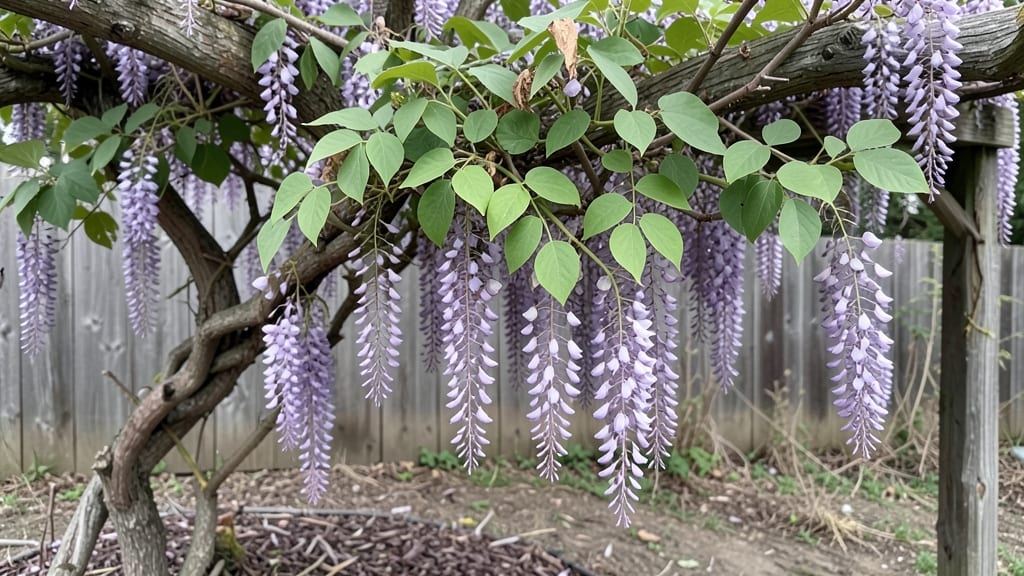
Amethyst wisteria plants bring a dreamy purple cascade that turns any garden into a romantic escape—if you give them the right conditions. 🌿 I fell for this variety after seeing how it thrived in a friend’s shady corner, where regular wisterias would struggle.
The secret lies in its ability to bloom reliably even with less sun, making it perfect for understory plantings or trellises near patios.
You’ll need well-draining soil rich in organic matter, a sturdy trellis or arbor for support, and patience—these vines grow aggressively but reward you with fragrant blooms from late spring through summer. In cooler climates, they’ll even hold onto some foliage in winter, adding year-round texture.
The key is balancing moisture (never soggy) with consistent care, and you’ll end up with a living purple waterfall that neighbors will envy.
Once established, amethyst wisteria becomes nearly self-sufficient, with fewer pests than other varieties and a natural resistance to powdery mildew if you prune correctly. The blooms attract hummingbirds and butterflies, turning your garden into a buzzing sanctuary.
With the right placement, you’ll have a showstopper that requires minimal fuss but delivers maximum impact—no fancy tricks, just smart gardening.
Whether you’re draping it over a pergola, training it along a fence, or tucking it into a woodland garden, this wisteria adapts beautifully. The real magic happens when you pair it with hostas or ferns for contrast—suddenly, your space feels like a secret garden.
Let’s get those roots in the ground and watch the purple magic unfold.
📚 In This Guide
- What you need
- Instructions
- Tips and common mistakes
- Wrapping up and next steps
What you need
- ● Amethyst Wisteria Plant: A healthy, disease-free Wisteria variety (e.g., Wisteria floribunda ‘Amethyst Falls’). Choose a 1-3 year-old plant for best establishment.
- ● Growing Containers (if potted): Large 5-gallon or bigger containers (minimum 18" diameter) with drainage holes.
- ● 1-2 containers per plant (if training as a standard or cascade).
- ● Well-Draining Soil: 60% high-quality potting mix (e.g., Miracle-Gro or FoxFarm).
- ● 30% perlite or pumice (for aeration).
- ● 10% compost (for nutrients).
- ● Support Structure: Trellis, arbor, or sturdy fence (for climbing varieties; 6-10 ft tall).
- ● Orchid stakes or bamboo canes (for dwarf varieties; 3-5 ft tall).
- ● Fertilizer: Balanced 10-10-10 or 20-20-20 granular fertilizer (apply every 4-6 weeks during growing season).
- ○ Slow-release osmocote (optional for potted plants).
- ● Pruning Tools: Bypass pruners (for clean cuts).
- ● Loppers (for thicker stems).
- ● Garden shears (for shaping).
- ● Mulch: 2-3 inches of organic mulch (e.g., wood chips or straw) to retain moisture.
- ● Soil pH Test Kit (ideal range: 6.0-7.0).
- ● Drip Irrigation System (for consistent moisture in containers).
- ● Plant Ties or Soft Wire (to secure vines to supports).
- ● Growth Regulator (e.g., Paclobutrazol) (to control vigorous growth in containers).
- ● Frost Cloth (for young plants in cold climates).
Step-by-Step instructions for planting and caring for amethyst wisteria
Here's how to grow these stunning purple cascades with minimal fuss—once established, they'll reward you for years.
🌱 Step 1: Choose the Perfect Planting Location
Amethyst wisteria thrives in partial shade to full sun—think dappled sunlight where it gets morning rays and afternoon shade. Avoid harsh afternoon sun in hot climates, or the leaves will scorch. I always test the spot by observing how other plants grow there—if they’re thriving, it’s likely a good match.
This vine needs support to climb, whether it’s a sturdy trellis, arbor, or fence. Install your structure before planting so roots can anchor properly. The vines will grow 10-15 feet long, so space the support at least 6 feet apart if planting multiple vines. Dig a hole twice as wide as the root ball but only as deep as the container’s base—burying too deep suffocates the roots.
💧 Step 2: Plant and Water for Strong Establishment
Gently remove the amethyst wisteria from its container and loosen any circling roots with your fingers. Place it in the hole so the top of the root ball sits level with the soil surface—burying the crown too deep causes rot. Backfill with the native soil, pressing lightly to remove air pockets but not compacting too firmly.
Water deeply right after planting to settle the soil and eliminate air gaps. Use 1 gallon of water per plant—this ensures roots make contact with moist soil. Mulch around the base with 2-3 inches of organic mulch (like shredded bark) to retain moisture and regulate soil temperature. Keep the soil evenly moist but not soggy for the first 4-6 weeks—this is critical for root establishment.
☀️ Step 3: Prune and Fertilize for Year-Round Blooms
Prune in late winter or early spring before new growth begins. Remove dead or crossing branches first, then cut back one-third of the previous year’s growth to encourage bushier, more vibrant blooms. Amethyst wisteria flowers on new wood, so don’t be shy—pruning stimulates fresh, flowering growth. I always sanitize my pruners with rubbing alcohol to prevent disease.
Fertilize twice a year: once in early spring with a balanced 10-10-10 fertilizer and again in mid-summer with a low-phosphorus, high-potassium formula (like 5-10-10) to support blooming. Water the soil thoroughly before and after applying fertilizer to prevent root burn. Watch for dark green, glossy leaves—that’s your sign the plant is happy and absorbing nutrients.
✂️ Step 4: Maintain and Encourage Vigorous Growth
Water deeply once a week during the first growing season, then every 10-14 days once established—amethyst wisteria is drought-tolerant but blooms best with consistent moisture. You’ll know it’s thirsty when the leaves start to curl or the vine feels lightweight when touched. Avoid overhead watering to prevent fungal diseases like powdery mildew.
Train the vines along their support by tying them loosely with soft plant ties every 6-8 inches. Don’t wrap too tightly—you want to guide growth, not restrict it. In fall, reduce watering slightly to prepare the plant for dormancy, but keep the soil slightly moist until the first hard frost. The purple blooms will return more vigorously each year if you keep up this routine.
Tips & tricks for perfect amethyst wisteria growth
These simple strategies will help your amethyst wisteria thrive and produce those stunning purple cascades year after year.
The Light Factor: Pay special attention to sunlight placement in Step 1. If your location gets intense afternoon sun, consider planting near a north-facing wall or using a sheer curtain to filter harsh rays. I've seen leaves scorch in just a few hours of direct afternoon sun—watch for crispy edges as an early warning sign. For maximum blooms, aim for at least 6 hours of morning sun combined with afternoon shade.
Root Establishment Secret: During those critical first 4-6 weeks after planting (Step 2), I've found that using a moisture meter helps prevent overwatering. The soil should feel like a damp sponge—not soggy. If you notice leaves wilting even after watering, it's often a sign of underwatering rather than overwatering. The roots need consistent moisture to establish properly without suffocating.
Pruning Technique: When you're cutting back one-third of last year's growth in Step 3, focus on removing the oldest, thickest stems first. These are the ones that produce fewer flowers and can become woody. I always make my cuts just above a leaf node or bud—this is where new growth will emerge. Using sharp, sanitized pruners prevents tearing and reduces disease risk, which is especially important for vines that produce flowers on new wood.
Support System: For the 6-8 inch spacing mentioned in Step 4, I recommend using spiral plant ties rather than rigid wire. They're gentler on the stems and allow for natural movement as the vine grows. When training your amethyst wisteria, give it some slack—you want to guide growth, not restrict it. The vines will naturally seek support, so don't be afraid to let them explore their surroundings a bit.
Pro Tips for Amethyst Wisteria Plants
- These simple strategies will help your amethyst wisteria thrive and produce those stunning purple cascades year after year.
- The Light Factor: Pay special attention to sunlight placement in Step 1.
- Root Establishment Secret: During those critical first 4-6 weeks after planting (Step 2), I've found that using a moisture meter helps prevent overwatering.
Frequently asked questions
Got questions about growing amethyst wisteria plants? You’re not alone! Here are some of the most common concerns—and their answers—to help you cultivate a stunning purple cascade with confidence.
How fast does amethyst wisteria grow, and when will I see blooms?
Amethyst wisteria is a fast grower, often adding 12–24 inches per year under ideal conditions. With proper care (sunlight, well-draining soil, and patience), you can expect vibrant purple blooms in 2–3 years. Some varieties may flower earlier, especially if pruned correctly in late winter.
Can amethyst wisteria survive winter in colder climates?
While amethyst wisteria thrives in USDA Zones 7–11, it can tolerate brief cold snaps with the right prep. Mulch heavily around the base in fall, and consider wrapping young plants in burlap for extra protection. In freezing zones, grow it in containers and move indoors during winter.
What’s the best way to prune amethyst wisteria for fuller growth?
Prune in late winter or early spring (before new growth) to shape the plant and encourage blooms. Cut back leggy stems by 1/3 and remove dead or crossing branches. Avoid heavy pruning in fall, as it can stress the plant. For a lush cascade, train vines along a trellis or fence.
Are there non-toxic alternatives if I have pets or kids?
While amethyst wisteria is mildly toxic if ingested (causing stomach upset), safer alternatives like clematis or morning glories offer similar cascading beauty. For pet-friendly purple blooms, try lilacs or purple passionflower. Always research before planting near curious critters!
Why are my amethyst wisteria leaves yellowing or dropping?
Yellowing leaves often signal overwatering, poor drainage, or nutrient deficiencies. Check soil moisture—wisteria prefers it slightly dry between waterings. Amend soil with compost, and fertilize lightly in spring. Pests like spider mites can also cause stress; treat with neem oil if needed.
Pro Tip:
For year-round interest, pair amethyst wisteria with evergreen shrubs (like boxwood) or spring bulbs (like daffodils). This keeps your garden vibrant in every season!
Wrapping up and next steps
Growing amethyst wisteria plants is a rewarding way to add a splash of purple elegance to your garden—whether you’re a seasoned gardener or just starting out! 🌸 With the right care, these stunning climbers will thrive year-round, offering beauty and a touch of whimsy.
Now that you’re equipped with the essentials, why not take the next step?
- Start small: Plant a single vine in a pot or along a trellis to test your green thumb.
- Experiment: Try pairing it with complementary plants like roses or lavender for a showstopping display.
- Share the joy: Snap photos of your progress and inspire others to cultivate their own purple paradise!
Your garden—and your future self—will thank you for the effort! 🌿✨