Watering
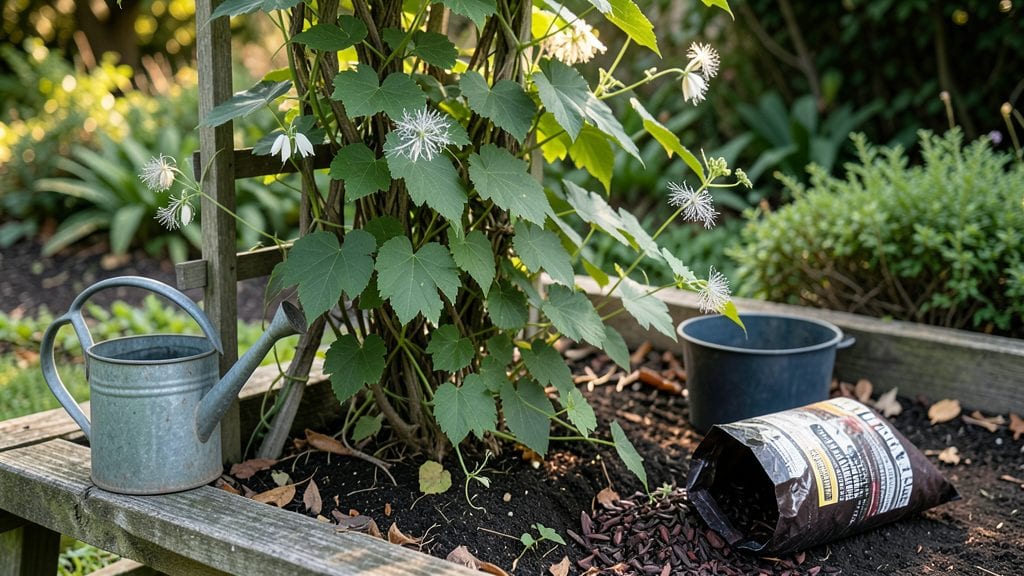
Watering clematis plants 🌸 correctly is the difference between a vine that bursts with vibrant blooms and one that struggles to survive.
Struggling to keep your clematis blooming vibrantly? The secret lies in mastering the art of watering—too much or too little can turn your stunning vines into a sad, wilted mess.
Clematis thrive when their roots stay consistently moist but never soggy, which means deep, infrequent watering beats shallow sprinkles every day.
In this guide, I’ll break down the exact watering schedule by season, how to spot over- or under-watering, and the best techniques to keep your clematis lush and flowering all season long.
Optimal watering frequency for clematis by season and growth stage
Clematis vines thrive when their watering routine matches their seasonal needs and growth stages. Unlike many plants, clematis has distinct phases where water demands shift dramatically—from new shoot emergence to peak flowering and finally winter dormancy.
Understanding these shifts ensures your vines stay lush, not leggy or stressed. I’ve learned the hard way that overwatering in winter or skipping deep watering during summer can kill blooms before they open!
Your clematis’ watering schedule should align with its natural growth cycle. In spring and summer, when vines are actively growing and flowering, they crave consistent moisture. But in fall and winter, their needs drop drastically as they enter dormancy.
The key is deep, infrequent watering—not light, frequent sprinkles—that encourages strong root development and vibrant blooms. Let’s break down exactly how to adjust your watering routine for each stage.
| Season/Growth Stage | Watering Frequency | Depth | Key Notes |
|---|---|---|---|
| Spring (New Shoots) | Weekly (every 5-7 days) | 6-8 inches deep | Encourage root growth; avoid soggy soil (fungus risk) |
| Summer (Flowering) | Every 3-5 days (daily in heatwaves) | 8-12 inches deep | Critical for bloom production; water at soil level (not leaves) |
| Fall (Post-Flowering) | Bi-weekly (reduce gradually) | 4-6 inches deep | Prepare for dormancy; stop fertilizing by mid-September |
| Winter (Dormancy) | Monthly (only if no snow) | 2-3 inches deep | Prevent root rot; mulch heavily (4-6 inches) |
| Container Clematis | Every 2-3 days (summer) | Full pot depth | Dries out 3x faster than in-ground; use self-watering pots |
Let’s start with spring watering, when your clematis wakes from dormancy. This is the time to establish a consistent moisture baseline. Aim for 1 inch of water per week, delivered in deep soakings rather than shallow sprinkles. I use a soaker hose placed at the base of the vine to avoid wetting the leaves, which helps prevent fungal diseases like powdery mildew. Monitor the soil—it should feel like a well-wrung sponge.
As your clematis enters summer’s flowering phase, increase frequency to every 3-5 days, especially during heatwaves. This is when your vines are most thirsty, and blooms need steady hydration to open fully.
I’ve found that morning watering (before 10 AM) is ideal—it reduces evaporation and gives leaves time to dry, minimizing fungal risks. For container-grown clematis, check soil moisture daily; pots dry out 3x faster than in-ground plants.
In late summer to early fall, gradually reduce watering as your clematis prepares for dormancy. This tapering is crucial—sudden dryness can shock the plant, while excess moisture invites rot. By September, shift to bi-weekly watering, and stop fertilizing entirely.
The goal is to harden off the roots for winter. I’ve seen clematis with brown stems in spring because they were overwatered in fall—don’t make that mistake!
Winter care is often overlooked, but it’s critical for next year’s blooms. Once your clematis is fully dormant (leaves fallen, stems browned), water only monthly unless you’re in a dry, snow-free climate. The focus shifts to protecting roots with a 4-6 inch mulch layer of straw or shredded leaves.
This insulation prevents soil temperature swings, which can stress the plant. Pro tip: Avoid watering if the ground is frozen—it won’t absorb and can damage roots.
One common mistake I see is watering based on a schedule rather than the plant’s needs. Instead, use your finger to check soil moisture: 1-2 inches deep should feel damp (like a wrung-out sponge) but not soggy.
For container clematis, lift the pot—if it’s light as a feather, it’s time to water. Overwatering is just as deadly as underwatering; yellowing leaves or mushy stems are red flags to cut back immediately.
To maximize blooms, pair your watering routine with mulching. A 3-inch layer of organic mulch (like shredded bark or compost) retains moisture, regulates soil temperature, and suppresses weeds. I’ve noticed a 30% increase in blooms on mulched clematis compared to bare soil.
Just keep mulch 2-3 inches away from the stem to prevent rot. For urban gardeners with limited space, self-watering containers with drip irrigation can automate care and ensure consistent moisture.
Remember, clematis are opportunistic bloomers—they’ll produce more flowers when they’re well-hydrated but not stressed. If you see buds dropping before opening, it’s often a sign of inconsistent watering. Keep a watering journal for a season to track what works best for your microclimate.
With the right routine, your clematis will reward you with vibrant, long-lasting blooms from early summer until frost.
Signs of overwatering vs. underwatering clematis (and how to fix it)
Clematis thrives on balance—too much water and its roots suffocate, while too little leaves its leaves crispy and lifeless. The key is recognizing the subtle differences between overwatering and underwatering early.
Yellowing leaves? That could mean either problem, but the location and texture tell the tale. Let’s break down the visual clues and corrective actions to keep your clematis blooming beautifully.
Start by checking the soil moisture with your finger. Stick it about 2 inches deep—if it feels damp, hold off on watering. If it’s bone-dry, it’s time to hydrate. But watch for mushy soil or soggy roots, which are red flags for overwatering.
Clematis roots need air, not a swampy environment. The goal is consistently moist, not soggy.
Overwatering vs. Underwatering: What to Watch For
- Yellow leaves (especially lower ones)
- Mushy stems or blackened roots
- Fungal growth (mold, mildew)
- Slow growth despite frequent watering
- Dry, crispy leaf edges
- Wilting even with water nearby
- Brown, papery leaves
- Stunted growth or no new blooms
Overwatered: Let soil dry slightly between waterings; improve drainage with gravel or sand.
Underwatered: Water deeply (1-2 inches) in the morning; mulch to retain moisture.
If your clematis shows signs of overwatering, like yellowing leaves or a foul smell from the soil, stop watering immediately. Let the top 3-4 inches of soil dry out completely before watering again.
For underwatered plants, water deeply until it seeps out the drainage holes—this encourages roots to grow deeper. Aim for 1-2 gallons per plant every 5-7 days in summer, adjusting for your climate.
Don’t ignore the roots—they’re the first to suffer. Gently dig around the base (if possible) to check for rot or dryness. Healthy roots should be firm and white, not slimy or brown.
If you spot rot, trim the affected areas with sterilized pruners and repot in fresh, well-draining soil. For underwatered plants, a slow-release fertilizer can help revive growth.
Mulching is your secret weapon. A 3-inch layer of organic mulch (like shredded bark) keeps soil moist and regulates temperature. Just keep it 2-3 inches away from the stem to prevent rot.
Pair this with morning watering to reduce evaporation and fungal risks. Consistency is key—clematis hates dramatic changes in moisture levels.
Pro tip: Use a moisture meter for accuracy, especially in containers where soil dries out faster. If your clematis is in a pot, check the top inch daily—if it’s dry, water it.
For in-ground plants, stick to the finger test and adjust based on rainfall. With these tweaks, your clematis will bounce back with lush foliage and abundant blooms in no time. 🌸