Watering
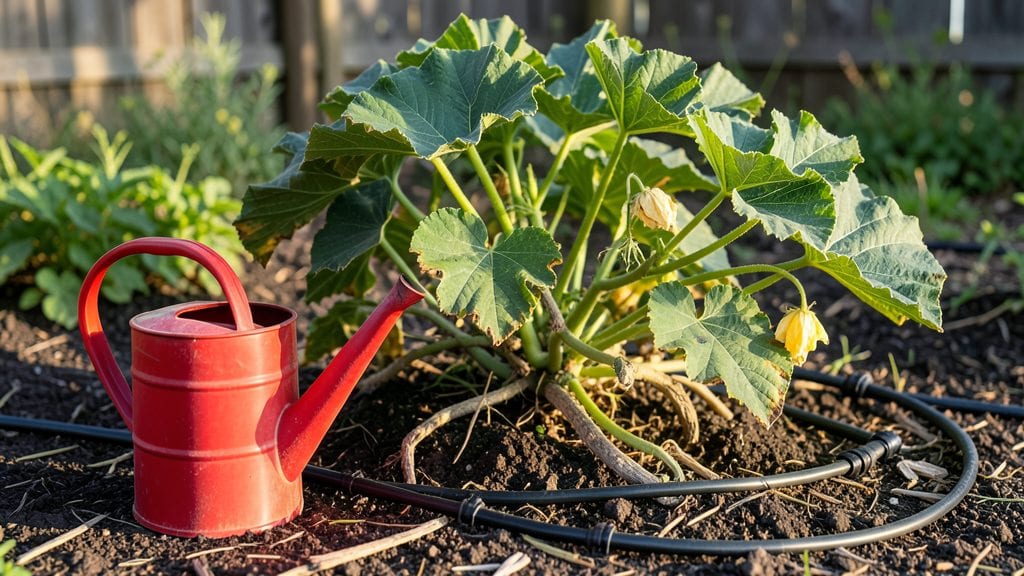
Your underwatered pumpkin plant can bounce back faster than you think—sometimes even in 24 hours. I’ve nursed back plants that looked like dried-up straw with the right approach, and the key starts with understanding why those vines wilted in the first place.
The moment you see leaves curling or stems feeling hollow, it’s not too late to turn things around.
Pumpkins are thirsty plants, but they hate soggy roots just as much. The real fix comes down to deep watering—not just a quick splash that barely reaches the roots.
Check the soil 2 inches down; if it’s dry, give it 1-2 gallons of water at the base, then repeat every 2-3 days until the vines perk up. Mulch helps too—spread 2-3 inches of straw or shredded leaves to keep moisture locked in.
Within a day, you’ll notice leaves unfurling and stems firming up again. Keep an eye out for new growth near the vine tips—that’s your sign the plant’s recovering.
For long-term health, water in the morning so leaves dry quickly, and avoid wetting the foliage to prevent disease. Soon, those vines will be sprawling strong again.
This works for both bush and vining pumpkins, whether you’re growing in soil or containers. The same principles apply whether you’re dealing with a single plant or an entire patch. Once you’ve got the watering routine down, your pumpkins will thank you with bigger, healthier fruit all season.
Root Causes Of Thirsty Vines
Underwatered pumpkin plants don’t just happen by accident—they’re usually the result of overlooked environmental or gardening factors. Understanding these causes is the first step to reviving your struggling vines. Let’s break down the real culprits behind wilting, yellowing leaves, and stunted growth.
Pumpkins are heavy drinkers—their sprawling vines and large leaves demand consistent moisture, especially during hot weather. Here’s why inconsistent watering leads to trouble:
- Shallow Root Systems Struggle: Young pumpkin plants develop roots in the top 6–12 inches of soil.
If you water too lightly or infrequently, these roots can’t reach deep moisture, causing stress. - Evaporation Outpaces Supply: Sandy or loamy soils dry out fast (within hours on sunny days).
If you’re only watering once a day, the plant may go thirsty by mid-morning. - Drip Irrigation vs. Surface Watering: A quick hose spray or sprinkler doesn’t penetrate deeply. For best results, water slowly at the base (1–2 inches per week, more in heatwaves).
Pro Tip: 🌡️ Check soil moisture before watering—stick your finger 2 inches deep. If it’s dry, it’s time to hydrate.
Pumpkins are heat-loving but not drought-resistant. When temperatures soar or rainfall disappears, their large leaves transpire (lose water) rapidly, leading to underwatering symptoms:
- Stomata Close Under Stress: Leaves have tiny pores (stomata) that regulate water.
In extreme heat, they seal shut to prevent dehydration, but this also stops photosynthesis—leading to yellowing and wilting. - Soil Moisture Depletion: A single day of 90°F+ weather can evaporate 1–2 inches of water from the topsoil.
Without replenishment, roots shrink and die back. - Root Burn Risk: If you overwater after a drought, the sudden shift can cause root rot—another silent killer.
Action Step: 🔥 Mulch heavily (straw or wood chips) to retain moisture and water deeply in the early morning to reduce evaporation.
Even with regular watering, clay-heavy or compacted soil traps air pockets, preventing roots from absorbing moisture efficiently. Here’s how it backfires:
- Water Runs Off Instead of Soaking In: Clay soil repels water if dry, creating a hydrophobic layer.
Pumpkin roots can’t access water even if it’s nearby. - Root Suffocation: Compacted soil limits oxygen to roots, causing them to rot or starve—even when the surface looks damp. - Nutrient Lockout: Poor drainage also washes away fertilizers, leaving plants nutrient-deficient (another underwatering symptom: purple stems).
Fix It: 💡 Amend soil with compost or perlite before planting. For established plants, aerate the soil with a garden fork to break up compaction.
Pumpkins need space to spread—when they’re cramped, their roots compete for water instead of expanding. Common mistakes:
- Too Close to Other Plants: Vines steal moisture from neighbors, leaving your pumpkin high and dry. - Shallow Root Zones: If planted in containers or raised beds without depth, roots can’t grow downward for stability. - Weed Competition: Weeds drink up water your pumpkin needs.
A single dandelion can suck 25% of soil moisture in hot weather.
Solution: 🌱 Space vines 3–5 feet apart and remove weeds within a 2-foot radius. For containers, use at least 5-gallon pots with drainage holes.
Hidden underground threats disrupt water uptake before you even notice wilting. Watch for:
- Squash Vine Borers: Larvae chew roots and stems, creating entry points for rot.
- Fungal Infections (e.g., Pythium): Thrives in overly wet or stagnant soil, clogging root hairs.
- Nematodes: Microscopic worms pierce roots, reducing their ability to absorb water.
Preventative Tip: 🛡️ Rotate crops (avoid planting pumpkins in the same spot yearly) and apply neem oil to deter pests.
Even the best gardeners get caught off guard by sudden rain followed by scorching heat. The cycle goes like this: 1. Heavy rain → Soil becomes waterlogged (roots suffocate).
- Sun returns → Topsoil dries faster than roots can recover.
- Plant wilts from the whiplash of too much/too little moisture.
Workaround: 🌦️ Use a rain gauge to track weekly water needs. If rain skips a week, supplement with 1–2 inches of water.
Ironically, overwatering can mimic underwatering symptoms. Watch for:
- Mushy stems (root rot).
- Yellow leaves with brown edges (salt buildup from tap water).
- Foul-smelling soil (anaerobic bacteria thriving).
Fix: Let soil dry slightly between waterings—pumpkins prefer consistent moisture, not soggy soil.
Revive Your Pumpkin Patch Now
If your pumpkin plant is drooping, wilting, or showing signs of thirst, don’t panic—these quick fixes can bring it back to life in a day or two (or even faster!). The key is acting fast, diagnosing the root cause (literally!), and adjusting your care routine.
Below, we’ll break down practical solutions tailored to the most common reasons your pumpkin plant might be underwatered—plus prevention tips to keep those vines thriving.
Cause: Shallow watering or infrequent hydration leaves roots parched, especially in sandy or fast-draining soil.
How to Fix It: ✅ 🔥 Step 1: Soak the Soil Thoroughly
- Stick your finger 2–3 inches deep into the soil. If it’s dry, it’s time to water.
- Use a hose, watering can, or drip irrigation to deliver 1–2 inches of water directly to the base of the plant. Let it seep in slowly—no puddles! (Pumpkins hate soggy roots too.)
- Pro Tip: 💡 Water early in the morning (6–9 AM) to reduce evaporation and fungal risks.
✅ 🍳 Step 2: Check Drainage
- If water pools on the surface after 30 minutes, your soil may be clay-heavy or compacted.
- Solution: Mix in compost or perlite to improve drainage, or create a small trench around the plant to channel water deeper.
✅ 👨🍳 Step 3: Mulch to Retain Moisture
- Spread 2–3 inches of organic mulch (straw, shredded leaves, or grass clippings) around the base (but not touching the stem).
- Why? Mulch acts like a moisture blanket, slowing evaporation and keeping roots cool.
Prevention: 🌡️ Water deeply 2–3 times per week (adjust for heat—daily in 90°F+ weather). ✨ Use a moisture meter ($10 on Amazon) to track soil dampness accurately.
Cause: Extreme heat increases evaporation, making soil dry out overnight. Pumpkin plants in full sun (6+ hours/day) need more frequent hydration.
How to Fix It: ✅ 🥘 Step 1: Increase Frequency, Not Just Volume
- In 90°F+ weather, water every 1–2 days (morning only).
- Test the soil: Press your foot gently—if it springs back, it’s dry. If it holds a slight indent, it’s moist enough.
✅ 🔪 Step 2: Shield Leaves (Temporarily)
- If leaves are scorched or crispy, they’re losing water too fast.
- Quick fix: Set up a shade cloth (30–50% coverage) for 2–3 hours midday until the plant recovers.
✅ ⏰ Step 3: Evening Watering (Last Resort)
- If you must water in the evening, do it 3–4 hours before sunset to avoid fungal issues (like powdery mildew).
Prevention: 🎯 Plant in late spring (after last frost) to avoid early-season heat stress. 💪 Fertilize lightly with fish emulsion or compost tea—healthy plants handle heat better!
Cause: Potted pumpkins or sandy/rocky soil can’t hold moisture, while clay soil drains too slowly, leading to root suffocation.
How to Fix It: ✅ 🔥 Step 1: Repot (If in a Container)
- If roots are circling the pot or soil dries in <1 hour, upgrade to a 5-gallon minimum pot with drainage holes.
- Soil mix: 60% potting soil + 30% compost + 10% perlite for aeration.
✅ 🍳 Step 2: Amend Garden Soil
- For sandy soil: Add 2 inches of compost and mix in coco coir (holds water better than peat moss).
- For clay soil: Dig in sand or vermiculite to improve drainage.
✅ 👨🍳 Step 3: Use Hydrogels or Water Crystals
- DIY hack: Sprinkle water-absorbing crystals (like polyacrylamide) into the soil—they expand to hold 200x their weight in water.
- Reapply every 2–3 weeks during dry spells.
Prevention: 💡 Test your soil’s pH (ideal: 6.0–6.8)—poor nutrition weakens plants’ drought resistance. ✨ Rotate crops if you’ve had issues—pumpkins are heavy feeders and deplete soil quickly.
Cause: Wilting can mimic underwatering if squash vine borers, aphids, or fungal infections are sapping energy.
How to Fix It: ✅ 🔥 Step 1: Inspect Leaves & Stems
- Yellowing veins? Could be mosaic virus (no cure—remove the plant).
- Holes in stems? Vine borers—cut open the stem to check for white larvae.
- Sticky leaves? Aphids—spray with neem oil or soapy water.
✅ 🍳 Step 2: Treat Fungal Issues
- Powdery mildew? Spray with baking soda mix (1 tsp baking soda + 1 quart water + a drop of dish soap).
- Black spots? Early blight—remove infected leaves and water at the base (not overhead).
✅ 👨🍳 Step 3: Prune Damaged Growth
- Trim yellow, wilted, or chewed leaves to redirect energy to healthy vines.
- Sterilize pruners with rubbing alcohol to prevent spreading disease.
Prevention: 🎯 Crop rotate—don’t plant pumpkins/squash in the same spot yearly. 💪 Use row covers early in the season to block pests.
- 💡 Monitor with a "Finger Test": Stick your finger 3 inches deep—if it’s dry past your first knuckle, water immediately.
- 🌡️ Adjust for Rain: If it rained >1 inch, skip watering for 2–3 days to avoid root rot.
- ✨ Harvest Early: If your plant is struggling, pick smaller pumpkins (like sugar pumpkins)—they mature faster and stress the plant less.
- 📊 Track Your Plant’s Needs: Keep a watering journal to learn your soil’s moisture patterns.
Remember: Pumpkin plants are resilient—with the right care, they’ll bounce back faster than you think! 🚀 Start with deep watering, adjust for your climate, and keep an eye out for pests. Your future jack-o’-lantern (or pie filling) will thank you!
Frequently asked questions
How do I know if my pumpkin plant is truly underwatered?
Check for wilting leaves that don’t spring back when touched, yellowing edges on older leaves, or stems that feel hollow when squeezed. Dig 2 inches deep—if the soil is bone-dry, that’s your sign. Also watch for drooping vines that recover slightly at night (a classic thirst signal).
Can I fix an underwatered pumpkin plant in just 24 hours?
Yes! Start by giving it 1–2 gallons of water at the base (not overhead) and apply 2–3 inches of mulch to lock in moisture. Water again in the morning if the soil feels dry. Most plants show improvement within 12–24 hours, but severe cases may take 3–5 days to fully recover.
Why does my pumpkin plant wilt even after I water it?
This could mean root damage (from pests like vine borers), overheated soil, or poor drainage. Check for holes in stems (borers) or mushy roots (rot). If the soil stays soggy after watering, amend it with perlite or sand to improve airflow.
How often should I water pumpkins in containers vs. garden beds?
Container pumpkins need watering every 1–2 days (soil dries faster), while garden beds require 2–3 times weekly. Use the finger test: Stick your finger 2 inches deep—if dry, water deeply. Containers also need drainage holes to prevent root rot.
Will my pumpkin fruit still grow if the plant is underwatered?
Small pumpkins may form, but they’ll be underdeveloped or misshapen due to stress. Focus on reviving the plant first—prioritize watering the base until leaves perk up. Once recovered, the plant can redirect energy to fruit growth. Harvest any small pumpkins early to reduce strain.