Watering
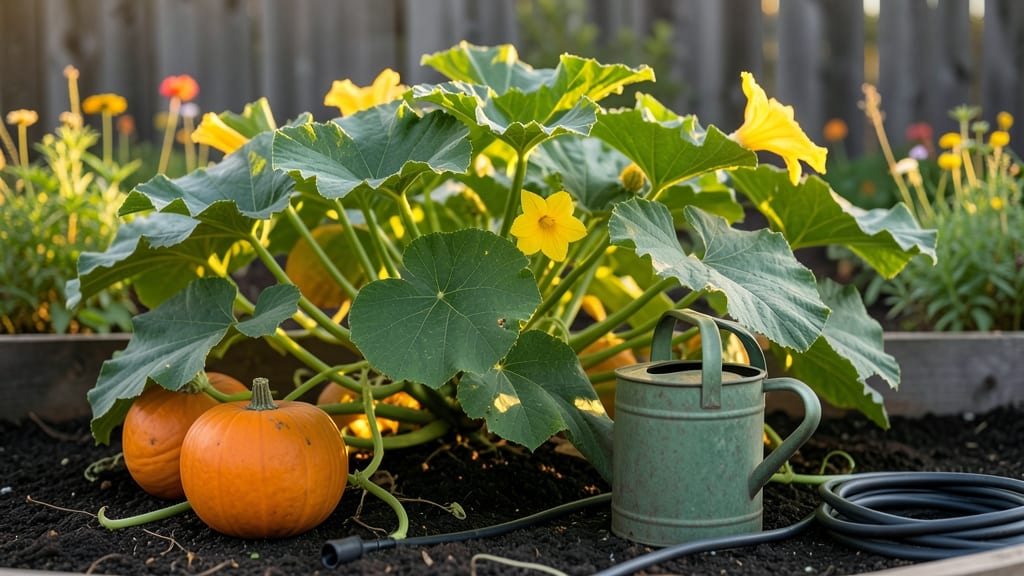
Watering pumpkin plants correctly is the secret to turning those sprawling 🎃 vines into a bountiful harvest—or watching them wilt before they even flower.
Pumpkin plants demand consistent moisture to grow into those prized, vine-covered giants—but overwatering or uneven hydration can spell disaster for your harvest. Mastering the art of watering pumpkin plants isn’t just about frequency; it’s about understanding soil moisture dynamics, root development, and seasonal adjustments.
In USDA Zone 6a, where summer heat can dry out the soil in days, deep watering in the morning keeps roots happy and prevents fungal diseases.
But even the best routine can backfire if you miss the signs of overwatering—yellowing leaves or mushy stems—or underwatering, like crispy edges and wilting vines.
Below, I’ll break down the exact schedule, techniques (drip irrigation vs. hand-watering), and how to adjust when heatwaves hit. By the end, you’ll know exactly how to keep your pumpkins thriving from seedling to harvest.
How often to water pumpkin plants for maximum growth
Pumpkins thrive when their roots stay consistently moist, but their watering needs shift dramatically from seedling to harvest. Underwatering stunts growth, while overwatering invites rot and fungal diseases. The key lies in maintaining 1-2 inches of soil moisture at all times—especially during critical stages like flowering and fruiting.
Let’s break down the science behind watering frequency so you can nurture healthy vines and plump pumpkins.
Your pumpkin plants’ watering schedule should adapt to their growth stage, weather conditions, and soil type. Sandy soils dry faster than clay, and summer heat demands more frequent watering than spring mornings.
I’ve grown pumpkins in both raised beds and in-ground plots, and the biggest lesson I learned? Deep, infrequent watering encourages root development far more than shallow, daily sprinkles.
| Growth Stage | Watering Frequency | Soil Moisture Goal | Key Considerations |
|---|---|---|---|
| Seedling (0-4 weeks) | Every 2-3 days | 1 inch deep | Keep soil evenly moist; avoid soggy soil |
| Vegetative (4-8 weeks) | Every 3-4 days | 1-2 inches deep | Encourage deep root growth; water at soil level |
| Flowering (8-12 weeks) | Daily or every 2 days | 2 inches deep | Critical for pollination; morning watering preferred |
| Fruiting (12+ weeks) | Every 2-3 days (adjust for heat) | 1-2 inches deep | Maintain steady moisture; reduce as harvest nears |
| Heatwave Conditions | Daily (early morning) | 2+ inches deep | Mulch heavily to retain moisture; avoid wetting leaves |
| Drought Conditions | Every 4-5 days (deep soak) | 2-3 inches deep | Prioritize root zone; monitor for wilting |
During the seedling stage (first 4 weeks), your pumpkin plants have shallow roots, so focus on keeping the top 1 inch of soil consistently moist. Use a spray bottle or gentle watering can to avoid disturbing the delicate sprouts.
I’ve seen seedlings collapse from uneven moisture, so aim for light but frequent watering—think of it like watering a houseplant, not a mature vegetable.
As your plants enter the vegetative stage (weeks 4-8), they’ll begin developing deeper roots. This is when you can shift to deep watering every 3-4 days, encouraging roots to grow downward. Water at the base of the plant rather than overhead to prevent fungal diseases like powdery mildew.
A simple trick I use? Stick your finger 2 inches into the soil—if it feels dry, it’s time to water.
The flowering stage (weeks 8-12) is the most critical for watering. Pumpkin flowers need steady moisture to open properly and facilitate pollination. Water daily or every 2 days, aiming for 2 inches of soil moisture.
Morning watering is ideal because it gives foliage time to dry before evening, reducing the risk of blossom end rot or mildew. I’ve had years where late-afternoon watering led to wilted flowers—don’t let that happen to you!
Once your pumpkins start forming (weeks 12+), maintain 1-2 inches of soil moisture but reduce frequency slightly to every 2-3 days. Overwatering at this stage can cause the fruit to split or develop soft spots.
Pay attention to your pumpkins’ size—larger varieties like Atlantic Giant need more water than smaller Jack Be Little types. Mulching with straw or shredded leaves helps lock in moisture and keeps roots cool.
Environmental factors play a huge role in adjusting your watering schedule. In high humidity, you might need to water less frequently because the air already holds moisture. Conversely, dry, windy conditions can dry out soil faster, so check moisture levels daily.
I once grew pumpkins in a sandy loam soil that dried out in hours—switching to drip irrigation saved my harvest by delivering water directly to the roots.
Heatwaves are the biggest challenge for pumpkin watering. When temperatures exceed 90°F (32°C), increase frequency to daily watering in the early morning. Use mulch (3-4 inches thick) to insulate the soil and reduce evaporation.
Avoid wetting the leaves, as this can promote powdery mildew. If you’re away during extreme heat, consider setting up a self-watering system or soaker hose to maintain moisture.
As harvest approaches (typically 85-120 days after planting), you can gradually reduce watering to every 5-7 days. This helps the pumpkins thicken their rinds and develop sweeter flesh. Stop watering
Signs of overwatering vs. underwatering pumpkin plants
Pumpkin plants rely on steady moisture to produce those massive, show-stopping fruits—but too much or too little water can derail your harvest. The key to spotting hydration issues lies in observing leaf texture, stem firmness, and root health.
For example, yellowing leaves with mushy stems signal overwatering, while crispy edges and drooping vines scream underwatering. Both extremes stress your plants, so quick action can save your pumpkins.
Start by checking the soil moisture 1-2 inches below the surface. Stick your finger in—if it feels damp, you might be overdoing it. If it’s bone-dry, it’s time to water deeply.
Pumpkins need 1-2 inches of water weekly, but adjust for heat or rain. Ignoring these signs can lead to root rot or stunted growth, so stay vigilant.
Overwatering vs. Underwatering: Quick Fixes
Overwatering
- Yellow leaves (lower first)
- Mushy stems when pressed
- Foul soil smell (rot)
- Slow wilting despite wet soil
✅ Fix: Let soil dry slightly between waterings. Improve drainage with perlite or sand.
Underwatering
- Crispy leaf edges
- Drooping vines (even at night)
- Dry, cracked soil surface
- Slow growth despite warmth
✅ Fix: Water deeply at soil level. Use mulch to retain moisture.
Overwatered pumpkins often show yellowing leaves that start at the base and spread upward. The stems may feel soft or spongy, and the soil might emit a musty odor—a red flag for root rot.
To revive your plant, reduce watering immediately and improve drainage by amending the soil with compost or organic matter. Avoid letting water pool around the base, as pumpkins hate soggy roots.
Underwatered pumpkins, on the other hand, exhibit crispy leaf edges and wilting vines that don’t bounce back after watering. The soil near the roots may pull away from the pot or feel dry even 2 inches down.
If you notice this, water deeply—aim for 2-3 gallons per plant—and focus on the root zone rather than sprinkling the leaves. Mulching with straw can help lock in moisture for longer.
For both issues, morning watering is ideal. It gives leaves time to dry before evening, reducing fungal risks. If your pumpkins are struggling, check the root health by gently lifting a vine.
Healthy roots should be white or tan, while rotten roots turn black and mushy. Adjust your watering routine based on these clues to keep your pumpkins thriving.
Remember, pumpkins thrive on consistency. Whether you’re dealing with overwatering or underwatering, the goal is to strike that perfect balance—moist but not soggy, hydrated but not drowned.
With these signs in mind, you’ll be able to diagnose and fix hydration issues before they derail your harvest. 🎃