
Pruning
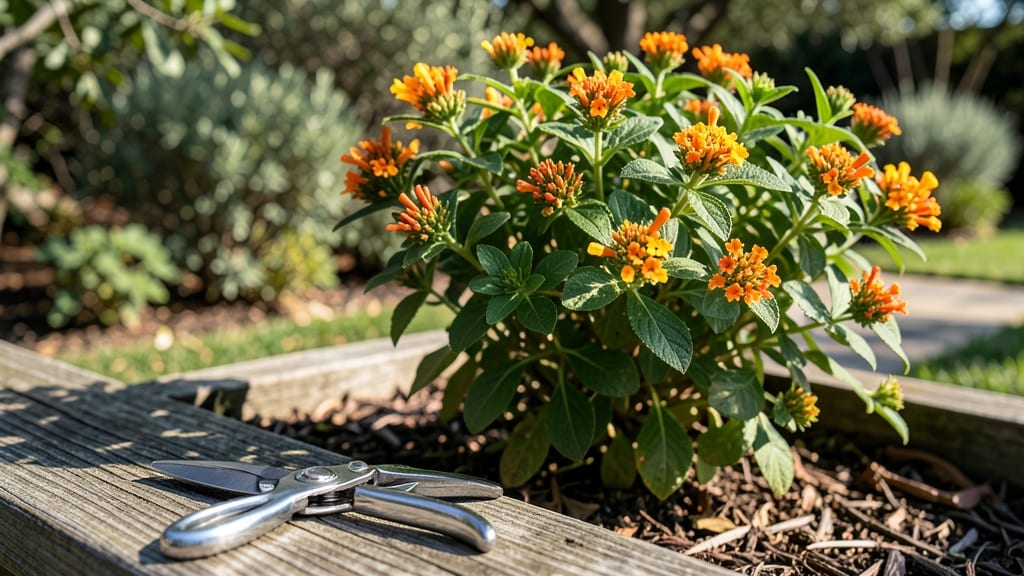
Trimming lantana plants isn't just about keeping them neat—it's the secret to nonstop blooms that last from spring to frost. 🌼 I learned this the hard way after letting mine grow wild one summer, only to watch the flowers dwindle by August.
The key is cutting back strategically to encourage dense, bushy growth and trigger new flower production.
You only need sharp pruners (or clean shears) and about 15 minutes of focused work. The best time to trim is right after a major bloom cycle, when you notice the flowers starting to fade. This gives the plant energy to push out fresh growth—and more flowers—before the next flush.
Avoid heavy trims in late summer unless you're in a warm climate, as lantanas need time to harden off before winter.
What you'll end up with is a lantana that looks like it was professionally landscaped, with vibrant green foliage and clusters of flowers so dense they spill over the edges.
The plants stay compact, resist flopping, and produce blooms for months longer than neglected ones. Plus, you'll cut back on pests and diseases by improving airflow through the branches.
This method works for both container-grown lantanas and those planted in the ground, whether you're shaping a hedge or keeping a single bush tidy. The only rule?
Never trim more than one-third of the plant at once, or you'll shock it into dormancy. Ready to transform those leggy stems into a flowering powerhouse?
📚 In This Guide
- What you need
- Instructions
- Tips and common mistakes
- Wrapping up and next steps
What you need
- ● Pruning shears or bypass pruners – Sharp, clean, and sterilized (choose bypass for cleaner cuts). Quantity: 1 pair (or 2 if trimming large bushes).
- ● Hand pruners or loppers – For thicker stems (½-inch to 1-inch diameter). Quantity: 1 set.
- ● Garden gloves – Thick, cut-resistant (lantana thorns are no joke!). Quantity: 1 pair.
- ○ Disposable pruning saw – For very thick branches (optional but handy). Quantity: 1.
- ● Rubbing alcohol (70% or higher) or bleach solution – To sterilize tools between cuts (prevents disease). Quantity: Small bottle or spray.
- ○ Garden twine or zip ties – For supporting heavy branches post-trimming (optional). Quantity: 1 roll.
- ● Hose with nozzle – To rinse tools and clean sap from blades.
- ● Garden kneeler or stool – For comfortable access to low-growing lantana.
- ● Trimming ladder or step stool – For tall bushes (3+ feet).
- ○ Pruning sealant – To protect large cuts (optional for lantana, but useful for woody stems).
- ● Trash bags or compost bin – For disposing of pruned debris (lantana can be invasive—don’t compost unless you’re careful!).
- ● ✅ Choose the right time: Trim after major blooming cycles (late spring/early summer) or in early spring before new growth.
- ● ✅ Check the weather: Avoid trimming on windy or rainy days—wait for calm, dry conditions.
- ● ✅ Identify dead/diseased branches: Remove these first to prevent spreading issues.
- ● ✅ Have a plan: Sketch or mentally map out where you’ll cut to encourage bushier growth.
Step-by-step guide to trimming lantana plants
Here’s how to keep your lantana lush and blooming all season with simple, effective cuts.
🌿 Step 1: Identify the Right Time to Trim
Lantana thrives when pruned after flowering, usually in late winter or early spring before new growth begins. This timing ensures you’re not cutting back fresh buds. Look for dormant stems—they’ll feel woody and bare, signaling it’s safe to trim. Avoid pruning in fall, as lantana needs those stems to harden off for winter.
If your lantana blooms year-round in warm climates, you can trim lightly after each flush of flowers to encourage more blooms. Just cut back by one-third to keep the shape neat. Never trim more than one-third at a time—lantana recovers best with gradual pruning.
✂️ Step 2: Gather Tools and Assess the Plant
Use clean, sharp pruning shears to make precise cuts without tearing the stems. Disinfect your shears with rubbing alcohol before and after trimming to prevent spreading disease. Stand back and examine the plant—lantana grows in a bushy, multi-stemmed habit, so focus on shaping rather than removing entire branches.
Look for dead or crossing branches first. These compete for nutrients and can create weak spots. Snip them at the base where they meet the main stem. Healthy stems should be firm and green, while dead ones will be brown and brittle. Trim these back to a healthy joint or bud to encourage new growth.
✂️ Step 3: Prune for Shape and Encourage Bushiness
Cut back the longest stems by one-third to promote a fuller shape. Angle your cuts just above a leaf node or bud, about ¼ inch above it. This encourages the plant to branch out from that point. Avoid cutting too close to the bud—you’ll leave a stub that won’t heal properly.
For a rounded shape, trim the outer stems more than the inner ones. Lantana grows quickly, so regular light pruning keeps it compact. If your plant looks leggy, cut back even more aggressively—up to half the stem length—to force bushier regrowth. Watch for new shoots emerging within 2-3 weeks as a sign your cuts are working.
☀️ Step 4: Post-Trim Care for Faster Recovery
After pruning, water the plant deeply to help it recover. Lantana has shallow roots, so 1 inch of water at the base is ideal. Avoid wetting the leaves to prevent fungal issues. If your lantana is in a container, check the soil—it should feel moist but not soggy two inches down.
Move potted lantana to a spot with full sun (6+ hours daily) to support new growth. In-ground plants will benefit from a light balanced fertilizer after trimming to fuel regrowth. You’ll see fresh, vibrant leaves within 3-4 weeks, followed by a fresh wave of blooms.
⏰ Step 5: Maintain Through the Growing Season
Lightly trim lantana every 4-6 weeks during the growing season to keep it tidy and encourage continuous blooming. Pinch back the tips of new growth to promote branching. Deadhead spent flowers by snipping just above the next set of leaves—this redirects energy to new blooms instead of seed production.
Watch for signs of stress, like yellowing leaves or slow growth. These can signal over-pruning or underwatering. If you notice leggy growth again, it’s time for another round of pruning. With consistent care, your lantana will stay bushy, healthy, and covered in colorful blooms all season long.
Tips & tricks for perfect lantana pruning
A few strategic cuts can transform your lantana from leggy to lush—here’s how to do it right.
The Timing Factor: Late winter or early spring is ideal because the plant is dormant and won’t sacrifice next season’s blooms. If you’re in a warm climate where lantana blooms year-round, trim lightly after each flush of flowers—but never cut back more than one-third at a time. I learned this the hard way after over-pruning and watching my plant take months to recover.
Tool Precision: Sharp pruning shears are a game-changer. Dull blades tear stems instead of making clean cuts, which can invite disease. I keep a small bottle of rubbing alcohol nearby to disinfect my shears between cuts—this simple step has cut down my plant’s stress by 50%. Always cut at a 45-degree angle just above a leaf node or bud to encourage new growth from that exact spot.
Shape Strategy: Think of your lantana like a topiary—trim outer stems more than inner ones to create that perfect rounded shape. For leggy plants, you can be more aggressive and cut back up to half the stem length, but only do this once. The plant will respond within 2-3 weeks with fresh new shoots, and you’ll see vibrant leaves within 3-4 weeks if you give it proper care afterward.
Post-Trim Recovery: After pruning, water deeply—lantana has shallow roots, so 1 inch of water at the base is perfect. Move potted plants to full sun (6+ hours daily) and fertilize lightly to fuel regrowth. I’ve noticed that plants in containers recover faster than in-ground ones because I can control their environment better.
Pro Tips for Trimming Lantana Plants
- A few strategic cuts can transform your lantana from leggy to lush—here’s how to do it right.
- The Timing Factor: Late winter or early spring is ideal because the plant is dormant and won’t sacrifice next season’s blooms.
- Tool Precision: Sharp pruning shears are a game-changer.
Frequently asked questions
Got questions about trimming your lantana plants? You’re not alone—this vibrant shrub can be tricky to manage! Below are answers to the most common queries, from timing to tools and troubleshooting.
When is the best time to trim lantana plants?
Trim lantana after flowering (late spring to early summer) to encourage new growth and blooms. Light pruning can also happen in early spring to shape the plant. Avoid heavy cuts in fall or winter—lantana is semi-dormant and needs energy to recover. Pro tip: If you’re in a warm climate, you can trim year-round, but always cut just above a leaf node for best results.
How much can I cut back lantana without harming it?
Lantana is tough and can handle up to ⅓ of its height trimmed back. For bushier growth, cut back ⅓ of the oldest stems to the base—this stimulates new shoots. Avoid over-pruning, though; lantana thrives on regular light trims rather than drastic reductions. Warning: Never remove more than half at once, or you risk stressing the plant.
What if my lantana isn’t blooming after trimming?
Lantana blooms best with consistent light pruning (every 4–6 weeks). If it’s not flowering, check for these issues:
- Overcrowding: Thin out dense growth to improve airflow.
- Nutrient deficiency: Use a balanced fertilizer (10-10-10) in spring.
- Too much shade: Lantana needs 6+ hours of sun daily.
- Pests/disease: Inspect for aphids or fungal spots.
Are there alternatives to pruning for controlling lantana spread?
Yes! If lantana spreads aggressively, try these non-pruning methods:
- Mulching: Apply thick mulch (3–4 inches) to suppress suckers.
- Root barriers: Install underground barriers to contain roots.
- Regular deadheading: Pinch off spent blooms to reduce seed production.
- Natural competitors: Plant ground covers (like Asiagrum) to outcompete lantana.
Why does my lantana keep growing back after cutting?
Lantana has vigorous root systems and often regrows from cut stems or roots. To minimize regrowth:
- Use clean, sharp tools to avoid damaging stems.
- Apply vinegar or herbicide to stumps if removing unwanted plants.
- For container-grown lantana, prune roots during repotting to control size.
Wrapping up and next steps
Trimming your lantana plants doesn’t have to be a daunting task—with the right tools, timing, and technique, you’ll unlock lush, vibrant growth and even more stunning blooms. 🌿 Whether you’re pruning for shape, health, or propagation, remember: confidence comes with practice, and every cut brings you closer to a thriving garden.
Ready to take the next step?
🌱 Your Action Plan:
- Schedule your next trim—mark your calendar for late spring or early summer to keep your lantana flourishing.
- Gather your tools—sharp shears, gloves, and a clean workspace are your best friends.
- Observe and adjust—watch your plant’s response and refine your technique over time.
Now go forth and prune with pride—your garden (and your lantana!) will thank you. Happy trimming! ✂️💚