
Pruning
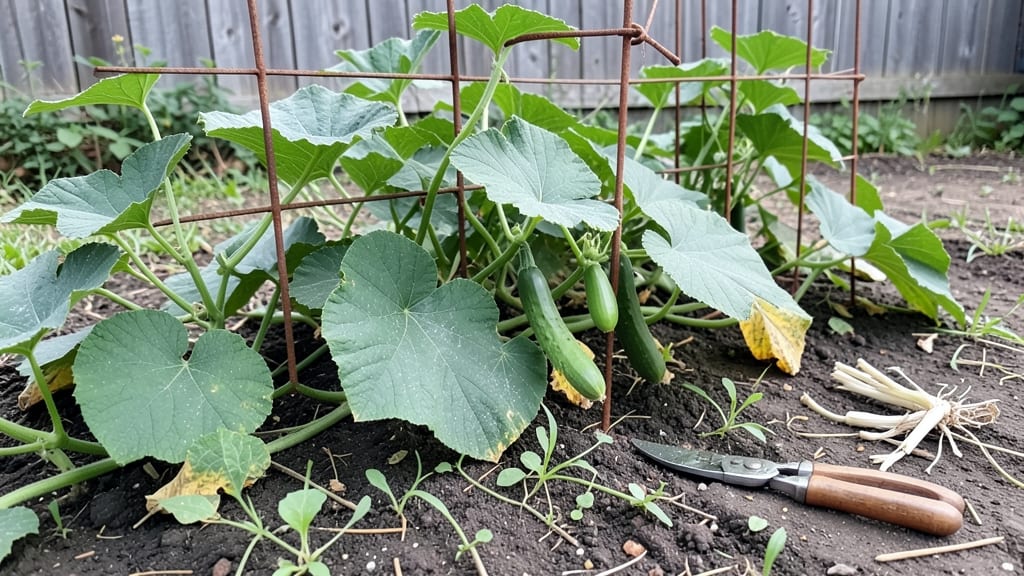
Trimming cucumber plants can double your harvest if you do it right—it’s all about directing energy where it matters most. ✨ I learned this the hard way after letting my vines sprawl into a tangled mess, producing small, bitter fruit instead of the crisp, abundant harvest I wanted.
The key is strategic cutting to encourage bushier growth and better air circulation, which keeps diseases at bay and fruits sweeter.
You’ll need sharp pruning shears (dull blades crush stems) and about 15 minutes on a warm afternoon when the plants are actively growing. For indeterminate varieties, focus on removing side shoots that form below the first leaves of each vine—these sap energy that could go toward fruit production.
Determinate types need less trimming, but you’ll still want to open up the plant’s center to improve airflow and reduce pests like powdery mildew.
After just a few sessions, you’ll notice thicker vines and more flowers setting fruit. The plants become more manageable, too—no more wrestling with unruly vines or losing cucumbers in the foliage.
Plus, the fruit tends to ripen more evenly, giving you a steady supply instead of a sudden glut. It’s the difference between a handful of cucumbers and a basketful.
This method works for both backyard gardens and container growing, though container plants may need slightly more frequent trimming to stay compact. The best time to start is when vines reach 12-18 inches tall—don’t wait until they’re overgrown.
With a little practice, you’ll have a foolproof system that keeps your cucumbers productive all season long.
📚 In This Guide
- What you need
- Instructions
- Tips and common mistakes
- Wrapping up and next steps
What you need
- ● Sharp pruning shears or scissors: Bypass pruners (for clean cuts) or clean, sharp scissors (if trimming small stems).
- ● Disinfect with rubbing alcohol before and after use to prevent disease spread.
- ○ Gloves (optional but recommended): Nitrile or garden gloves to protect hands from thorns or dirt.
- ● Garden twine or plant ties: Soft twine or Velcro ties (10–20 feet, depending on plant size) to support vines after trimming.
- ● Watering can or hose: For post-trimming hydration (1–2 gallons per plant).
- ● Plant growth hormone powder: Speeds up healing of cut stems (e.g., rooting hormone).
- ● Mulch (straw or shredded leaves): Retains moisture and reduces stress on plants.
- ● Label markers: If pruning different varieties, label branches to track growth patterns.
- ● Knee pad or stool: For comfort when trimming larger or ground-level plants.
Step-by-Step guide to trimming cucumber plants
Here’s how to prune cucumbers for stronger vines and more abundant fruit—no guesswork involved.
🌿 Step 1: Identify What to Trim and What to Keep
Start by examining your cucumber plant for three key areas: main vines, side shoots, and fruit clusters. The main vine is the thick central stem that grows upward—this is your plant’s backbone and should never be cut. Look for side shoots (smaller stems branching off the main vine) and fruit clusters (where cucumbers develop).
Remove male flowers (they have a long stem and no mini cucumber at the base) unless you’re saving seeds—these drain energy. Keep female flowers (they have a tiny cucumber at the base) and any side shoots that appear below the first fruit cluster. These will support future growth.
✂️ Step 2: Make Clean Cuts at the Right Spots
Use clean, sharp pruning shears to make cuts just ½ inch above a leaf node (the bump where leaves or stems grow). Avoid tearing the stem—this invites disease. For side shoots, trim them back to 2-3 inches if they’re growing too long, but leave 1-2 leaves attached to encourage new growth.
If a vine has too many fruit clusters (more than 3-4), prune back some to prevent overloading. Overcrowded fruit leads to smaller cucumbers and weaker vines. Think of it like giving your plant room to breathe—it’ll reward you with bigger, healthier harvests.
🌱 Step 3: Encourage Bushier Growth with Strategic Pruning
After trimming, focus on training the main vine to grow vertically. Tie it to a trellis or stakes with soft plant ties, adjusting as it grows. This keeps the plant upright, improves air circulation, and makes harvesting easier. For bush cucumber varieties, prune only the tips of vines to encourage branching.
Watch for suckers (small shoots growing from the joint where a leaf meets the stem). These steal energy from fruit production. Pinch them off early—don’t wait until they’re 6 inches long. The sooner you remove them, the more energy your plant puts into cucumbers instead of extra foliage.
☀️ Step 4: Maintain and Monitor After Pruning
Water the plant deeply after trimming to help it recover. Cucumbers are thirsty, so keep the soil evenly moist (about 1-2 inches deep) but not soggy. Mulch around the base to retain moisture and prevent weeds from competing for nutrients.
Check your plant weekly for new side shoots or overcrowded fruit. Prune again as needed, especially during peak growing months (late spring to early summer). You’ll know you’re doing it right when your plant looks fuller at the base and produces larger cucumbers consistently.
⏰ Step 5: Time Your Pruning for Maximum Impact
Prune early in the morning when the plant is hydrated and cuts heal faster. Avoid trimming during hot afternoons—stressed plants wilt easily. For bush cucumbers, prune once every 2 weeks to control size. For vining types, prune weekly to manage growth and fruit load.
Stop heavy pruning 4-6 weeks before your first frost to let the plant focus on ripening existing fruit. You’ll know it’s time to slow down when cucumbers start turning yellow or the vines slow their growth. At this point, just remove dead or diseased leaves and let nature take its course.
Tips & tricks for perfect cucumber plant pruning
Precision pruning transforms your cucumber plants from scrappy underachievers into prolific producers. Here’s how to get it right without losing a single harvest.
Visual Cues Matter: In Step 1, when identifying female flowers, look for the tiny cucumber at the base—it’s the size of a pea when the flower first appears. Male flowers have long stems and no cucumber bump. I’ve learned the hard way that removing too many female flowers early can stunt your harvest, so keep at least two per vine if you want consistent fruit.
Timing Secret: The weekly checks in Step 4 are non-negotiable, especially during peak growing months. I schedule my pruning days for Mondays so I can monitor progress throughout the week. If you notice new side shoots appearing faster than every 7 days, you’re likely dealing with a vigorous vine—prune those suckers immediately to redirect energy to fruit production.
Equipment Upgrade: While clean pruning shears work, I’ve found that a small pair of nail clippers (sterilized with rubbing alcohol) works perfectly for those hard-to-reach suckers. The precision prevents tearing stems, which is crucial for preventing disease entry points. Always disinfect your tools between plants to avoid spreading pathogens.
Seasonal Strategy: That 4-6 week window before frost in Step 5 is your plant’s final push for flavor development. I mark my calendar with colored stickers to remind myself when to slow down pruning. If you’re in a warmer climate with no frost, continue light pruning until cucumber production naturally slows in late fall.
Pro Tips for Trimming Cucumber Plants
- Precision pruning transforms your cucumber plants from scrappy underachievers into prolific producers.
- Visual Cues Matter: In Step 1, when identifying female flowers, look for the tiny cucumber at the base—it’s the size of a pea when the flower first appears.
- Timing Secret: The weekly checks in Step 4 are non-negotiable, especially during peak growing months.
Frequently asked questions
Got questions about trimming cucumber plants? You’re not alone—even seasoned gardeners need a little guidance! Here are answers to the most common queries to help you trim like a pro and maximize your harvest.
When is the best time to trim cucumber plants?
Trim your cucumber plants in the morning when the plants are dry and the sun isn’t too intense. This reduces stress on the plant and gives it time to recover before the heat of the day. Aim to prune every 1–2 weeks during the growing season, but avoid heavy trimming once flowers appear to encourage fruiting.
Should I remove all the leaves when trimming?
No! Only remove yellow, diseased, or overcrowded leaves—never strip healthy foliage. Leaves provide energy for the plant through photosynthesis. Focus on trimming suckers (those small shoots growing between the main stem and branches) and any leaves blocking airflow to prevent pests and diseases.
What if I accidentally trim too much?
Don’t panic! Cucumber plants are resilient. If you’ve over-trimmed, stop immediately and let the plant recover. Water it well and avoid further pruning for at least 2 weeks. If the plant looks stressed, fertilize lightly with a balanced fertilizer to support regrowth. Over time, it should bounce back with proper care.
Can I use pruning shears or should I pinch suckers by hand?
Both work, but clean, sharp pruners are best for larger stems or suckers. For smaller suckers, pinching by hand is quick and precise—just use your thumb and forefinger to snap them off cleanly. Always sterilize your tools with rubbing alcohol between cuts to prevent spreading disease.
What should I do with the trimmed-off parts?
Discard healthy trimmings in your compost bin (they’ll break down quickly) or use them as mulch around the base of the plant. Avoid composting diseased or pest-infested clippings—burn or trash them instead to prevent spreading problems to other plants.
Does trimming work for all cucumber varieties?
Not quite! Bush cucumbers (like ‘Bush Champion’) need minimal trimming, while vining varieties (like ‘Straight Eight’) benefit the most from regular pruning. If you’re unsure, check your seed packet—most vining types thrive with trimming, but bush types may not need it at all.
Wrapping up and next steps
Trimming your cucumber plants isn’t just about keeping them tidy—it’s the secret to bushier vines, healthier growth, and a bountiful harvest! 🌱 By mastering the right techniques, you’ll encourage stronger plants, reduce disease risks, and maximize your yield.
With the right tools, timing, and a little patience, you’ll soon be enjoying plump, delicious cucumbers all season long.
Ready to put your new skills into action? Start with one or two plants this week—observe how they respond, and soon you’ll be a pruning pro! Happy gardening! 🌿