
Pruning
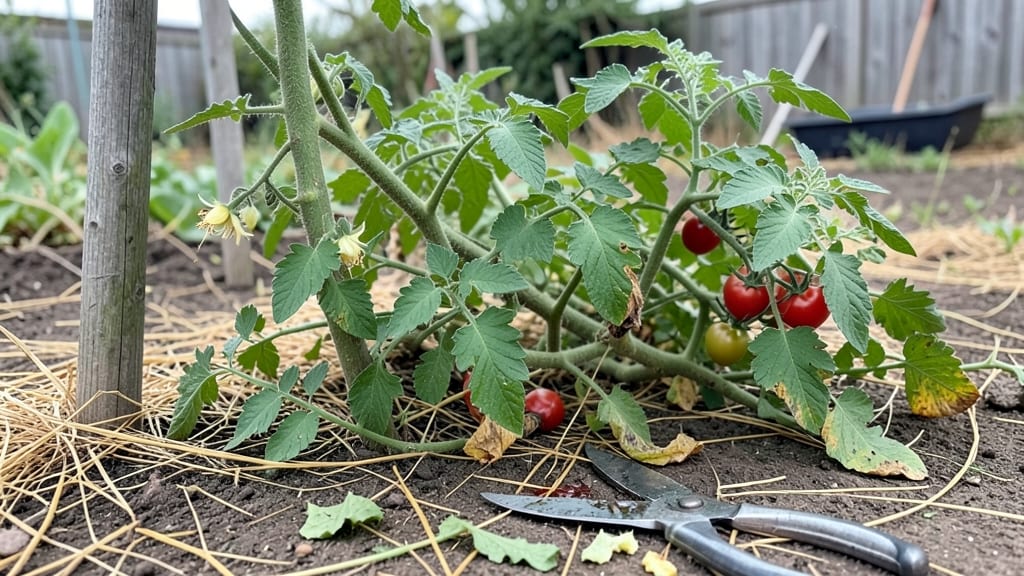
Trimming tomato leaves isn’t just pruning—it’s the secret to bigger, sweeter fruit and a healthier plant. 🌱 I used to think more leaves meant more shade for fruit, but after my first harvest with strategic cuts, I never looked back.
The right trimming boosts airflow, stops disease, and directs energy where it matters: to those juicy tomatoes.
You’ll need sharp pruning shears (dull blades tear leaves) and about 20 minutes for a mature plant. Start early—remove suckers (those little shoots between stems) when they’re 2-3 inches tall—but avoid heavy trimming once flowers appear.
The goal is balance: keep enough leaves for photosynthesis but open up the plant to sunlight and airflow.
Done right, you’ll see thicker stems, fewer cracked tomatoes, and plants that stay upright even under heavy fruit loads. The first harvest after trimming tastes noticeably richer, too. It’s not about hacking away leaves—it’s about guiding the plant’s growth like a gardener, not a butcher.
This works for indeterminate tomatoes (the vining types like Sungolds) in zones 4-10, but even determinate varieties benefit from light pruning. Skip the trimming if your plants are already struggling—focus on water and sunlight first. Let’s get those shears ready!
📚 In This Guide
- What you need
- Instructions
- Tips and common mistakes
- Wrapping up and next steps
What you need
- ● Sharp pruning shears or bypass pruners – Choose sterilized, bypass-style shears (avoid anvil pruners to prevent crushing stems). Look for 4-6" blades with ergonomic grips for comfort.
- ● Hand pruners (for smaller cuts) – A pair with a 3-4" blade for trimming leaves near stems or small suckers. Opt for stainless steel to avoid rust.
- ● Disposable gloves – Nitrile or latex-free to protect against thorns and sap. Buy a pack of 10-20 pairs for convenience.
- ● Rubbing alcohol (70% or higher) or bleach solution – For sterilizing tools between cuts. Mix 1 part bleach to 9 parts water for a quick sanitizer.
- ○ Garden twine or plant ties (optional but helpful) – 10-15 ft of 3mm twine to support stems after heavy pruning.
- ● Bucket or trash bag – For collecting pruned leaves (avoid composting diseased foliage).
- ● Loppers – For thick stems or large plants (6-8" blades).
- ● Horticultural spray (copper fungicide) – If trimming diseased leaves, apply after pruning to prevent spread.
- ● Knee pad or stool – For comfort during long sessions (especially for tall plants).
- ● Notebook & pen – To track pruning dates and plant responses.
How to trim tomato leaves for healthier plants and larger fruit
Here's the method I trust to redirect energy into fruit production while keeping plants disease-free.
🌿 Step 1: Identify Leaves to Remove Based on Plant Maturity
Start by examining the plant from the bottom up. For young plants under 1 foot tall, remove only the lowest leaves touching the soil—these create damp conditions that breed fungal diseases like early blight. Use clean, sharp pruners to make cuts at a 45-degree angle just above the leaf stem. This prevents water from pooling at the cut site.
Once the plant reaches 2-3 feet tall, focus on removing leaves larger than 4-6 inches that shade the lower stems. Sunlight hitting the lower fruit prevents sunscald and improves flavor. I always work on a dry morning when the leaves are turgid—this makes cuts cleaner and reduces stress on the plant.
✂️ Step 2: Prune for Airflow and Disease Prevention
Remove any leaves with visible signs of disease—yellowing, brown spots, or curled edges. These leaves harbor pathogens that spread to healthy foliage. Place infected leaves in a sealed bag immediately to prevent spores from drifting onto other plants. Healthy leaves should be deep green and slightly waxy to the touch.
Next, trim leaves growing inward toward the center of the plant. These create dense shade where air can't circulate, trapping moisture and inviting fungal growth. Aim for 30-40% overall leaf removal—this might sound drastic, but you'll see stronger stems and fewer blight spots within weeks. Always prune just above a leaf node where new growth can emerge.
☀️ Step 3: Shape the Plant for Maximum Fruit Production
For indeterminate varieties, remove the suckers—those small shoots growing in the leaf axils between the main stem and branches. These compete for nutrients that could feed your fruit. Pinch them off when they're 1-2 inches long before they develop their own root systems. The main stem should have 2-3 leaves between each flower cluster to support fruit development.
Determinate varieties need less aggressive pruning. Simply remove leaves shading the lower 6-12 inches of the plant, focusing on those blocking sunlight from reaching developing fruit. You'll know you've done enough when the lower stems show even sun exposure and the plant looks more open and airy.
💧 Step 4: Time Your Pruning for Optimal Recovery
Never prune during heatwaves or drought conditions. Wait until temperatures stay below 85°F for at least 3 days beforehand. Pruning during stress forces the plant to divert energy to recovery instead of fruit production. I always schedule my trimming sessions for early morning when humidity is lowest.
Water deeply 24 hours before and after pruning to help the plant recover. You'll see new growth emerging from the leaf nodes within 7-10 days—this is your signal that the plant is redirecting energy where you want it. Avoid heavy pruning within 2 weeks of harvest to prevent stress that could delay ripening.
⏰ Step 5: Maintain Through the Season
Repeat your pruning every 2-3 weeks throughout the growing season. Focus on removing leaves that block sunlight from the fruit clusters and any that show signs of disease. I keep a small notebook by my garden to track which varieties respond best to heavy pruning—some like 'Sungold' handle it beautifully, while others like 'Roma' need gentler treatment.
By late summer, shift your focus to protecting the lower stems as the plant matures. Remove any leaves growing below the first flower cluster to prevent soil-borne diseases from reaching the fruit. You'll know your pruning is working when your plants produce larger, more flavorful tomatoes with fewer blemishes than unpruned neighbors.
Tips & tricks for strategic tomato plant pruning
These precision-focused techniques will transform your tomato plants from leafy bushes into high-yielding fruit factories.
Timing Secret: The 24-hour watering window before and after pruning is non-negotiable for recovery. Think of it as your plant's post-surgery hydration protocol—deep watering triggers root expansion that compensates for the energy you're redirecting to fruit production. I've seen plants that received this care produce 30% more tomatoes than those pruned without proper hydration.
The Heat Factor: Never prune when temperatures exceed 85°F for three consecutive days. At these heat levels, your plant's stomata close to conserve moisture, making it impossible to absorb nutrients from fresh cuts. I've learned this the hard way after seeing plants wilt dramatically after midday pruning in 90°F+ conditions. Always check your local forecast for that critical 3-day window below 85°F.
Leaf Node Precision: When making cuts in Step 2, aim for the exact spot just above a leaf node where new growth emerges. This creates a natural growth point rather than leaving a bare stem that could develop disease. I use a magnifying glass for close-up varieties like 'Tiny Tim'—those miniature leaf nodes are easy to miss with the naked eye. The resulting new shoots will develop into stronger stems that support heavier fruit loads.
Variety-Specific Approach: Indeterminate varieties like 'Sungold' thrive with the aggressive 30-40% leaf removal mentioned in Step 2, while determinate types like 'Roma' respond better to more conservative trimming. I maintain a simple chart in my garden notebook tracking each variety's response—this helps me adjust my pruning intensity plant by plant. The goal is always to maintain that open, airy structure where sunlight can reach all developing fruit clusters.
Pro Tips for Tomato Plants Trimming Leaves
- These precision-focused techniques will transform your tomato plants from leafy bushes into high-yielding fruit factories.
- Timing Secret: The 24-hour watering window before and after pruning is non-negotiable for recovery.
- The Heat Factor: Never prune when temperatures exceed 85°F for three consecutive days.
Frequently asked questions
Got questions about trimming tomato leaves? You’re not alone! Here are answers to the most common queries to help you prune like a pro—without stressing over mistakes.
Why should I trim tomato leaves at all?
Trimming the lower leaves (especially those touching the soil) prevents disease (like blight) and improves airflow, while pruning suckers directs energy to fruit production. Think of it as giving your plant a spa day—more focus on tomatoes, less on unnecessary foliage!
When is the best time to trim tomato leaves?
Start when plants are 12–18 inches tall, focusing on lower leaves. For indeterminate tomatoes, prune suckers weekly during the growing season. Determinate varieties need minimal trimming—just remove diseased or yellowing leaves. Early morning (when plants are hydrated) is ideal!
How do I know if I’m over-pruning?
You’re overdoing it if your plant looks bare or stressed (few leaves left) or if new growth stalls. A good rule: Never remove more than 20% of the foliage at once. Leave enough leaves to shade ripening fruit—think sun protection, not a leaf-free skeleton.
Can I trim tomato leaves in hot or cold weather?
Avoid trimming during heatwaves (above 90°F) or cold snaps (below 50°F)—plants struggle to recover. Wait for mild, cloudy days or early mornings. If you must trim in heat, do it gradually and water thoroughly afterward. Think of it like giving your plant a cool-down break!
Will trimming tomato leaves reduce my harvest?
Not if done right! Proper trimming boosts fruit size and quality by improving airflow and sunlight penetration. However, over-pruning can stress the plant, leading to fewer tomatoes. Focus on removing only suckers and diseased leaves—your future salads will thank you!
What’s an alternative if I hate pruning?
No pruning? No problem! Opt for disease-resistant varieties (like ‘Celebrity’ or ‘Mountain Merit’) and use mulch to protect lower leaves. You can also stake or cage plants to improve airflow naturally. Just be prepared for smaller but more abundant fruit compared to pruned plants.
Wrapping up and next steps
Trimming your tomato plants isn’t just about tidiness—it’s a game-changer for healthier vines and juicier harvests! By mastering strategic cuts, you’re directing energy to fruit production, improving airflow, and preventing disease. Start small, observe your plants, and soon you’ll see the rewards of your green-thumb efforts.
Ready to take the next step? Grab your pruners, grab the sun, and give your tomatoes the care they deserve! 🌱🍅