
Blooming
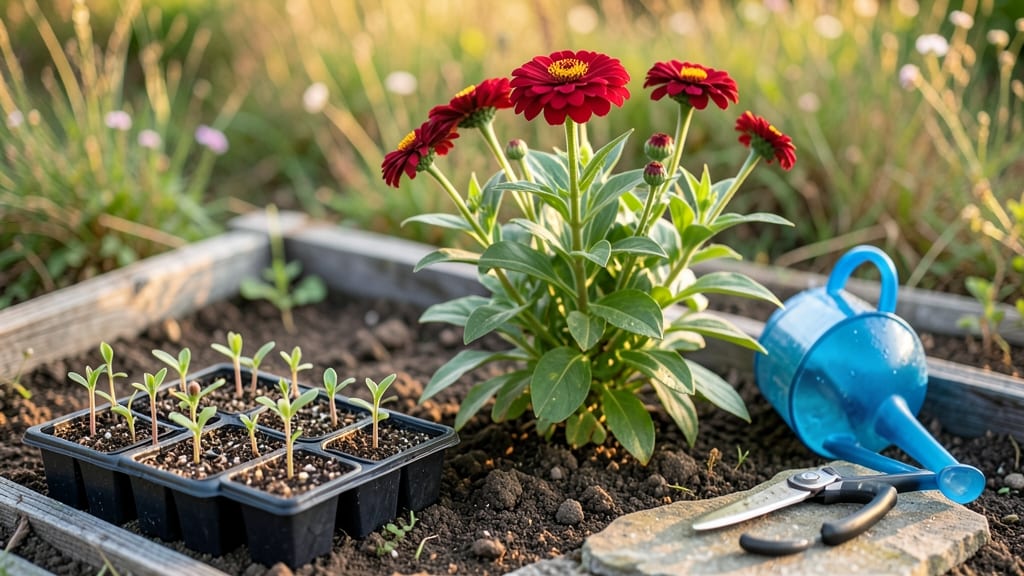
Succession planting zinnias guarantees a summer-long parade of color instead of a single burst of blooms. 🌻 I learned the hard way that one planting means one glorious month of flowers—then nothing until next year.
The secret is simple: sow seeds every 2-3 weeks from spring until midsummer, and your garden will stay vibrant until frost.
You’ll need a sunny spot with well-draining soil, zinnias that self-seed easily (like ‘Benary’s Giant’ or ‘Profusion’), and a small bag of seeds. Spacing matters too—plant seeds 6-12 inches apart in rows 18 inches apart.
This method works in any climate, but adjust timing: start earlier in warm zones and later in cooler ones to avoid frost damage.
By staggering plantings, you’ll enjoy continuous blooms from June through October. The flowers attract pollinators, deter pests like aphids, and keep your garden looking fresh longer than any single planting ever could. Plus, the later batches often self-seed for next year’s show.
Pro tip: Mark your planting dates with stakes or a garden journal. If you forget, just watch the first batch fade—it’s nature’s reminder to start the next! The payoff is worth the small effort, and your neighbors will wonder how you keep zinnias blooming all season.
📚 In This Guide
- What you need
- Instructions
- Tips and common mistakes
- Wrapping up and next steps
What you need
- ● Zinnia seeds: Choose fast-maturing varieties (e.g., Profusion Series or Benary’s Giant) for quick blooms. Aim for 2–3 packets (50–100 seeds per packet) to ensure a continuous supply.
- ● Well-draining potting mix or garden soil: 1–2 cubic yards (amend with compost for fertility).
- ● Garden space or containers: For in-ground planting: 12–18 inches of spacing per plant in full sun (6+ hours/day).
- ● For containers: 5–7-inch pots per plant (use at least 6–8 containers for succession batches).
- ● Watering can or hose with a gentle nozzle: Zinnias need 1 inch of water per week (more in extreme heat).
- ● Fertilizer: Balanced 10-10-10 or 5-10-10 (apply at planting and mid-season).
- ● Plant markers or labels: 20–30 sticks to track planting dates and varieties.
- ● Hand trowel or transplanting spade (for digging small holes).
- ● Pruning shears or scissors (to deadhead spent blooms and encourage regrowth).
- ● Gloves (to protect hands from thorns on some varieties).
- ○ Optional but handy: Seedling trays (for starting indoors 4–6 weeks before last frost).
- ● Row cover or shade cloth (to protect young seedlings from pests or heat).
- ● Mulch (straw or shredded leaves to retain moisture).
- ● Weather watch: Plant when soil temps are at least 55°F (after last frost date in your zone).
- ● Sunlight audit: Confirm your garden spot gets full sun (zinnias will sulk in shade!).
- ● Succession schedule: Plan to sow new batches every 2–3 weeks (adjust based on your climate).
Step-by-Step instructions for succession planting zinnias
Here's how to stretch your zinnia season from spring until frost with minimal extra work.
🌱 Step 1: Select Your Zinnia Varieties and Planting Schedule
Zinnias come in early, mid, and late-season varieties. For nonstop blooms, I plant three rounds spaced 3 weeks apart. Start with early varieties like 'Thumbelina' or 'Crystal' for first color, then move to mid-season 'Benary's Giant' or 'Profusion', and finish with late bloomers like 'Zahara' or 'Candy Cane'. This ensures flowers just as one batch fades.
Check your frost dates—plant the first round 2-3 weeks before your last spring frost. The final planting should go in 6-8 weeks before the first fall frost. I always mark these dates on my calendar so I don't forget. Zinnias grow fast, and you want each batch to mature before the next round is ready.
🪴 Step 2: Prepare the Planting Site for Each Round
Zinnias thrive in full sun (6+ hours daily) and well-draining soil. Before planting each new round, loosen the soil to 6 inches deep with a garden fork. Mix in 1 cup of 5-10-10 fertilizer per 10 square feet to give each new batch a nutrient boost. I like to add a handful of compost too—it improves drainage while feeding roots.
Space seeds 6-12 inches apart depending on variety (dwarf types need less space). Plant seeds ¼ inch deep—they won't germinate if buried too deeply. Water gently after planting, keeping the soil consistently moist until germination. You'll see sprouts in 7-14 days if temperatures stay above 60°F.
☀️ Step 3: Maintain Consistent Care Through Each Planting Round
Once seedlings emerge, thin to the strongest plant per spot, leaving 6-12 inches between stems. Deadhead spent blooms immediately to encourage more flowers—this is key for succession planting. I pinch off faded blooms with my fingers while watering, so I don't forget. Water at the base 1 inch per week, increasing to 1.5 inches during hot spells.
Watch for powdery mildew in humid weather. If you see white powder on leaves, spray with a mix of 1 tablespoon baking soda, 1 quart water, and a drop of dish soap. Space your plantings so older zinnias are past their peak when new ones are just starting—this prevents disease from spreading between batches.
⏰ Step 4: Time Your Final Planting for Late-Season Color
The last planting is your secret to fall color. Choose heat-tolerant varieties like 'Zahara' or 'Candy Cane' for this round. Plant them 6-8 weeks before your first fall frost—they'll bloom right up until cold weather hits. I always add a handful of slow-release fertilizer when planting this final batch to give them extra strength for late-season growth.
Protect these late bloomers with a lightweight row cover if frost threatens early. Even a light frost won't kill established zinnias, but it will damage tender new growth. You'll be amazed at how fresh these late bloomers look compared to other annuals that quit in September.
✂️ Step 5: Harvest and Preserve Blooms for Year-Round Enjoyment
Cut stems when 2/3 of the buds are open for the longest vase life. Harvest in the early morning when blooms are fully hydrated. Strip lower leaves and place stems in lukewarm water immediately—this prevents air bubbles from blocking water uptake. Change water every 2-3 days for maximum freshness.
For dried flowers, hang stems upside down in a dark, dry place. Once completely dry, arrange them in low vases for winter color. I always save a few stems from each planting round to dry—it's a great way to enjoy your succession planting long after the growing season ends.
Tips & tricks for perfect succession planting zinnias
A few simple strategies can transform your zinnia garden from seasonal bursts of color to a continuous floral display. Here's what I've learned after years of perfecting this method.
Variety Spacing Secret: When planning your three rounds spaced 3 weeks apart, stagger the varieties by height. Place taller varieties like 'Benary's Giant' in the first round—they'll mature just as your shorter 'Thumbelina' varieties from later rounds reach their peak. This creates a layered effect that hides gaps between plantings and makes your garden look fuller throughout the season.
Soil Prep Strategy: The 6-inch deep soil loosening in Step 2 isn't just about roots—it's about creating air pockets that prevent soil compaction. I take this a step further by adding a 1-inch layer of coarse sand to heavy clay soils before mixing in compost. This improves drainage dramatically, especially important for zinnias which hate soggy roots. The 5-10-10 fertilizer ratio gives them exactly the right balance of nutrients without burning tender seedlings.
Germination Timing: Those 7-14 days for germination at 60°F+ can feel like forever, but there's a trick to speed things up. After planting seeds ¼ inch deep, cover the area with clear plastic wrap or a humidity dome. This creates a mini greenhouse effect that can cut germination time by half. Just remember to remove the cover once sprouts appear to prevent mold.
Deadheading Discipline: The key to continuous blooms lies in Step 3's deadheading instruction—but here's the secret most people miss. Instead of just pinching off faded blooms, look for the first set of leaves below the flower head. Cut just above this leaf node. This encourages new growth from that spot, giving you two flowers where you previously had one. I do this every morning with my coffee, and it makes a huge difference in my flower count.
Pro Tips for Succession Planting Zinnias
- A few simple strategies can transform your zinnia garden from seasonal bursts of color to a continuous floral display.
- Variety Spacing Secret: When planning your three rounds spaced 3 weeks apart, stagger the varieties by height.
- Soil Prep Strategy: The 6-inch deep soil loosening in Step 2 isn't just about roots—it's about creating air pockets that prevent soil compaction.
Frequently asked questions
Got questions about keeping your zinnias blooming all season long?
Here are answers to the most common concerns—so you can enjoy nonstop color with ease!
What’s the best spacing for succession planting zinnias?
Zinnias thrive with 12–18 inches between plants when directly sowing. If transplanting, space them 8–12 inches apart to allow airflow and reduce disease risk. Crowding can lead to leggy stems and fewer blooms, so don’t skimp on space!
How often should I sow new zinnias for continuous blooms?
For a steady supply of flowers, sow seeds every 2–3 weeks after the last frost until 6–8 weeks before your first fall frost. This staggered approach ensures blooms overlap, creating a seamless color show from spring to frost.
Can I succession plant zinnias in hot climates?
Zinnias are heat-tolerant and even thrive in summer’s peak. Just water deeply but infrequently (let soil dry between waterings) to prevent fungal issues. In extreme heat, provide afternoon shade for young seedlings until they establish roots.
Why aren’t my zinnias blooming after succession planting?
Common culprits include over-fertilizing with nitrogen (promotes foliage, not flowers), poor sunlight (zinnias need 6+ hours of sun daily), or pests like Japanese beetles. Try deadheading spent blooms and switching to a low-nitrogen, high-phosphorus fertilizer to encourage flowers.
What’s a good alternative if zinnias don’t grow well in my area?
If zinnias struggle with your climate or soil, try cosmos, marigolds, or sunflowers—they’re also great for succession planting! Cosmos, in particular, self-seed easily and tolerate poor soil, making them a low-maintenance swap for zinnias.
Wrapping up and next steps
Succession planting zinnias is your ticket to a nonstop parade of color that keeps your garden vibrant from spring until frost! 🌸 By staggering plantings every 2–3 weeks and following a few simple tips, you’ll enjoy blooms for months—no gaps, no regrets.
Whether you’re a seasoned gardener or just starting, this method is game-changing for low-maintenance beauty.
Ready to dive in? Start with your first batch this week—grab seeds, mark your calendar, and watch your garden transform into a living masterpiece. Happy planting! 🌱