
Aphids
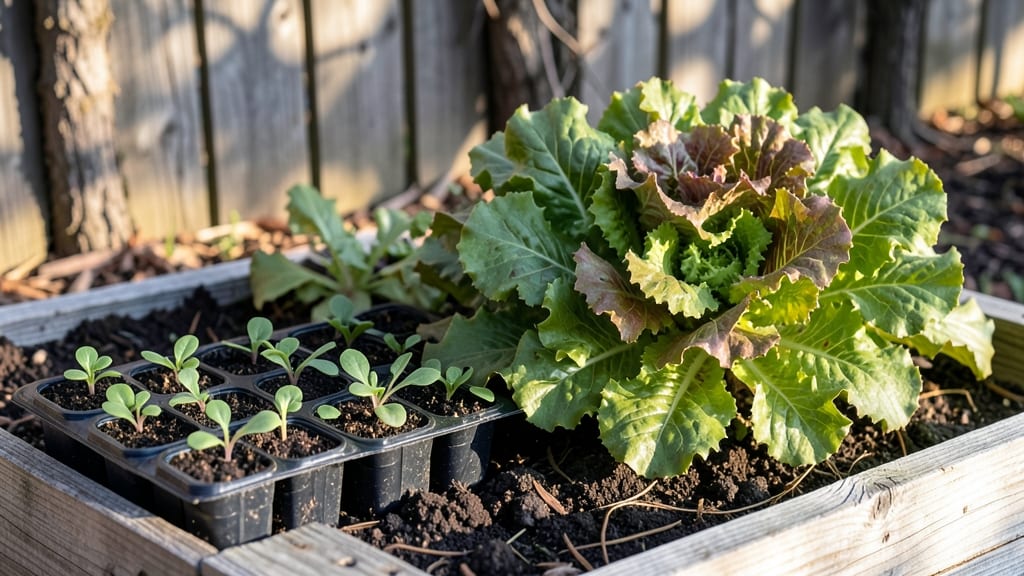
Succession planting lettuce means fresh, crisp leaves straight from your garden for months instead of weeks—something I learned the hard way after watching my first crop bolt in June heat.
The trick isn’t complicated: you plant small batches every 2-3 weeks, letting each group mature while the next one takes over. My 2-foot-wide raised bed now produces more lettuce than my old full-season planting ever did, and I never run out of salad greens.
You’ll need quick-growing varieties like 'Black Seeded Simpson' or 'Buttercrunch' for reliable results, plus a shady spot or afternoon shade cloth once summer arrives. Start with just 10-12 seeds every 14 days, thinning to 6-8 inches apart as they grow.
The key is timing—plant early spring varieties in March, heat-tolerant types in June, and cold-hardy ones in September for winter harvests. Even in small spaces, this method works.
By mid-summer, you’ll be harvesting tender leaves while new seedlings take over, creating a loop that keeps your kitchen stocked. The flavor stays sweeter too, since you’re picking when the plants are young and vibrant.
Plus, you avoid the disappointment of a single, short-lived harvest. This is how I went from one sad head of lettuce to a year-round supply in just one season.
Works for containers too—just use 5-gallon pots for each batch. The real secret? Pay attention to your local frost dates and adjust your schedule. Once you master it, you’ll wonder why you ever planted lettuce all at once. Let’s get those seeds in the ground!
📚 In This Guide
- What you need
- Instructions
- Tips and common mistakes
- Wrapping up and next steps
What you need
- ● Lettuce seeds: 1–2 packets of fast-maturing varieties (e.g., Buttercrunch, Romaine, or Leaf Lettuce)—choose heat-tolerant types for summer plantings.
- ● Growing space: Containers: 4–6" deep pots (4–6 plants per pot) or raised beds (12–18" deep).
- ● In-ground beds: 12–18" wide rows (space seeds 6–12" apart).
- ● Growing medium: High-quality potting mix or well-draining garden soil (amend with compost for fertility).
- ● Watering tools: Watering can with a fine rose or drip irrigation setup.
- ● Fertilizer: Balanced organic fertilizer (5-5-5 or 10-10-10) or compost tea.
- ● Planting tools: Hand trowel or seedling tray for precision planting.
- ● Row marker or stakes to track planting dates.
- ● Shade cloth: 30–50% shade fabric for summer plantings (prevents bolting).
- ● Mulch: Straw or shredded leaves to retain moisture and suppress weeds.
- ● Row covers: Lightweight fabric to protect seedlings from pests (e.g., aphids).
- ● Calendar or app: To track planting intervals (every 2–3 weeks for continuous harvests).
Step-by-Step instructions for succession planting lettuce
Here’s how to keep your garden producing crisp, fresh lettuce all season long.
Prepare Your Planting Site
Lettuce thrives in cool weather and well-drained soil. Choose a location that gets 4-6 hours of sunlight daily—morning sun is ideal to prevent bolting. Work the soil to a depth of 6 inches, removing any rocks or debris. If your soil is heavy clay, mix in 2 inches of compost to improve drainage and fertility. Lettuce prefers slightly acidic soil with a pH between 6.0 and 7.0, so test your soil if possible.
Since lettuce grows quickly, you’ll want to keep the area weed-free. Pull any existing weeds before planting, as they’ll compete for nutrients and space. If you’re reusing a garden bed, rotate crops—avoid planting lettuce in the same spot where other leafy greens grew the previous year to prevent disease buildup.
Time Your Plantings for Continuous Harvests
Succession planting relies on timing. Start your first batch 4-6 weeks before your last frost date in spring. For a nonstop harvest, plant new seeds every 2-3 weeks until 6-8 weeks before your first fall frost. This staggered approach ensures you always have mature lettuce ready to pick while younger plants grow behind them.
If you’re growing in containers, space your plantings 10-14 days apart to maximize yield. Lettuce varieties mature at different rates—leaf lettuce (like romaine or butterhead) typically takes 30-50 days, while head lettuce (like iceberg) takes 60-80 days. Adjust your planting schedule based on the variety you’re growing.
Sow Seeds Directly for Best Results
Lettuce doesn’t transplant well, so sow seeds directly into the garden. Scatter seeds ¼ inch deep and 1 inch apart in rows spaced 12-18 inches apart. For a continuous harvest, create a 2-foot-wide band and plant seeds in 3-inch sections, spacing each section 2-3 weeks apart. This creates a rolling harvest window.
Thin seedlings to 6-8 inches apart once they develop 2-3 true leaves. Use scissors to snip unwanted plants at soil level—this prevents disturbing the roots of nearby seedlings. Water gently after thinning to help the remaining plants establish.
Maintain Moisture and Protect from Heat
Lettuce needs consistent moisture to stay crisp. Water deeply once or twice a week, aiming for 1 inch of water per week. Use a soaker hose or drip irrigation to keep leaves dry and reduce disease risk. Avoid overhead watering, especially in the evening, as wet foliage invites fungal issues.
Watch for signs of bolting—lettuce sends up a flower stalk when stressed by heat or long days. If temperatures rise above 75°F, provide afternoon shade with a lightweight row cover or shade cloth. Mulch around plants with 2 inches of straw to retain moisture and keep roots cool.
Harvest Strategically for Longer Production
For a continuous supply, harvest outer leaves first when they reach 3-4 inches tall. Use clean scissors or fingers to snip or twist leaves at the base. This encourages the plant to produce more leaves, extending the harvest by 2-4 weeks. If you prefer whole heads, harvest when they’re firm and fully formed.
Remove entire plants when they bolt or become bitter. Replace them with a new batch of seeds to maintain your succession schedule. With this method, you’ll enjoy fresh lettuce from early spring through late fall—no gaps, no waste.
Tips & tricks for perfect succession planting lettuce
These practical tips will help you maximize your lettuce harvest without the common pitfalls that lead to wasted effort and bitter leaves.
Soil Preparation is Everything: In Step 1, when working the soil to a depth of 6 inches, don't stop at just removing rocks. Break up any compacted layers with a broadfork or garden fork to improve root penetration. If your soil tests outside the ideal 6.0-7.0 pH range, consider adding sulfur to lower pH or lime to raise it—lettuce is sensitive to soil chemistry. I've seen lettuce bolt prematurely when soil pH was off by just 0.5 points.
Timing Your Plantings Strategically: The 2-3 week spacing between plantings in Step 2 is your secret weapon for continuous harvests. To make this easier, mark your planting dates on a calendar right when you start. For leaf lettuce varieties that mature in 30-50 days, you'll want to stagger plantings so that while one batch is ready to harvest, another is just reaching maturity. This creates a perfect production pipeline without any gaps.
Thinning Technique Matters: When thinning seedlings in Step 3 to 6-8 inches apart, use clean scissors rather than pulling plants by hand. This prevents disturbing the roots of nearby seedlings and reduces the risk of disease transmission. I've found that thinning at the 2-3 true leaves stage gives plants enough room to develop strong root systems before competing for sunlight and nutrients.
Heat Management is Critical: The 75°F threshold mentioned in Step 4 is where lettuce starts to feel stressed. If you notice leaves turning bitter or plants sending up flower stalks before harvest, it's time to act. Lightweight row covers provide shade while still allowing sunlight through—think of them as a breathable umbrella for your plants. I've successfully extended my harvest season by 3-4 weeks using this simple technique during hot spells.
Pro Tips for Succession Planting Lettuce
- These practical tips will help you maximize your lettuce harvest without the common pitfalls that lead to wasted effort and bitter leaves.
- Soil Preparation is Everything: In Step 1, when working the soil to a depth of 6 inches, don't stop at just removing rocks.
- Timing Your Plantings Strategically: The 2-3 week spacing between plantings in Step 2 is your secret weapon for continuous harvests.
Frequently asked questions
Got questions about keeping your lettuce harvests flowing year-round?
Here are answers to the most common concerns about succession planting lettuce—so you can grow fresh greens without the guesswork!
What’s the best spacing for succession planting lettuce?
Start seeds or transplants 6–12 inches apart in rows spaced 12–18 inches apart. For small spaces, try cut-and-come-again varieties like Buttercrunch or Leaf Lettuce, which thrive in tighter clusters (4–6 inches apart). Thin seedlings to avoid overcrowding as they grow!
How often should I replant lettuce for continuous harvests?
Replant every 2–3 weeks in warm seasons (spring/fall) and 3–4 weeks in cooler weather. For cold-hardy varieties (like Winter Density), stretch it to 4–6 weeks. Use a planting calendar to track cycles—aim for overlapping maturity dates!
What’s the easiest way to prevent pests (like aphids) in succession-planted lettuce?
Aphids love tender lettuce! Rotate planting locations every few weeks to disrupt their life cycle. Spray leaves with neem oil or introduce ladybugs as natural predators. For severe infestations, remove heavily affected plants immediately to protect the rest of your crop.
Can I succession plant lettuce in hot summer months?
Yes—but choose heat-tolerant varieties like Jericho or Black Seeded Simpson. Provide afternoon shade (use row covers or plant near taller crops) and keep soil moist. Avoid bolting by harvesting outer leaves first and replanting in late summer for fall crops.
What if my lettuce bolts before I can harvest it?
Bolting (premature flowering) happens when days get long or temps rise. Harvest aggressively by cutting outer leaves to delay maturity. For future crops, use shade cloth (30–50%) and choose slow-bolting varieties like Romaine. Succession plant in partial shade or cooler microclimates (e.g., near north-facing walls).
Wrapping up and next steps
Mastering succession planting lettuce is your ticket to a bountiful, year-round harvest—even in tiny gardens! By staggering plantings and choosing the right varieties, you’ll enjoy crisp, fresh greens without the hassle of pests or wasted space. 🌱
Ready to put your new skills into action? Start with one small batch this week, then expand as you gain confidence. Soon, you’ll be the envy of your neighborhood with a never-ending salad bar—all thanks to smart planning and a little green thumb!