
Diseases
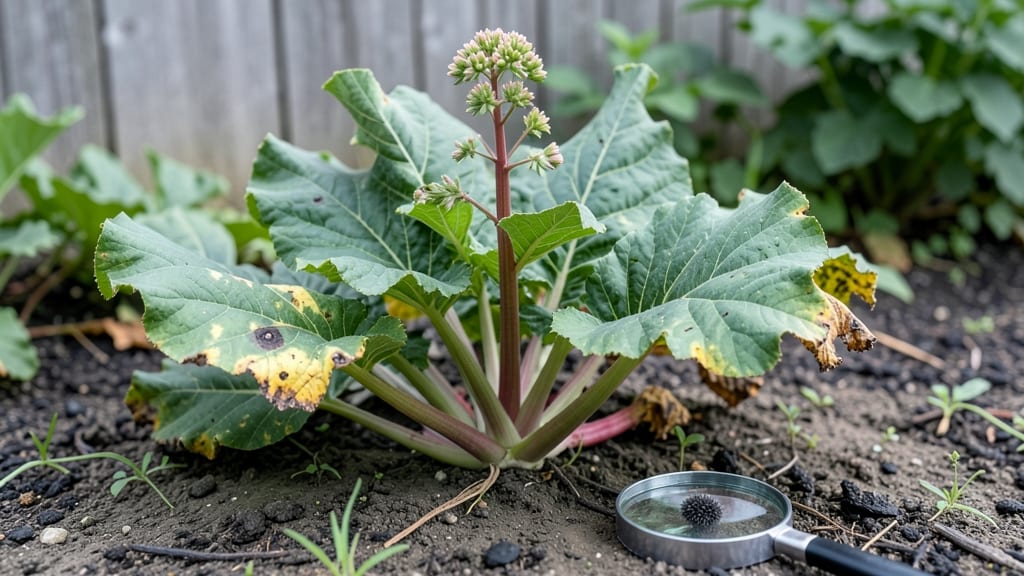
Rhubarb plant diseases can turn your vibrant stalks into a sad, spotted mess if you don't catch them early. 🌱 I've seen crown rot and leaf spots ruin entire patches—until I learned the telltale signs and how to stop them organically.
The key is spotting those first weird brown spots or yellowing leaves before they spread.
Most problems start with too much moisture or crowded plants. Fungal diseases like rust show up as orange pustules, while bacterial spots create water-soaked marks. The good news?
Proper spacing, good drainage, and copper sprays can save your crop without harsh chemicals. I'll show you exactly what to watch for and how to treat it fast.
📚 In This Guide
- What you need
- Instructions
- Tips and common mistakes
- Wrapping up and next steps
What you need
- ● Pruning shears or sharp scissors – Sterilized (rubbing alcohol or bleach solution) to avoid spreading pathogens. Quantity: 1 pair.
- ● Gloves (nitrile or rubber) – Protects your hands from sap and soil-borne diseases. Quantity: 1 pair.
- ● Spray bottle (16 oz) – For applying organic treatments like neem oil or baking soda spray.
- ● Garden trowel or small shovel – For digging around roots or removing infected soil. Quantity: 1.
- ○ Magnifying glass (optional but helpful) – To inspect tiny signs like powdery mildew spores or aphid clusters.
- ● pH test kit – Ensures your soil is in the ideal range (6.0–6.8) for rhubarb health. Quantity: 1.
- ● Labeling tags & marker – To mark infected plants for quarantine or treatment tracking.
- ● Neem oil (100% cold-pressed) – 16 oz bottle for fungal/bacterial diseases (mix 1 tbsp + 1 tsp mild soap per quart of water).
- ● Baking soda solution – 1 tbsp baking soda + 1 quart water + few drops of soap (for powdery mildew).
- ○ Copper fungicide (optional) – Ready-to-use spray for stubborn fungal issues like leaf spot.
- ● Compost or well-aged manure – 5–10 gallons to boost soil health and immunity.
- ● Diatomaceous earth (food-grade) – 1 lb bag for crawling pests like slugs or mites.
- ● Access to a well-ventilated workspace (diseased plants can spread spores quickly!).
- ● Knowledge of your rhubarb’s variety and growing conditions (e.g., sunlight, watering habits).
- ● A notebook or phone app to log symptoms and treatment dates.
How to identify and treat rhubarb plant diseases organically
Rhubarb is tough, but even hardy plants get sick—here’s how to spot trouble early and fix it without chemicals.
🌿 Step 1: Spot the Early Warning Signs
Start by inspecting your rhubarb’s leaves and stems for yellowing, wilting, or unusual spots. Fungal diseases like leaf spot show up as tan or brown spots with yellow halos on leaves, often in damp weather. Viruses may cause stunted growth or distorted leaves, while bacterial crown rot makes stems soft and mushy at the base.
Check the undersides of leaves too—powdery mildew looks like white, dusty patches, while rust appears as orange pustules. If you see any of these, act fast. The sooner you catch it, the easier it is to treat. I always examine plants after rain, since moisture triggers most fungal issues.
💧 Step 2: Improve Airflow and Reduce Moisture
Diseases thrive in crowded, damp conditions, so thin out your rhubarb plants if they’re growing too close together. Aim for 3 feet between crowns to let air circulate. Remove any dead or diseased leaves immediately—don’t compost them, either. Toss them in the trash instead to prevent spreading spores.
Water at the base of the plant in the morning so foliage dries quickly. Avoid overhead sprinkling, which keeps leaves wet too long. If you’ve had wet weather, consider adding 2-3 inches of mulch around the crown to protect roots while keeping soil dry.
✂️ Step 3: Apply Organic Fungicides and Treatments
For fungal issues like leaf spot or rust, spray plants with a mix of 1 tablespoon baking soda, 1 tablespoon vegetable oil, and 1 teaspoon mild liquid soap per gallon of water. Apply this solution on a dry, calm day in the early morning. Repeat every 7-10 days until new growth appears healthy.
If you suspect bacterial crown rot, dig up the plant and inspect the crown. Cut away any soft, discolored tissue with a sterilized knife. Replant in fresh soil and avoid watering until new growth appears. For viral infections, remove the entire plant—there’s no cure, and the virus spreads easily.
☀️ Step 4: Strengthen Plants for Next Season
After treating diseases, focus on preventing future outbreaks. Feed your rhubarb in early spring with a balanced organic fertilizer to boost its immune system. I use composted manure or a low-nitrogen blend to avoid encouraging leafy growth at the expense of roots.
Rotate planting locations if possible—don’t grow rhubarb in the same spot year after year. This breaks disease cycles in the soil. Also, choose disease-resistant varieties if your area has a history of fungal problems. Varieties like ‘Victoria’ or ‘Valentine’ handle stress better than others.
⏰ Step 5: Monitor and Maintain Year-Round
Keep an eye on your rhubarb throughout the growing season. Healthy plants have deep green leaves, sturdy stems, and no unusual spots. If you notice any changes, act quickly. I check plants weekly during peak growing months—it only takes a few minutes and saves hours of cleanup later.
In fall, clean up all plant debris and remove any remaining leaves or stems. This eliminates overwintering spots for fungi and bacteria. Store any remaining crowns in a cool, dry place for next year’s harvest. With consistent care, your rhubarb will bounce back stronger each season.
Tips & tricks for identifying and treating rhubarb plant diseases
Here's what I've learned after helping gardeners revive their rhubarb patches—these tricks make all the difference between losing plants and saving them.
The Early Detection Game-Changer: I can't stress this enough—check your rhubarb after every rainstorm. That's when fungal spores activate. Look for those yellow halos around brown spots on leaves (leaf spot) or the orange pustules on leaf undersides (rust). These signs appear within 24-48 hours of wet conditions, so don't wait until the next weekend to investigate. I keep a small magnifying glass handy for close-ups of suspicious spots.
Airflow is Non-Negotiable: In Step 2, when you're spacing those crowns 3 feet apart, think vertically too. Prune lower leaves to improve airflow through the plant. I've seen crowded rhubarb patches with perfect spacing between crowns but still get fungal issues because the plants were too dense. Also, avoid planting rhubarb near other leafy greens—it needs its own space to breathe.
Treatment Timing Matters: That baking soda spray in Step 3 needs consistent application—don't skip treatments just because the spots seem to disappear. Fungal diseases often go dormant but resurface when conditions are right. I set calendar reminders for every 7-10 days during peak growing season to ensure I don't miss a treatment. And always spray in the early morning when humidity is lower.
Crown Inspection Secrets: When checking for bacterial crown rot in Step 3, cut through the crown lengthwise to see the internal damage. Healthy tissue should be crisp and white, while infected areas will be soft, brown, and smelly. I keep a sterilized knife and rubbing alcohol handy for quick cleaning between plants. If you find rot, don't replant that crown—it's better to lose one plant than risk spreading the disease to your whole patch.
Pro Tips for Rhubarb Plant Diseases
- Here's what I've learned after helping gardeners revive their rhubarb patches—these tricks make all the difference between losing plants and saving them.
- The Early Detection Game-Changer: I can't stress this enough—check your rhubarb after every rainstorm.
- Airflow is Non-Negotiable: In Step 2, when you're spacing those crowns 3 feet apart, think vertically too.
Frequently asked questions
Got questions about rhubarb plant diseases?
You’re not alone—gardeners often struggle with spotting, treating, and preventing issues in their rhubarb patches. Here are answers to the most common concerns to keep your plants thriving!
How do I tell if my rhubarb leaves are diseased vs. just yellowing from age?
Yellowing leaves can be normal as rhubarb matures, but disease-related discoloration often includes dark spots, mold, or irregular patterns. Check for powdery mildew (white powder) or rust (orange pustules). If leaves wilt suddenly or stems rot, disease is likely the culprit.
When is the best time to treat rhubarb diseases organically?
Act early—as soon as you spot symptoms! Spring (before new growth) is ideal for preventative sprays like neem oil or copper fungicide. For active infections, treat immediately during dry, calm weather (morning or evening) to avoid spreading spores. Avoid watering leaves to reduce humidity.
What’s the most effective organic cure for rhubarb crown rot?
Crown rot (often caused by Phytophthora) is tricky, but organic solutions include:
- Improving drainage by amending soil with compost or sand.
- Applying a baking soda spray (1 tsp baking soda + 1 quart water + drop of soap) weekly.
- Removing infected plants and sterilizing tools with rubbing alcohol.
Can I still harvest rhubarb if it has a disease?
Only harvest healthy stalks from disease-free plants. If leaves or stems show signs of infection (e.g., black spots, mold), discard them to avoid spreading pathogens. Focus on prevention—remove debris after harvest and mulch with straw to deter soil-borne diseases.
What’s a good alternative if my rhubarb keeps getting diseases?
Try disease-resistant varieties like ‘Victoria’ or ‘German Wine.’ If rhubarb fails, consider alternative perennials like:
- Sorrel (similar tangy flavor, more resilient).
- Gooseberry bushes (hardier, fewer disease issues).
- Strawberries (easier to manage organically).
Wrapping up and next steps
Identifying and treating rhubarb plant diseases early can save your garden—and your harvest! 🌱 From fungal infections like Botrytis to bacterial leaf spot, proactive care with organic remedies keeps your rhubarb thriving. Remember, prevention (like proper spacing and sanitation) is just as important as treatment.
Ready to take action? Start by inspecting your plants weekly and applying the remedies that fit your garden’s needs. With patience and consistency, your rhubarb will reward you with vibrant, healthy growth for years to come! 🌿