
Pruning
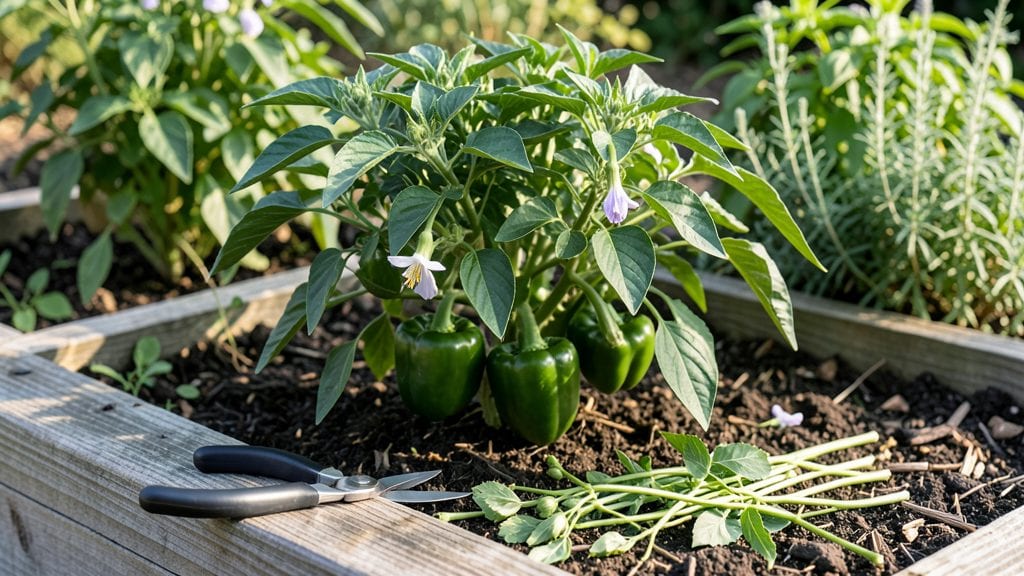
Pruning green pepper plants transforms a single plant into a year-round harvest machine—just three strategic cuts can double your yield and keep pests at bay. 🌱 I learned the hard way that skipping pruning means fewer peppers and more disease, but once I mastered the timing and technique, my plants produced so many peppers I had to give them away.
The key isn’t just cutting branches; it’s shaping the plant to focus energy where it counts.
You’ll need sharp pruners, a clean towel to disinfect them between cuts, and a sunny morning to work—pepper plants heal faster in bright light.
Start by removing any yellow or diseased leaves first, then focus on the three main cuts: trimming back leggy growth, opening up the center for airflow, and pinching off flower buds if you want bigger peppers later.
This method works for both bush and vine varieties, though vines need more aggressive pruning to control their sprawl.
The payoff is immediate: better air circulation means fewer fungal issues, and the plant directs its energy into producing larger, sweeter peppers instead of extra foliage. Within weeks, you’ll notice thicker stems and more flowers setting fruit.
My 3-cut system keeps plants productive for 6+ months, even in cooler weather, and cuts down on pests by reducing hiding spots for aphids and spider mites.
Here’s the secret: prune too early or too late, and you’ll stunt growth. Do it right after harvest or before new blooms appear, and you’ll see results in just 2-3 weeks.
The same rules apply whether you’re growing bell peppers, jalapeños, or poblano—just adjust the timing based on your climate. Let’s get those plants shaped for maximum harvest!
📚 In This Guide
- What you need
- Instructions
- Tips and common mistakes
- Wrapping up and next steps
What you need
- ● Pruning shears or bypass pruners: Sharp, clean, and sterilized (70% isopropyl alcohol works). Choose bypass-style (not anvil) to avoid crushing stems.
- ● Gloves: A pair of gardening gloves (nitrile or leather) to protect your hands from thorns and sap.
- ● Disinfectant solution: Mix 1 part bleach with 9 parts water (or use hydrogen peroxide) to sterilize tools between cuts.
- ○ Small bucket or bag: For collecting pruned branches (optional but helpful for composting or disposal).
- ● Garden twine or stakes: If your plant needs support after pruning (e.g., for heavy fruit loads).
- ● Hand pruners (smaller size): For tighter spaces or delicate trimming.
- ● Sharp knife or razor blade: For very precise cuts on small stems (sterilize first!).
- ● Garden hose or spray bottle: To rinse tools and clean sap off blades post-pruning.
- ○ Pruning sealant (optional): Like tree wound dressing if you’re concerned about large cuts (though peppers often heal fine without it).
How to prune green pepper plants for bigger harvests
Pruning peppers isn't about cutting back—it's about directing energy where it matters most. Here's how I shape plants for more fruit and stronger growth.
✂️ Step 1: Remove Suckers for Stronger Growth
Suckers are the small shoots that grow where the stem meets a branch. These little energy vampires steal nutrients from your peppers. I prune them off with clean, sharp scissors every 2-3 weeks during the growing season. Look for the tiny shoots growing at a 45-degree angle—those are your targets.
Don't worry about hurting the plant—pepper plants actually reward you for this. After removing suckers, the plant focuses its energy on existing branches, leading to thicker stems and more fruit. I always work in the morning when the plants are dry, so cuts heal faster.
☀️ Step 2: Trim Leggy Branches to Improve Airflow
If your pepper plant stretches too tall with sparse leaves, it's time for a trim. Leggy branches block sunlight and trap moisture, inviting fungal diseases. Cut back any stems that grow taller than 18 inches or have leaves spaced more than 6 inches apart.
Make your cuts just above a leaf node where new growth can sprout. This encourages bushier growth. I also remove any branches growing inward—they'll never get enough sun to produce fruit. After trimming, step back and admire your plant's new shape—it should look balanced and open.
🌿 Step 3: Prune Old Fruit Stems for Continuous Production
Here's the secret to year-round peppers: prune spent fruit stems. After harvesting, cut the stem ¼ inch above the fruit's base. This signals the plant to produce new flowers and fruit from lower branches. I do this every 2 weeks during peak production months.
Don't overdo it—leave at least 4-5 healthy leaves on each branch to keep photosynthesis going. You'll notice new flower buds forming within 7-10 days of pruning. This is your plant's way of saying "thank you" for giving it a fresh start.
⏰ Step 4: Clean Up After Harvest Season
When fall arrives and your peppers slow down, it's time for a final prune. Remove all dead leaves, diseased stems, and any remaining fruit. Cut back branches that grew too long during the season to 12-18 inches** tall. This prevents pests from overwintering in your plant.
I also sterilize my pruning tools with rubbing alcohol after each cut to prevent spreading disease. Wrap your plant in frost cloth if winter comes early—this protects it until spring. With proper winter care, your pepper plant will bounce back stronger than ever next season.
Tips & tricks for perfect green pepper plant pruning
These simple tricks will transform your pepper plants into fruit-producing powerhouses with minimal effort.
The Timing Secret: I always schedule my pruning sessions for the morning after a dry night. The plants are fully hydrated, making cuts heal faster. If you must prune in the afternoon, wait until at least 2 hours before sunset so the cuts have time to dry and seal before evening moisture sets in.
Tool Prep Matters: Sterilize your pruning tools with rubbing alcohol between cuts—this prevents spreading disease from one part of the plant to another. I keep a small bottle of 70% isopropyl alcohol in my gardening toolkit and wipe tools after every 3-4 cuts during a session. Sharp, clean tools also make cuts heal more quickly and look cleaner.
Visual Cues for Pruning: When trimming leggy branches in Step 2, look for the classic "V" shape where leaves meet the stem—that's your leaf node target. For suckers in Step 1, the 45-degree angle is your clue: any shoot growing at that angle is a sucker. These visual cues help you prune with confidence, even if you're new to gardening.
Seasonal Strategy: Don't stop pruning when summer ends! In Step 4, that final fall cleanup prevents pests from overwintering in your garden. I also take this opportunity to take stem cuttings from my healthiest branches—these can root in water and become next year's plants. It's a free way to expand your garden!
Pro Tips for Pruning Green Pepper Plants
- These simple tricks will transform your pepper plants into fruit-producing powerhouses with minimal effort.
- The Timing Secret: I always schedule my pruning sessions for the morning after a dry night.
- Tool Prep Matters: Sterilize your pruning tools with rubbing alcohol between cuts—this prevents spreading disease from one part of the plant to another.
Frequently asked questions
Got questions about pruning your green pepper plants? You’re not alone! Here are some of the most common concerns—and their straightforward answers—to help you keep your peppers thriving all year.
When is the best time to prune green pepper plants?
Prune early in the morning when the plants are still cool and hydrated (before 9 AM). Avoid pruning during peak heat or after heavy rain, as it can stress the plant. Focus on spring (new growth phase) and late summer (post-harvest) for optimal results.
How much should I cut off my pepper plants?
Remove 1/3 of the plant’s height during the first prune, then 10-20% of new growth in subsequent cuts. Never trim more than 25% of the foliage at once—this can shock the plant. Target yellowing leaves, dead branches, or overcrowded stems first.
What if I prune too late in the season?
Late pruning (after 6-8 weeks before the first frost) can stunt new growth and reduce next year’s yield. If you miss the window, focus on removing only dead/diseased foliage and mulching heavily to protect roots. Peppers are perennial in warm climates, so timing matters!
Can I use pruned pepper stems for anything else?
Dry and crush
pruned stems to make organic mulch or compost them for nutrient-rich soil. You can also propagate cuttings in water (root in 2-3 weeks) to grow new plants—just use healthy, non-flowering stems!
Should I prune if my peppers have pests?
Yes, but strategically. Remove infested leaves first (especially near the base), then prune 1-2 inches above the damage** to prevent spread. Avoid heavy pruning—pests thrive on stressed plants. Follow up with neem oil or insecticidal soap for extra protection.
Pro Tip:
Use sterilized pruners (wipe with rubbing alcohol) to prevent disease spread. And remember: Less is more—pepper plants bounce back faster with gentle, frequent prunes than one aggressive trim!
Wrapping up and next steps
Pruning your green pepper plants is a game-changer for bigger harvests and healthier growth—and you’ve got all the tools to master it! 🌱 By focusing on three strategic cuts (removing suckers, pruning leaves, and trimming branches), you’ll encourage stronger stems, better airflow, and a steady supply of peppers year-round.
Now that you’re armed with the know-how, there’s no better time to roll up your sleeves and give your plants the TLC they deserve.
Ready to take the next step? Pick a sunny day, grab your pruners, and start pruning! Your future pepper harvests will thank you—one strategic snip at a time. 🌶️✨