
Trees
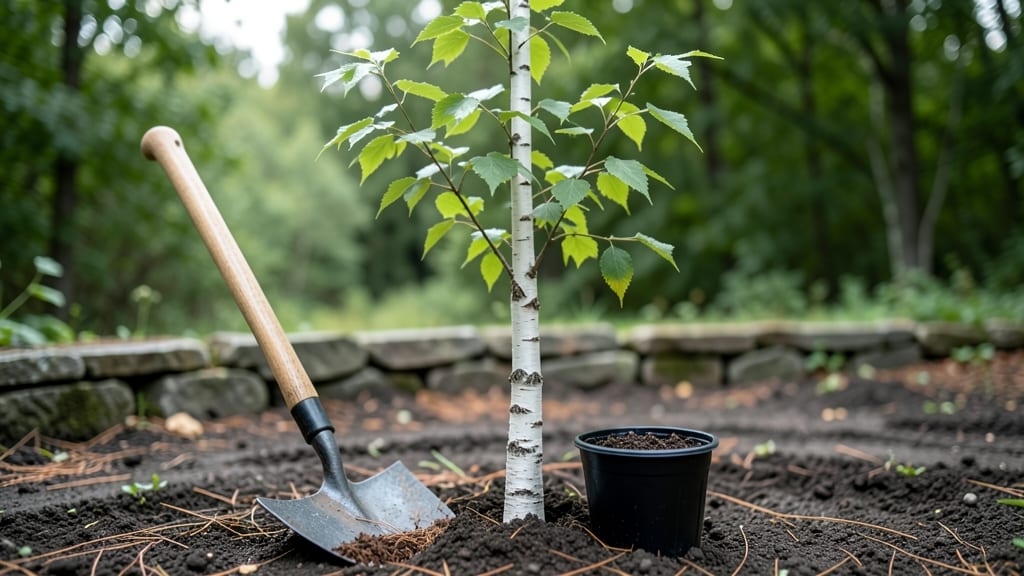
Planting birch trees gives you fast-growing shade that transforms bare spots into serene woodland corners with minimal fuss. I’ve planted paper birch, yellow birch, and river birch—each brings that signature white bark and delicate foliage, but they all share one trait: they grow 2-3 feet per year once established.
The key to that speed? Getting them in the ground at the right time and giving them the right start.
Timing matters more than you’d think—spring or early fall planting gives roots time to settle before extreme heat or freeze. Dig holes twice as wide as the root ball but no deeper, and mix in compost to loosen the soil.
Birch trees hate soggy feet, so if your yard stays wet, amend with sand or plant on a slight mound. Spacing depends on variety: paper birch needs 15-20 feet apart, while river birch can handle 10-15 feet for a denser look.
Watering’s the secret weapon for fast growth. Keep the soil moist for the first two weeks, then taper to once a week unless it’s a dry spell.
Mulch with wood chips to lock in moisture and block weeds, but keep mulch 3 inches away from the trunk to prevent rot. Within a year, you’ll see that signature birch silhouette taking shape—tall, slender, and impossibly graceful.
Here’s the best part: birch trees need almost no pruning. Just remove dead branches in late winter, and you’re done. They handle pests better than most shade trees, though birch borers can be a problem—watch for holes in the bark and treat with neem oil if you spot them.
Once they’re established, they’re basically set-and-forget shade makers.
📚 In This Guide
- What you need
- Instructions
- Tips and common mistakes
- Wrapping up and next steps
What you need
- ● Birch tree seedlings or saplings: Choose 1-3 (depending on your space) healthy, bare-root or container-grown Betula species (e.g., Betula papyrifera for paper birch or Betula pendula for weeping birch). Opt for 1-2 year old trees for faster establishment.
- ● Shovel or spade: A sturdy round-point shovel (18-24 inches wide) for digging holes efficiently.
- ● Garden trowel: For loosening soil around roots and backfilling.
- ● Measuring tape or ruler: To ensure proper spacing (15-25 feet apart for mature trees, depending on variety).
- ● Native or well-draining soil: Birch trees thrive in sandy, loamy, or slightly acidic soil (pH 4.5-7.0). Amend heavy clay with compost or peat moss if needed.
- ● Organic mulch: 2-4 inches of wood chips, straw, or pine needles to retain moisture and suppress weeds.
- ● Watering can or hose with nozzle: A gentle spray setting to avoid displacing soil around roots.
- ○ Tree stakes (optional but recommended): 2-3 biodegradable stakes (4-6 feet tall) and soft tree ties to support young trees in windy areas.
- ● Soil test kit: Check pH and nutrient levels—birch trees prefer moderately fertile soil.
- ● Mycorrhizal fungi: A root inoculant to boost early growth (especially for bare-root saplings).
- ● Slow-release fertilizer: A balanced 10-10-10 or acidic fertilizer (like 16-4-8) to give young trees a nutrient boost.
- ● Epsom salt (magnesium sulfate): 1 tablespoon mixed with water for chlorosis-prone varieties (e.g., yellowing leaves).
- ● Tree guard or protective wrap: To shield trunks from rodents or sun scorch in the first year.
- ● Choose a sunny to partially shaded location with well-draining soil (avoid waterlogged areas).
- ● Schedule planting during dormant seasons (early spring or fall) for best survival rates.
- ● Call 811 to check for underground utilities if planting near sidewalks or driveways.
- ● Plan for long-term spacing: Birch trees can grow 50-75 feet tall—leave room to grow!
Step-by-Step instructions for planting birch trees
Here’s the straightforward method I’ve used to establish healthy birch trees with minimal fuss.
Choose and Prepare the Planting Site
Birch trees thrive in moist, well-draining soil with partial to full shade, though they tolerate some sun. Avoid low spots where water pools—birches hate soggy roots. Test your site by digging a 12-inch deep hole and checking the soil. If it feels compacted or clay-heavy, mix in 2-3 inches of compost from your materials list to improve drainage.
Birches grow best where they won’t be crowded. Space each tree 15-20 feet apart to allow their canopies to spread without competing for nutrients. Mark the spots with stakes so you don’t lose track while digging. I like to plant them in early spring or fall when temperatures are mild—this gives roots time to establish before extreme heat or cold.
Dig the Hole and Amend the Soil
Dig a hole twice as wide as the root ball but no deeper—birch roots prefer to sit at the same depth they grew in the nursery. Use the shovel to loosen the sides of the hole so roots can spread easily. If your soil is sandy, add a 5-gallon bucket of compost to the bottom to help retain moisture.
Gently remove the birch tree from its container and loosen any circling roots with your fingers. Place the tree in the hole so the top of the root ball sits 1-2 inches below the surrounding soil level. This prevents the trunk from drying out as it grows. Fill the hole with the remaining soil, pressing lightly to remove air pockets but not compacting too firmly.
Water Thoroughly and Mulch
Water the tree deeply—enough so 6 inches of soil feels moist all the way through. Use the garden hose with a slow, steady stream to avoid disturbing the soil around the roots. Birches need consistent moisture, especially in their first year, so check the soil every 3-4 days during dry spells. If the top 2 inches feel dry, water again.
Spread 3 inches of mulch in a 3-foot diameter circle around the base, keeping it 6 inches away from the trunk to prevent rot. Use the wood chips from your materials list—they’ll help retain moisture and suppress weeds while breaking down slowly. Avoid piling mulch against the trunk; this can trap moisture and invite pests.
Stake and Protect Young Trees
If your birch tree is tall or top-heavy, use the stakes and twine to provide temporary support. Drive the stakes 6 inches into the ground on opposite sides of the tree, then loosely tie the trunk to them with the twine. Don’t cinch it too tight—you want the tree to sway slightly in the wind to strengthen its trunk. Leave the stakes in place for the first year, then remove them to encourage natural stability.
Young birch trees are sensitive to deer and rabbits. If you’re in an area with browsing animals, wrap the trunk with tree guard or use a wire cage around the base. Check the protection monthly to ensure it hasn’t loosened or become damaged. Birches grow quickly, so the first year is critical for establishing a strong root system before they outgrow common pests.
Monitor and Maintain Through the First Year
Birches are low-maintenance once established, but the first year requires a little extra attention. Fertilize lightly in early spring with a balanced, slow-release fertilizer—just ½ cup per tree—to encourage root growth without overstimulating foliage. Avoid heavy fertilizers, which can burn tender roots.
Watch for signs of stress: yellowing leaves often mean too much sun or dry soil, while brown edges can signal overwatering or poor drainage. Prune only to remove dead or damaged branches—never trim healthy growth. By the end of the first year, your birch should have strong, white bark and vigorous new shoots, signaling it’s well on its way to becoming a fast-growing shade provider.
Tips & tricks for planting birch trees
Planting birch trees successfully comes down to a few key details that make all the difference in their long-term health and growth speed. Here’s what I’ve learned from years of working with these fast-growing shade trees.
Soil Depth and Root Ball Placement: In Step 2, when you’re positioning your birch tree, pay special attention to the root ball depth. The top should sit 1-2 inches below the surrounding soil level—this prevents the trunk from drying out as it grows. I’ve seen many gardeners plant too deep, which can suffocate the roots, or too shallow, which makes the tree unstable. Use a level to check before backfilling.
Watering Strategy: Birches need consistent moisture, especially in their first year, but overwatering is just as harmful as underwatering. In Step 3, when you’re watering deeply to moisten 6 inches of soil, use your finger to check moisture every 3-4 days during dry spells. If the top 2 inches feel dry, that’s your cue to water again. I’ve found that early morning watering minimizes evaporation and keeps roots happy.
Mulching Technique: The 3-inch layer of mulch in a 3-foot diameter circle around your tree is crucial for moisture retention and weed suppression, but placement matters. Keep it 6 inches away from the trunk to prevent rot. I’ve used wood chips exclusively because they break down slowly and improve soil quality over time. If you’re using a different mulch, make sure it’s organic and free of weeds.
Staking Wisdom: If you’re staking your birch tree in Step 4, leave the stakes in place for the first year only. The goal is to provide temporary support while allowing the tree to sway slightly in the wind—this actually strengthens the trunk. I’ve seen too many gardeners leave stakes in too long, which can girdle the tree as it grows. Use soft twine and check it monthly to ensure it’s not too tight.
Pro Tips for Planting Birch Trees
- Planting birch trees successfully comes down to a few key details that make all the difference in their long-term health and growth speed.
- Soil Depth and Root Ball Placement: In Step 2, when you’re positioning your birch tree, pay special attention to the root ball depth.
- Watering Strategy: Birches need consistent moisture, especially in their first year, but overwatering is just as harmful as underwatering.
Frequently asked questions
Got questions about planting birch trees? You’re not alone! Here are some of the most common concerns—plus expert answers to help you grow a thriving grove with ease.
When is the best time to plant birch trees?
Plant birch trees in early spring (just as buds swell) or early fall (4–6 weeks before frost). Avoid summer heat or winter cold—both stress young roots. If you must plant in summer, water deeply daily and mulch heavily to retain moisture.
How often should I water newly planted birch trees?
Water deeply 2–3 times per week for the first year, soaking the soil 12–18 inches down. After that, birches are drought-tolerant, but young trees need consistent moisture. Pro tip: Use a soaker hose to avoid wetting leaves (which can cause fungal issues).
Can birch trees grow in clay soil?
Yes! Birches adapt well to clay, sandy, or rocky soil, but they prefer well-draining conditions. If your soil is heavy clay, amend it with compost or plant on a slight slope to prevent waterlogging. Their roots are shallow, so avoid compacted areas.
What pests or diseases should I watch for?
Birches are generally low-maintenance, but keep an eye out for:
- Bronze birch borer: Look for D-shaped holes or wilting leaves. Treat with beneficial nematodes or prune infested branches.
- Powdery mildew: White fungal growth on leaves? Space trees for airflow and apply neem oil if needed.
- Cankers: Remove infected bark with pruners and sterilize tools to prevent spread.
Most issues arise from stress (overwatering, poor drainage), so healthy soil = happy trees!
How close can I plant birch trees to my house or fence?
Keep birches at least 15–20 feet from structures to avoid root intrusion or bark that peels against siding. Their roots spread widely but aren’t aggressive. For paper birches (with peeling bark), add 3–4 feet extra clearance to prevent debris buildup.
Are there fast-growing birch alternatives if mine aren’t thriving?
If your birch struggles, try these low-maintenance, fast-growing shade trees:
- Eastern White Pine: Tolerates poor soil, grows 12–24”/year.
- Green Ash: Handles wet soil, thrives in urban areas.
- Honey Locust: Drought-resistant, great for privacy screens.
- Black Walnut: Fast-growing but avoid planting near other trees (allelopathic roots).
Birches are hardy, but these options offer similar benefits with extra resilience!
Wrapping up and next steps
Planting birch trees is a rewarding way to add beauty, shade, and sustainability to your landscape—without the high-maintenance hassle! 🌳 Whether you’re drawn to their striking bark, fast growth, or eco-friendly benefits, these trees are a fantastic choice for gardens, yards, or even urban spaces.
With the right soil prep, spacing, and care (like mulching and watering), you’ll be enjoying their graceful presence in no time.
Ready to get started? Take the next step:
- 📅 Pick your planting season (spring or fall) and mark your calendar!
- 🛒 Grab your supplies (birch saplings, gloves, and tools) and head outdoors.
- 🌱 Share your progress—tag us in your birch tree journey!