Container Gardens
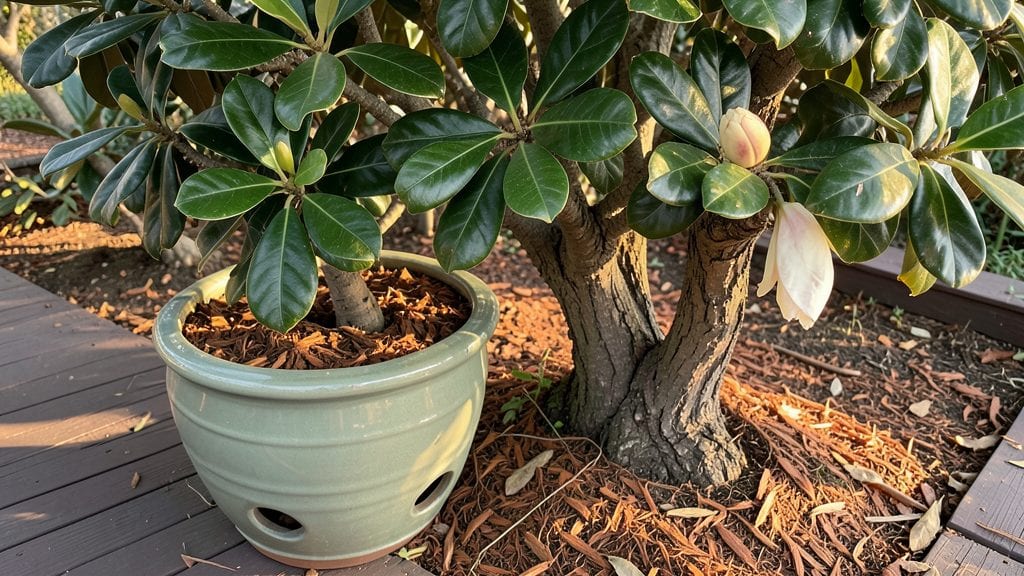
A magnolia potted plant in your yard brings fragrant spring blooms without the permanent commitment—some even grow 10 feet tall while thriving in a single pot. 🌸 I’ve grown these stately trees in containers for years.
The key isn’t just picking the right variety (like the dwarf ‘Little Gem’ or cold-hardy ‘Jane’) but creating the conditions that mimic their natural woodland roots.
You’ll need a 5-gallon minimum container for small varieties, 15+ gallons for larger ones, and soil that drains like a forest floor—equal parts potting mix, perlite, and compost. Most people overwater (magnolias hate soggy roots), so I check soil moisture by sticking my finger 2 inches deep before watering.
A south-facing spot with 6+ hours of sunlight keeps those iconic blooms coming, though some varieties tolerate partial shade.
By winter, your potted magnolia will reward you with glossy evergreen leaves and next year’s flower buds already forming. Pruning is simple: just remove dead branches in late winter and shape lightly to keep the canopy open.
The biggest challenge? Overwintering—wrap the pot in burlap and move it to a sheltered spot if temps drop below 10°F. With these adjustments, your magnolia thrives for decades.
Perfect for patios, small yards, or even large balconies—just remember that container size directly impacts how big your tree grows. Here’s how to keep it stunning season after season without the guesswork.
📚 In This Guide
- What you need
- Instructions
- Tips and common mistakes
- Wrapping up and next steps
What you need
- ● Magnolia potted plant: Choose a healthy specimen (preferably Magnolia grandiflora or Magnolia stellata for container gardening). Opt for a 3–5 gallon container if buying young or a 15+ gallon pot for mature plants.
- ● High-quality potting mix: Use a well-draining, acidic mix (pH 5.0–6.5). A blend of 50% peat moss or coconut coir, 30% perlite or pumice, and 20% compost works perfectly.
- ● Container: Select a durable, weather-resistant pot with drainage holes. Size depends on the plant’s age (see table below).
- ● Pruning tools: Bypass pruners (for clean cuts on stems up to ½ inch thick).
- ● Loppers (for thicker branches, if needed).
- ○ Sharp pruning saw (for mature wood, optional).
- ● Mulch: Organic mulch (e.g., pine bark or shredded leaves) to retain moisture and regulate soil temperature.
- ● Fertilizer: Slow-release acid-loving plant fertilizer (e.g., 8-3-9 or 10-10-10 formula) or organic options like fish emulsion.
- ● Watering can or hose with gentle spray nozzle (to avoid disturbing the soil).
- ● Soil moisture meter (to monitor watering needs without over/under-watering).
- ● Root stimulator (e.g., mycorrhizal fungi) for potted plants to boost root health.
- ● Plant support (stakes or cages) if your magnolia grows tall or top-heavy.
- ● Slow-release mosquito bits (to deter pests naturally).
- ● Decorative pot liner or saucer to catch excess water and enhance aesthetics.
Step-by-step instructions for growing magnolias in pots
Here’s how to cultivate a stunning potted magnolia that thrives indoors or on patios.
🪴 Step 1: Select the Right Pot and Soil Mix
Choose a large, sturdy container—at least 18-24 inches wide—with drainage holes to prevent root rot. Magnolias have extensive root systems, so a shallow but wide pot works best. I opt for unglazed ceramic or heavy plastic because they retain moisture without overheating in summer.
Use a well-draining potting mix designed for acid-loving plants, like azaleas or camellias. Amend it with 20% perlite or orchid bark to improve aeration. Avoid garden soil—it compacts too easily and suffocates roots. Fill the pot 1/3 full with the mix, leaving room for the root ball.
☀️ Step 2: Plant at the Correct Depth and Position
Dig a hole twice as wide as the root ball but no deeper than the top of the root flare. Gently remove the plant from its nursery container and loosen any circling roots with your fingers. Place it in the hole so the top of the root ball sits 1 inch below the pot’s rim—this prevents water pooling and stem rot.
Backfill with the amended potting mix, pressing lightly to eliminate air pockets. Water deeply until it drains freely from the holes. Magnolias need bright, indirect light—think 6-8 hours of morning sun and afternoon shade. A south-facing window works, but direct afternoon sun can scorch leaves. If indoors, rotate the pot quarter-turn weekly to encourage even growth.
💧 Step 3: Water and Fertilize for Optimal Growth
Water when the top 2 inches of soil feel dry—this usually means every 5-7 days, but adjust for humidity and temperature. Overwatering is the fastest way to kill a magnolia. I use room-temperature water to avoid shocking the roots, and I always water at the base, not overhead. Let excess water drain completely before adding more.
Feed with a balanced, acid-forming fertilizer (like 10-10-10 or 20-20-20) every 4-6 weeks during spring and summer. Reduce feeding in fall and winter—magnolias enter dormancy, and excess nutrients can burn roots. A slow-release fertilizer in early spring is my go-to for hassle-free care.
✂️ Step 4: Prune for Shape and Health
Prune only when necessary—magnolias bloom on last year’s growth, so heavy pruning reduces flowers. Remove dead, diseased, or crossing branches in late winter or early spring before buds swell. Use clean, sharp pruners and cut just above a bud or branch collar to encourage healing. Never prune more than 20% of the canopy in one season.
Shape the plant by thinning out crowded branches to improve airflow. This prevents fungal issues and lets light penetrate to the inner foliage. If you notice leggy growth, it’s a sign of insufficient light—move the pot closer to a bright window or supplement with a grow light for 12-14 hours daily.
⏰ Step 5: Overwinter for Long-Term Success
As temperatures drop below 50°F, move the magnolia to a cool but bright location, like a garage with natural light or a sunroom. Reduce watering to every 10-14 days, letting the soil dry more between waterings. Avoid drafts or heating vents—magnolias hate sudden temperature swings.
In late winter, inspect the plant for pests like scale or spider mites. Wipe leaves with a mild neem oil solution (1 tsp per quart of water) if you spot any. Resume regular care in early spring, and you’ll be rewarded with vibrant blooms and lush foliage year after year.
Tips & tricks for perfect potted magnolias
These insider strategies will help you avoid common pitfalls and maximize your magnolia's potential with minimal effort.
Pot Selection Wisdom: The 18-24 inch width requirement isn't arbitrary—magnolias develop extensive root systems that need room to spread horizontally. I've seen potted magnolias struggle in too-small pots, showing yellowing leaves within months. For container gardening, prioritize width over depth; shallow pots actually allow better root aeration. If you must use a deeper pot, add a layer of orchid bark at the bottom to encourage downward root growth.
Light Positioning Secret: That 6-8 hours of morning sun isn't just about quantity—it's about timing. Magnolias thrive on morning sunlight because the cooler temperatures prevent leaf scorch. I've noticed the most vibrant foliage on plants receiving eastern exposure. If you only have south-facing windows, position your magnolia 3-4 feet back from the glass during peak afternoon hours (1-4pm) to prevent heat stress. The quarter-turn weekly rotation isn't just for aesthetics—it prevents the plant from growing toward one light source, creating uneven growth patterns.
Fertilizer Timing Strategy: The 4-6 week feeding schedule during spring/summer might seem frequent, but magnolias are heavy feeders. I've found that applying fertilizer right after a deep watering (when the soil is moist) maximizes nutrient absorption. For the slow-release option, I recommend applying it in early spring as you're repotting—this provides a steady nutrient supply without the risk of over-fertilizing. Remember that fall and winter dormancy means no fertilizer at all; the plant's metabolic rate drops dramatically below 50°F.
Pruning Precision: The 20% canopy pruning limit might seem restrictive, but it's crucial for maintaining next year's blooms. Magnolia flowers form on last year's growth, so aggressive pruning reduces flowering potential. When shaping, focus on removing branches that cross or rub against each other—these create entry points for pests and diseases. I've seen dramatic improvements in air circulation (and thus reduced fungal issues) by simply thinning out crowded branches by 10-15% during the growing season.
Pro Tips for Magnolia Potted Plant
- These insider strategies will help you avoid common pitfalls and maximize your magnolia's potential with minimal effort.
- Pot Selection Wisdom: The 18-24 inch width requirement isn't arbitrary—magnolias develop extensive root systems that need room to spread horizontally.
- Light Positioning Secret: That 6-8 hours of morning sun isn't just about quantity—it's about timing.
Frequently asked questions
Got questions about keeping your magnolia potted plant thriving? Here are some of the most common ones—plus expert answers to help you avoid pitfalls and enjoy year-round beauty!
How often should I water my potted magnolia?
Water your magnolia when the top 1–2 inches of soil feel dry to the touch. In summer, this may mean watering every 2–3 days, while winter care can drop to once a week. Pro tip: Ensure pots have drainage holes to prevent root rot—magnolias hate soggy feet!
Can I keep a magnolia in a pot year-round, or should I move it indoors in winter?
Most magnolias are hardy outdoors in pots, but if you live in a cold climate (below 10°F), move it to a sheltered spot or indoors near a bright window. Avoid heat sources like vents, which can dry out the air. Warning: If indoors, watch for spider mites—dust leaves regularly to deter them!
Why are my magnolia leaves turning yellow?
Yellow leaves usually signal overwatering or poor drainage. Check the soil moisture and ensure your pot has adequate holes. If the problem persists, it could also be nutrient deficiency—fertilize lightly in spring with an acid-loving plant formula. Quick fix: Trim affected leaves to encourage new growth!
Will my potted magnolia ever bloom?
Patience is key! Young magnolias (under 5 years old) may take time to bloom. Ensure they get full sun (6+ hours daily), well-draining soil, and consistent care. Some varieties, like Magnolia grandiflora, bloom later but reward you with stunning flowers for decades. Fun fact: Prune sparingly—over-trimming can delay blooms!
What’s the best soil mix for a potted magnolia?
Use a blend of peat moss or coconut coir, perlite, and garden soil (ratio: 30% peat, 30% perlite, 40% soil). Magnolias love acidic soil (pH 5.0–6.5). Add a handful of pine bark fines for extra drainage. Test tip: Use a soil pH kit to monitor levels annually!
Wrapping up and next steps
Bringing a magnolia potted plant into your space is a rewarding way to enjoy year-round beauty with minimal effort! With the right soil, sunlight, and occasional pruning, you’ll have a stunning, low-maintenance centerpiece that thrives for seasons.
Whether you’re a seasoned gardener or just starting out, this elegant plant is the perfect addition to your container garden.
Ready to get started? Pick your favorite magnolia variety and give it the love it deserves—your future self (and your home’s curb appeal) will thank you! 🌿